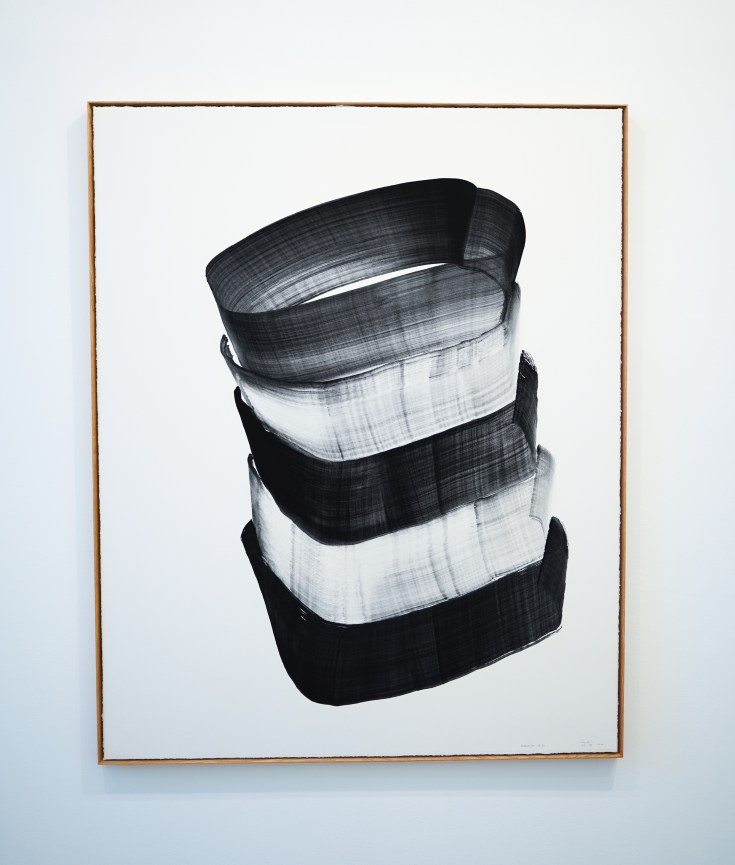

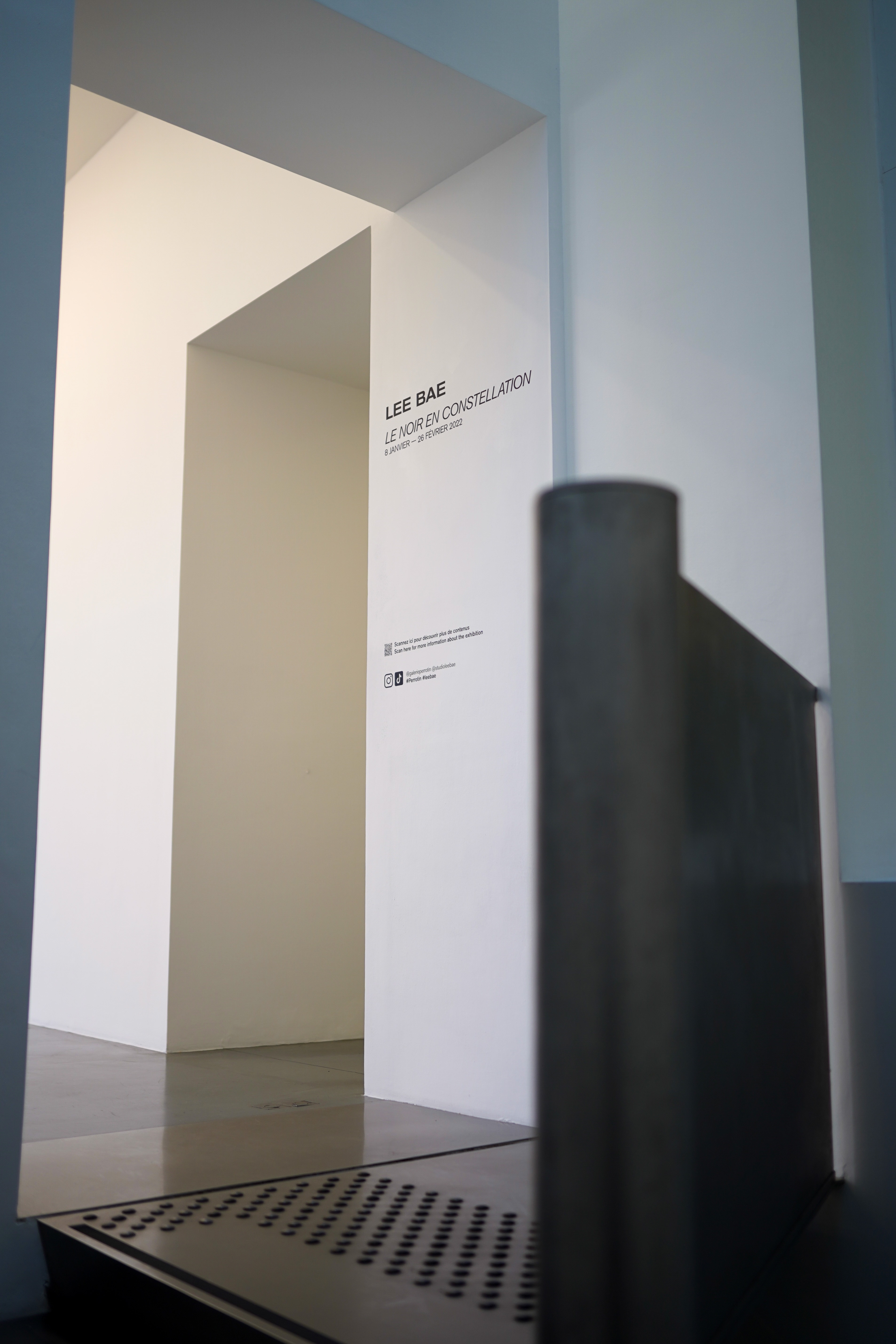
After shows in the Perrotin galleries of New-York, Tokyo and Hong-Kong, the South Korean artist Lee Bae is back at the gallery on rue de Turenne where he had already been invited in 2018. The exhibition named “Black in Constellation” until February 26th 2022, is a throwback to his last twenty years works, including exhibitions at the Musée Guimet (in 2015) and the Fondation Maeght (in 2018).
Charcoal
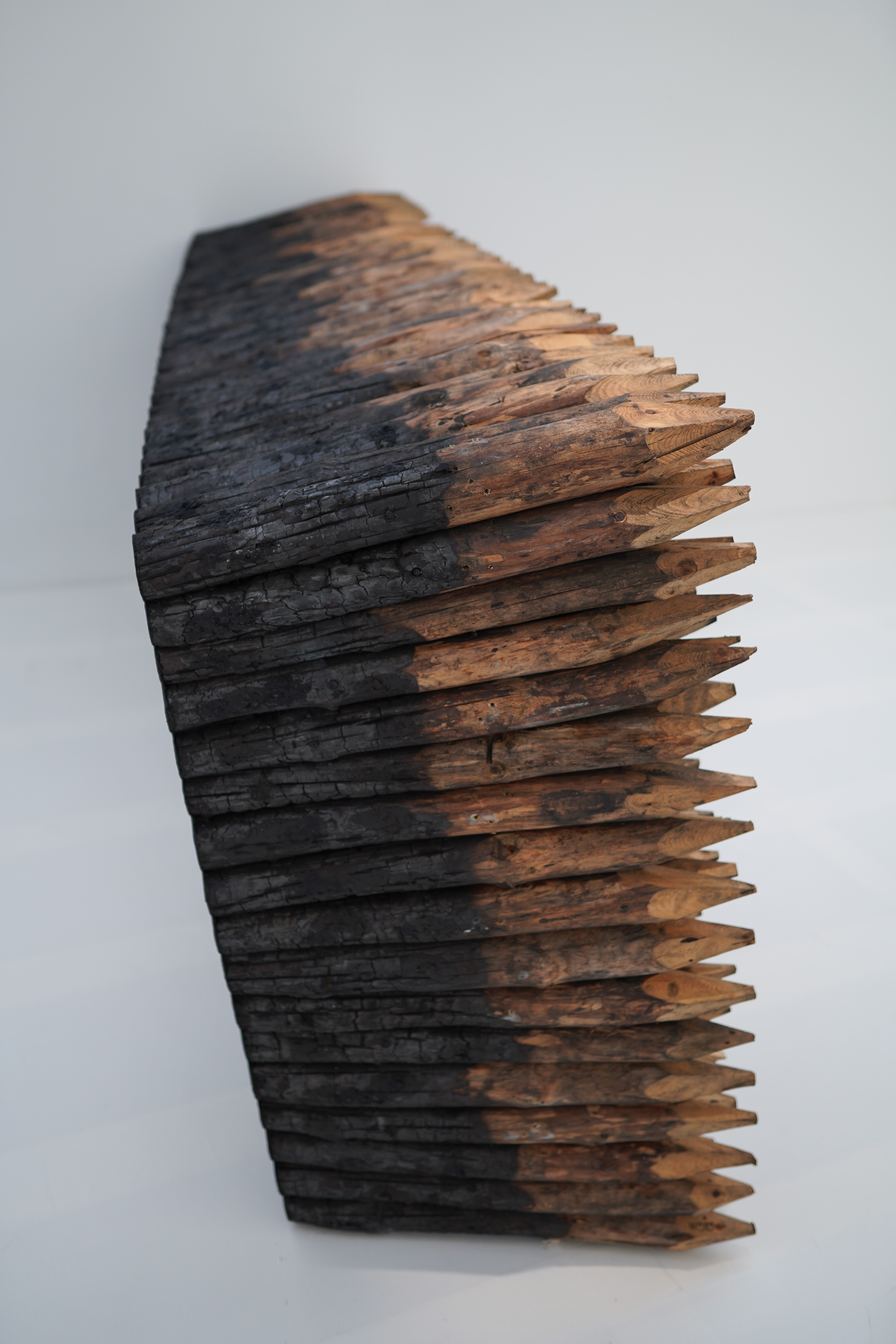
Born in 1956 in Chung-Do, South Korea, Lee Bae arrived in Paris in 1990. At first because of its economic price, he started to used charcoal for his works but he realized soon enough that this material reminds him of his native country: the Chinese black ink and the calligraphy of course, but this material is also used in Korea to prepare soy sauce and as a material to build house.
This sensory memory which links the artist to the charcoal will follow him all along his career. Lee Bae used exclusively this material until 2000. Then, in order not to get trapped in the ‘materiality’ of the charcoal, he decided to use the acrylic and to combine the black charcoal ink with the white canvas, in order to give a new depth and ambiguity to his work.
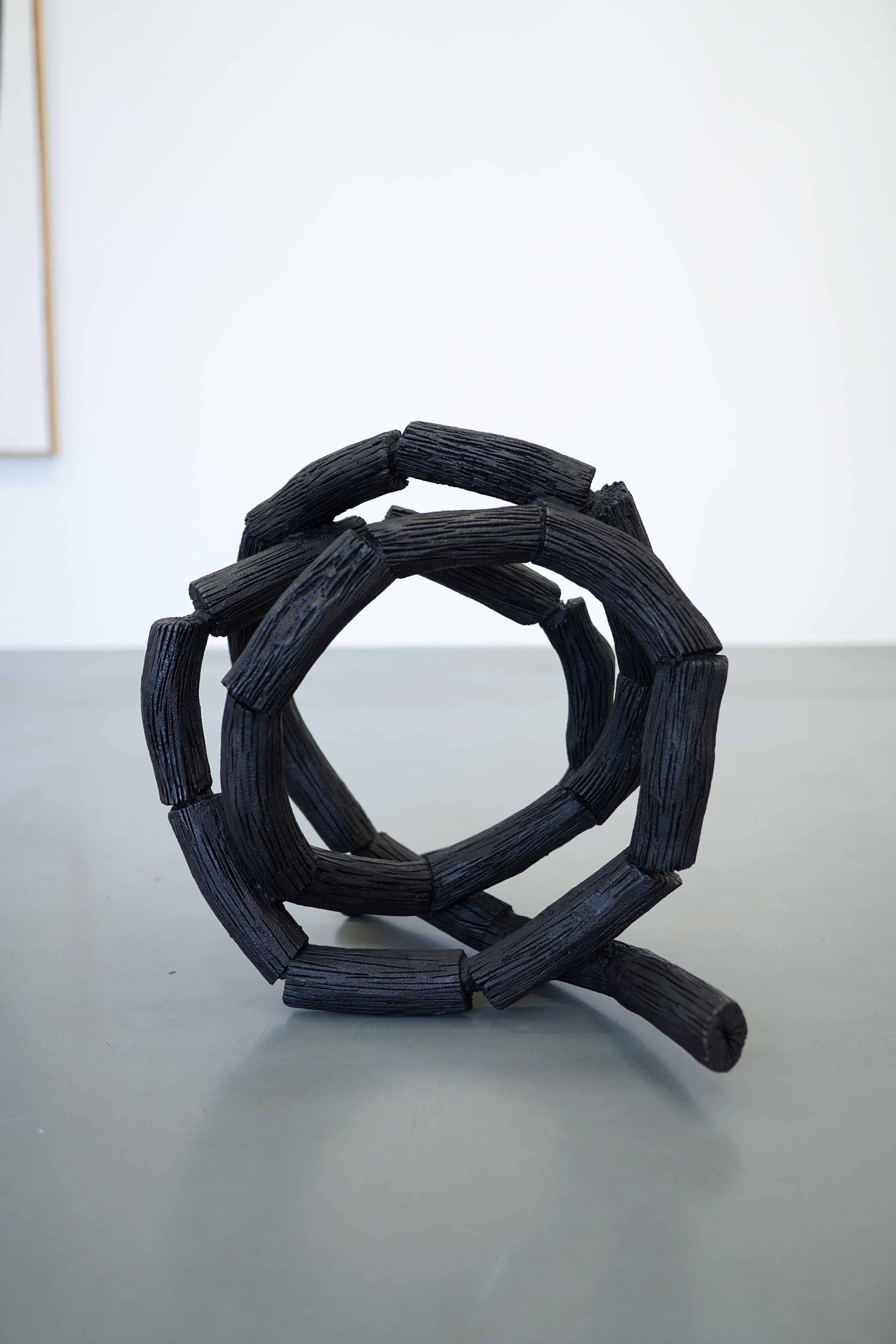
Interestingly, the artist makes himself the charcoal he used in his works. He owns a workshop located in the mountainous area of Daegu, in South Korea: « I chose the fir wood logs of my region that I bake in big traditional ovens of four meters diameter during a couple of weeks» he explains. « Then the set cools during another couple of weeks. Once well carbonized, I put some rubber bands around to keep the original shape.» he stated in an interview to the Gazette Drouot in 20181.
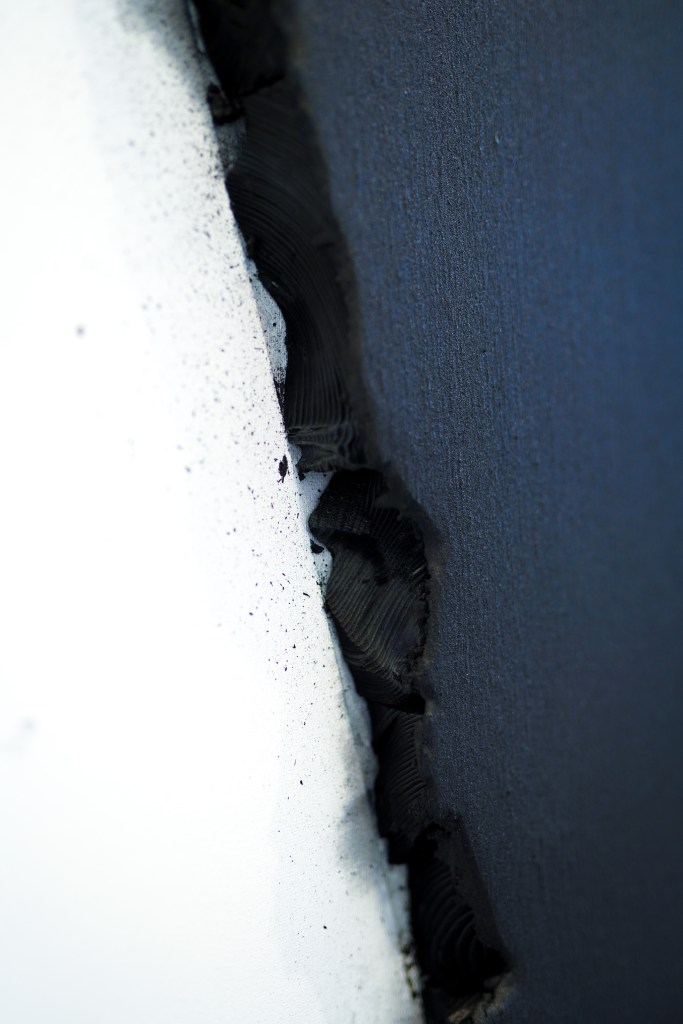
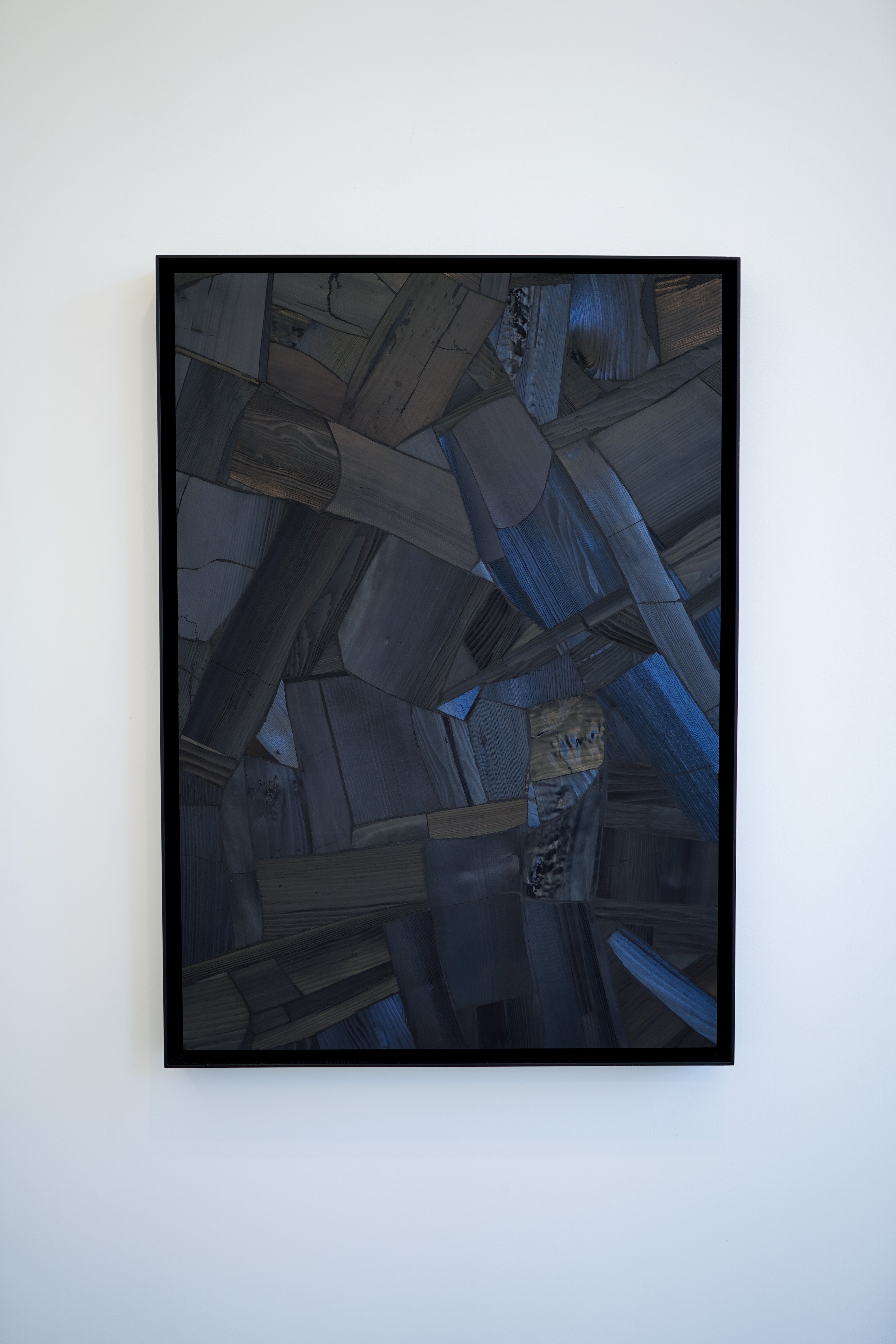
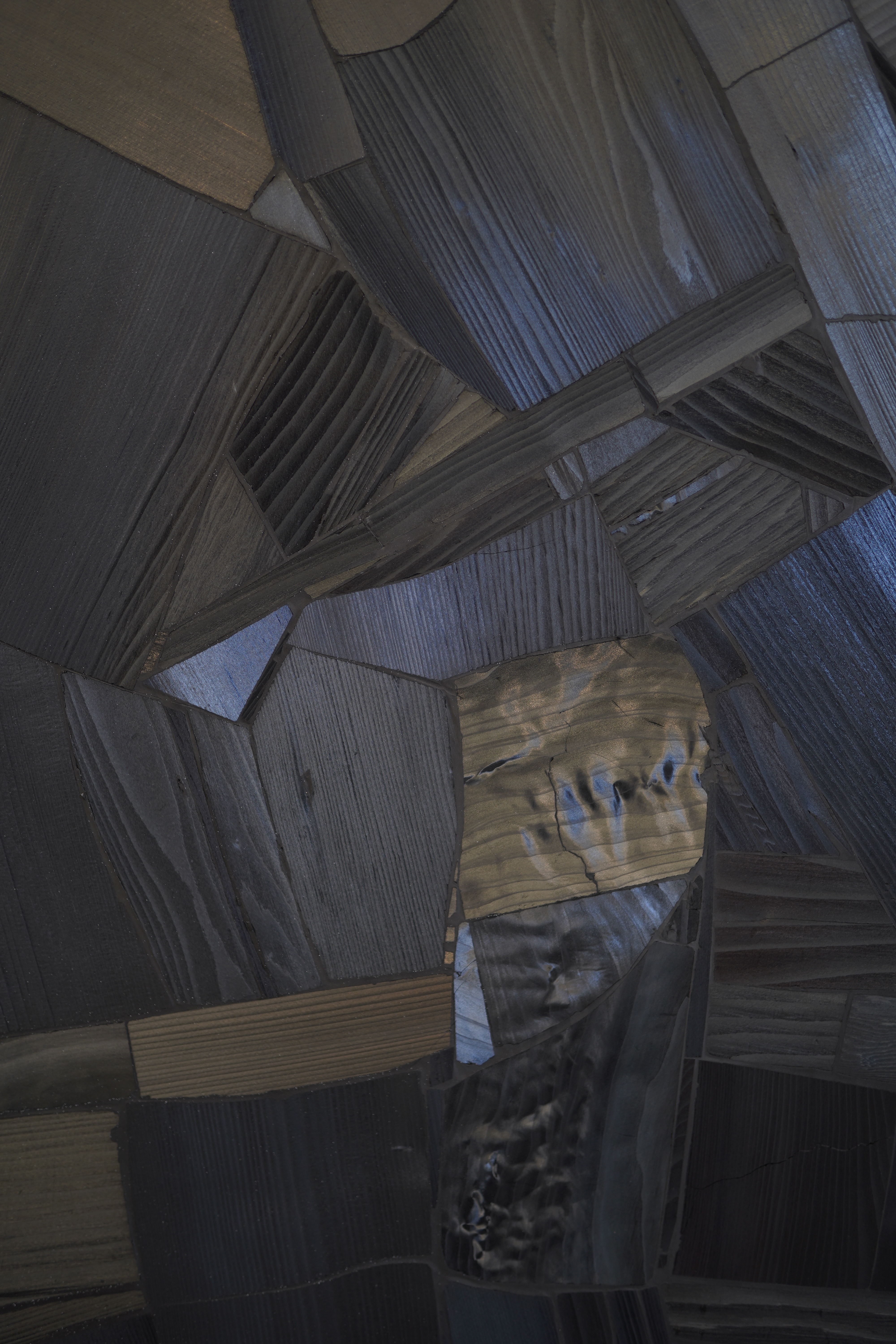
A thousand and one shades of black
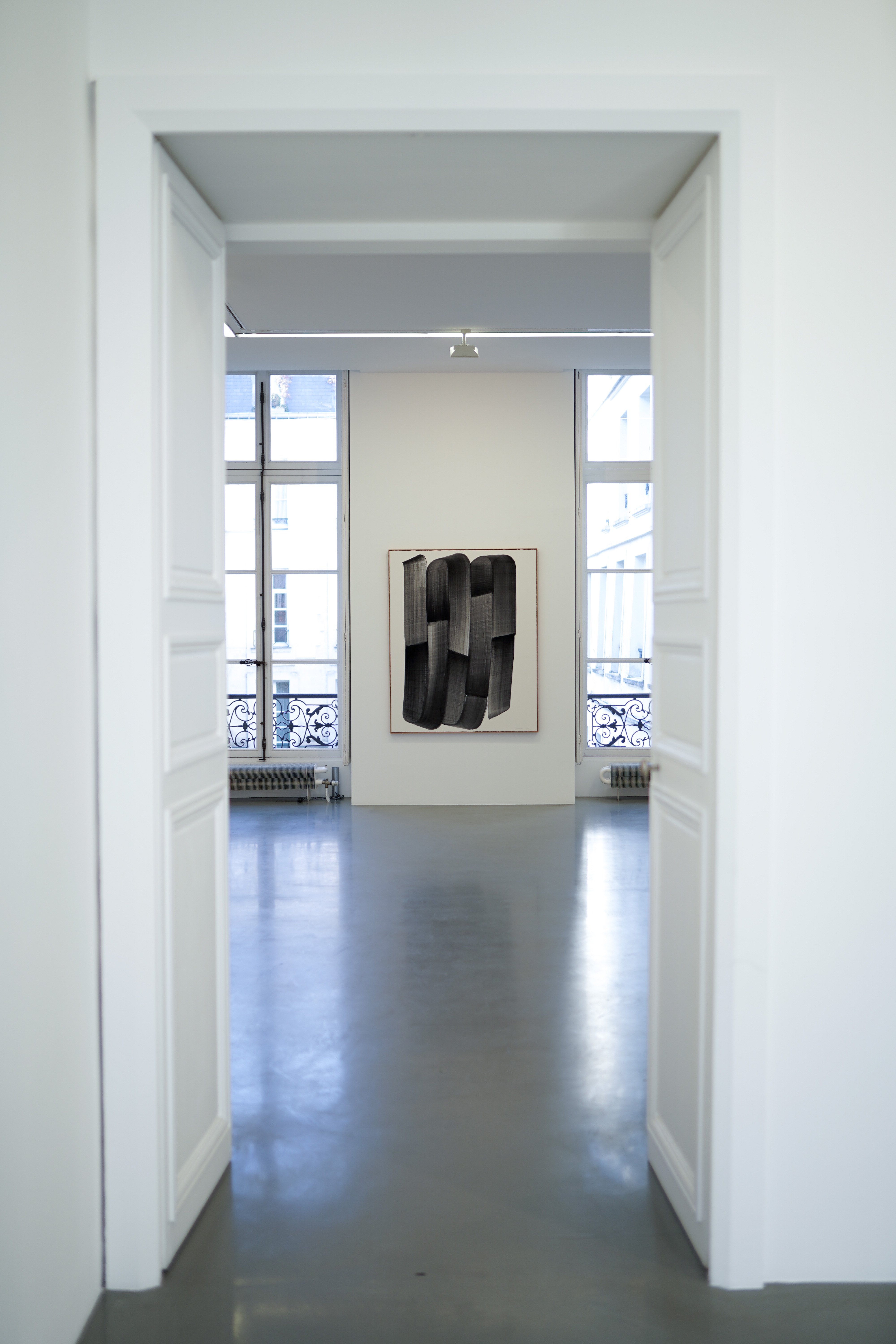
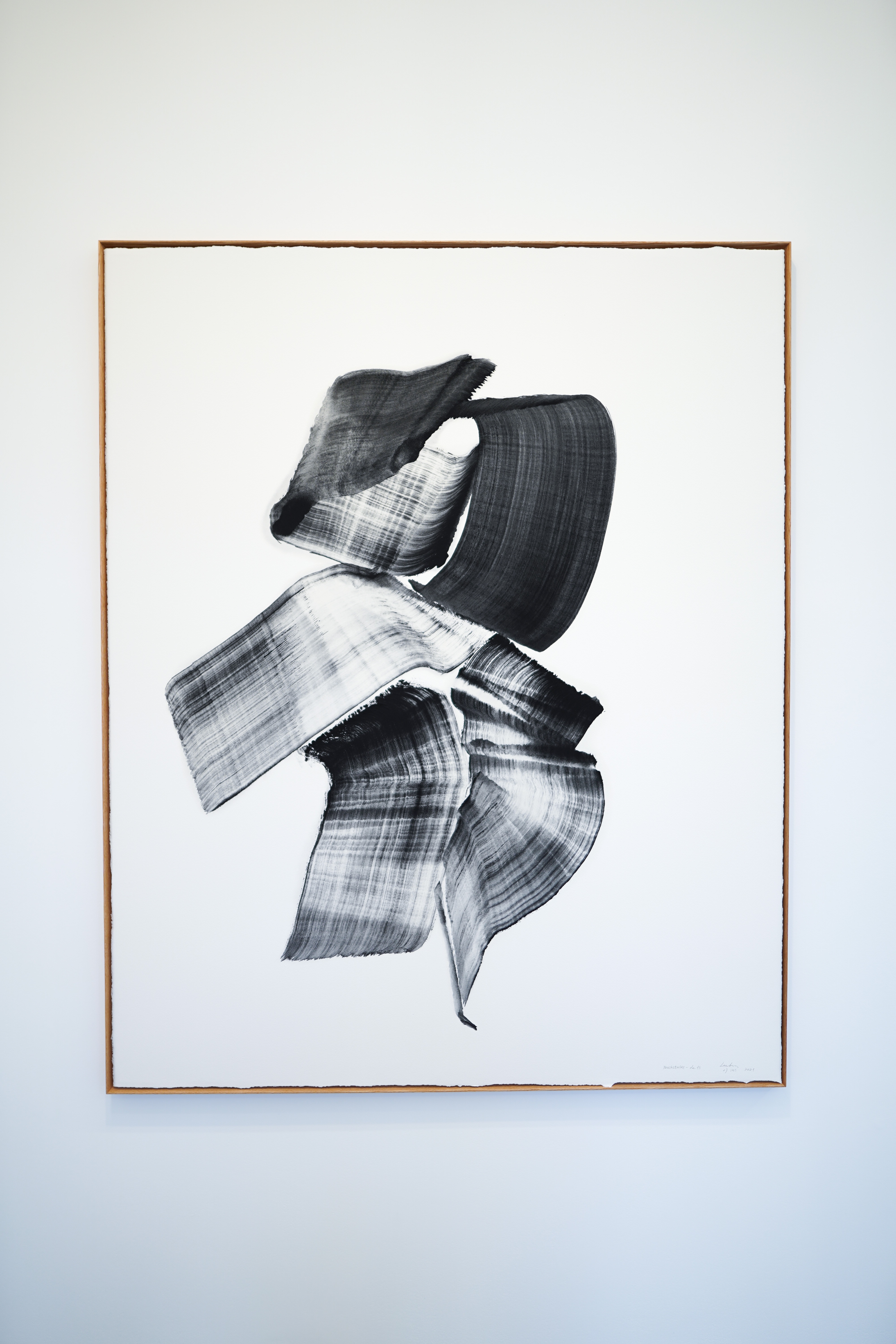
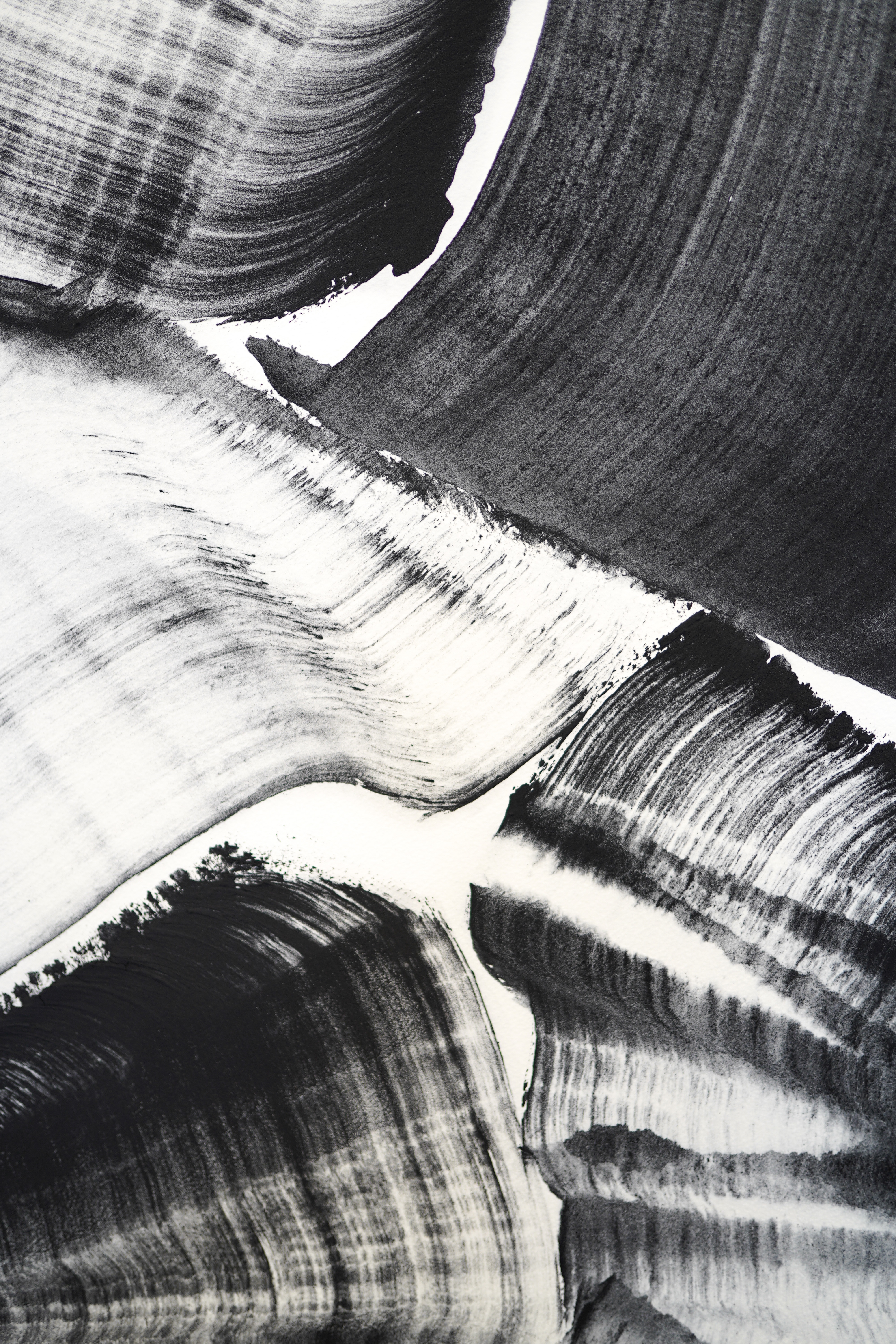
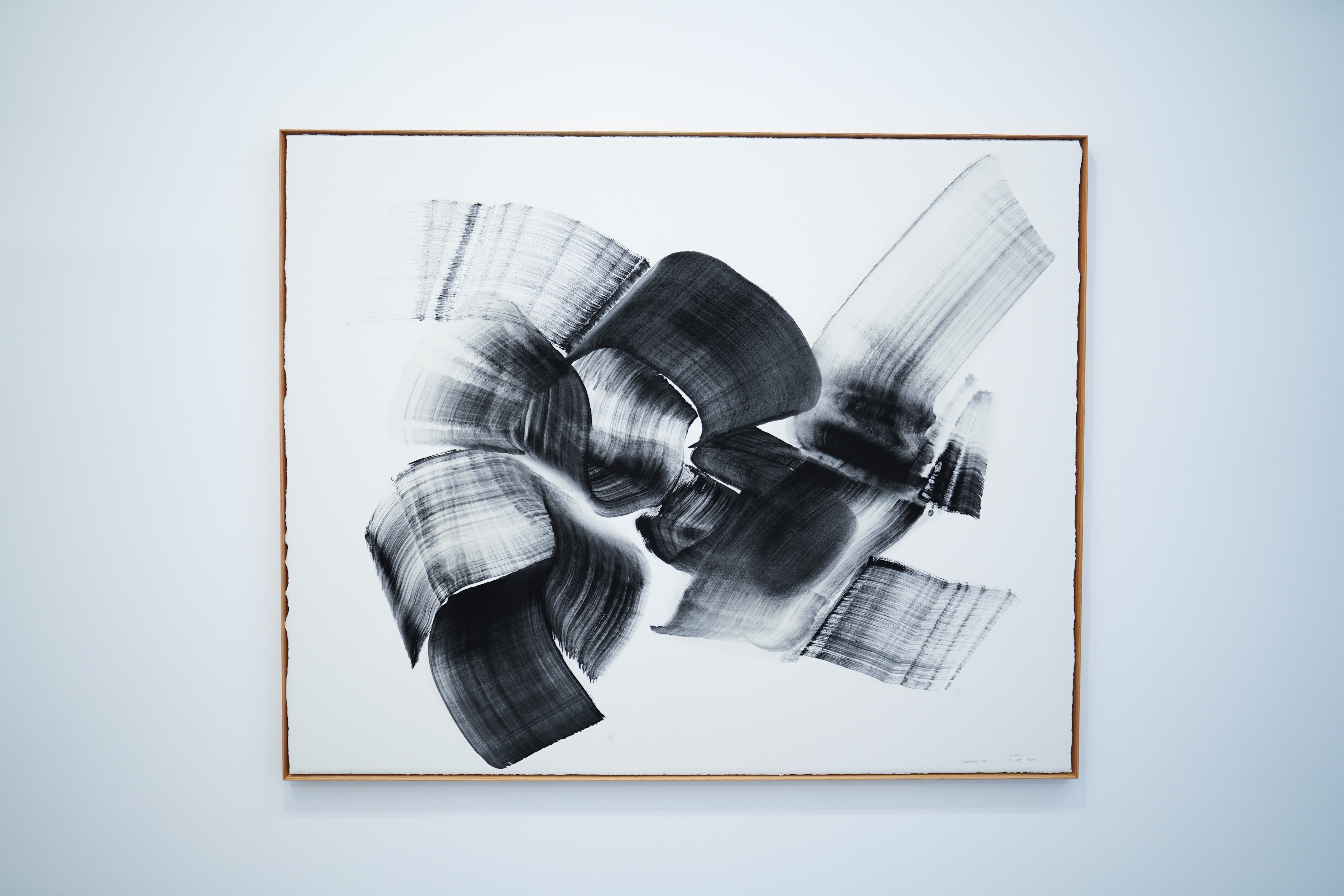
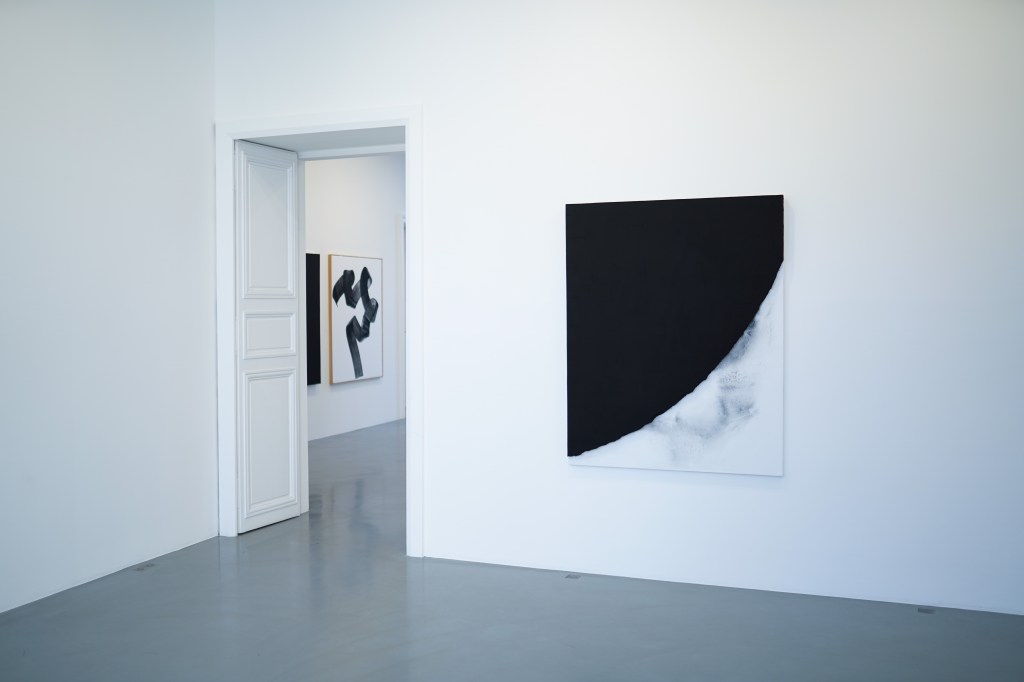
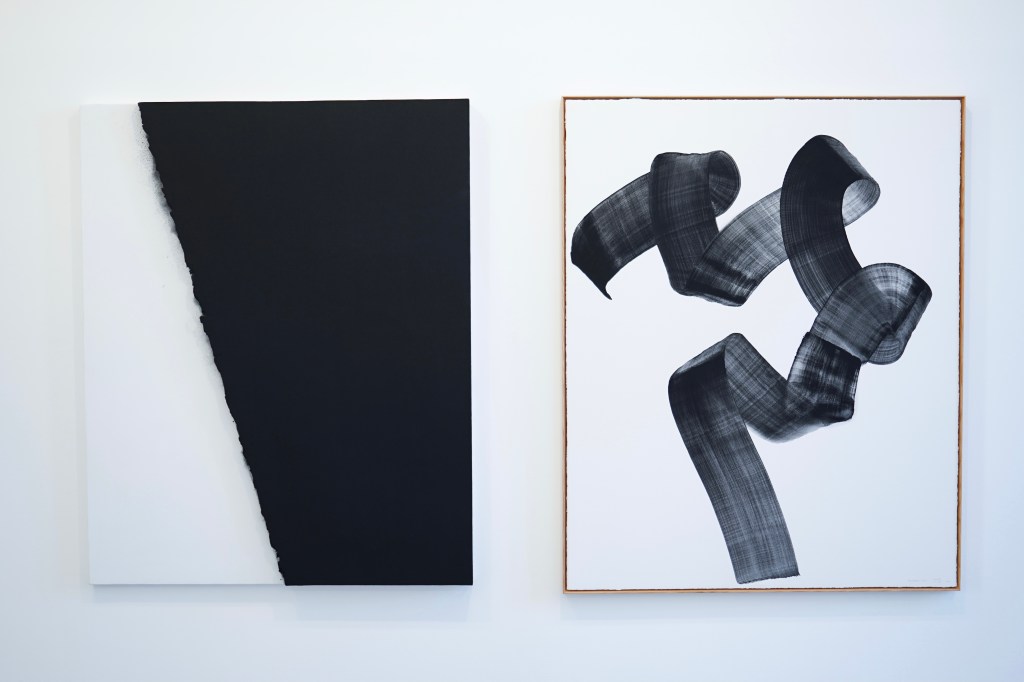
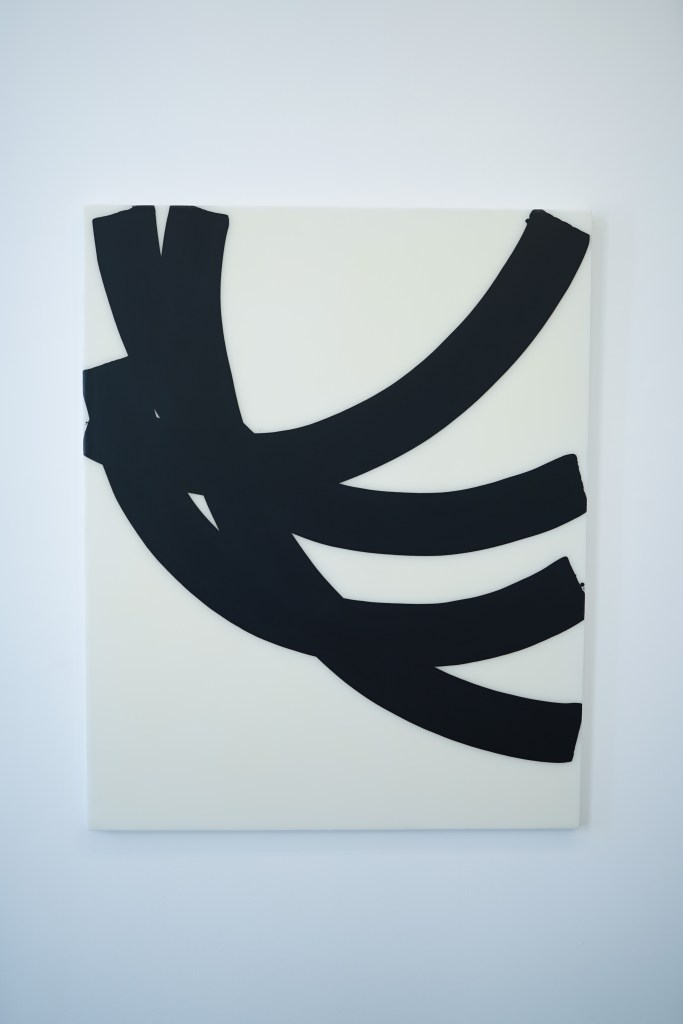
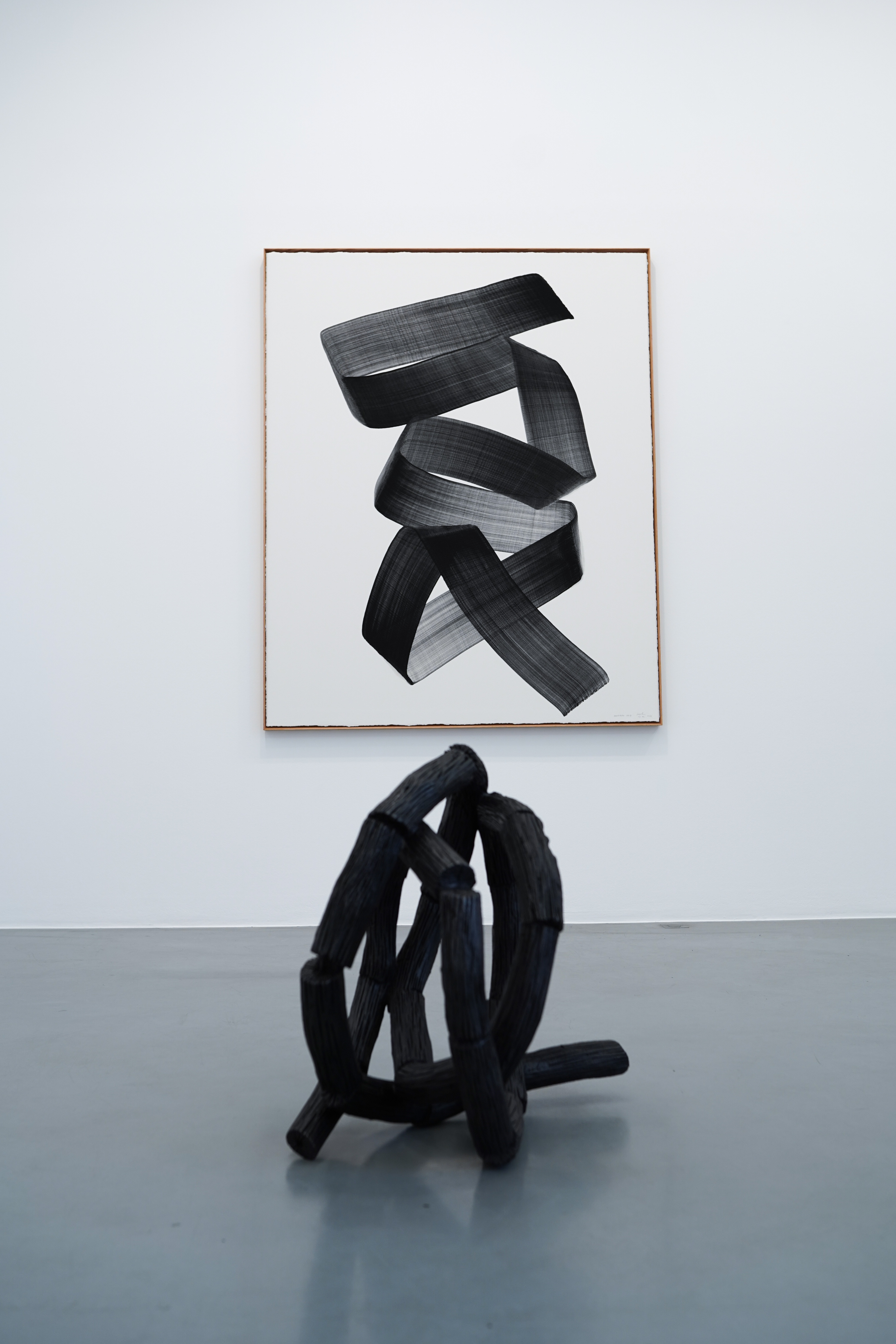
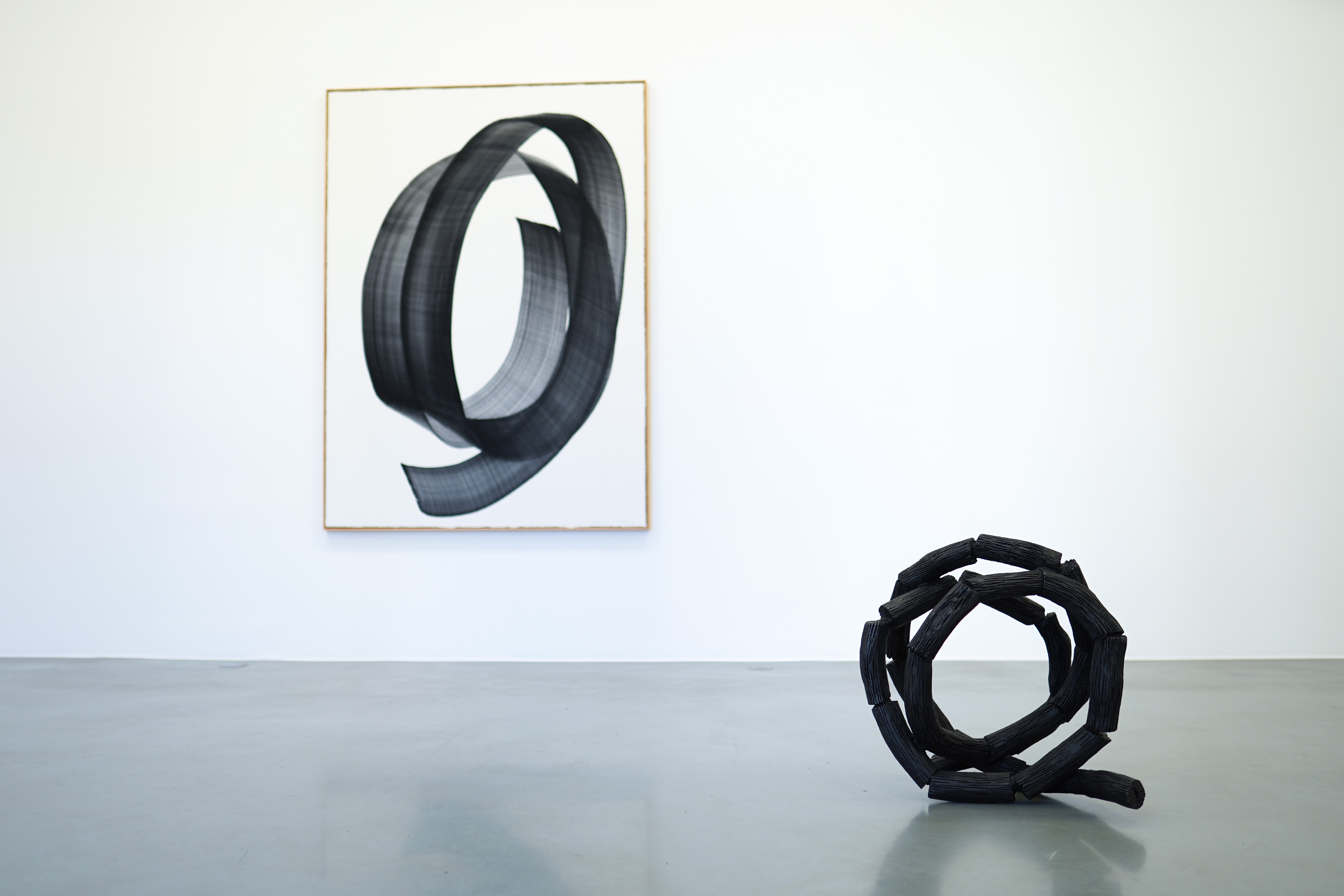
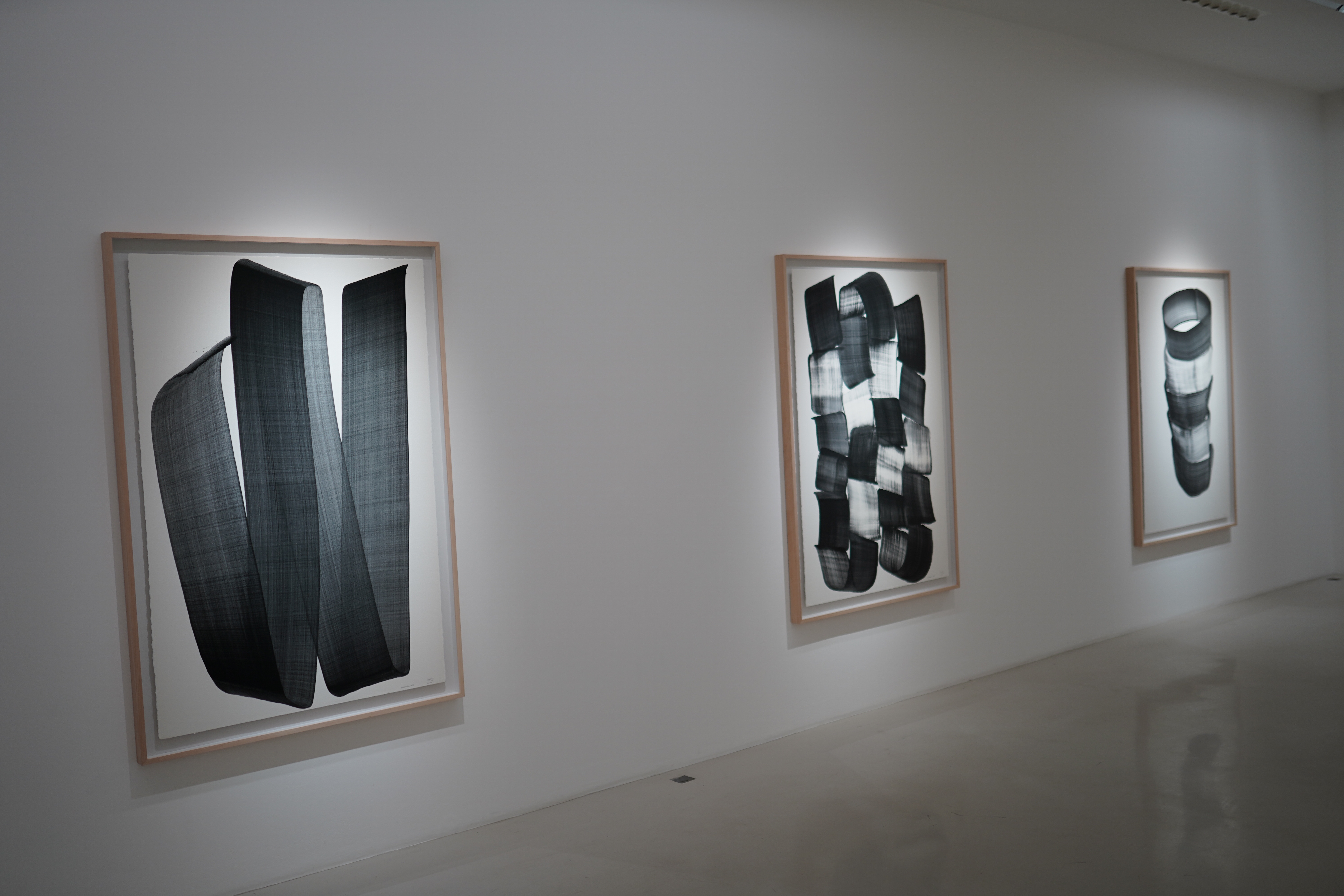
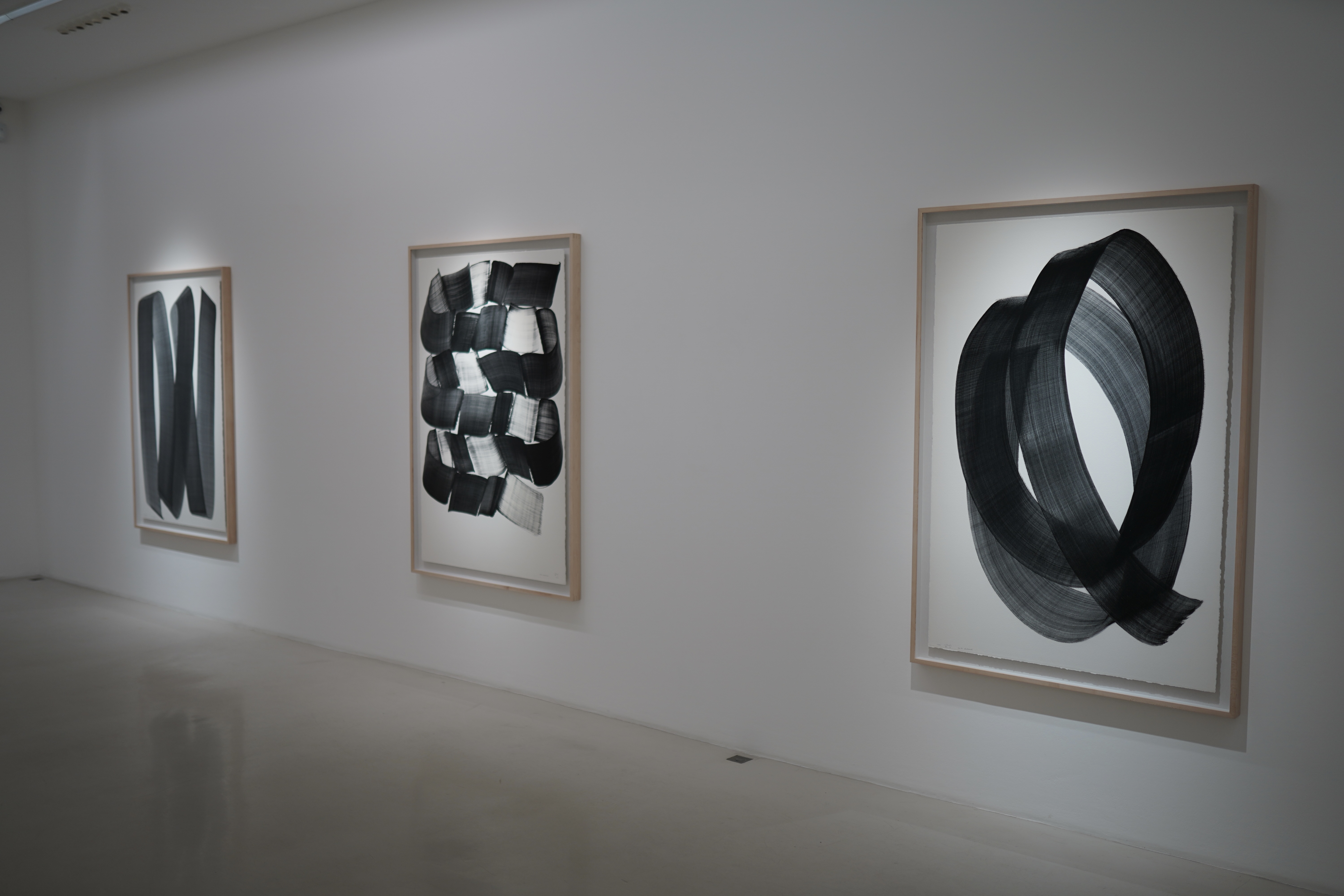
The exhibition features works made in the early 2000 – as the series « From fire » or « Landscape » made of charcoal pieces stuck on the canvas – and more recent pieces like « Untitled » (2020) or these « Brushstrokes » (2021) that remind of Far-East calligraphy. In addition to the artist’s evolution towards less geometric forms, the selection allows to appreciate the variety of techniques used. For instance, the rolling of calcined wood of a « From fire » seems to reflect the arabesque of the « Brushstrokes » that surround it (see below).
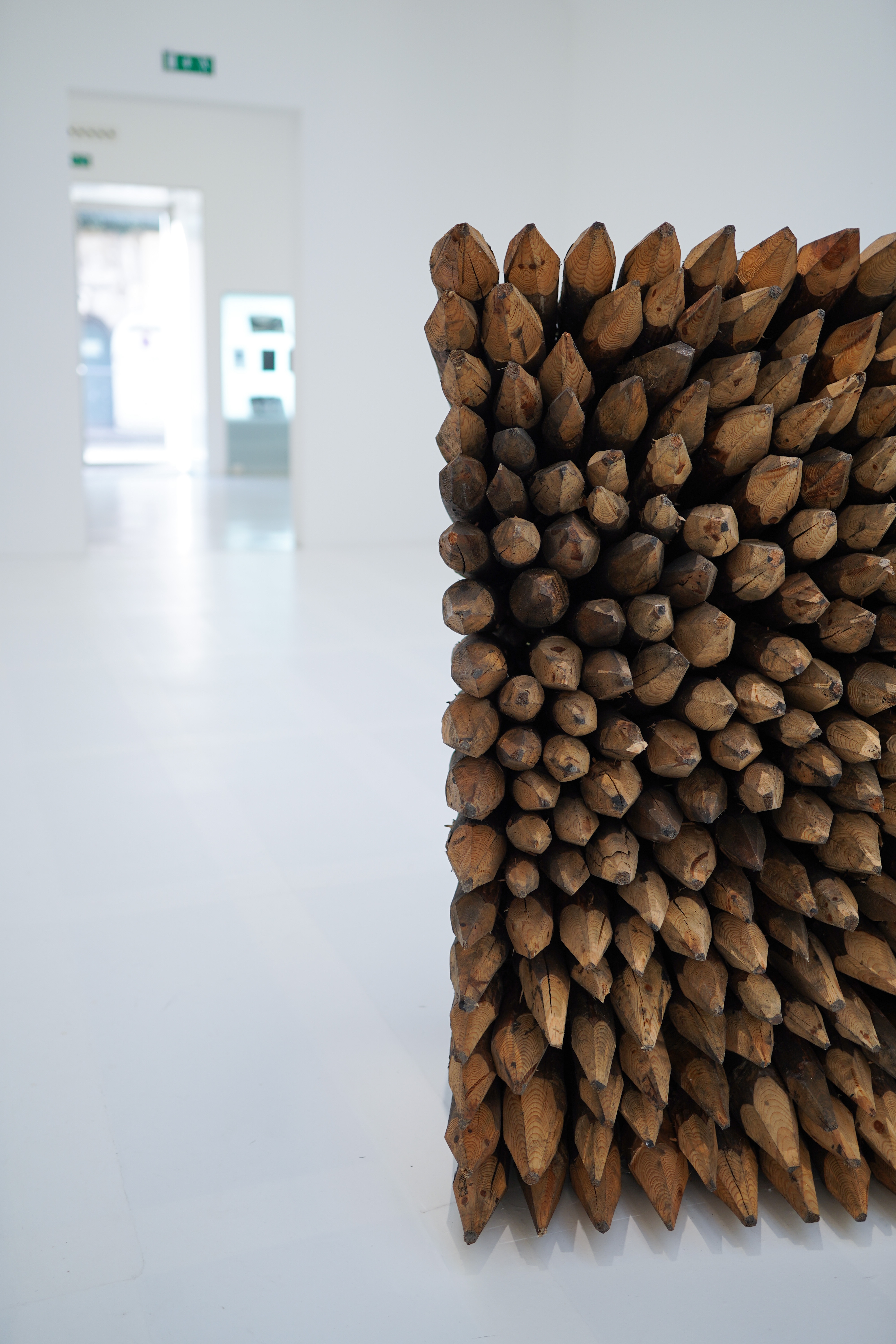
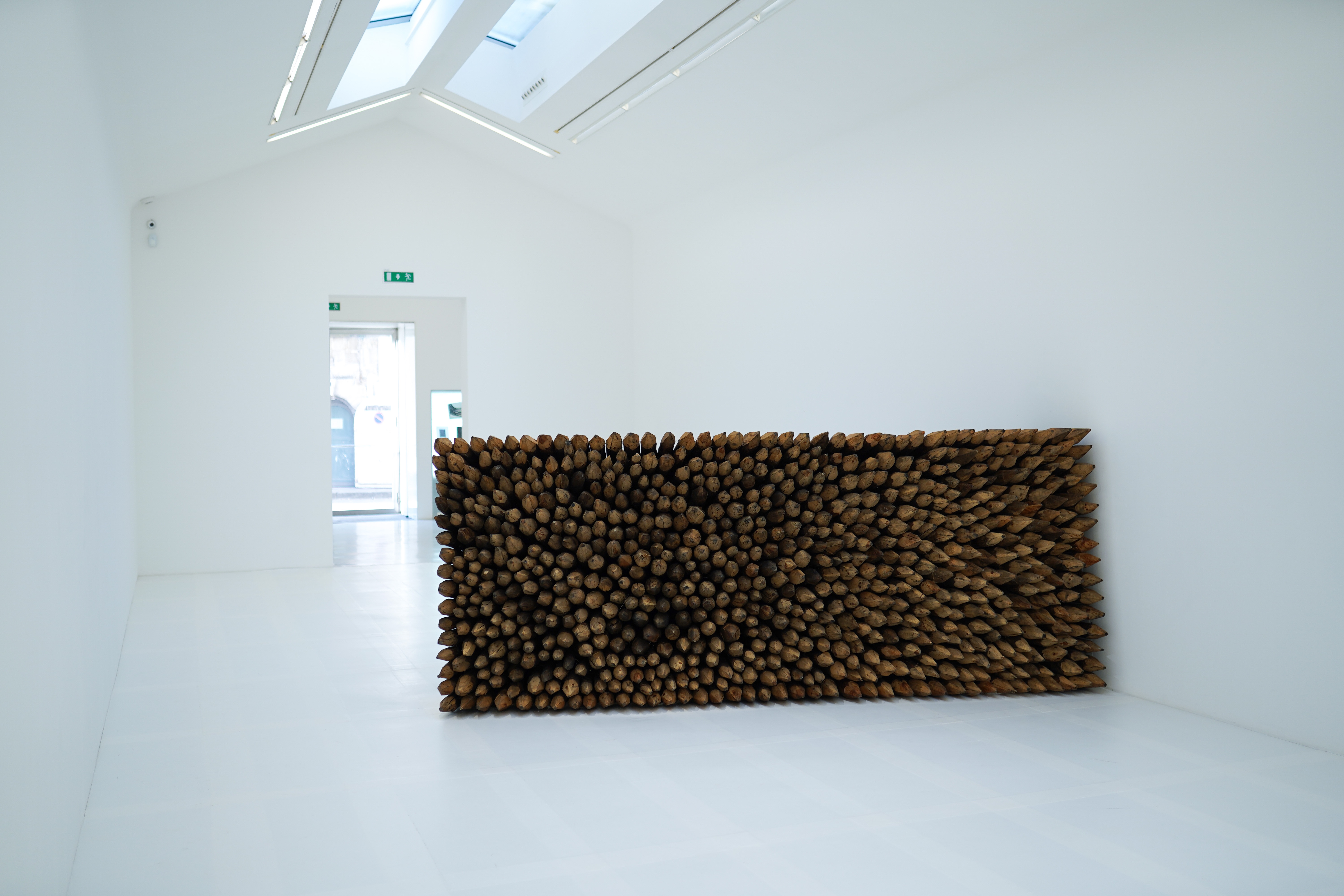
In the annex of the gallery, a stunning installation made of burned stakes turned sideways welcoms the visitors. The show ends with a « From fire (white lines) » series whose white reflects are highlighted – (enlightened!) by the darkness around. From deep blacks to more grey tones, through bluish hues, each work illustrates the various shades the black can take depending on the light, the texture and the technic used.
An outter inspiration
Sometimes compared to Pierre Soulages (1919-2022) and its Outrenoir (Beyond Black), Lee Bae shares with the French artsist the will to represent “what he does not know“. For both of them, the creative process comes from something deep inside themselves, which expresses itself unconsciously depending on the surrounding.
Thus, in an interview in the Revue des Deux Mondes, Soulages said: “The thing I know, it is that I do not know. […] Very often, I know that in what I do, people find sacred. But the sacred does not imply the divine. However, I feel, I have emotions, sensations, I live inside. If we don’t have this, we are lost.”2 Inspiring Lee Bae, he stated: “When Soulages says, ‘I don’t know what I am doing’, he is simply saying he opens up to the uncertainty of the outside world, or, to call it the realm of inspiration. I also vaguely feel that I rely on this type of inspiration. I am not talking about the inspiration that comes out of my own head, but the inspiration that comes from the outside.”3
Dansaekhwa
During his first years in Paris, Lee Bae was the assistant of another renowned Korean artist, Lee Ufan (born in 1936) and has learnt from artists such as Park Seo-bo (born in 1931) or Ha Chong-hyun (born in 1935) in South Korea, figures of the Dansaekhwa movement.
Appeared in the 1970s during a fast economic growth following the Korean War and the military dictatorship, this movement allowed a new generation of artists to approach the contemporary art of that time, while keeping a bond with their cultural legacy. Characterized by monochromatic abstraction, the Dansaekhwa differs from American abstract expressionism and European informalism by a meditative approach and the repetition of gestures which allow the artists to give more meaning to their works with time. Both concepts can be found in Lee Bae’s work, almost fifty years after the birth of the movement, and particularly in the works presented in this show.
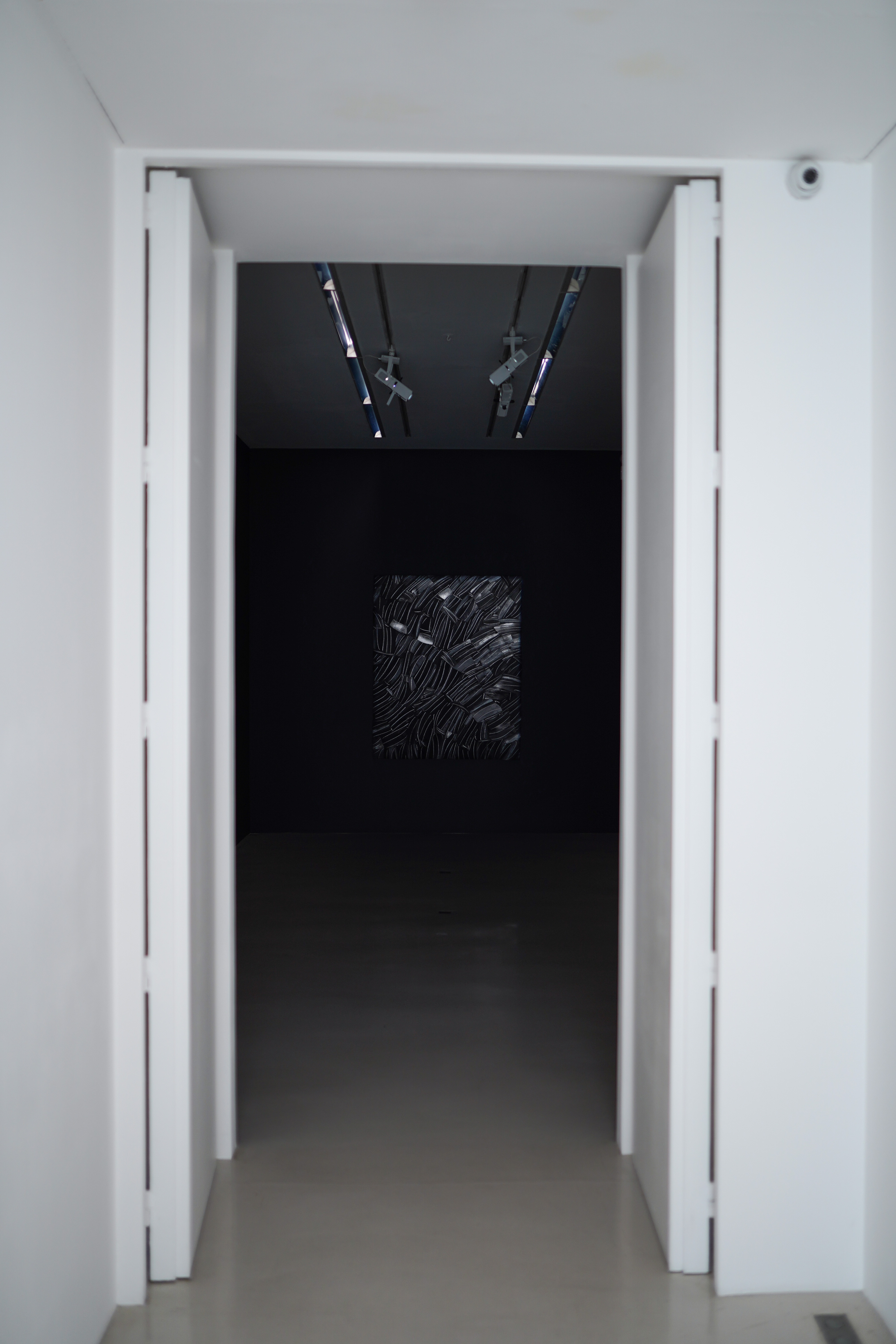
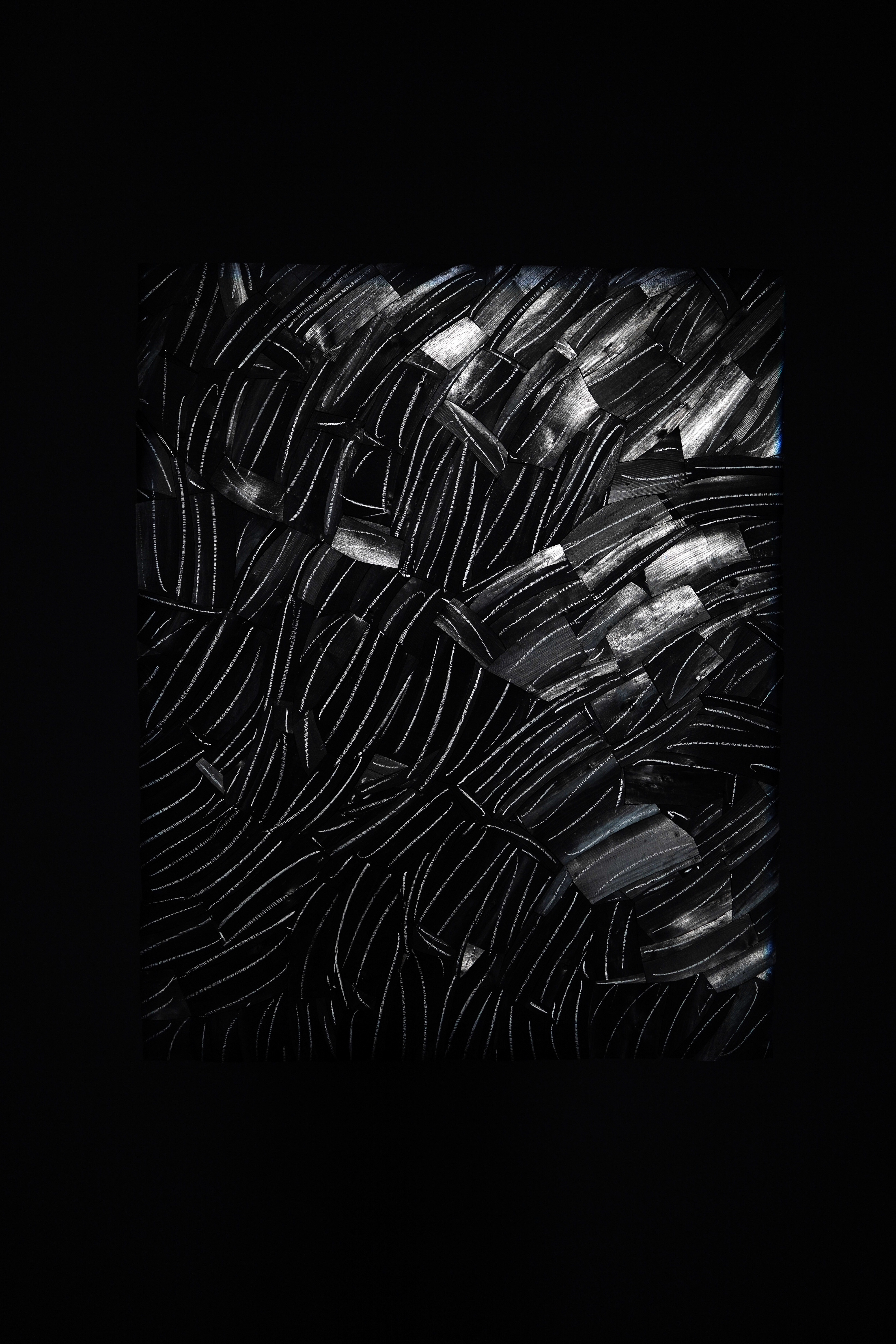
“Black in Constellation“, Lee Bae, show from January 8th until February 26th 2022 at the Perrotin gallery, 76 rue de Turenne 75003 Paris.
Links and sources:
- 1 https://www.gazette-drouot.com/article/l-obscure-clarte-de-lee-bae/4710 : an article from the Gazette Drouot published before Lee Bae exhibition at the Fondation Maeght in 2018,
- 2 https://www.revuedesdeuxmondes.fr/entretien-avec-pierre-soulages-le-batisseur-de-lumiere-seconde-partie/ : Pierre Soulages interview in La Revue des Deux Mondes in 2008,
- 3 https://www.leebae.art/text/2-interview/my-external-memory/ : ‘My External Memory‘ interview by the art critic Sim Eunlog,
- https://www.leebae.art : artist website,
- https://leaflet.perrotin.com/fr/view/177/le-noir-en-constellation : show presentation.
Photos credits: @elegantinparis
 Elégances Parisiennes