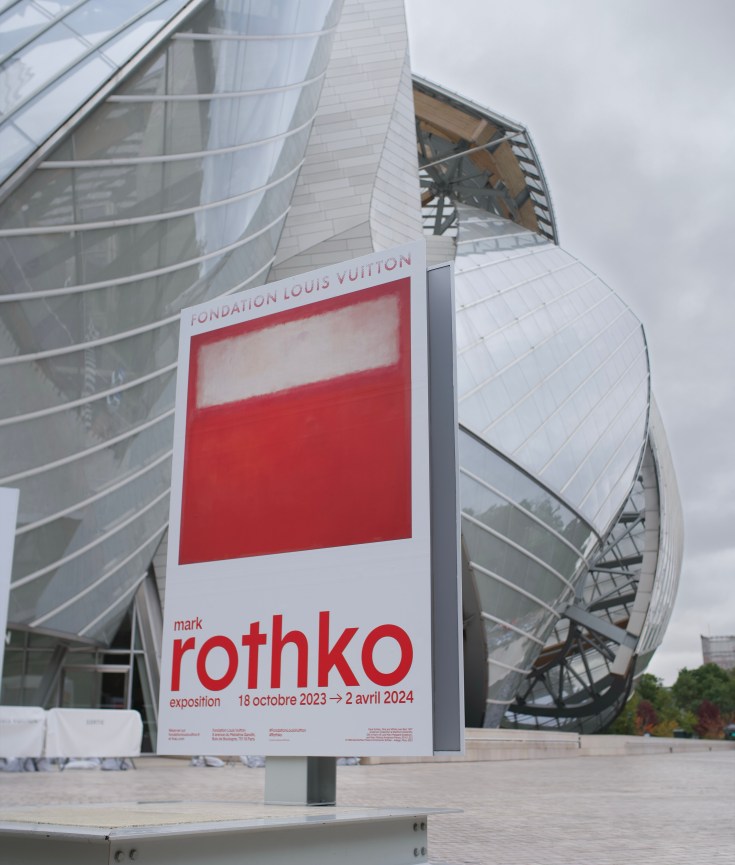

1962, Musée d’Art Moderne de la Ville de Paris, winter: for the first show of Mark Rothko (1903-1970) in the French capital, the weather turned out so awful that the exhibition had to close sooner than expected. Ten years later in 1972, another exhibition was presented at the Musée National d’Art Moderne, but the paintings were selected by the controversial Malborough Gallery who was sued by Mark Rothko’s children after his death. Then, in 1999, the Musée d’Art Moderne de la Ville de Paris organized another exhibition based on the show presented in the National Gallery of Washington and the Guggenheim of New-York a few months earlier, but only a third of the paintings crossed the Atlantic.
The 1999 exhibition was curated by the art historian Suzanne Pagé who is now the artistic director of the Fondation Louis Vuitton. She has teamed up with Christopher Rothko, doctor of psychology and son of the artist, to propose the most ambitious exhibition ever done on Mark Rothko, from October 18th 2023 until April 2nd 2024 at the Fondation. From the urban scenes and portraits he realized in the 1930s (which were rarely shown in previous exhibitions), including his ‘classic’ period in the 1950s that brought him to mainstream recognition, until his black and grays series at the end of his life, this retrospective offers a complete panorama of Rothko’s work with an hundred and fifteen paintings.
The 1930s and 1940s – Portraits, mythology and multiforms
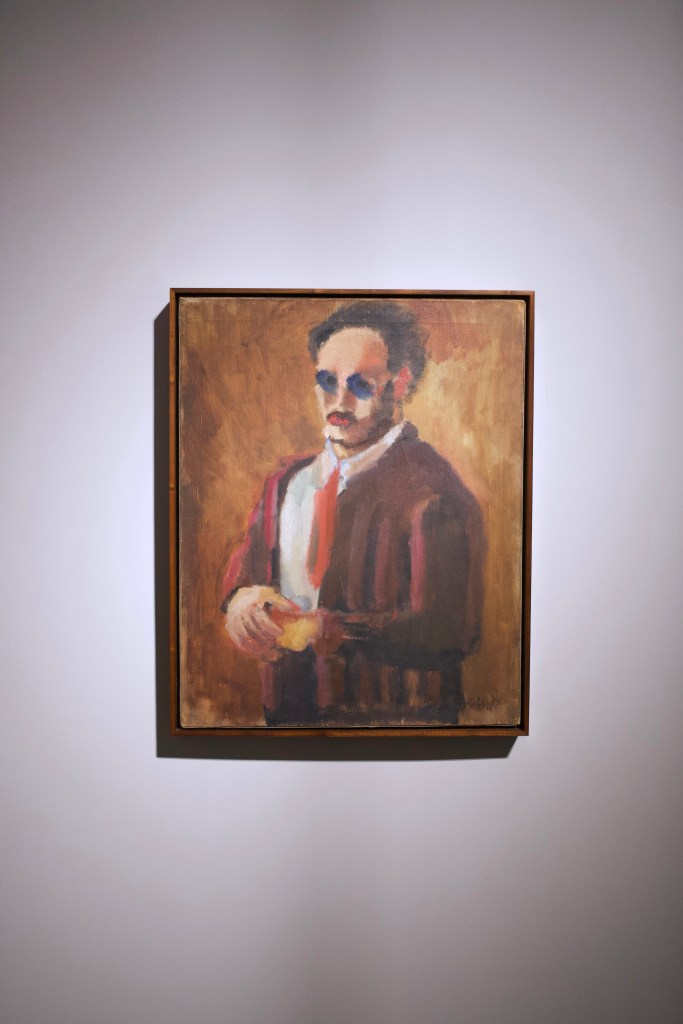
The exhibition opens with the only self-portrait made by Mark Rothko during his life, taken from the collection of his son, Christopher: emerging from a brown background, in three-quarter face, the artist seems to stare at us behind his black glasses, in a dark brown suit enhanced by a few red touches on his lips, tie or sleeve. This austere yet strong portrait is representative of his early works which include portaits and various urban scenes painted in the thirties.
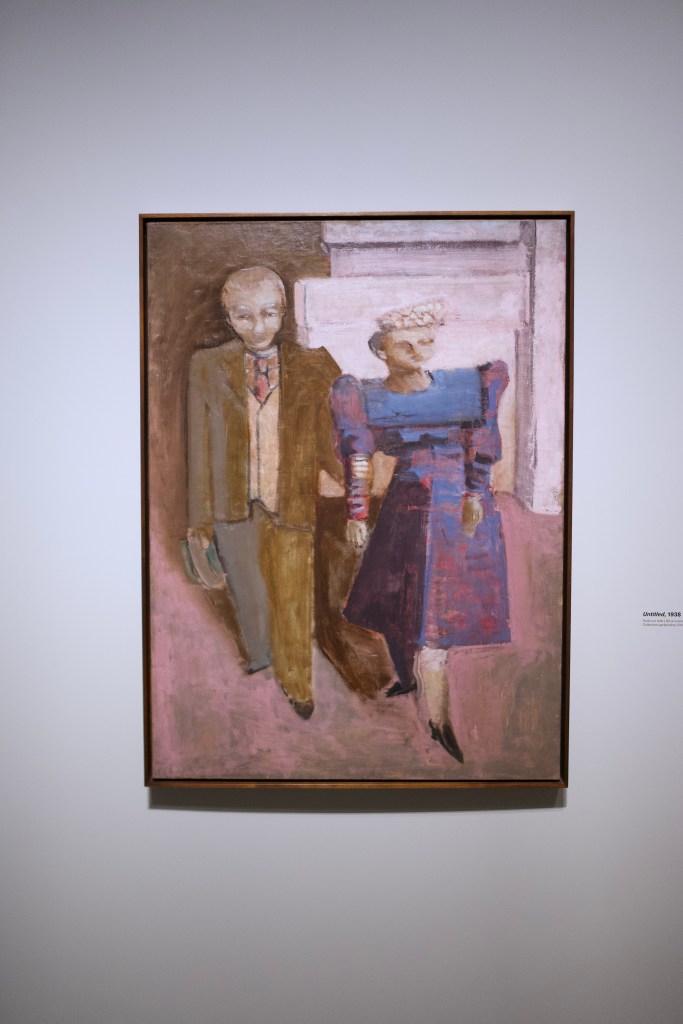
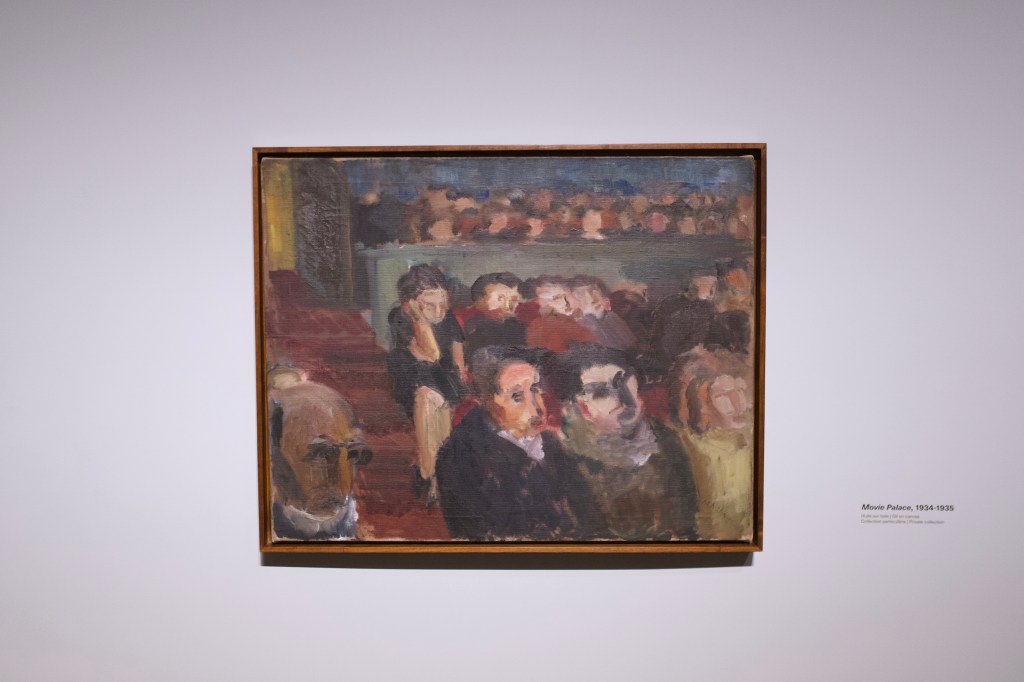
In early 1940, he realized he could not exactly paint the human figure the way he wanted and decided to abandon the figurative representation. After a short break, he came back to the painting and, along with his friends Adolph Gottlieb and Barnett Newman, looked to create a contemporary mythology. Inspired by ancient myths, but also by the european surrealist artists in exile in the United States during WWII, his works were populated with chimeric characters and biomorphic forms which tended to be more and more abstract.
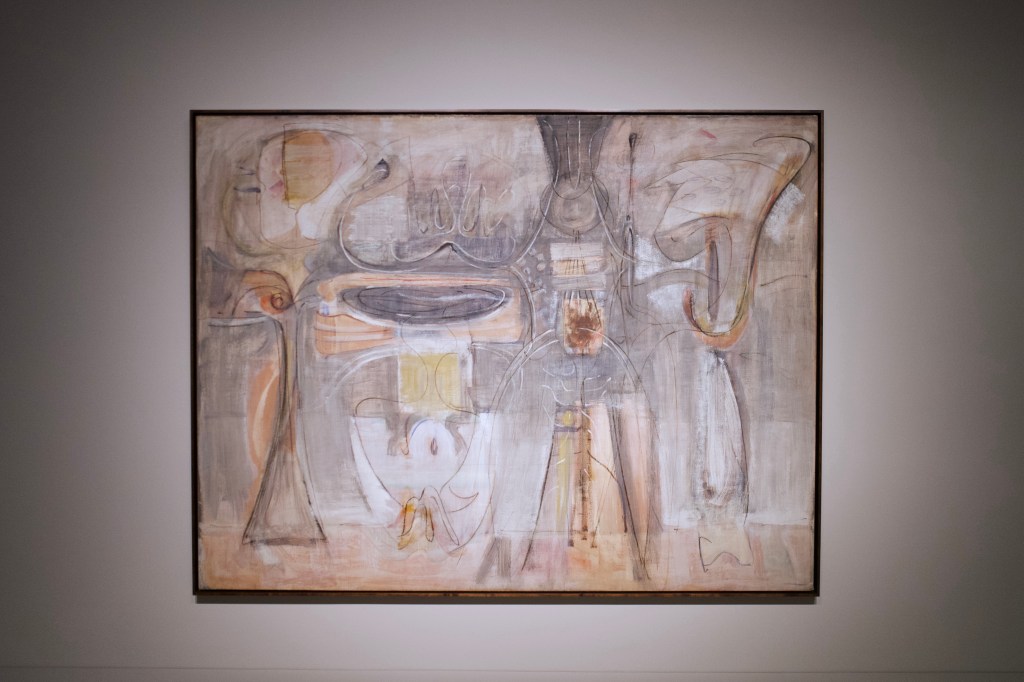
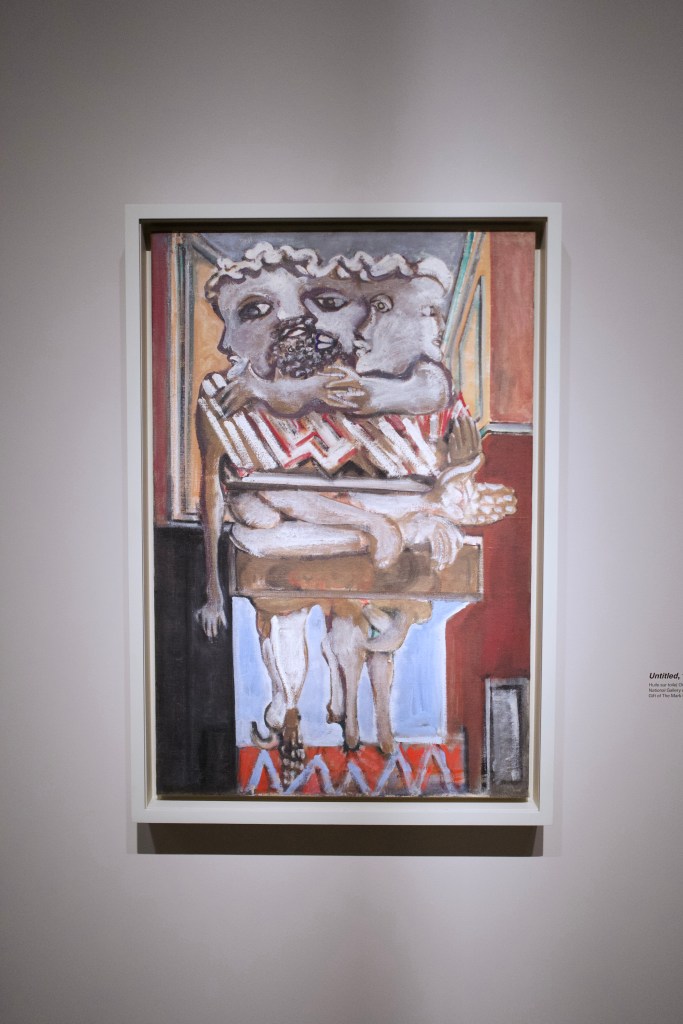
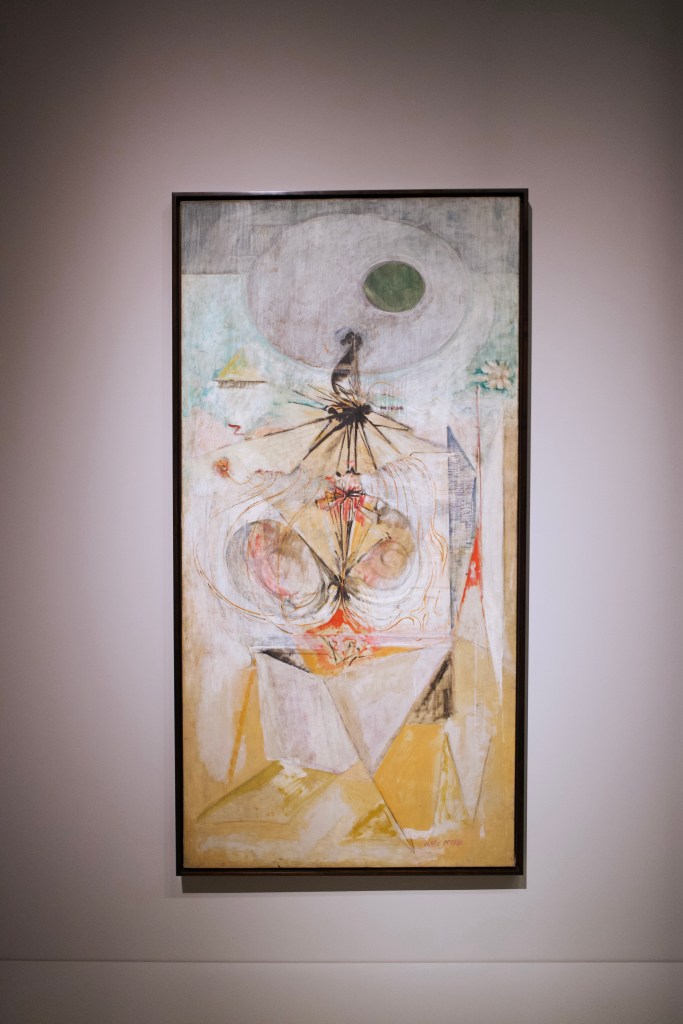
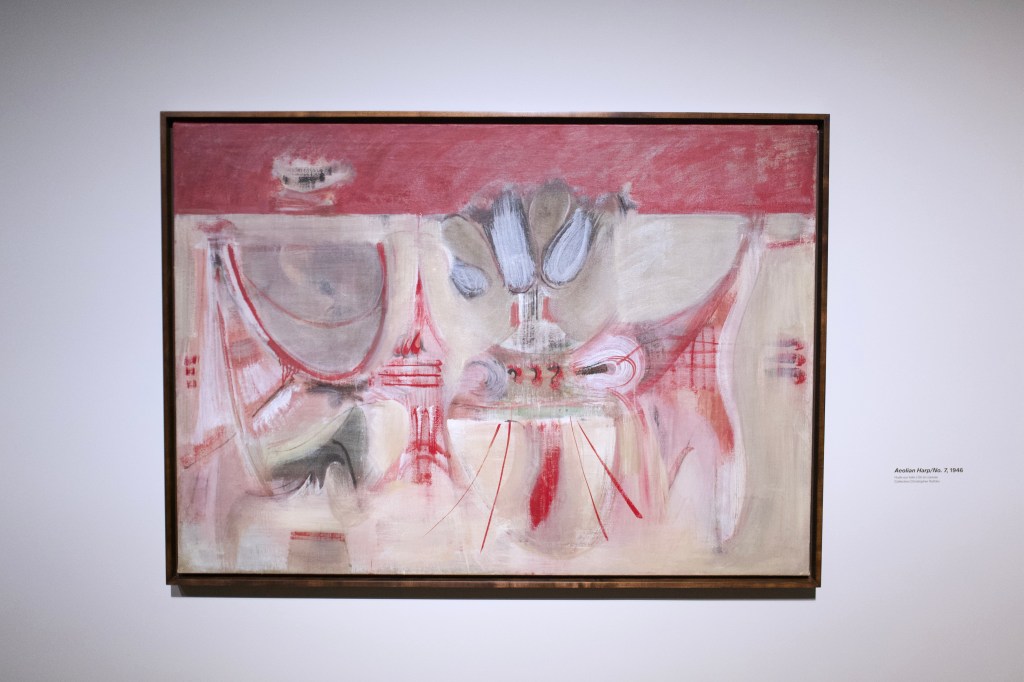
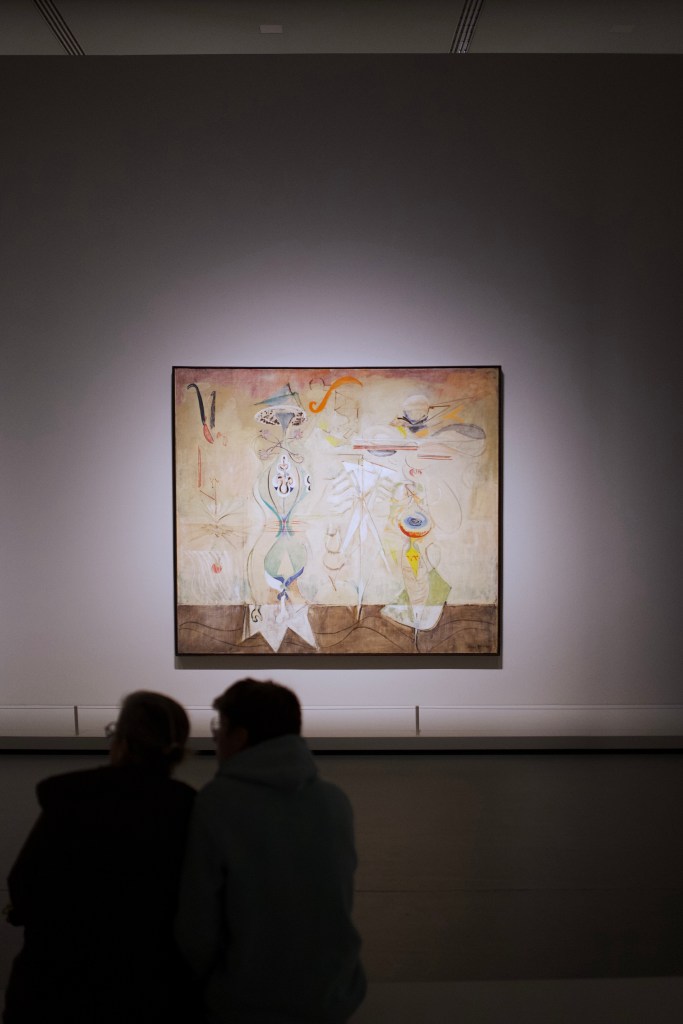

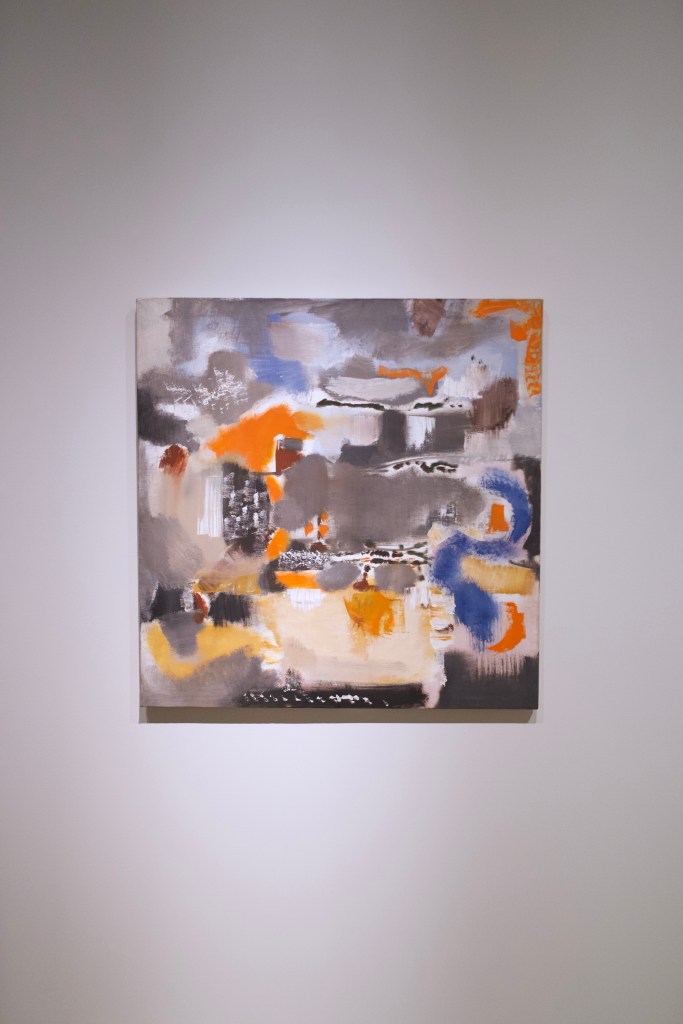
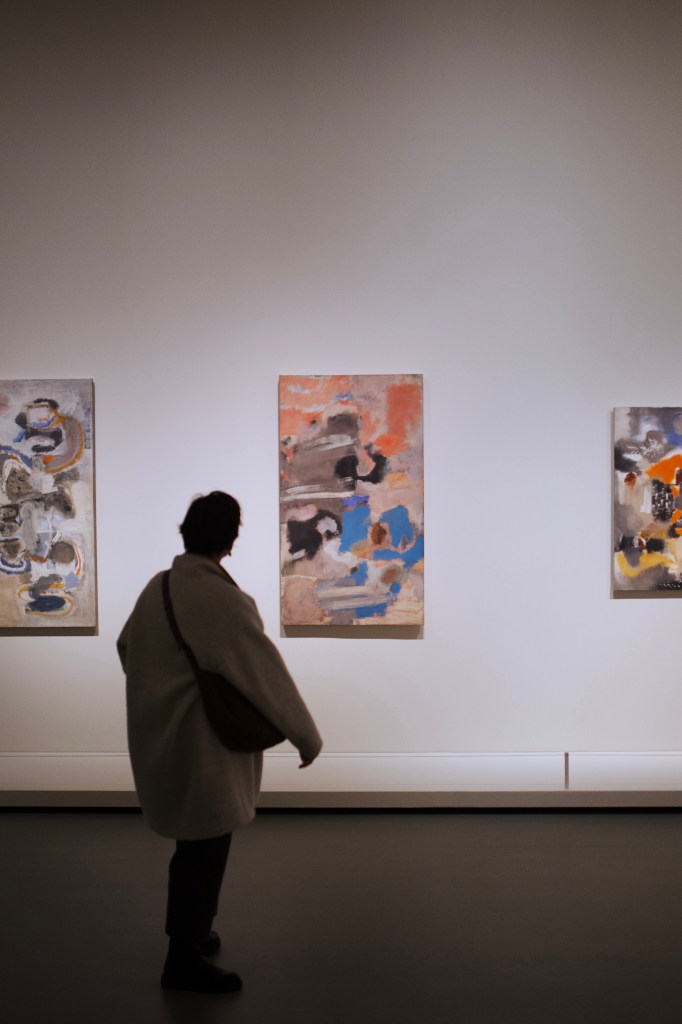
The end of 1946 is another important shift in Rothko’s journey: between late 1946 and 1949, he painted around one hundred ‘multiforms’, stepping into abstraction. Characterized by a limited palette, shapes that slowly became rectangular and a sensation of transparency, these works will lead him to the more simplified and unified compositions he will paint from the fifties until his suicide in 1970.
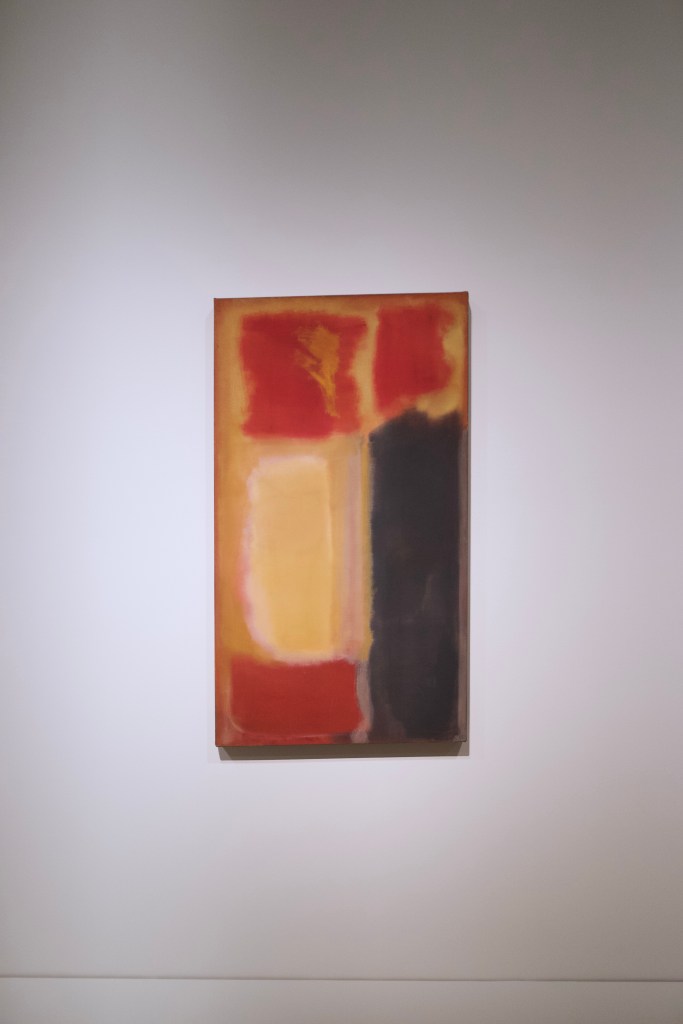
The 1950s – The ‘Classic’ period
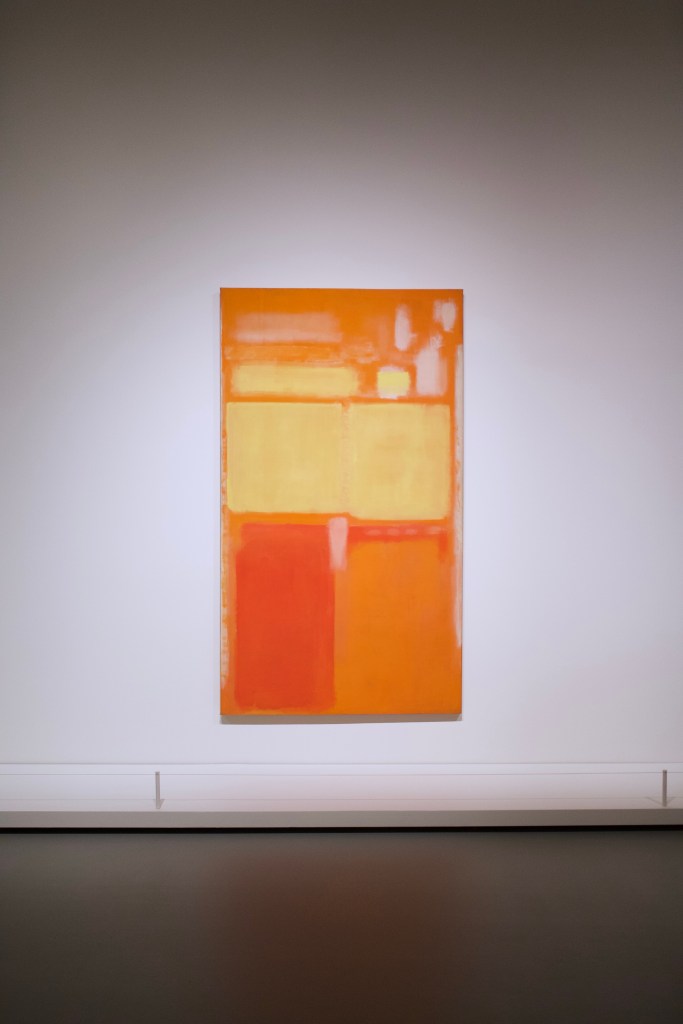
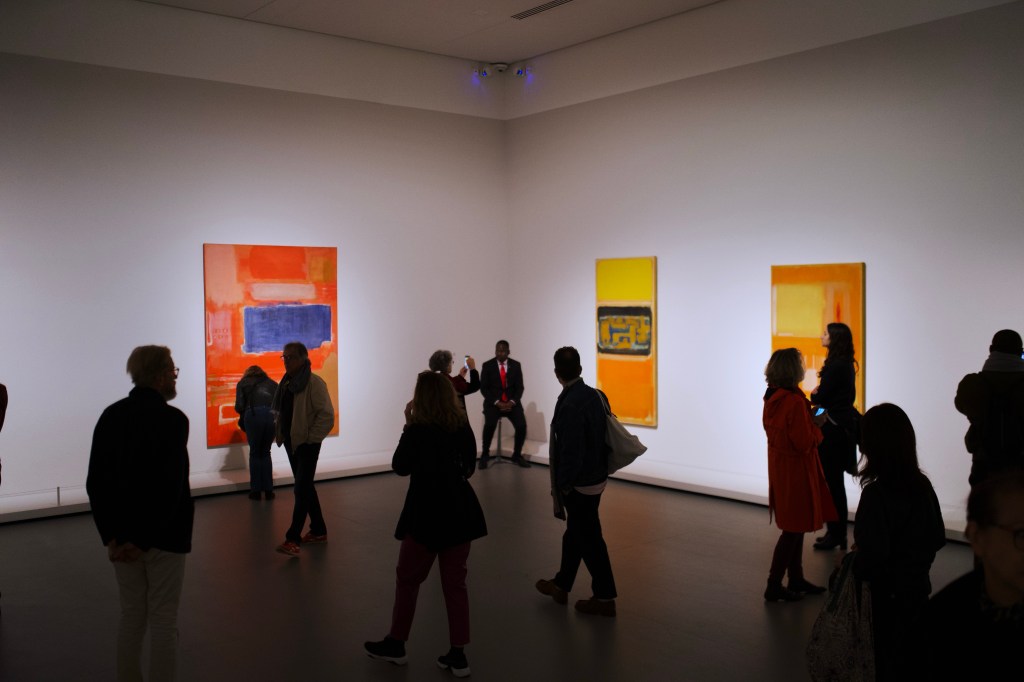
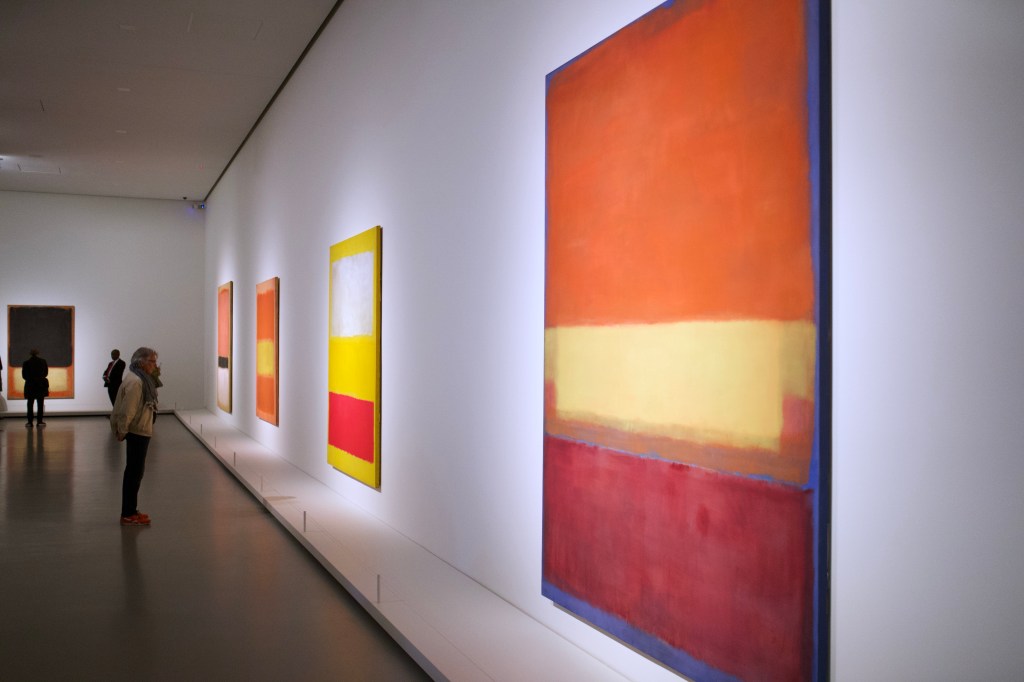
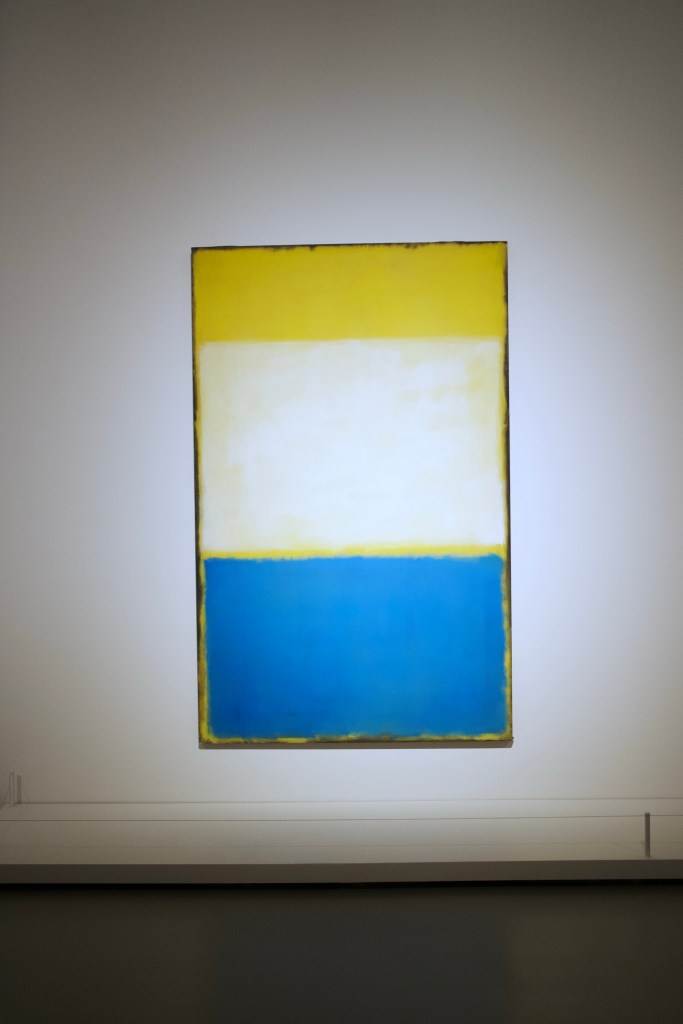
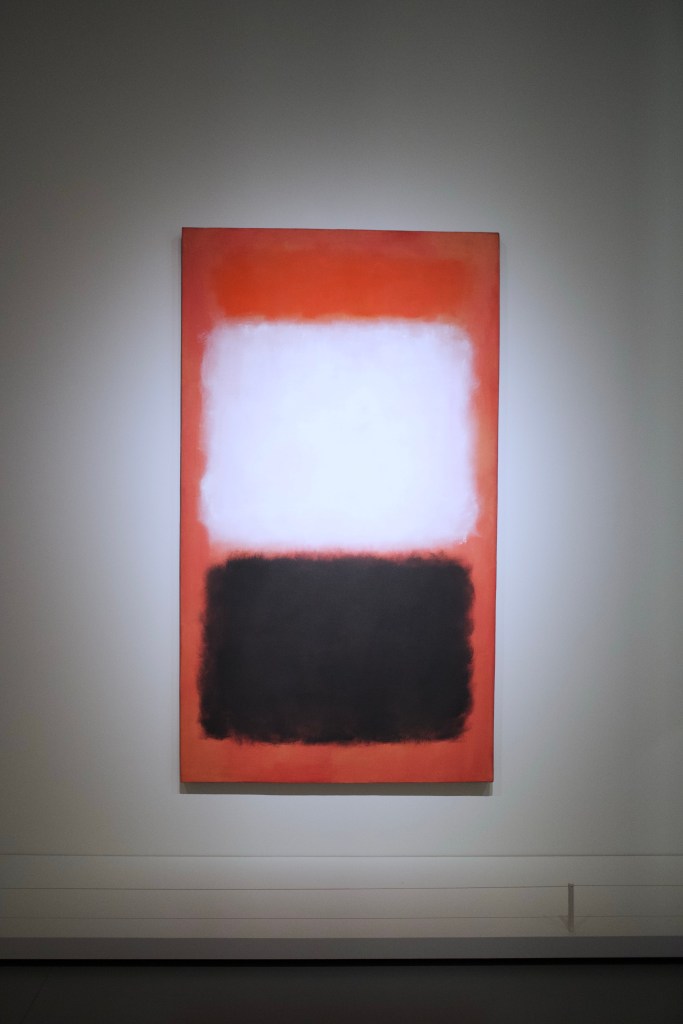
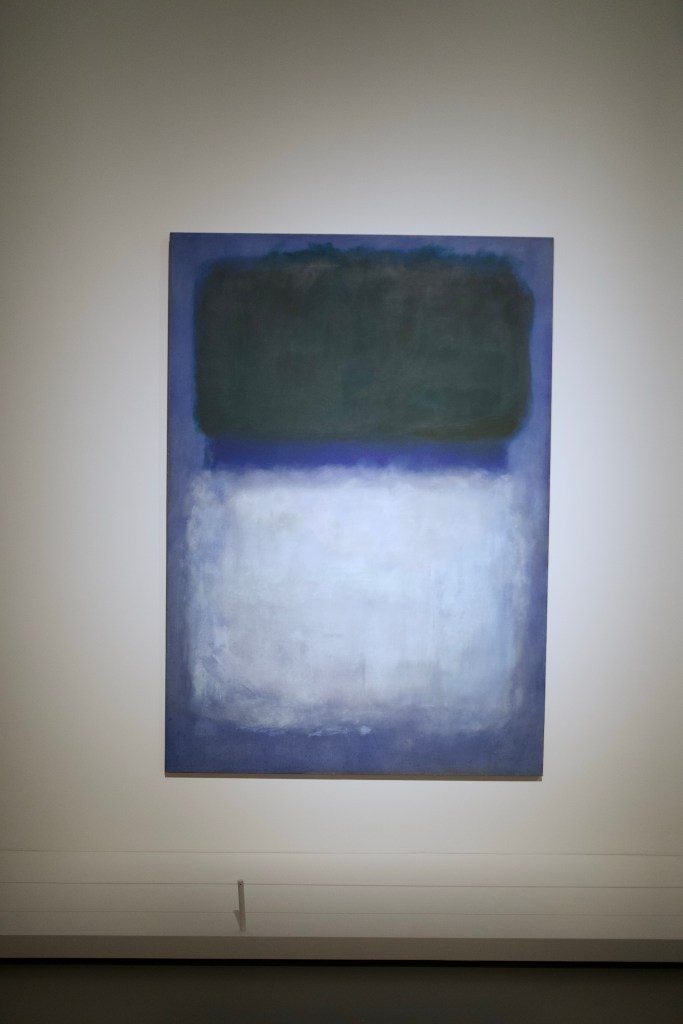
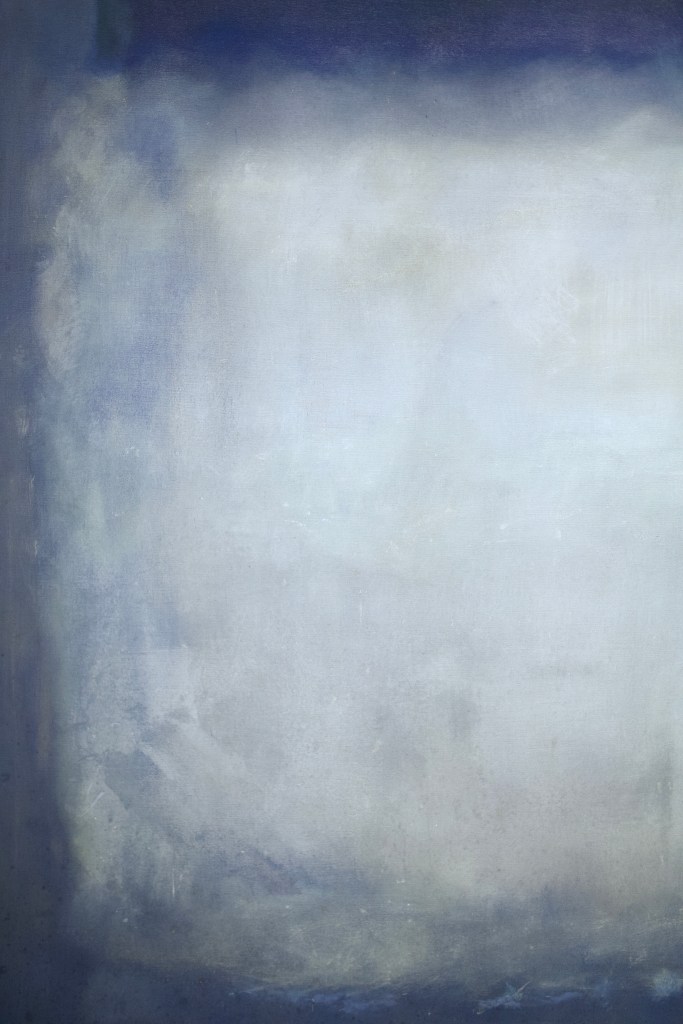
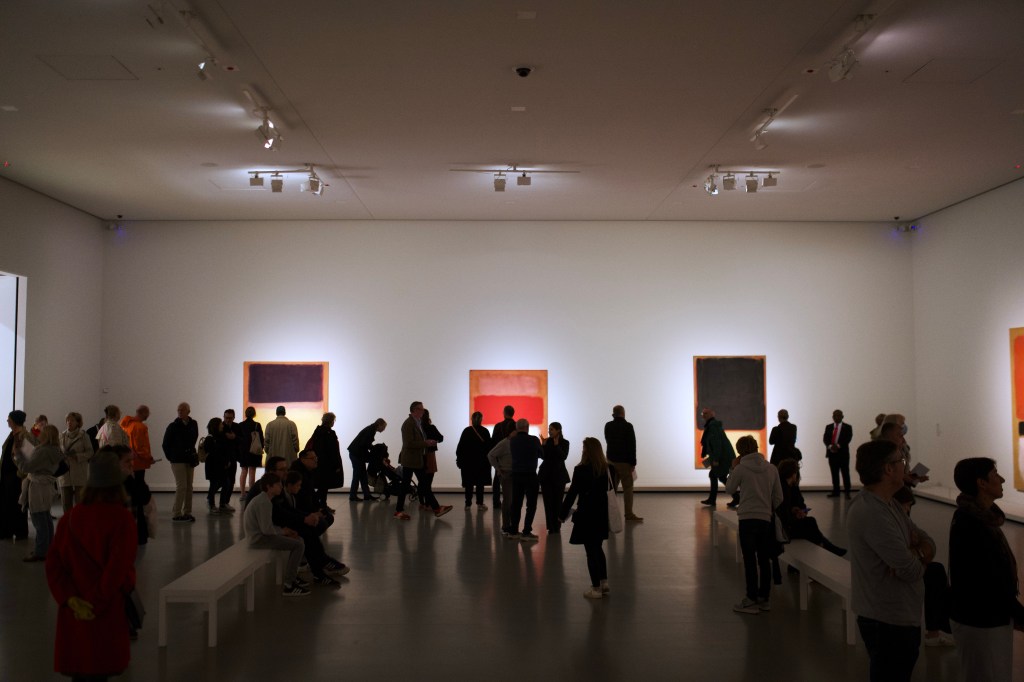
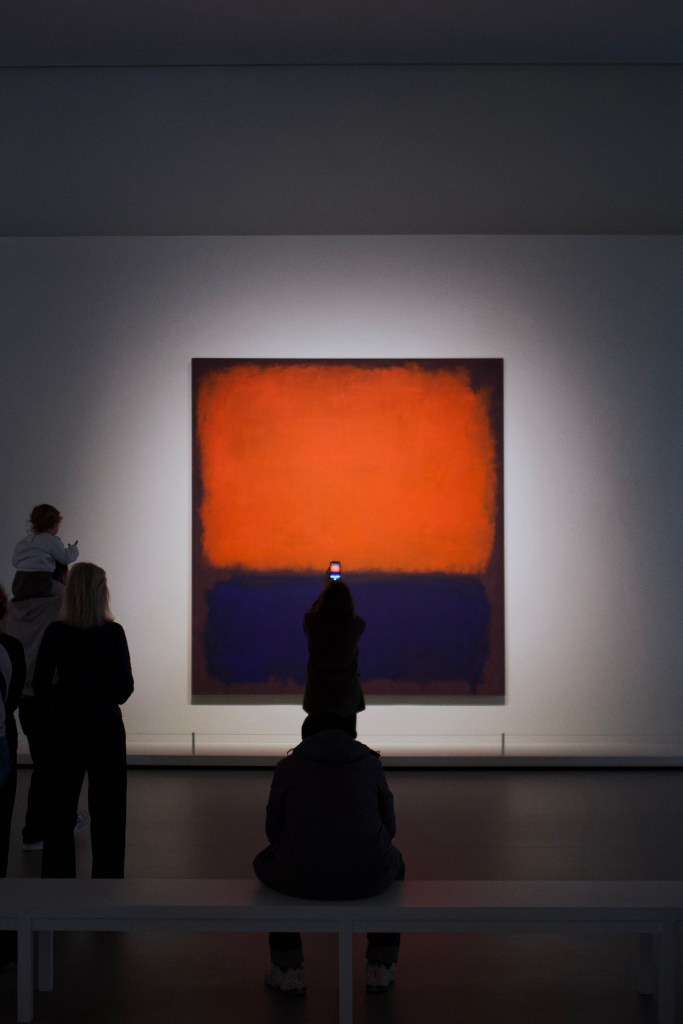
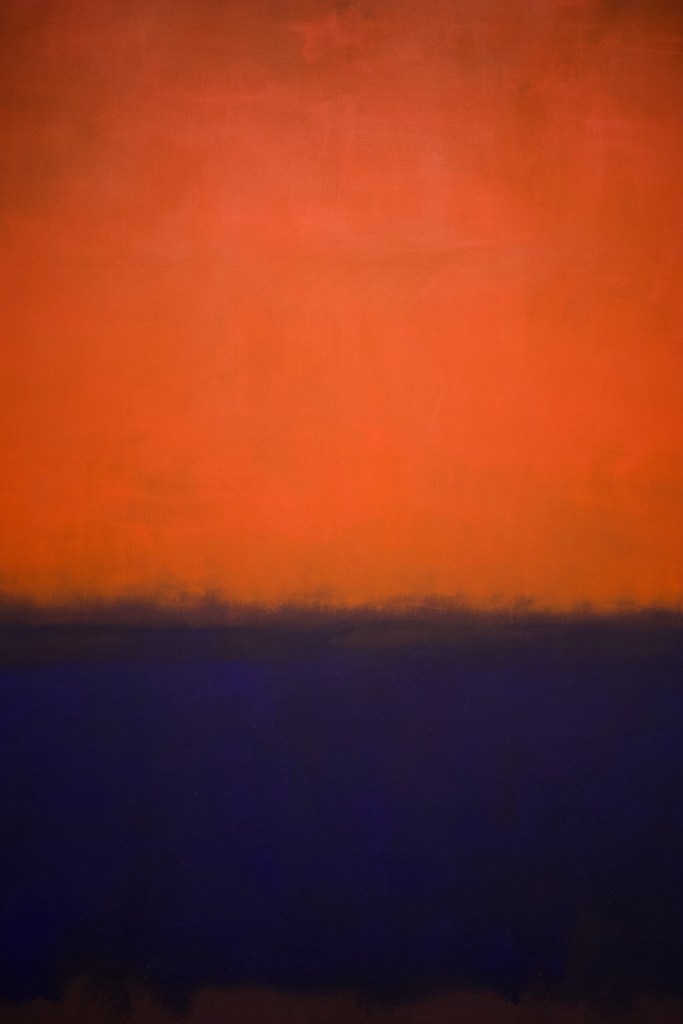
In January 1950, Mark Rothko exhibited a series of paintings at the Betty Parsons Gallery that will become his trademark for the next twenty years to come: two or three rectangular and colorful shapes, painted on a large sized frame-less canvas, and a sensation of floating or sfumato.
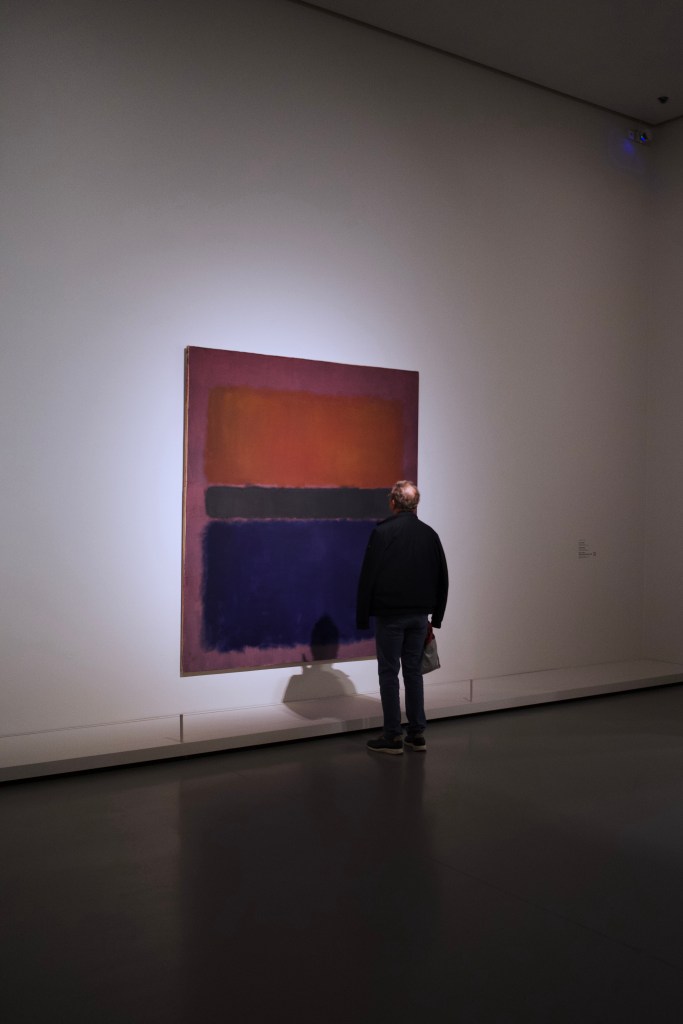
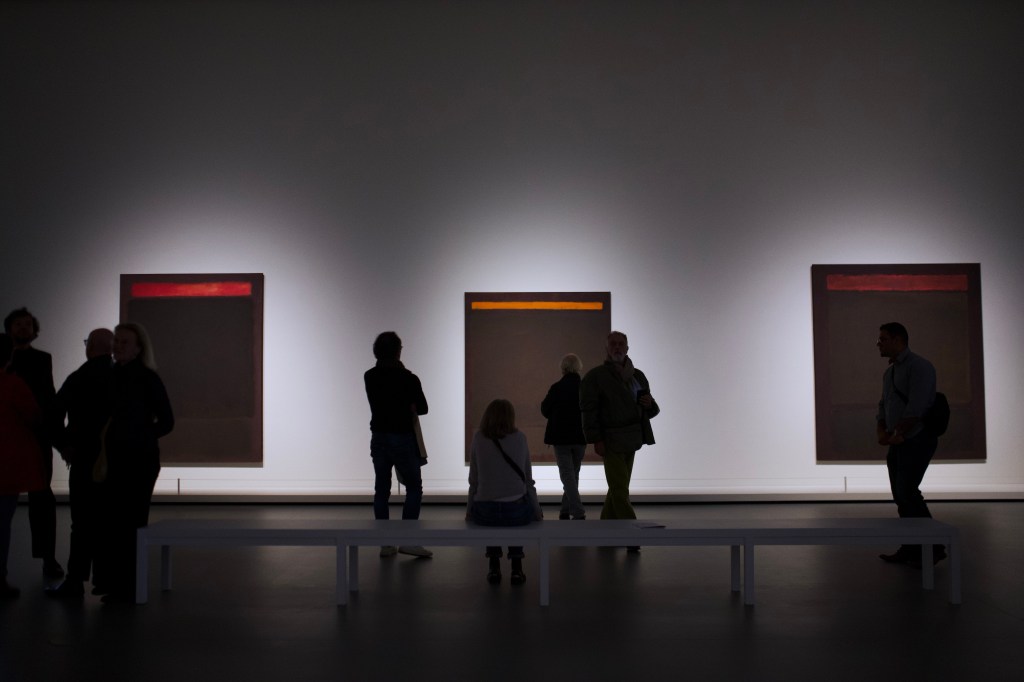
The exhibition at the Fondation Louis Vuitton respects the artist will during his life, as the paintings are hung at a low height, with few luminosity, giving to the viewer a more immersive experience.
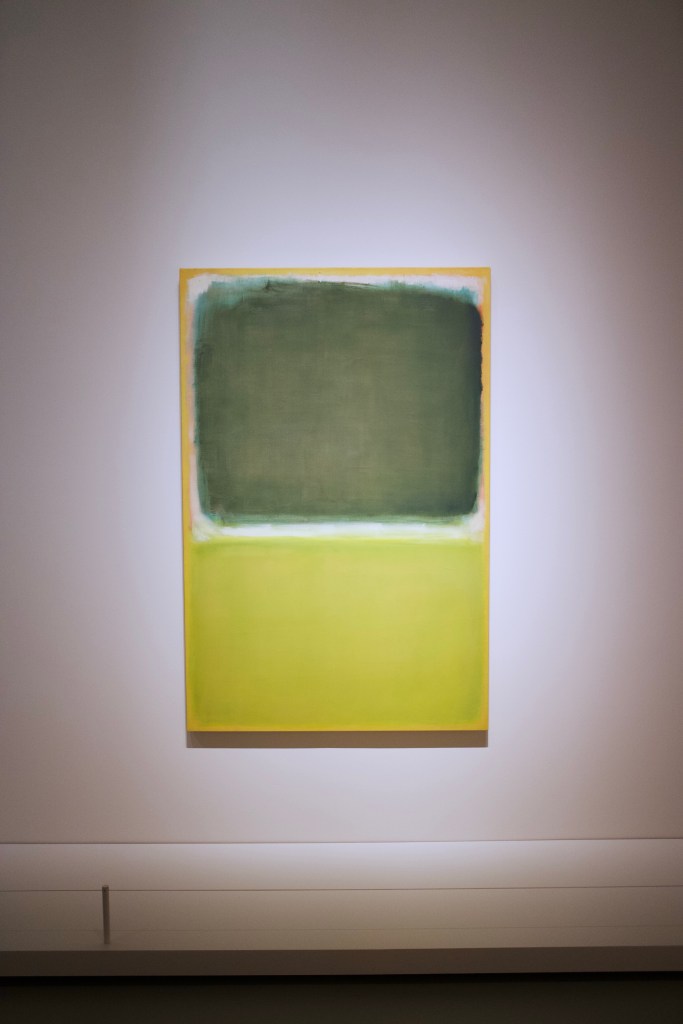
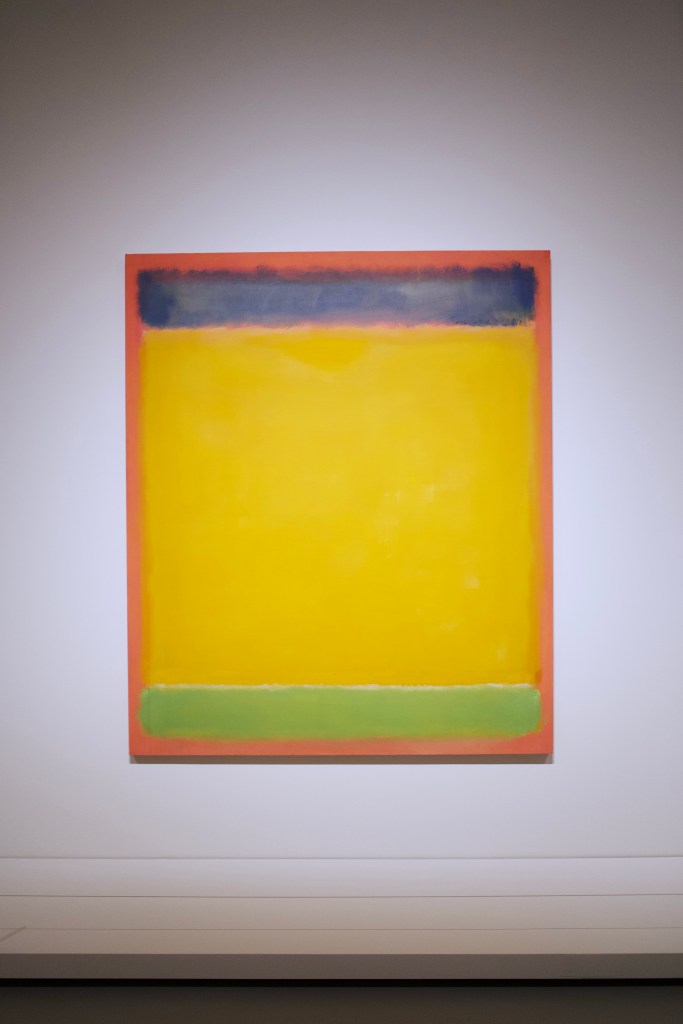
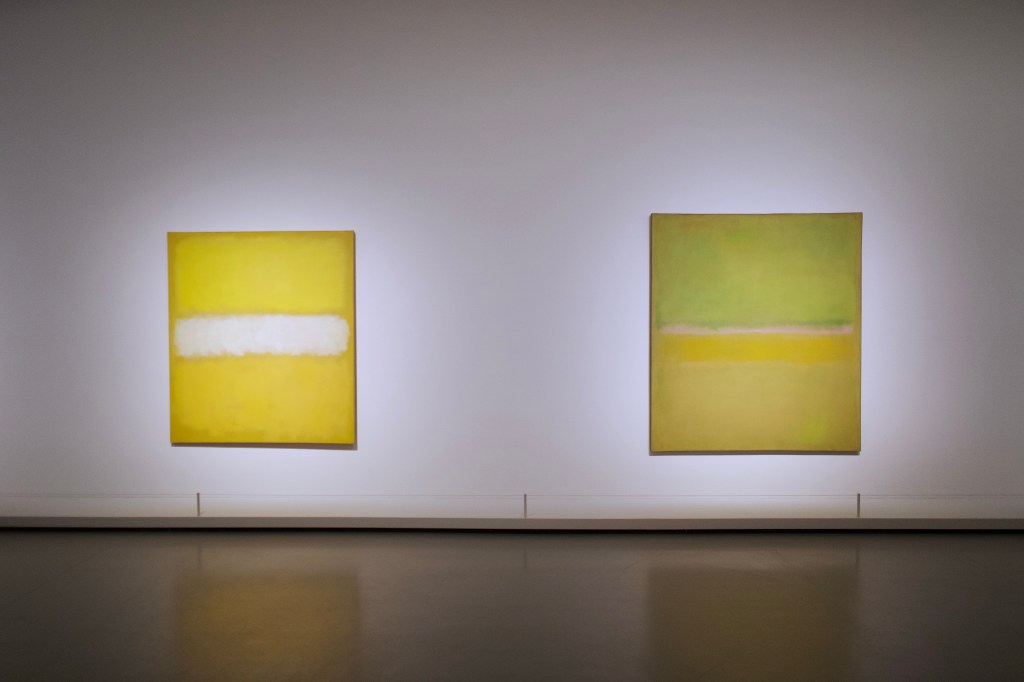
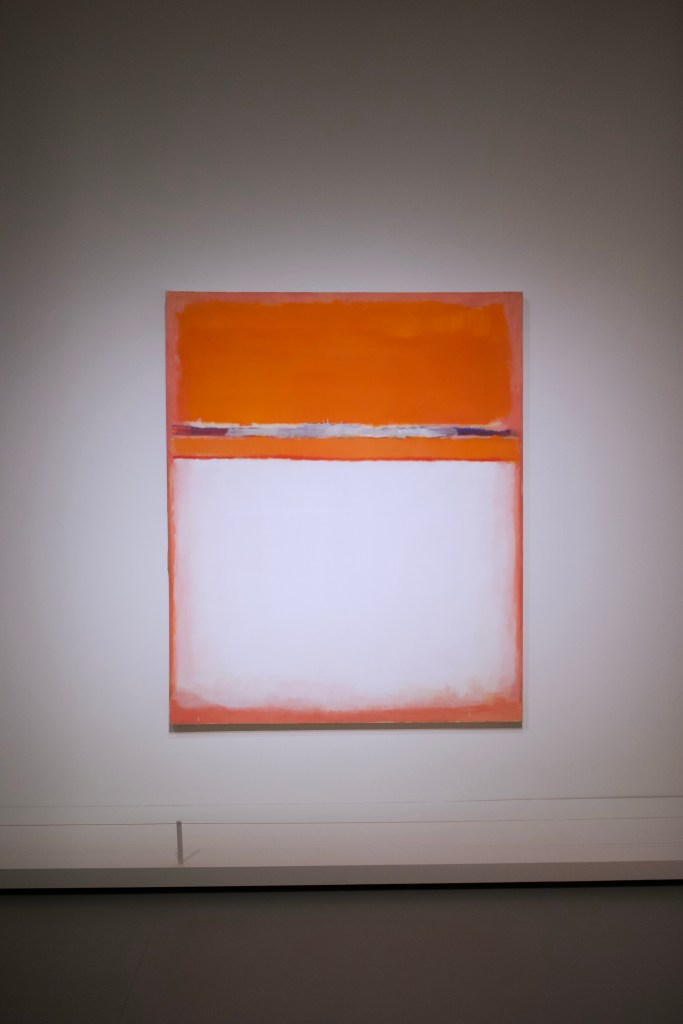
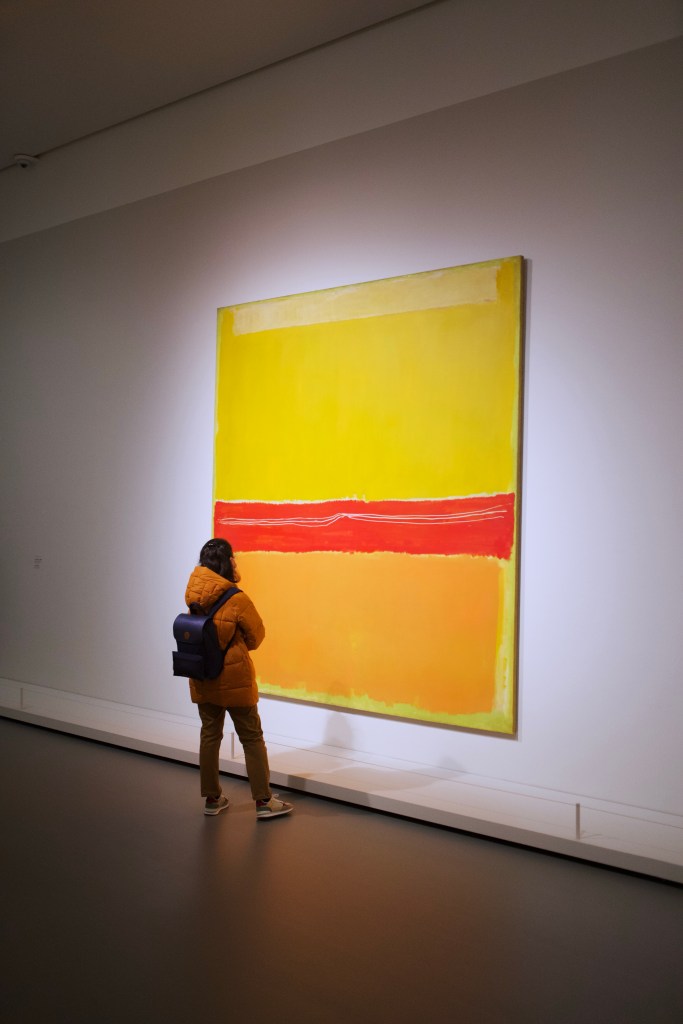
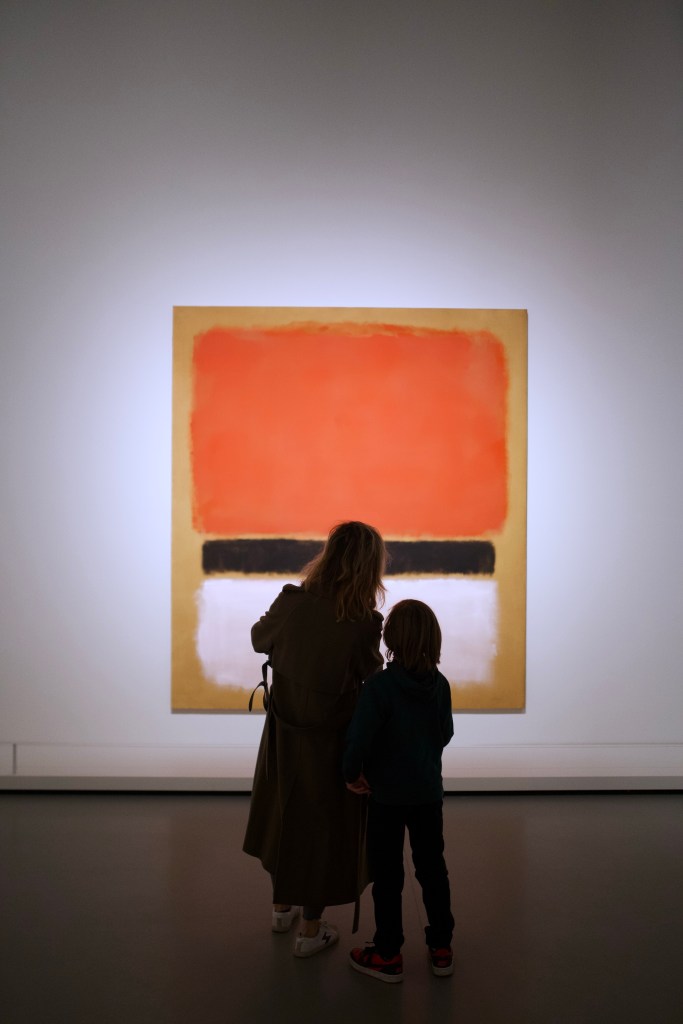
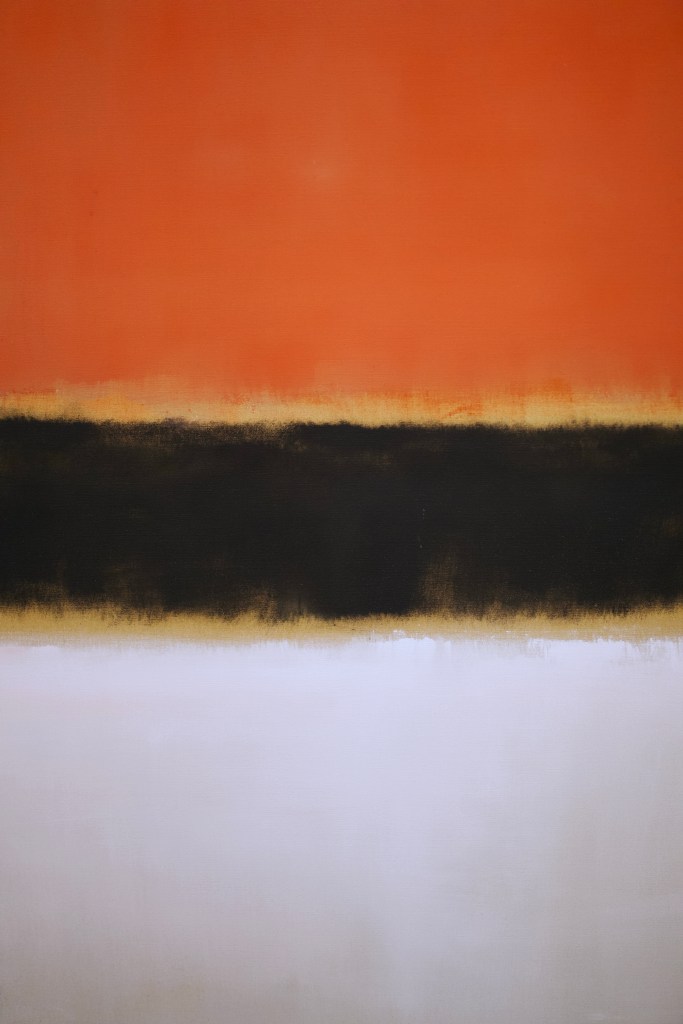
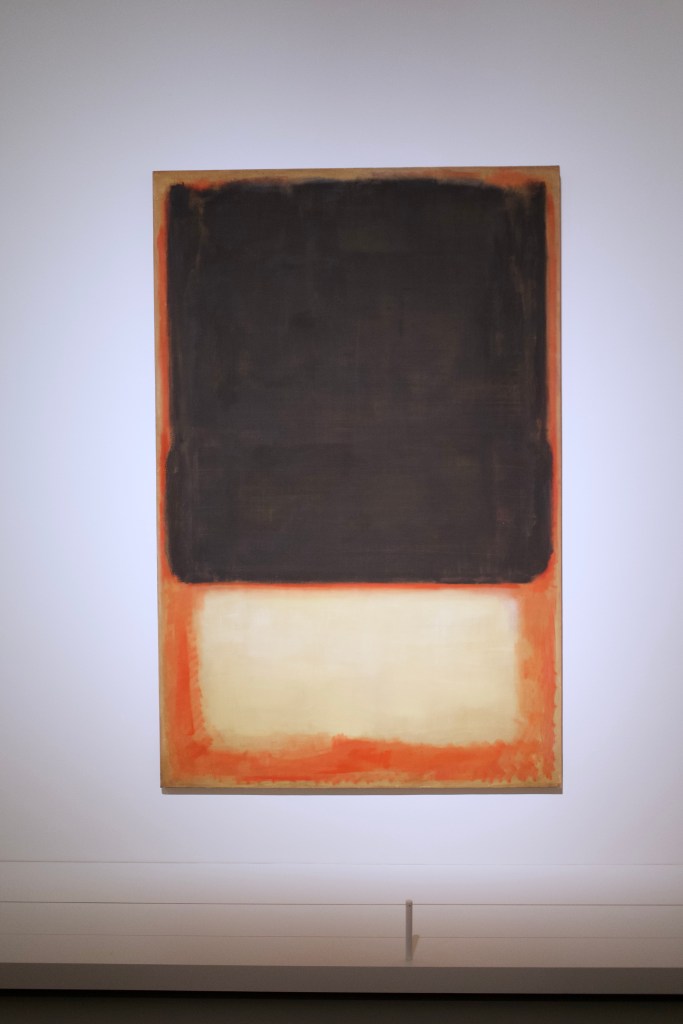
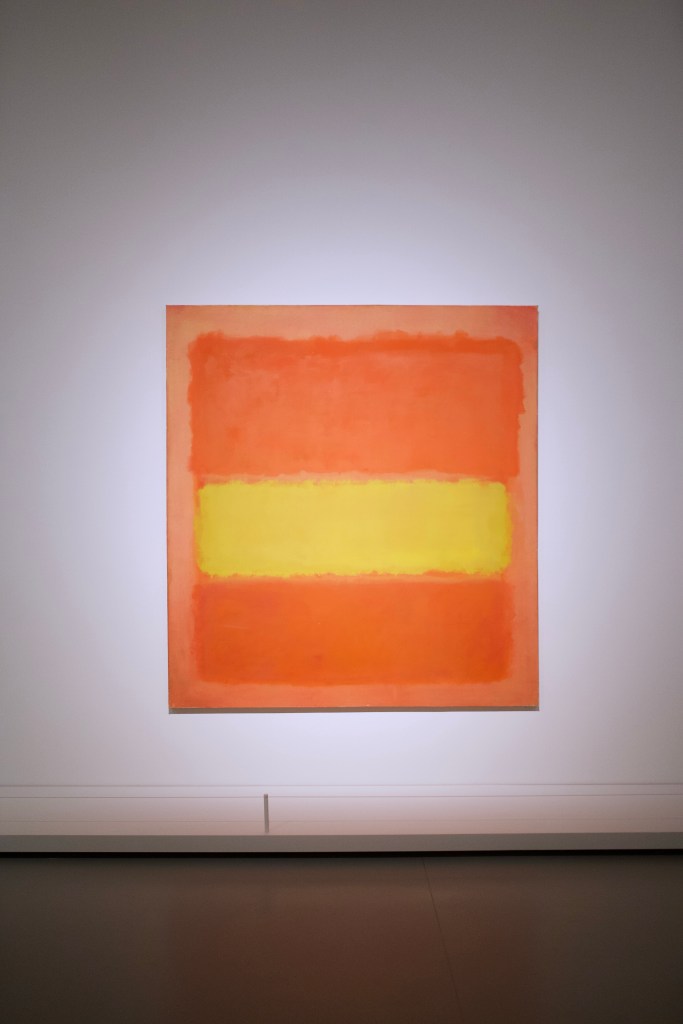
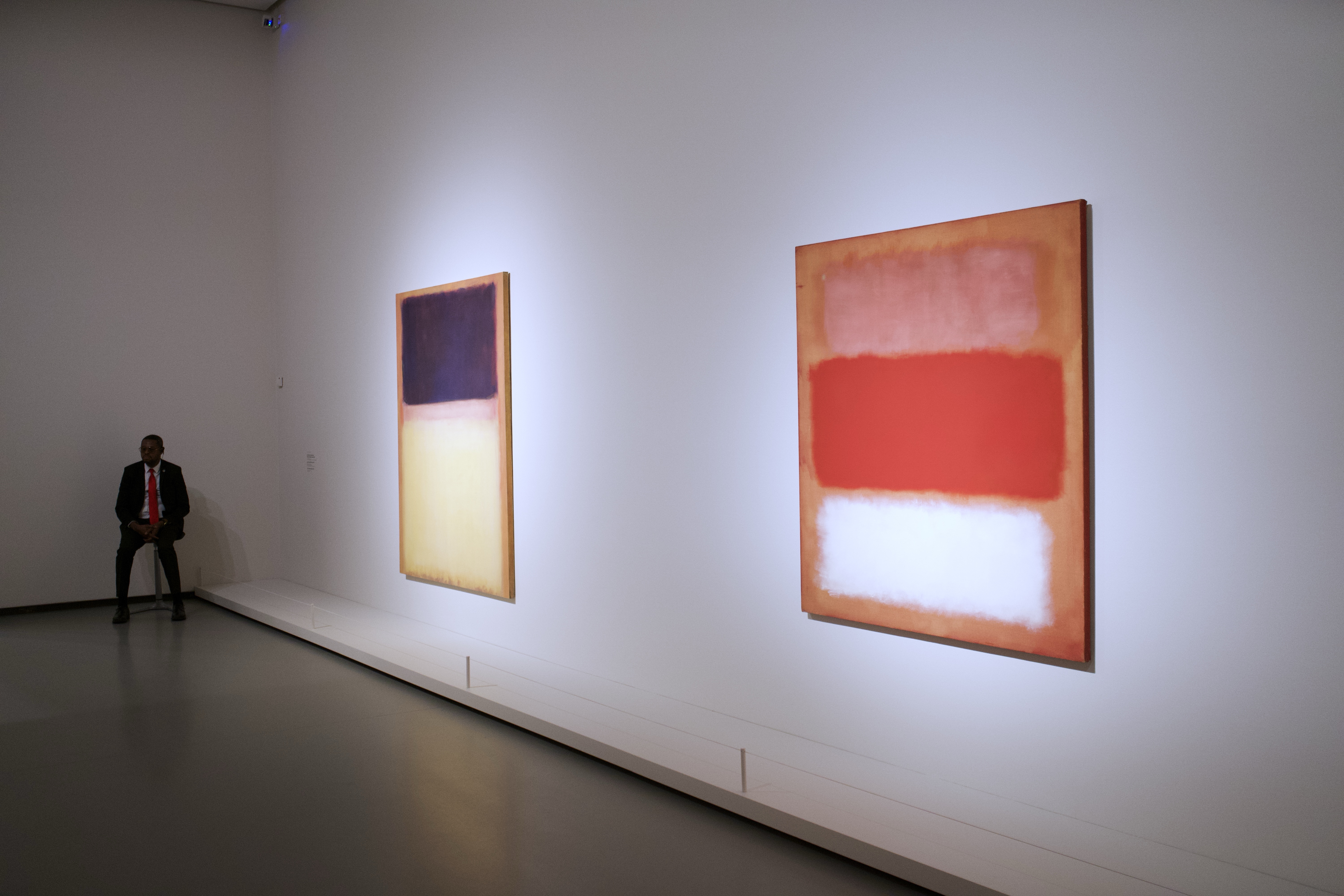
“I have been told that Mr. Rothko does not like to combine his work with any other painter.” said the American collector Duncan Phillips in 1956. Thus, he inaugurated the ‘Rothko Room’ four years later in 1960, featuring three paintings of the so-called classic period in a new building in Washington D.C. Another painting was added in 1966 in the ‘chapel’ as named by Phillips, which was the only permanent installation of Rothko’s works in a museum during his lifetime. Three of them have been lent for the Parisian exhibition.
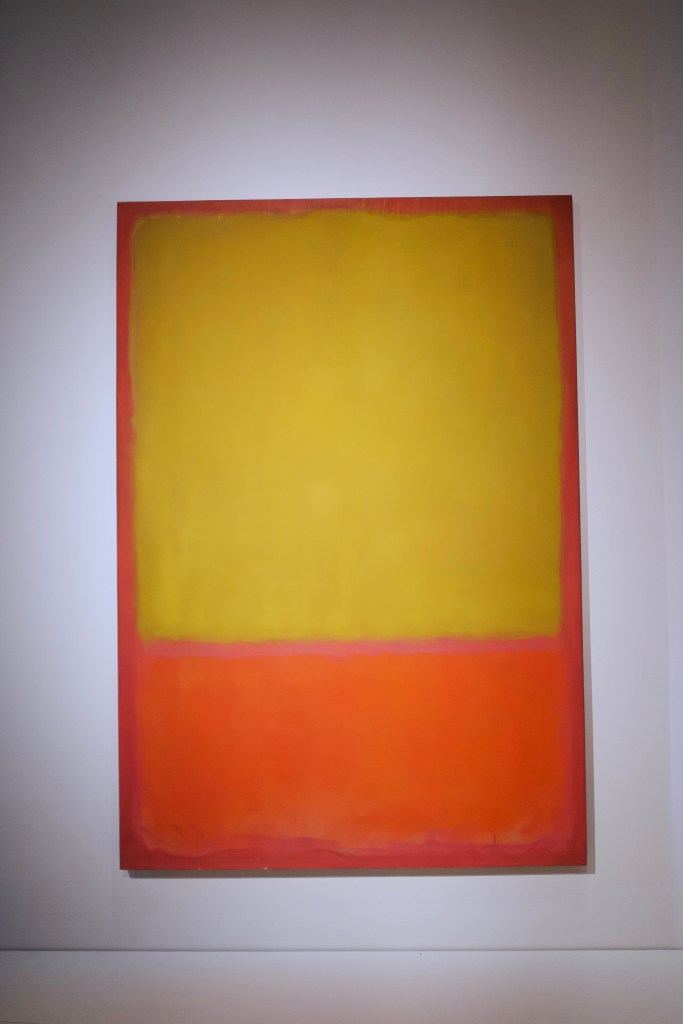
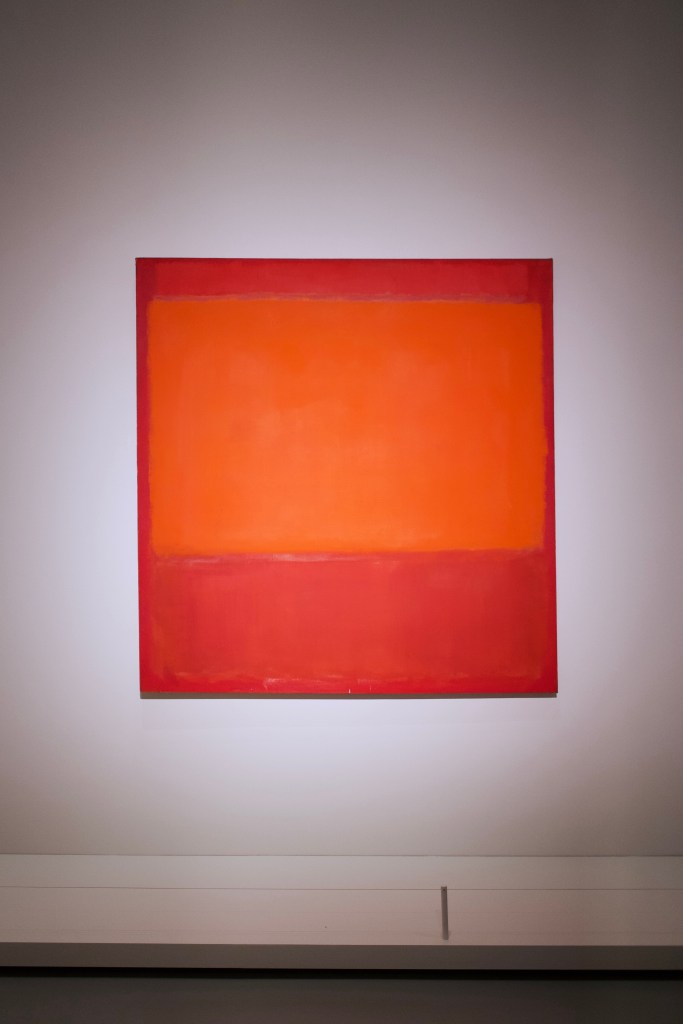
The Phillips Collection, Washington D.C.
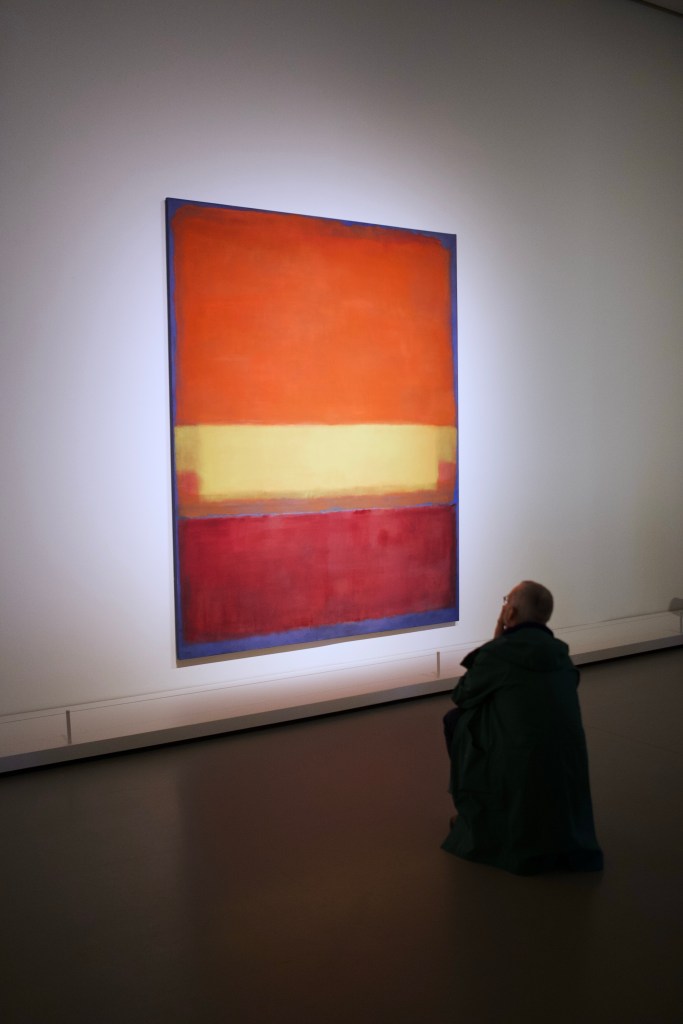
End of the 1950s and the 1960s – The Seagram Murals and Blackforms
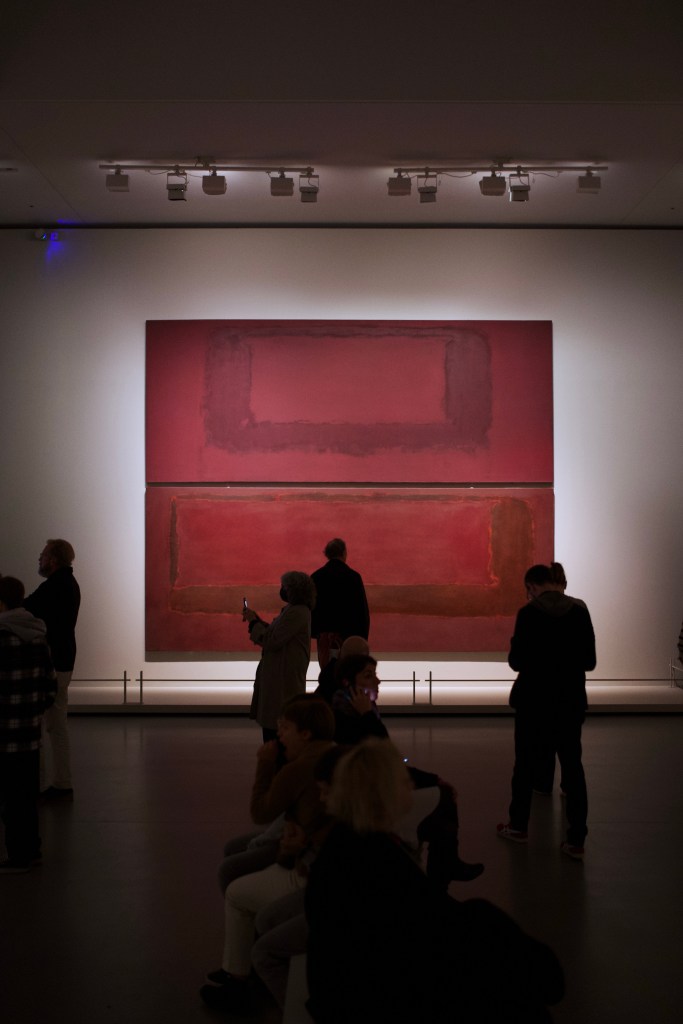
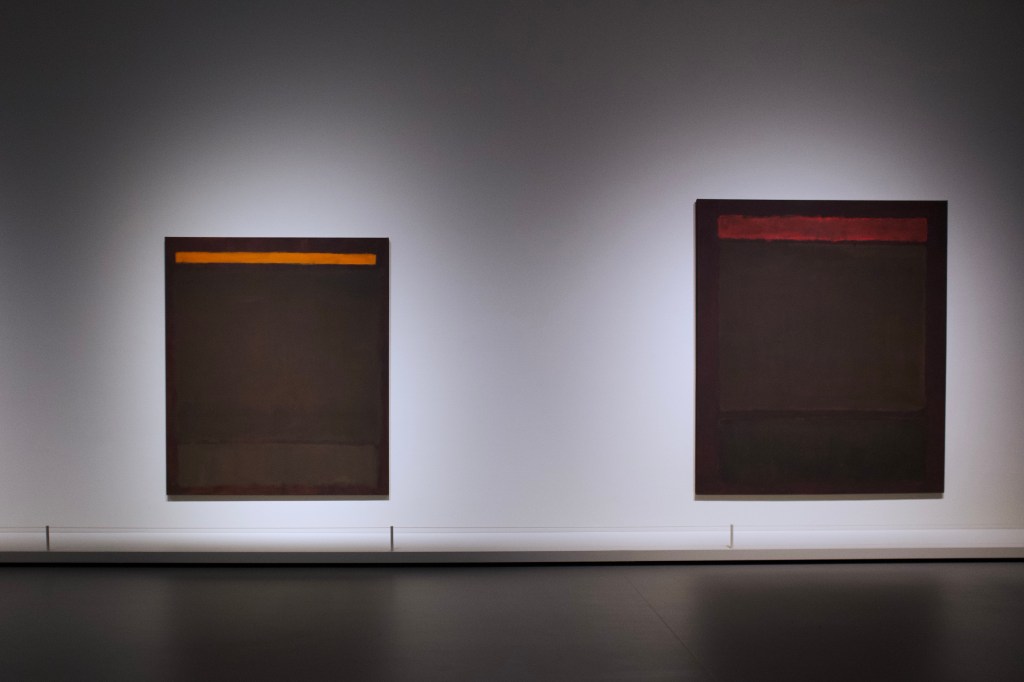
In June 1958, Mark Rothko received a commission to paint a series of murals for the Four Seasons restaurant of the Seagram Building in New-York, designed by the architect Mies van der Rohe. Enthusiast, Rothko decided to rent a new studio of the same dimensions of the dining room and began to produce a series of deep reds, crimsons and marroons compositions, in line with the darker hues he experimented since 1956. Nonetheless, as he returned from a journey in Europe, he realized that this place where the high society used to dine might not be in phase with the spirit of his work and he eventually withdrew the commission.
Although seven paintings were planned to be hung on the walls of the Four Seasons restaurant, the series made by Rothko was composed of more paintings. At the end of his life, he decided to give nine of them to the Tate in London, where he was impressed by J. M. W. Turner paintings, with specific instructions regarding their installation. The paintings arrived the day of his death and the Seagram Murals are exhibited since then in the Rothko Room of the museum. Thus, the exhibition in the Fondation Louis Vuitton is a rare occasion to see them outside the United Kingdom.
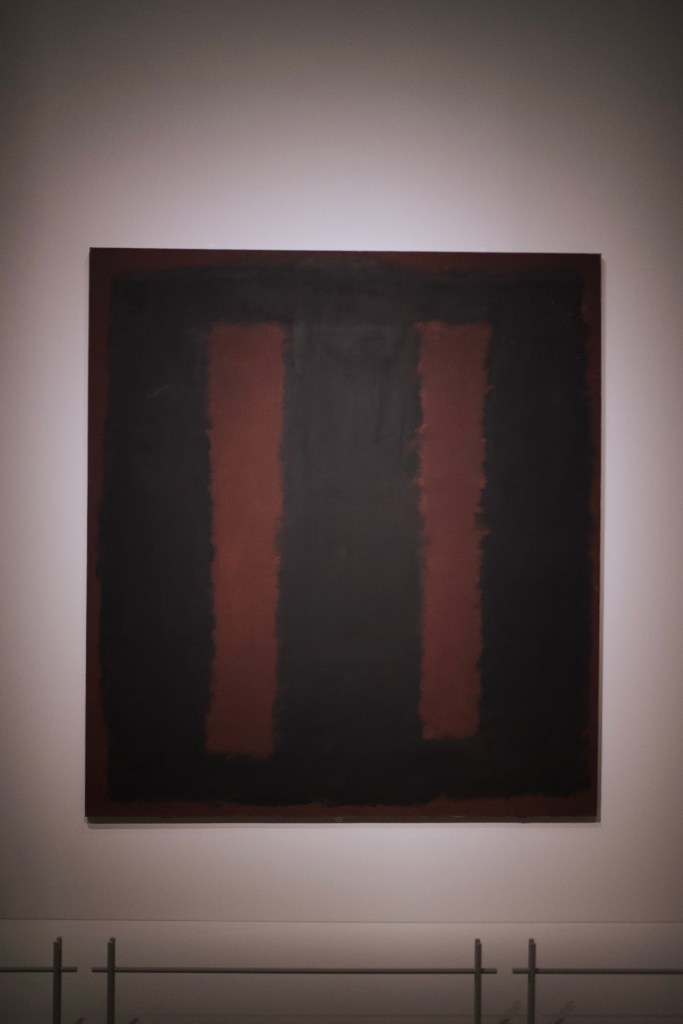

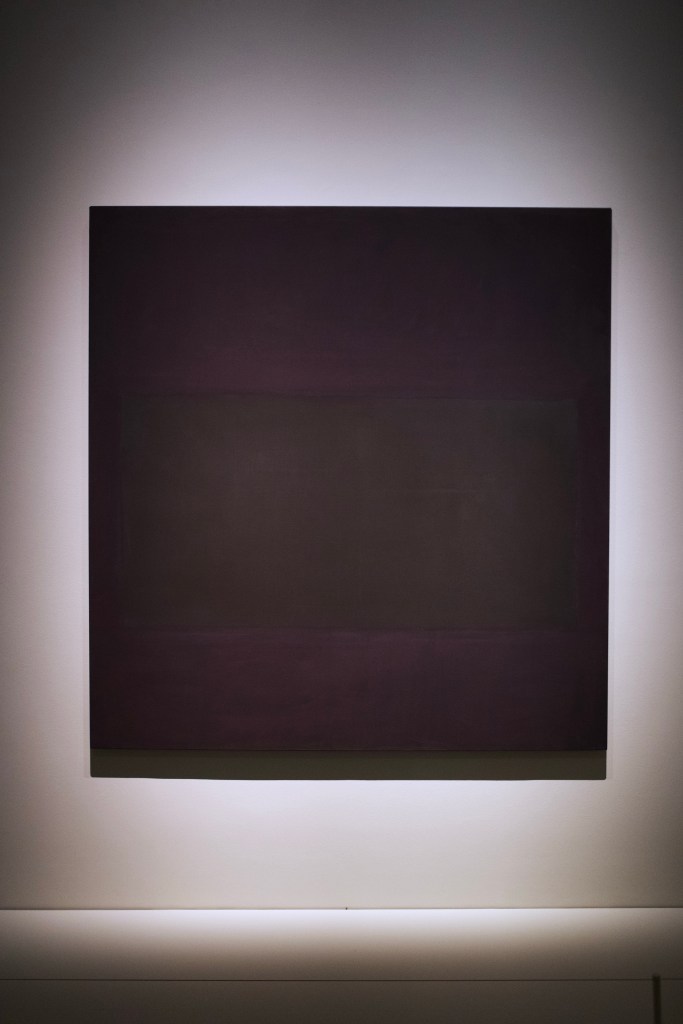
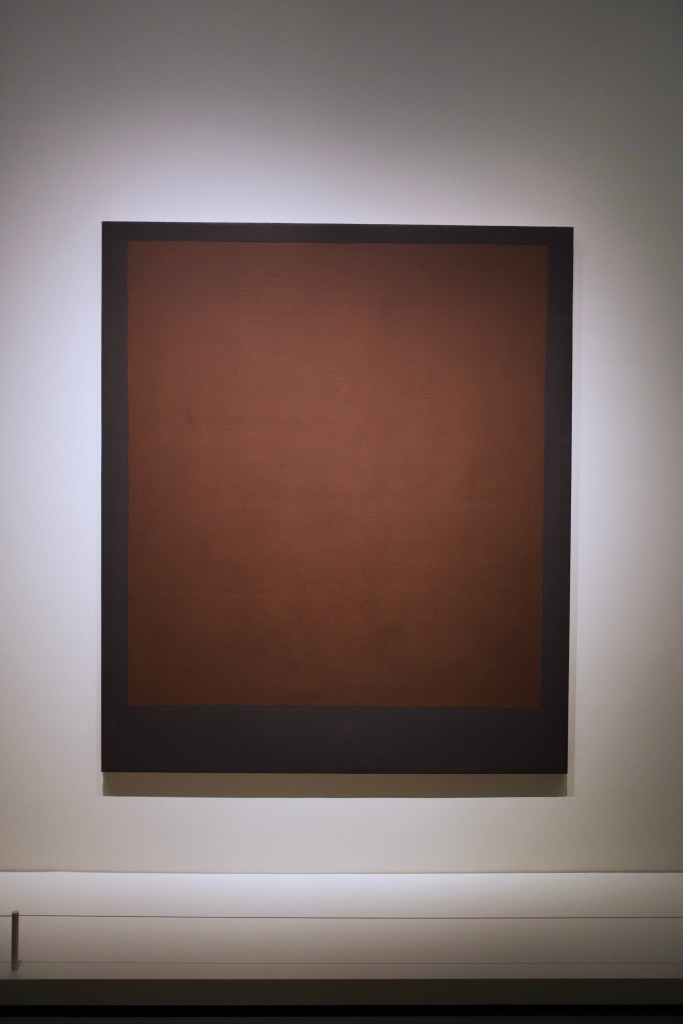
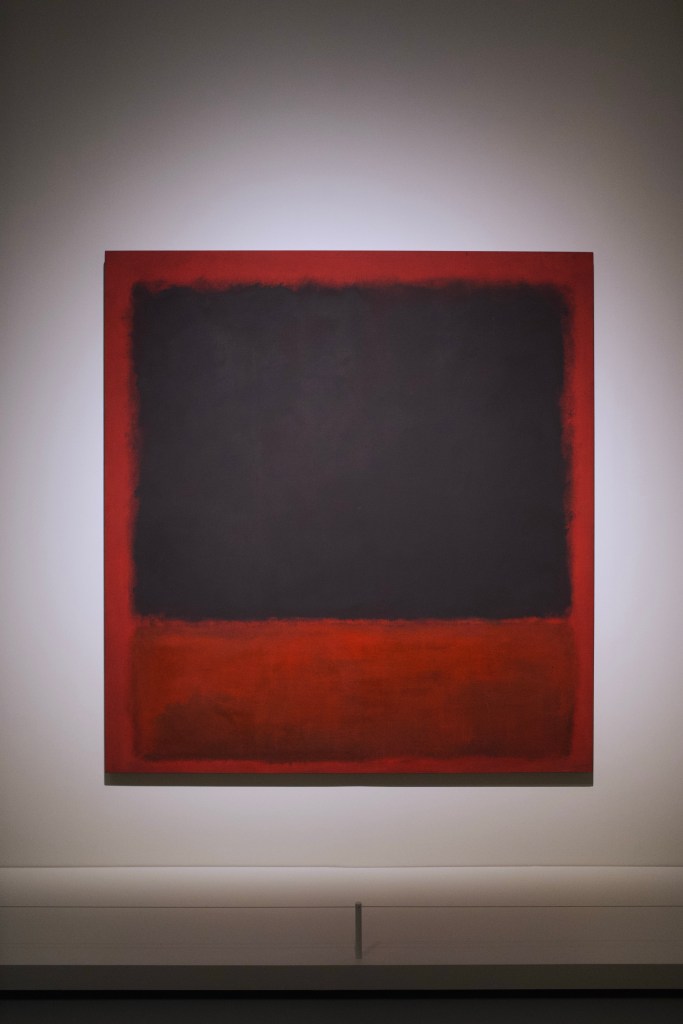
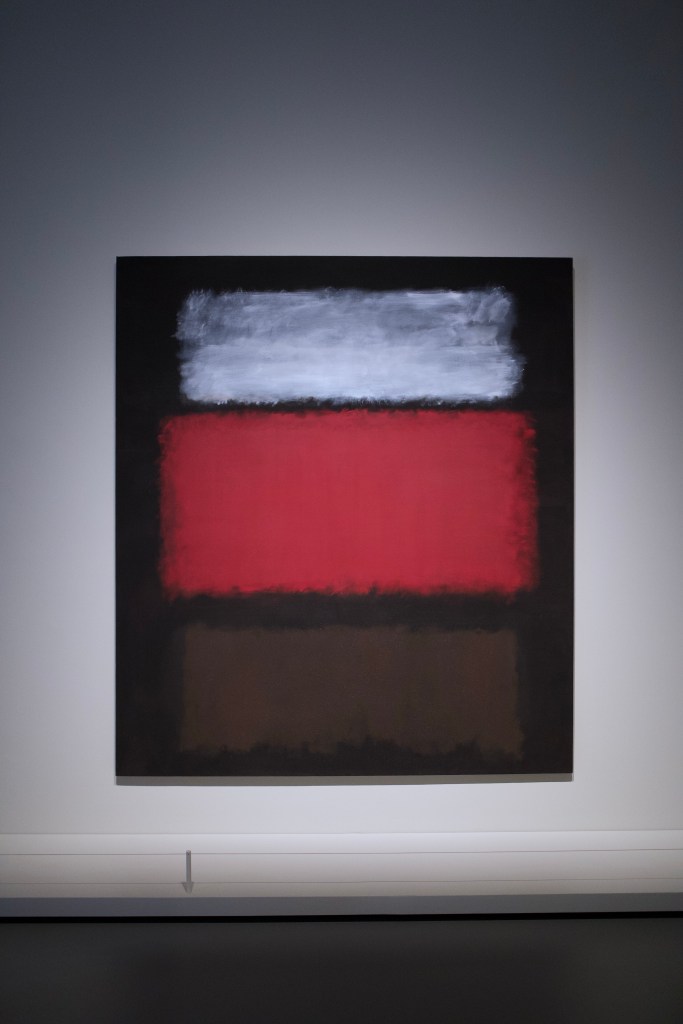
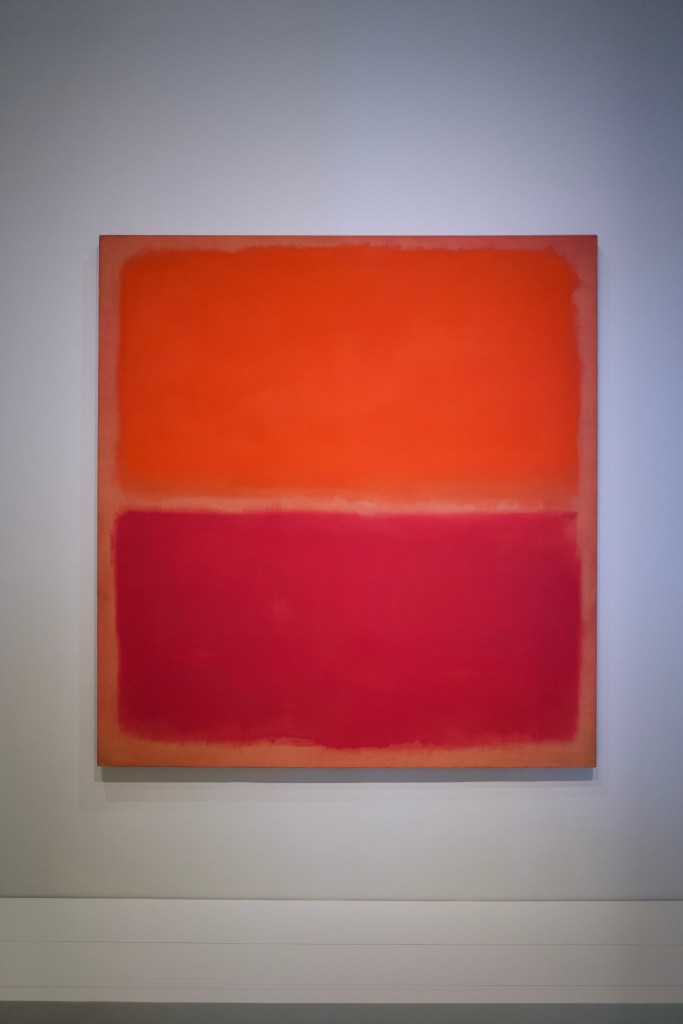
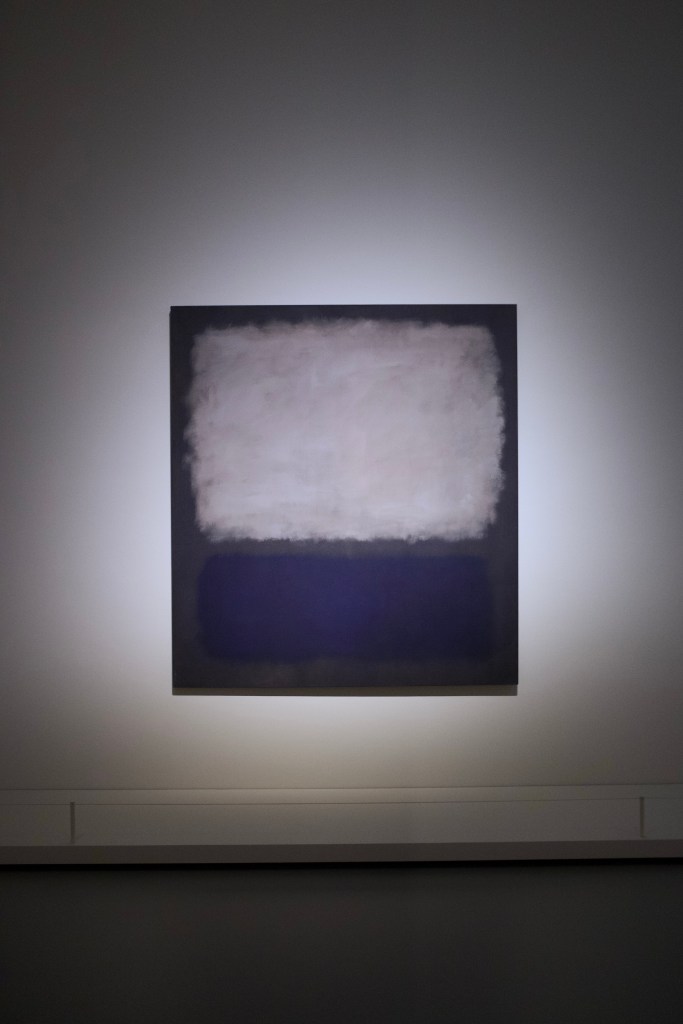
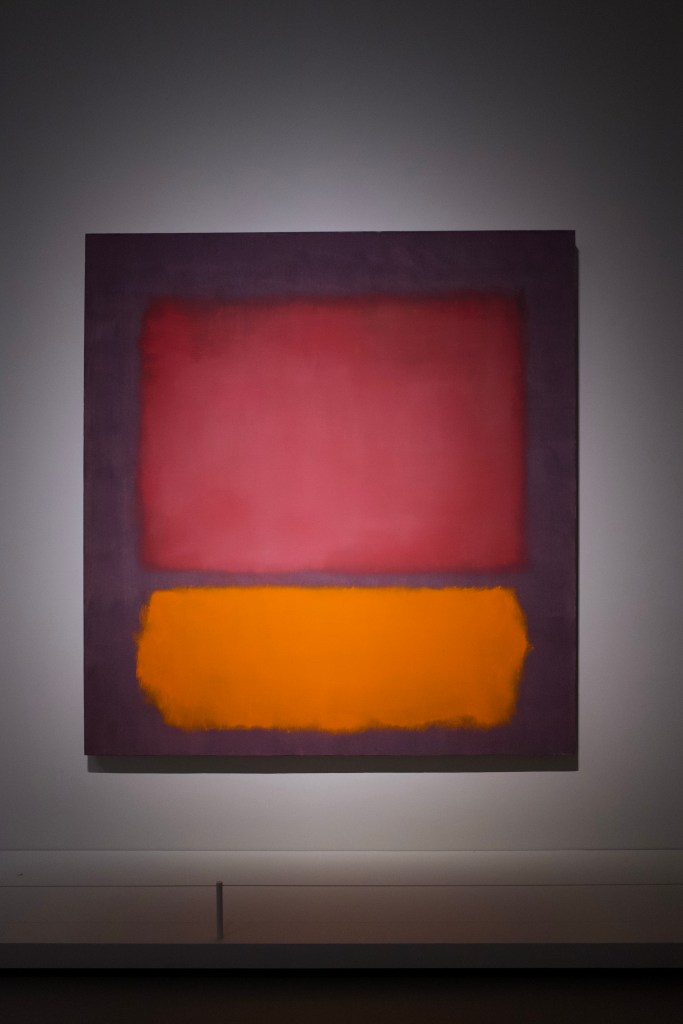
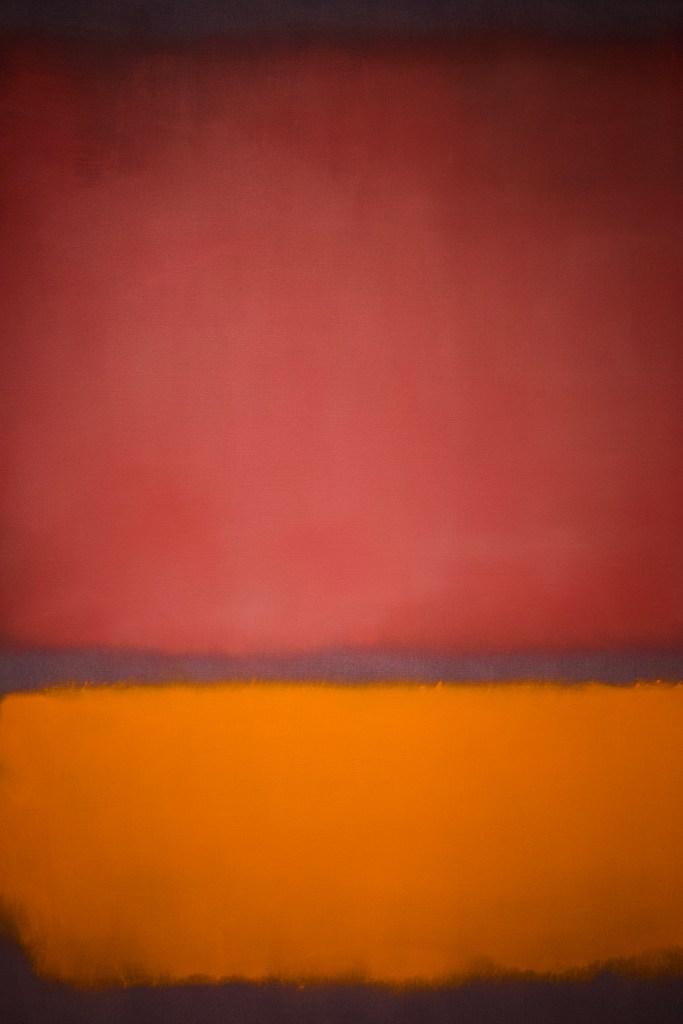
In the beginning of the sixties, his paintings became even darker, mixing reds, purples and browns with black, for his works known as Blackforms. This approach led him to the black compositions he realized for the Rothko Chapel commissioned by Dominique and John de Menil, a couple of French art collectors who moved in Texas, and inaugurated one year after his suicide in 1971.
The Black and Gray series and Giacometti
In March 25th and 26th 1967, the UNESCO’s Committee of Art Advisors decided to commission “a large mural measuring roughly 30 square meters [to] cover the east wall of the bar [of the new building of the UNESCO in Paris]. The work should be visible from three levels, including the large entrance hall… the Committee felt that work of this kind ought to be entrusted to one of the American artists who were used to handling large areas, and it recommended in order of preference: [Mark] Rothko, [Kenneth] Noland, [Robert] Indiana, [Ellsworth] Kelly.“1
Rothko had been contacted two years later, in March 1969, to realize this work. In the plan of the Comittee, a sculpture of Giacometti, an artist that Rothko liked and respected, was supposed to be set in the same room. Nevertheless, he turned down the offer, due to health issues and perhaps because the commission concerned a single large painting whereas Rothko would have preferred several works. Eventually, Ellsworth Kelly’s painting, Blue Green (1969), had been hung on the wall of the cafeteria in May 1970, where it is still today.
The last room of the show proposed to see this missed opportunity between these two major artists of the second half of the twentieth century. Thus, the Black and Grey series made in 1969-1970 at the end of his life – and which was inspired by Giacometti’s work, according to Robert Motherwell – meets the Homme qui Marche I and the Grande Femme II of the Swiss sculptor, to close this outstanding retrospective.
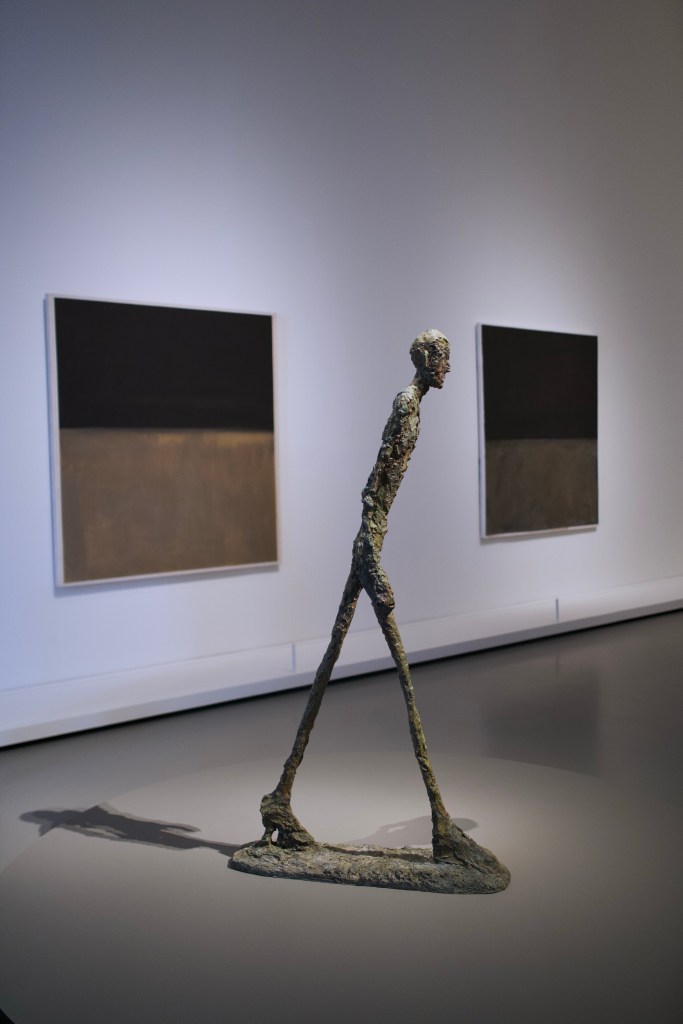
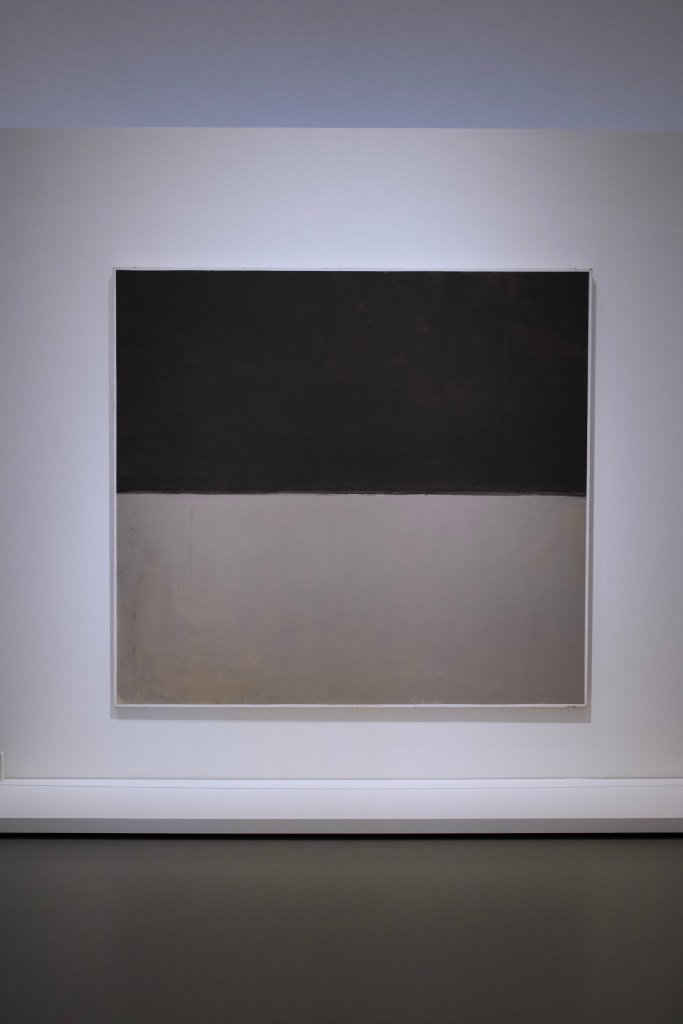
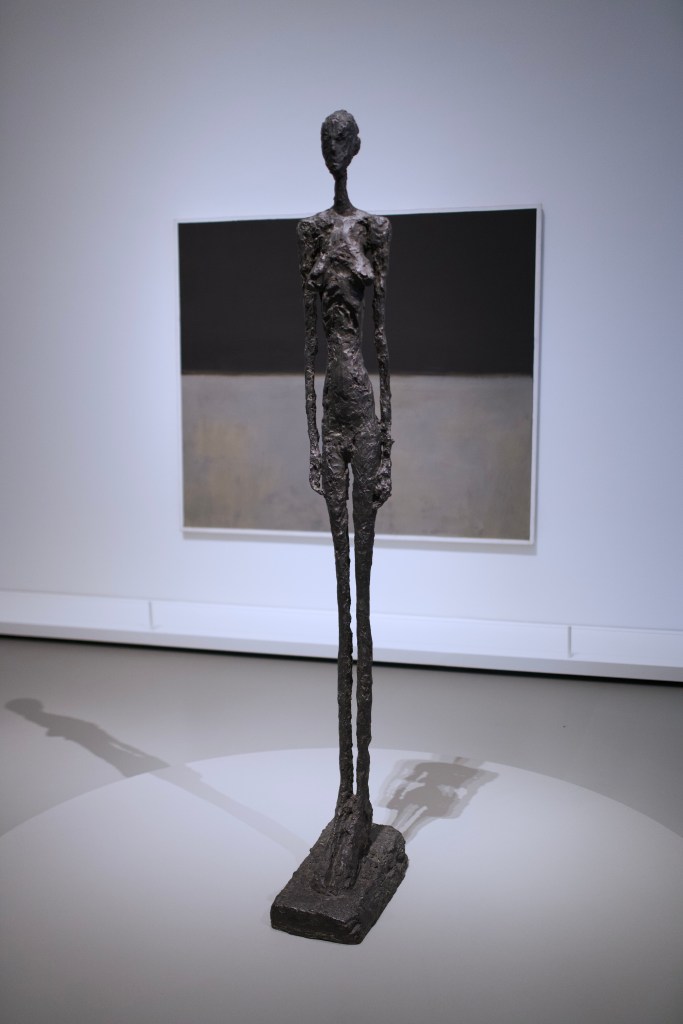
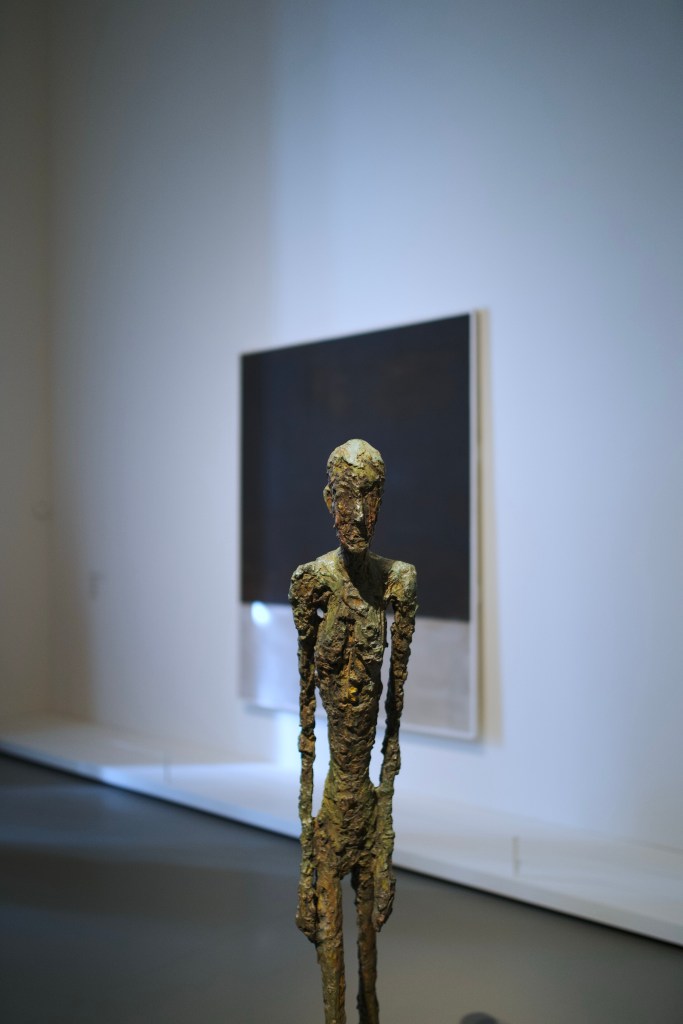
Untitled (1969) ; Untitled (1969) ; Homme qui marche I (1960), Alberto Giacometti
Untitled (1969); Grande Femme II (1959-1960), Alberto Giacometti,
Untitled (1969)

1 Minutes of the meetings of March 25 and 26, 1967. DIR/GES/23, UNESCO Archives.
Sources:
- Exhibition catalogue
- Un Watergate de l’art ?, article published in Le Monde on September 7th 1978 (in french)
- Exposition Mark Rothko : Ses tableaux parlent une langue universelle qui n’a pas besoin d’explications, article published in Le Monde on October 20th 2023 (in french)
Photos credits: @elegantinparis
 Elégances Parisiennes