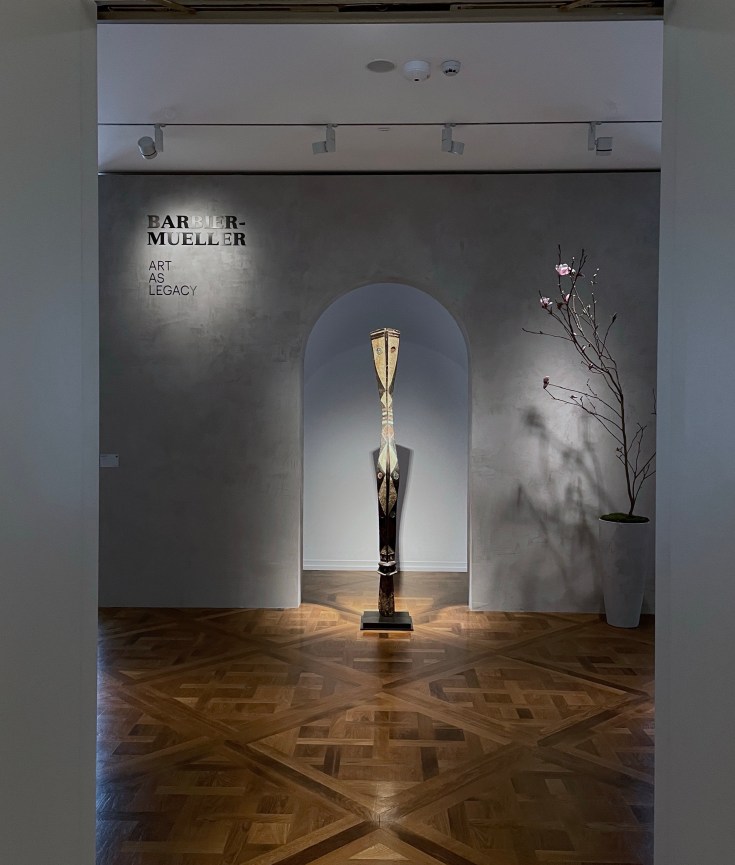

After auctionned the collections of Michel Périnet (2021), Béatrice and Patrick Caput (2022) and Jean-Louis Danis (2023), Christie’s Paris organized one of the most important sale of African and Oceanic art in these recent years. With a dozen of ‘price on request‘ lots (e.g. estimated at over one million euros) and several other with six figures prices, the sale named ‘Art as legacy‘ has broken records with a total sale amount of 73 millions euros (including fees) on March 6th 2024, for the one hundred exceptional works from Africa and Oceania listed in the catalogue.
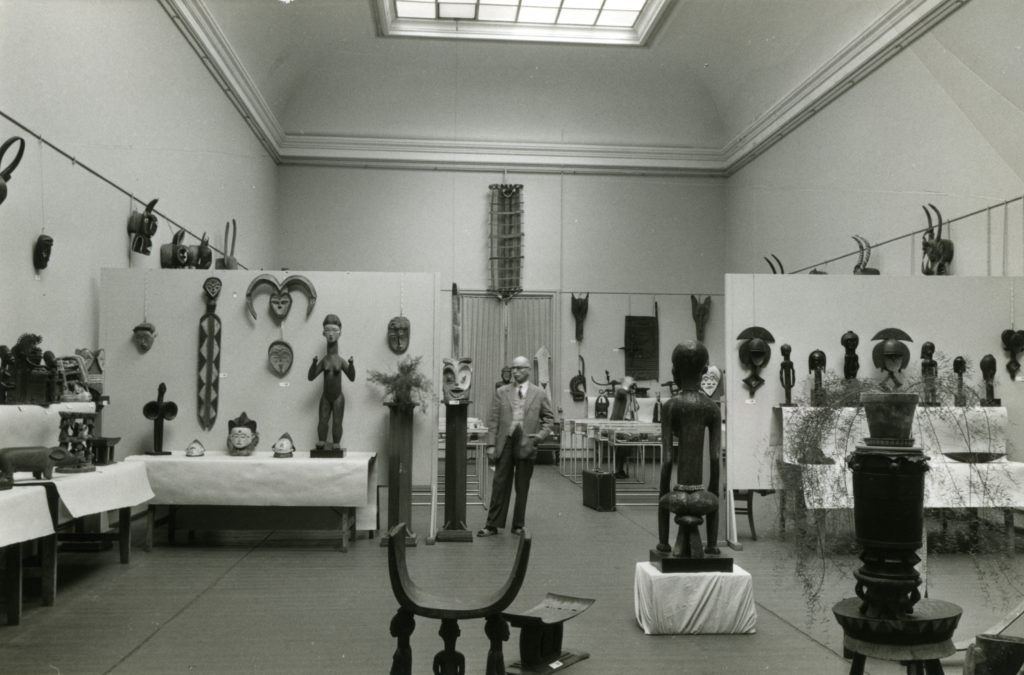
The Barbier-Mueller collection has been gathered by the well-famous Swiss art enthusiasts Josef Müller (1887-1977), his daughter Monique Müller (1929-2019) and his son-in-law Jean-Paul Barbier-Mueller (1930-2016). The first had been a renowned art collector, buying Cézanne, Renoir or Picasso paintings in his twenties and attending the gallery of Ambroise Vollard as he was living in Paris. Son of a small industrialist in Solothurn, in Switzerland, he was orphan at the age of six. In 1929, he married and had a daughter, Monique. A few years later in the mid-1930s, he divorced and went to live on the boulevard Montparnasse with his daughter, in the same neighborhood as Nicolas de Staël or his compatriot Diego Giacometti, who made two busts of him. He started to collect objects from Africa and the South Seas, visiting ‘the flea market, where he goes every Saturday, together with his young daughter, with two suitcases that he brings back full‘ reminded his son-in-law. In 1942, during the Second World War, due to health problems, he returned to live in Solothurn. A reserved and modest man, Josef Müller only exhibited his African collection in the museum of his hometown in 1957 at the age of 70.
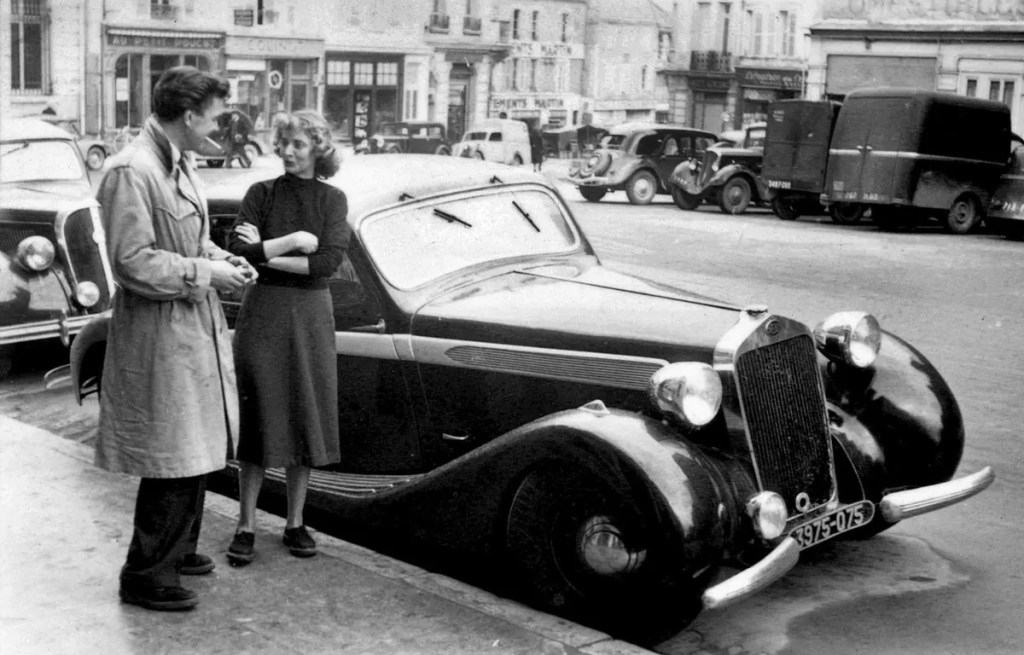
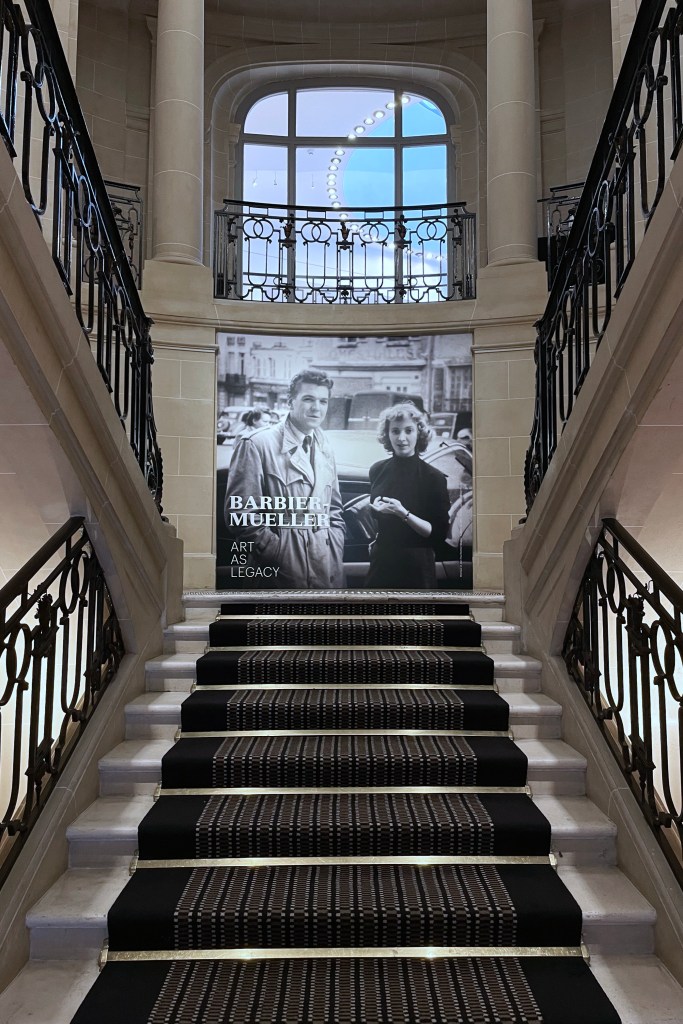
Born in 1930, Jean-Paul Barbier studied laws in Geneva and London. He became the director of a financial company in 1958 before creating a real estate business specialized in institutional investment and social housing two years later. He met Monique Müller in the beginning of the 1950s with who he got married in 1955. The couple will become one of the most respected art collectors – of either ‘primitive’, modern or contemporary art – during the following sixty years. In 1977, three months after the death of Josef Müller, the Barbier-Mueller museum opened in the heart of the old town of Geneva to exhibit the 7,000 works from Africa, Asia and Oceania collected by the family through the years. Jean-Paul officially added the surname of his father-in-law (spelled in French) in 1985.
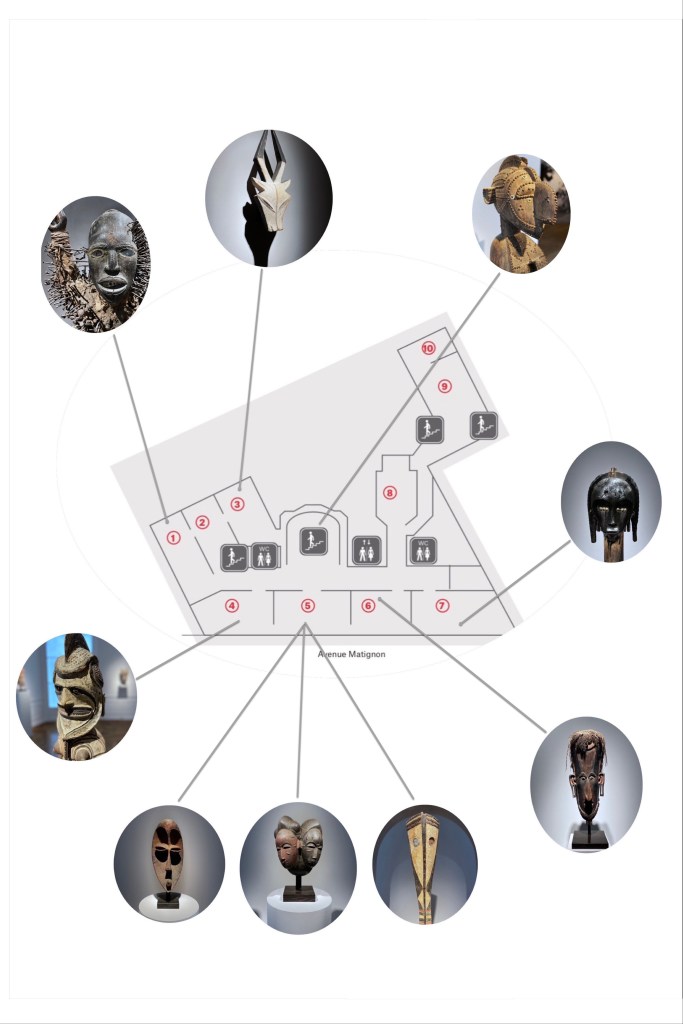
Ground floor galleries
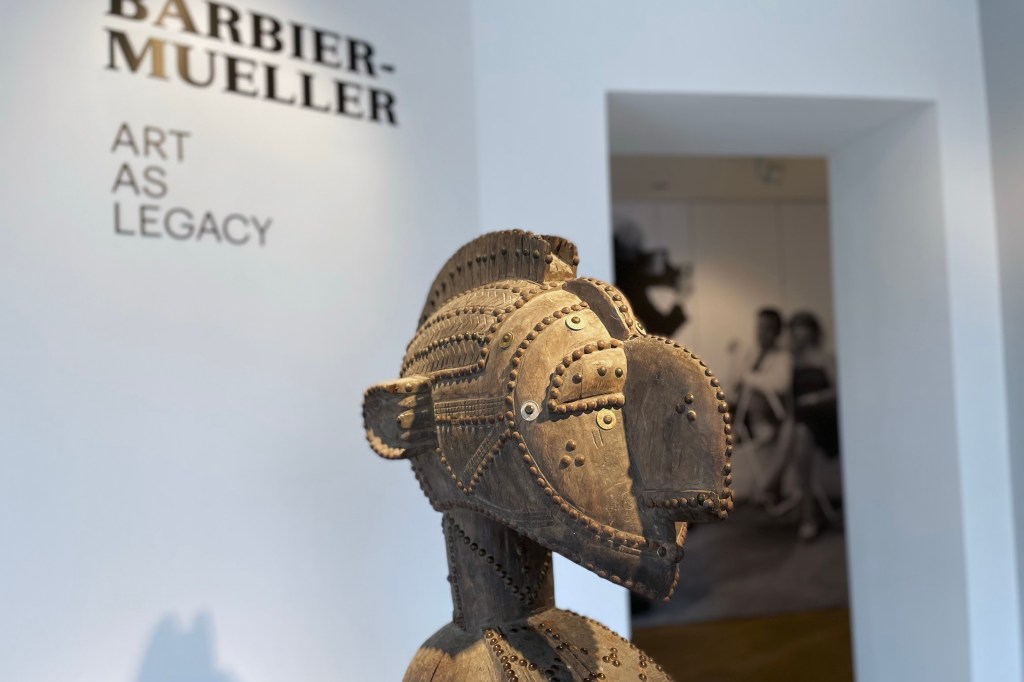
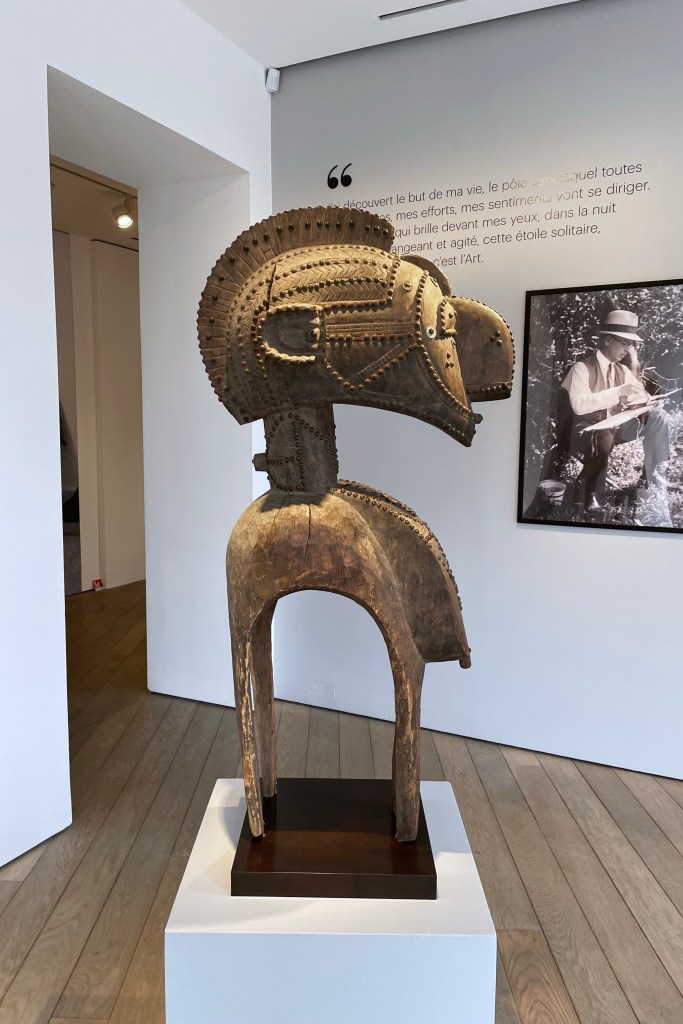
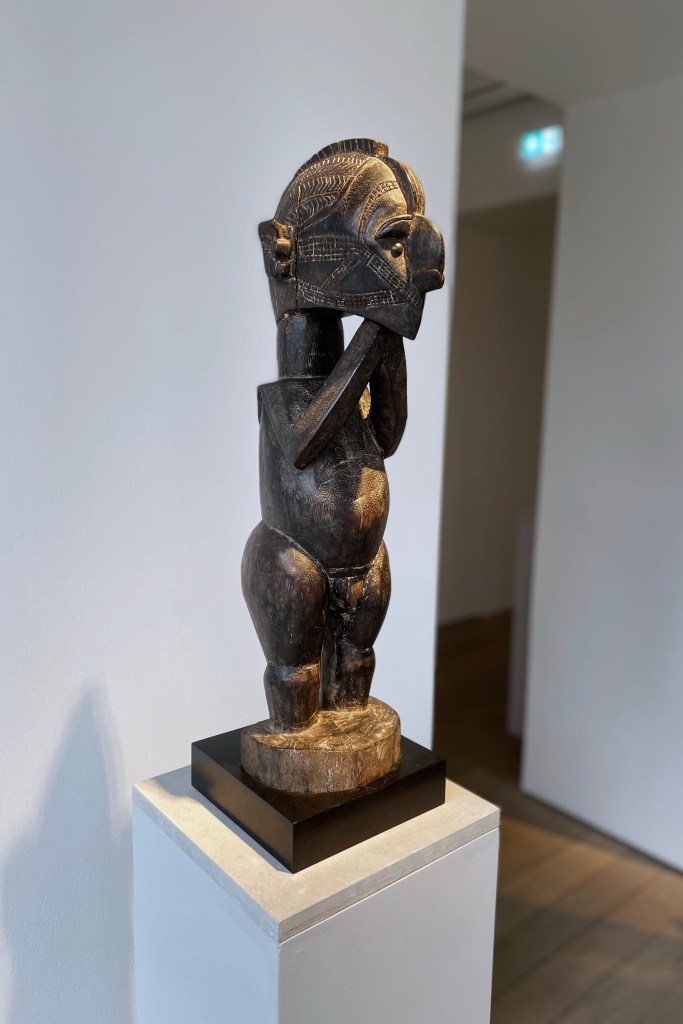
In the hall of the auction house on the avenue Matignon, two malangan figures (Papua New Guinea) were welcoming the visitors who came to see the works the days before the sale. The exhibition started with an imposing nimba shoulder mask along with a smaller dimba head figure, outstanding creations of Baga art (Guinea).
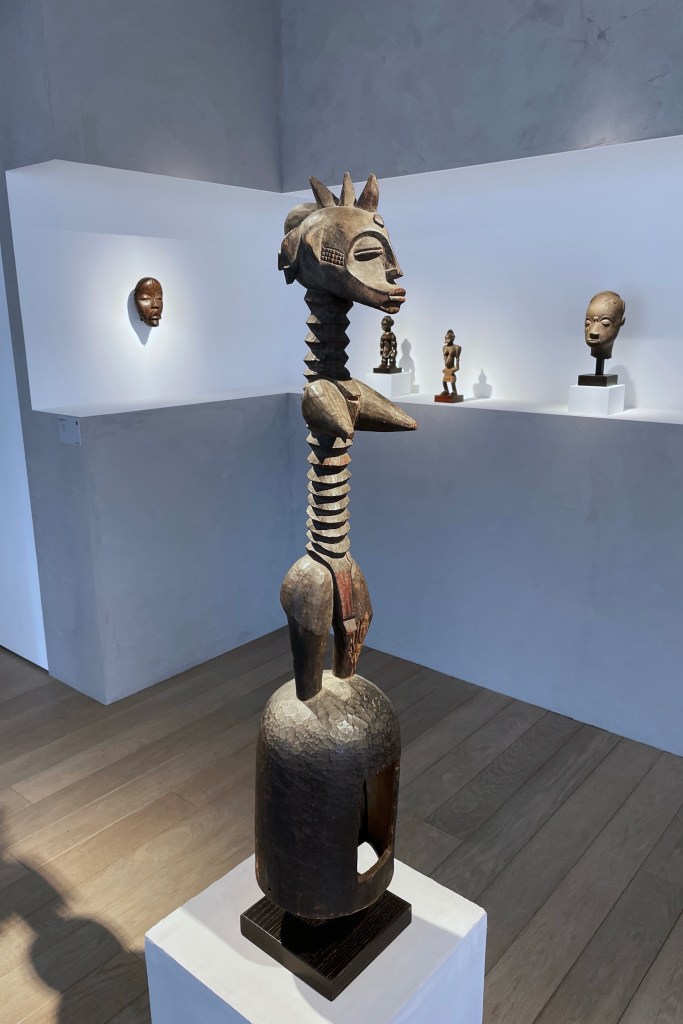
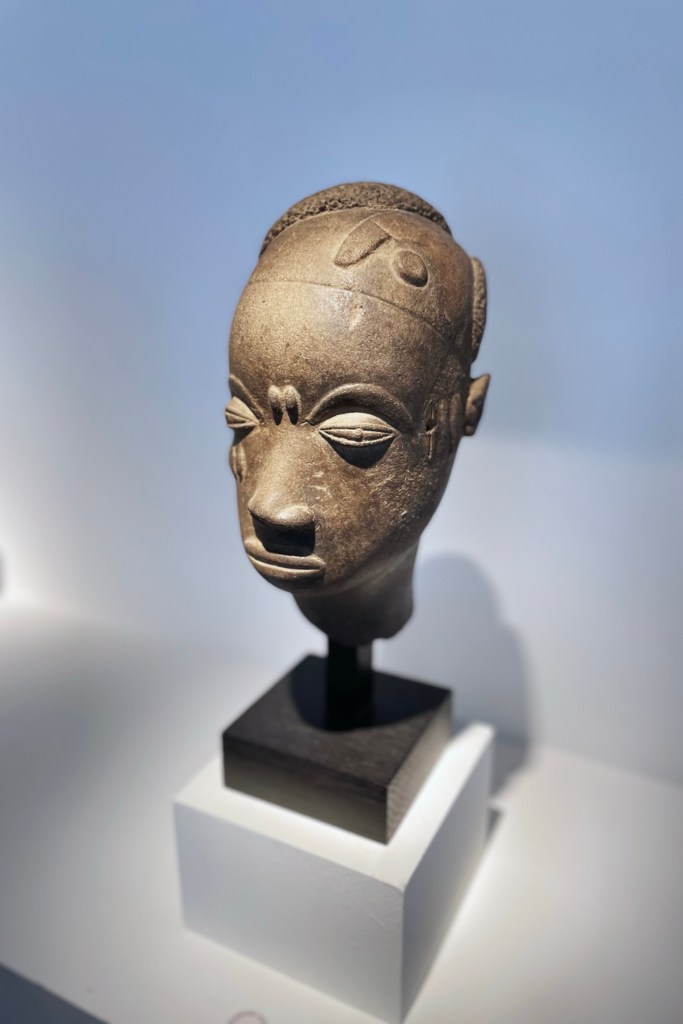
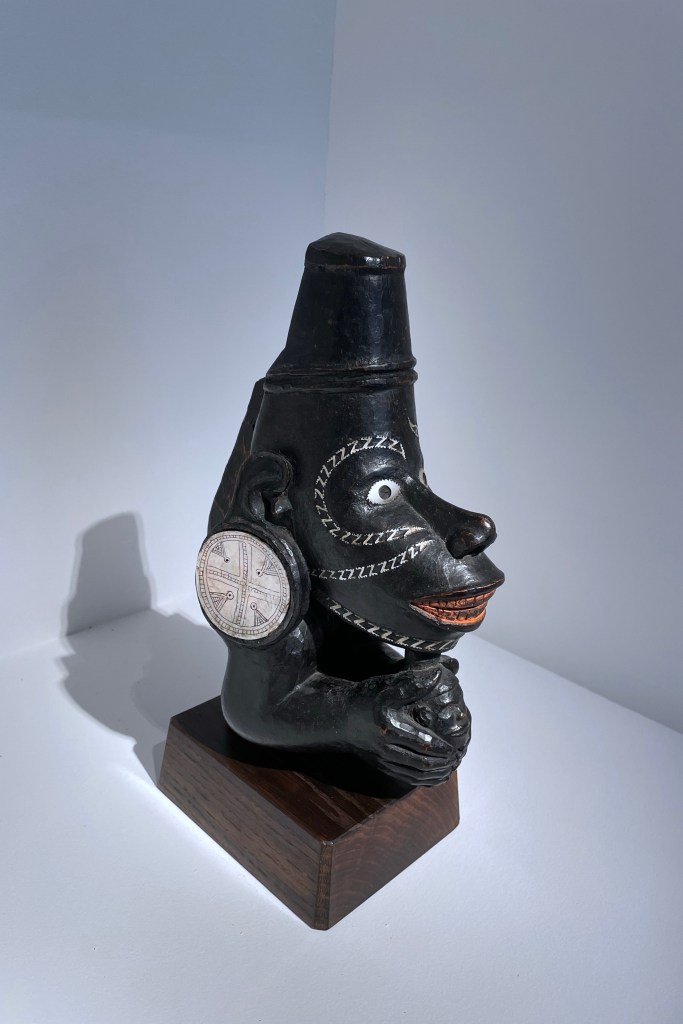
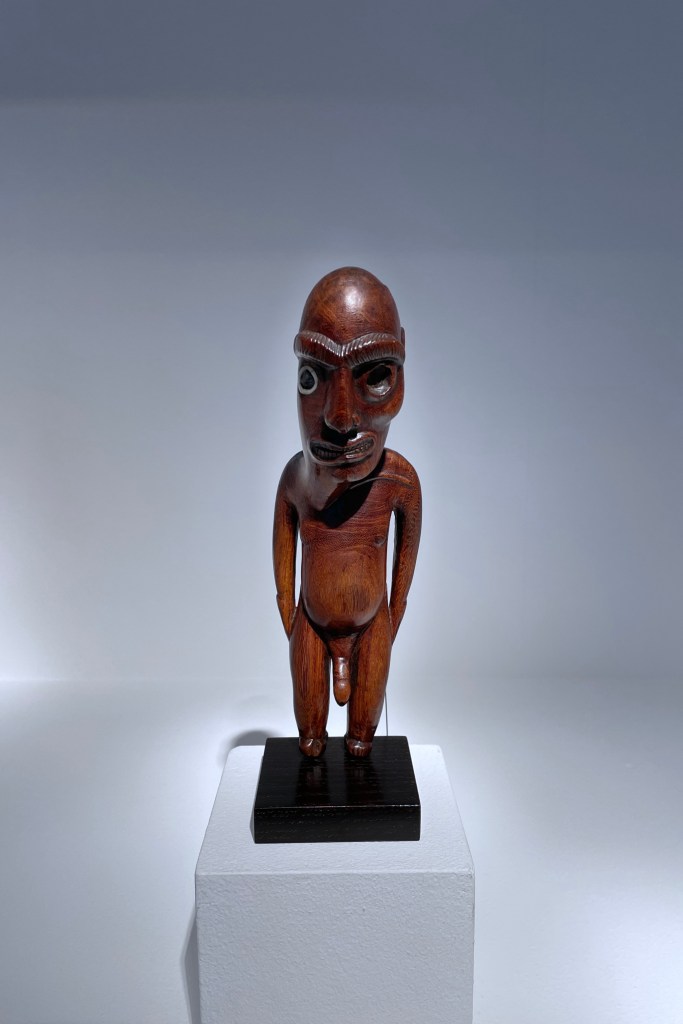
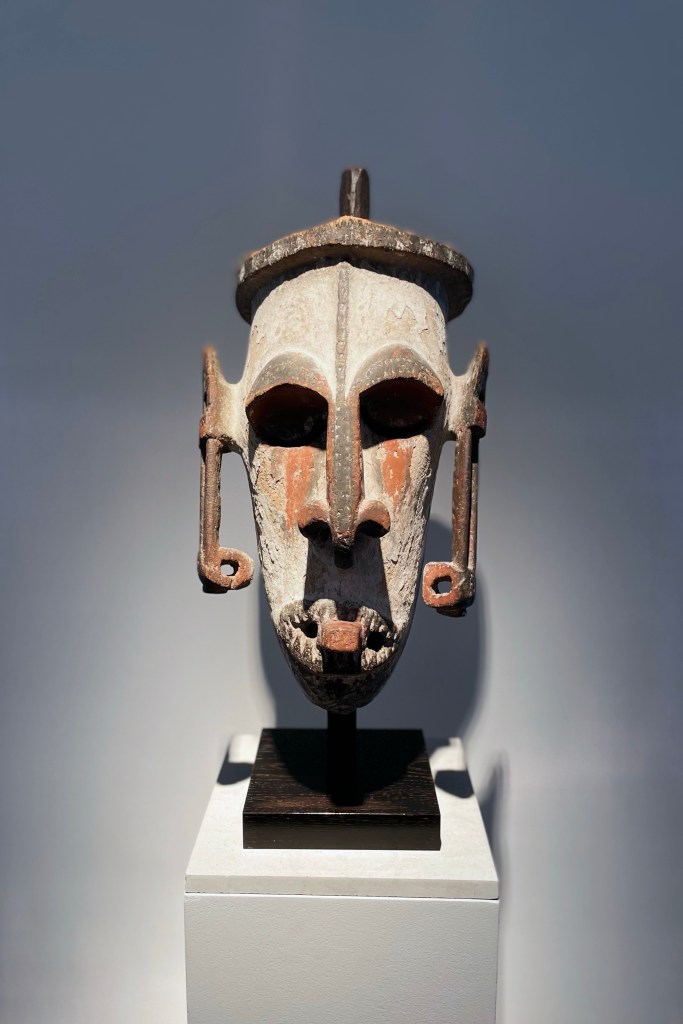
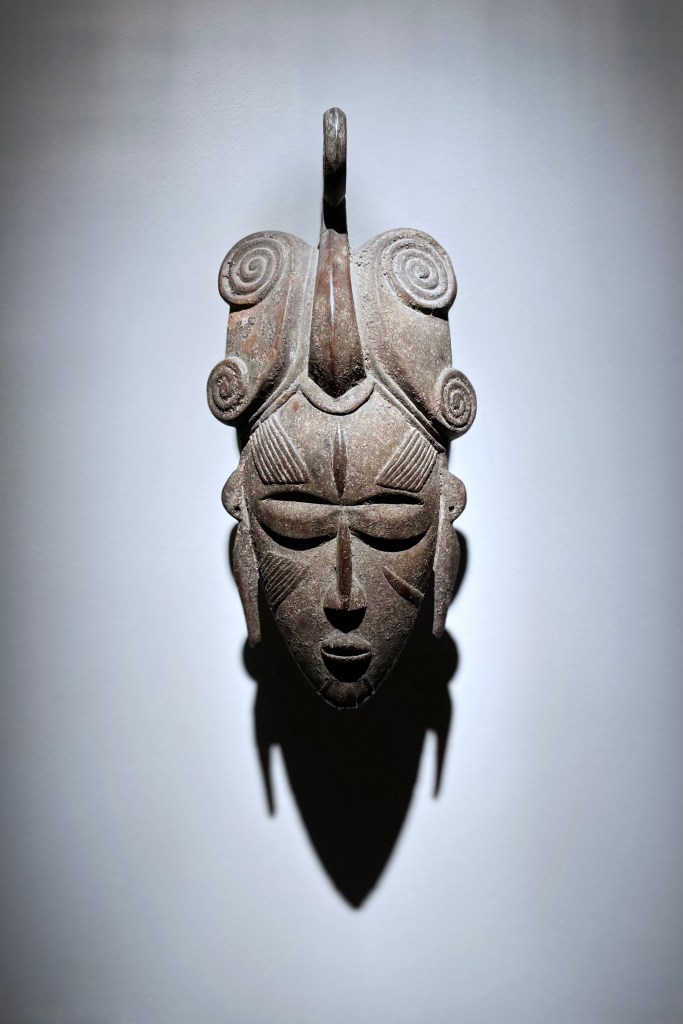
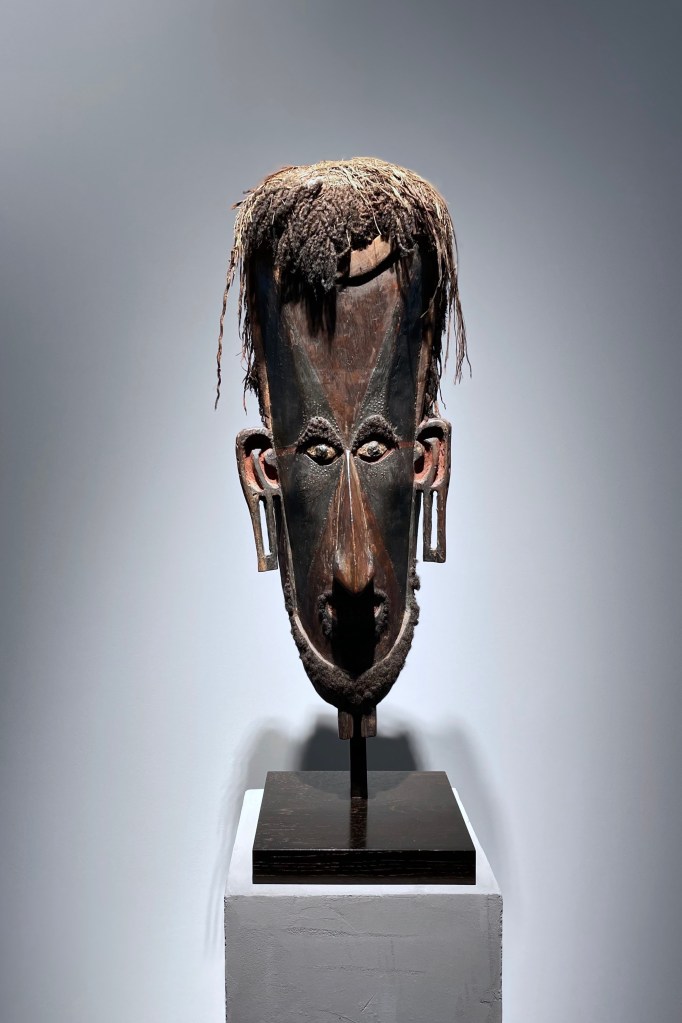
In the two other rooms of the ground floor, the Senufo helmet-mask (Côte d’Ivoire), the moai miro figure (Easter Island), the telum figure from the Bil Bil Island and the Astrolabe Bay mask (both Papua New Guinea) were expected lots sold between 300,000€ and 600,000€. The nguzu nguzu canoe prow figurehead (Solomon Islands), which reminds the one showed at the Oceania exhibition at the Quai Branly museum in 2019, was among the surprise of the auction, sold three times its highest estimation at 151,200€.


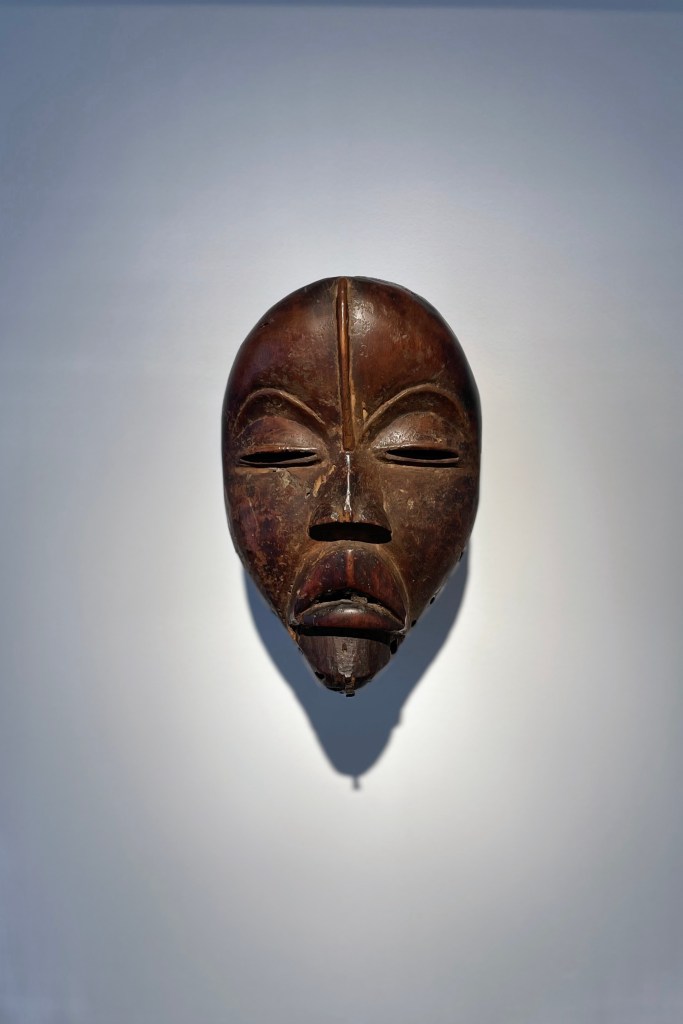
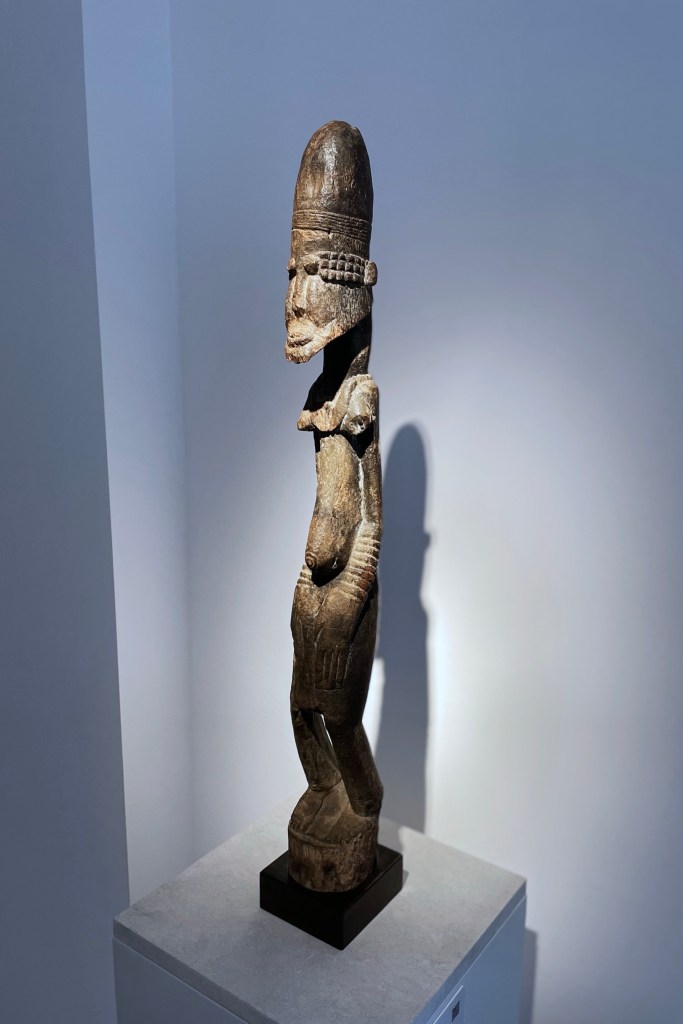
First floor galeries
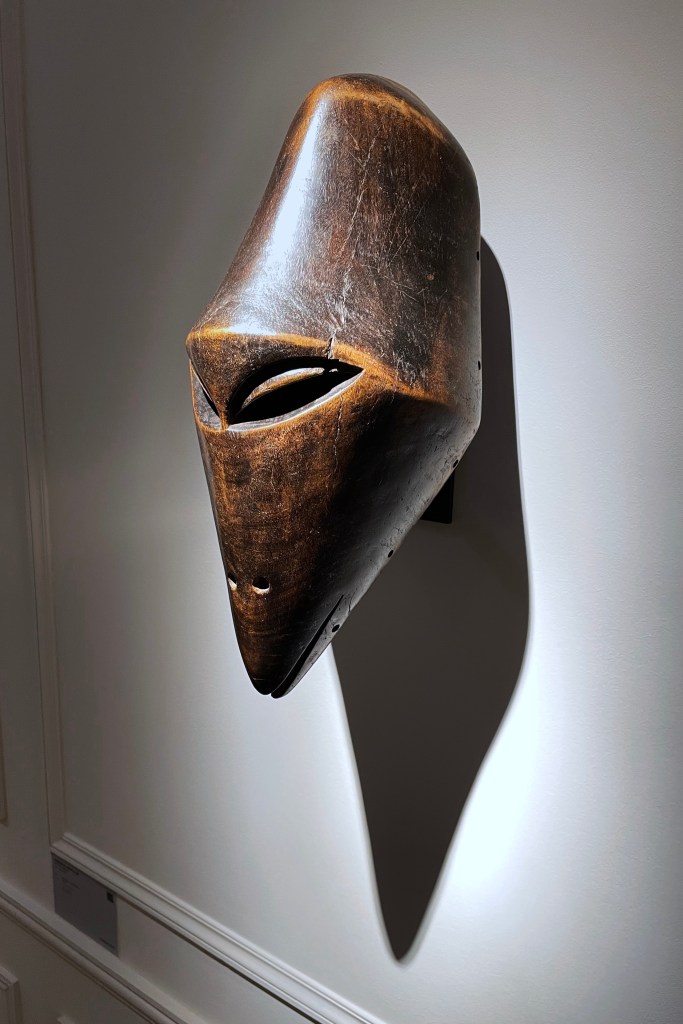
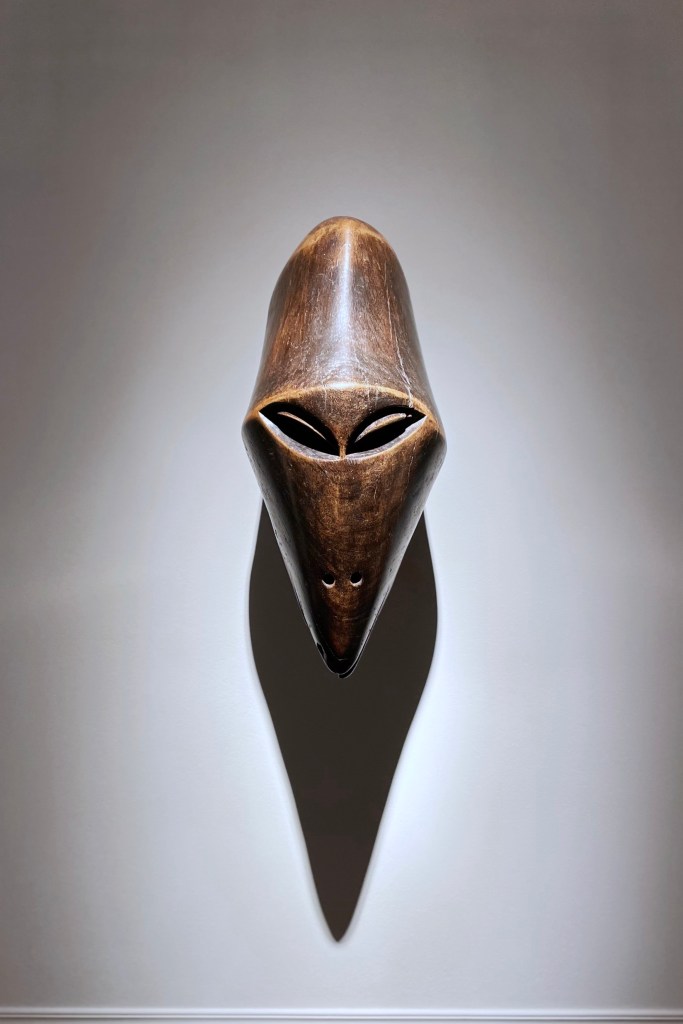
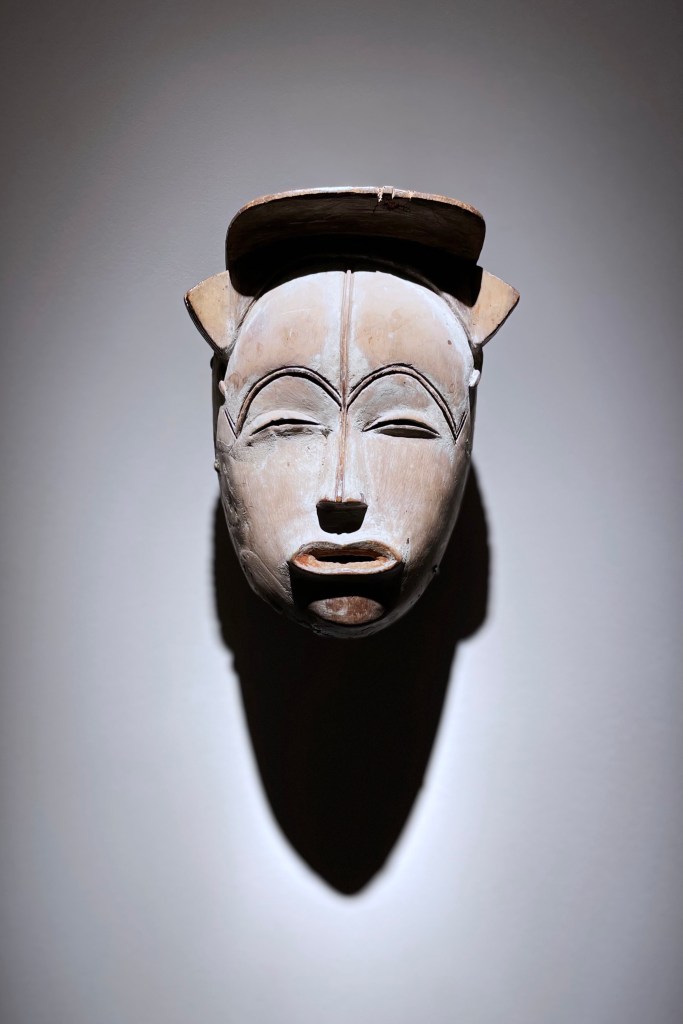
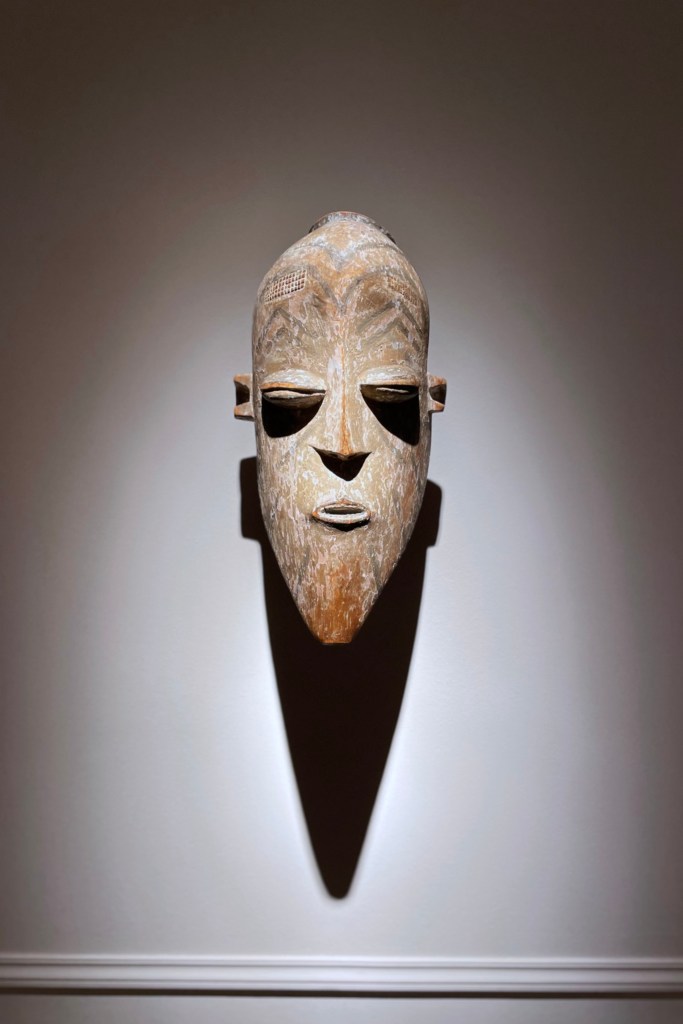
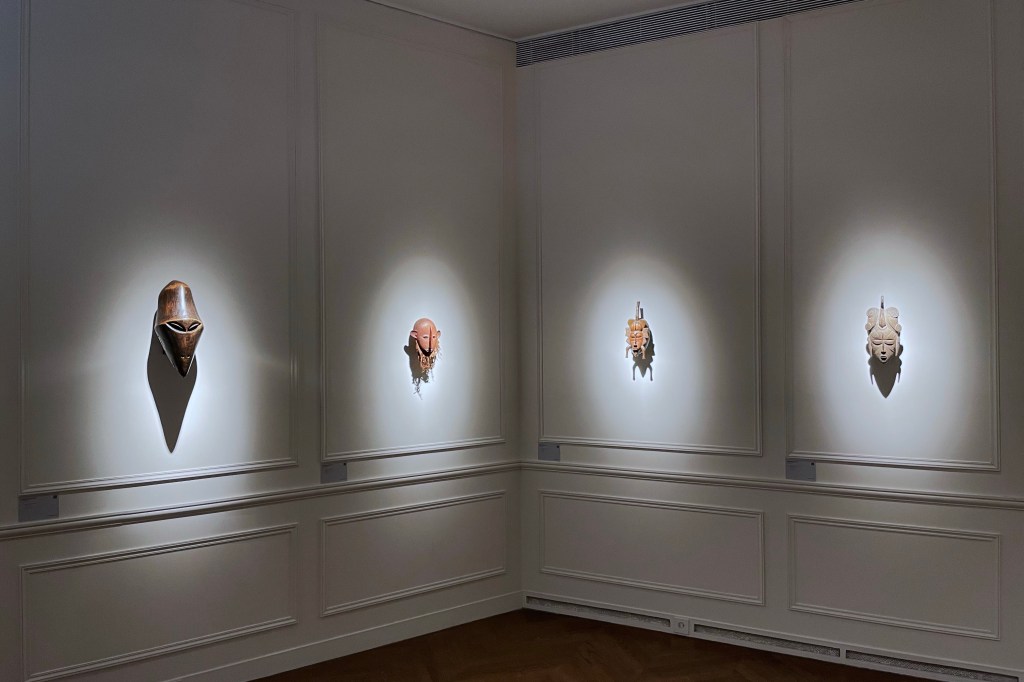
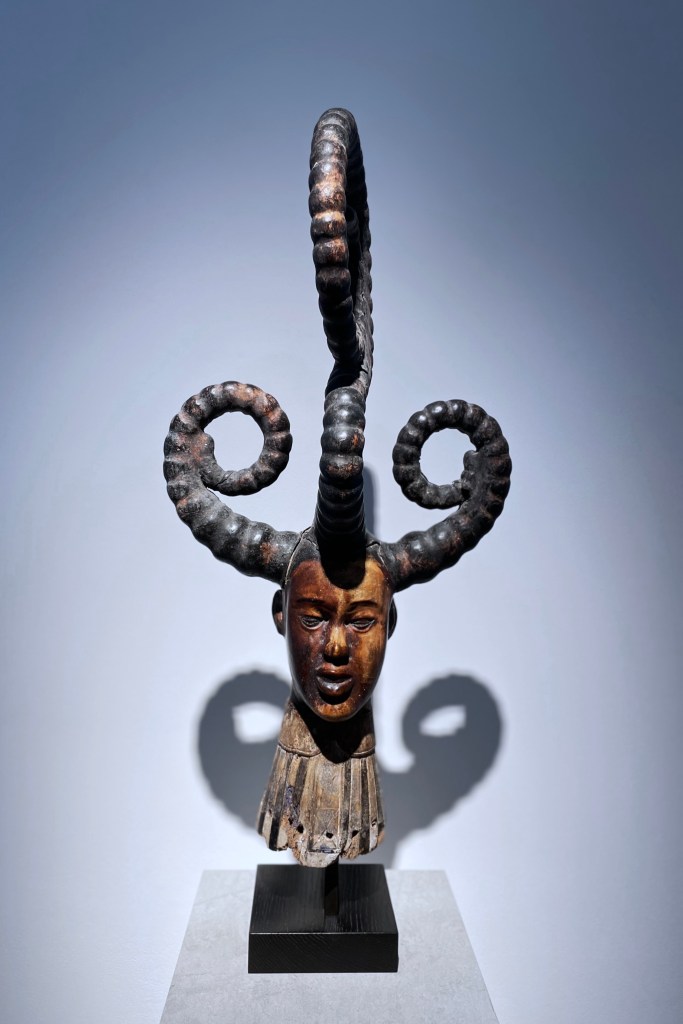
Upstairs, the first gallery proposed a selection of masks from Western and Central Africa. The most striking ones were perhaps the two animal-like works depicting a duiker antelope for the Kwele mask (Gabon) and a hornbill for the Tshokwe mask (Angola).
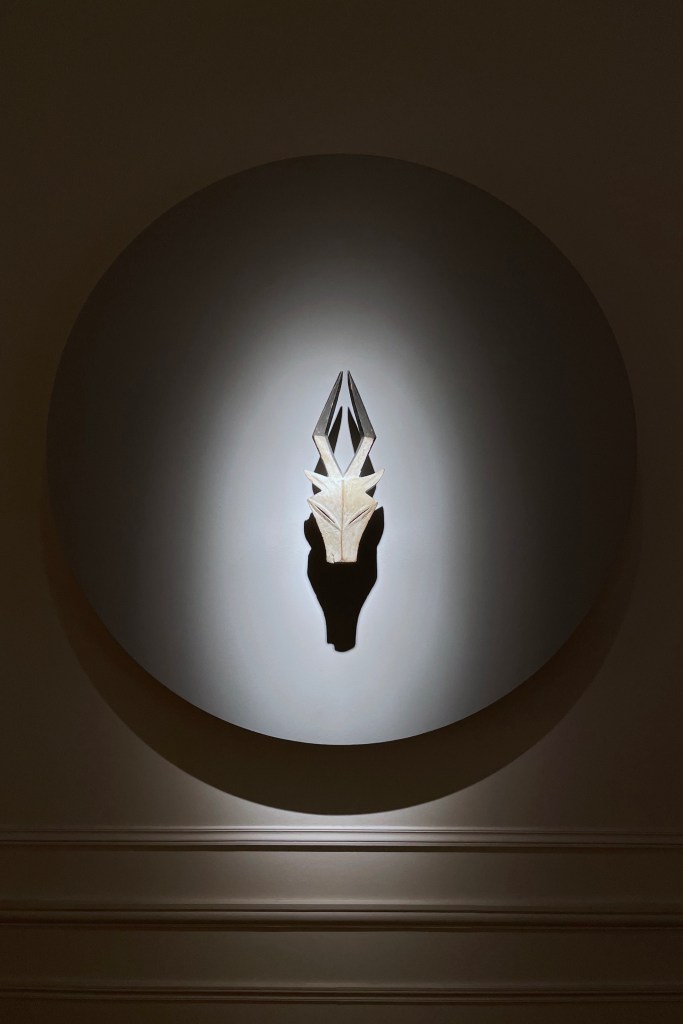
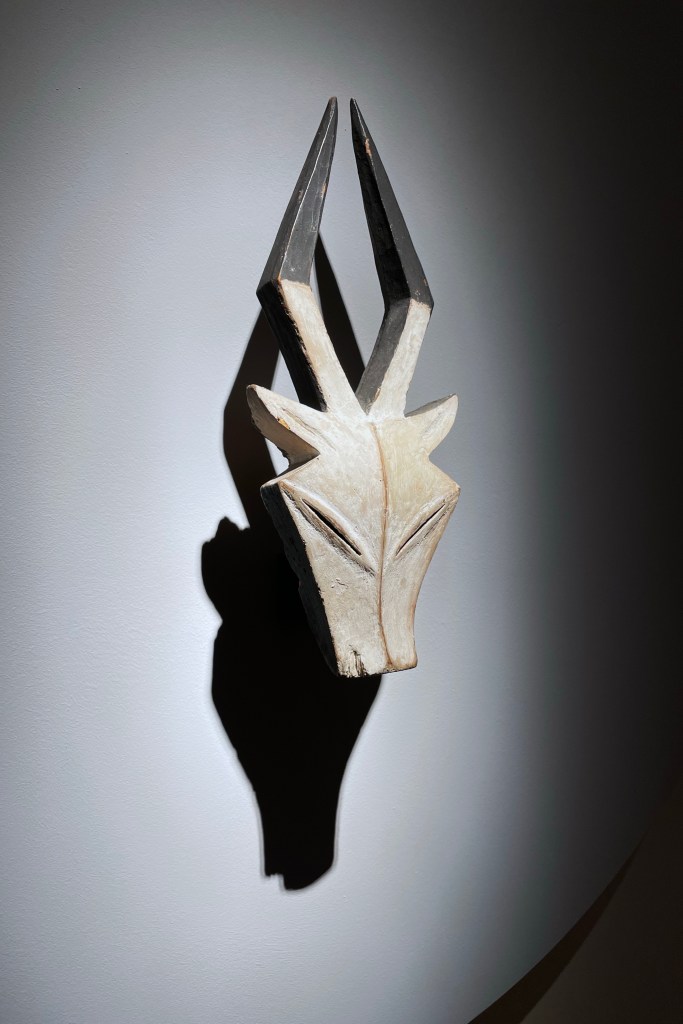
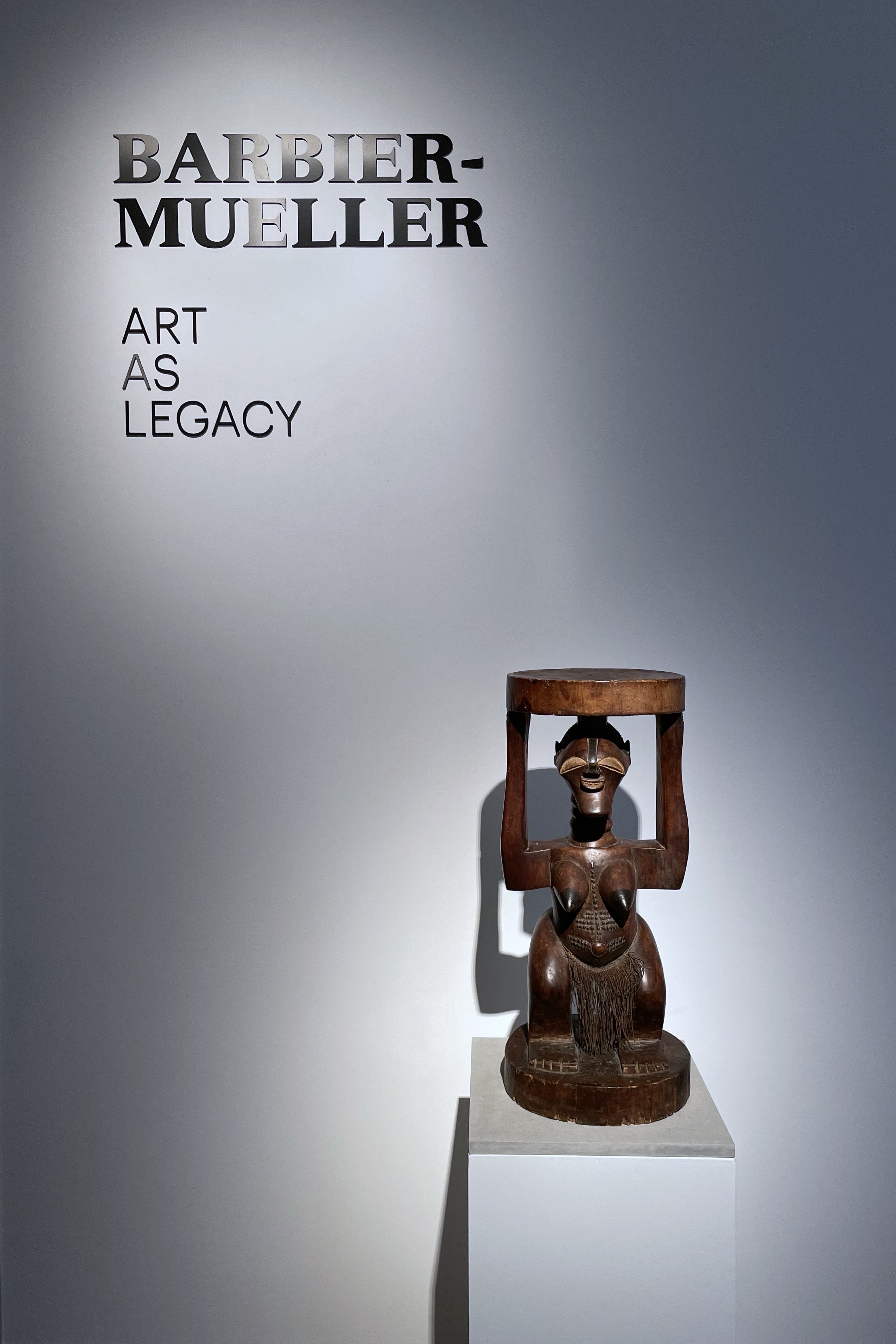
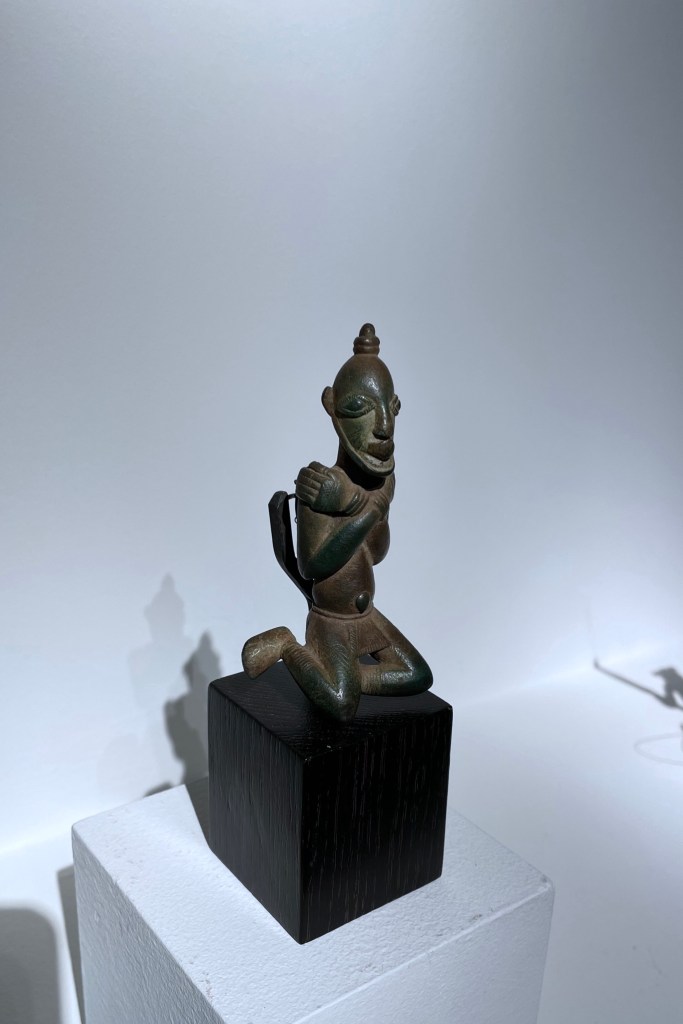
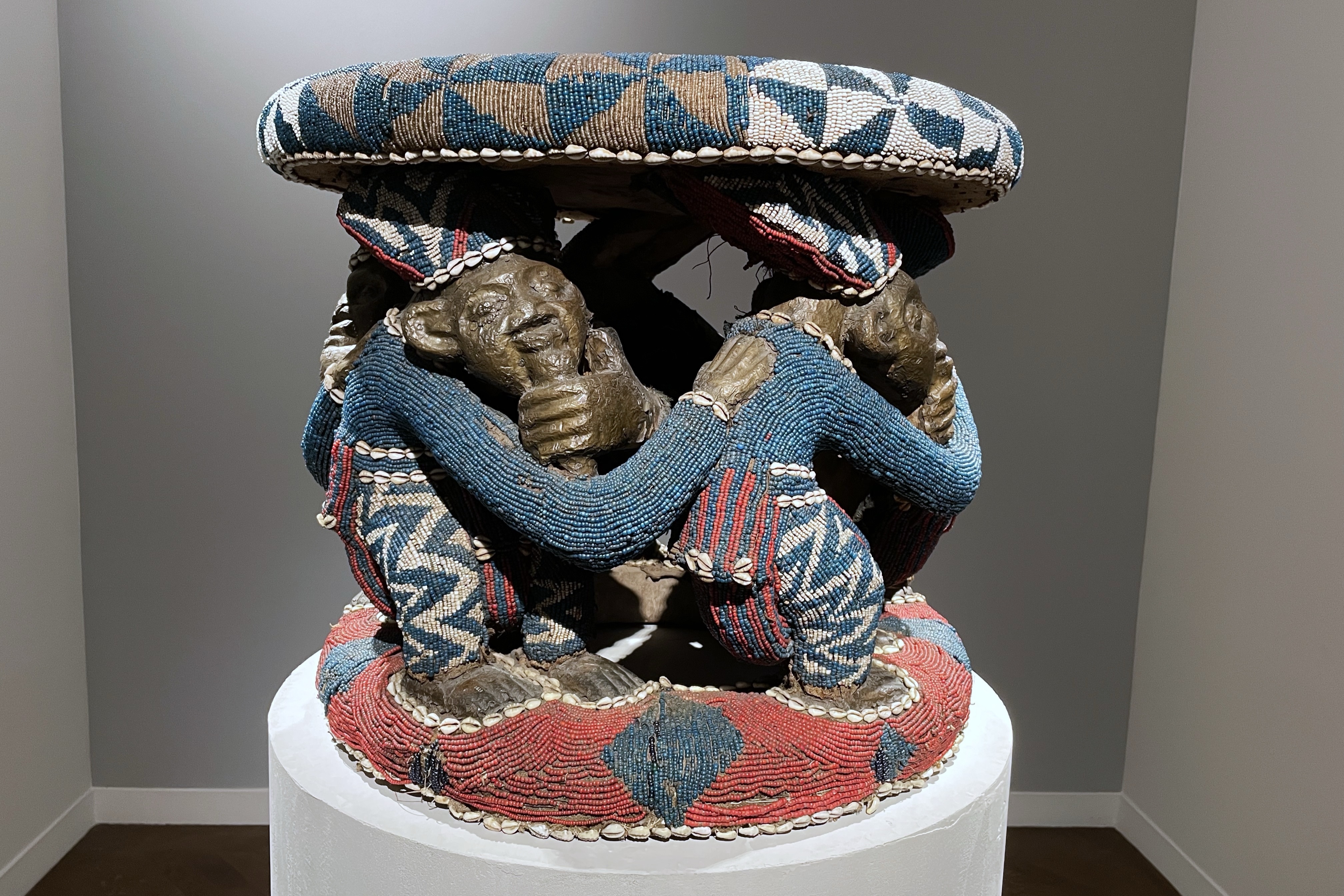
Sit down and relax: in the next room, a stunning Bamum round stool (Cameroon), or ru mfo, supported by four enigmatic figures, was offered by the Sultan Njoya to the German captain Glauning in the beginning of the 20th century and this beautiful Songye caryatid stool (Democratic Republic of the Congo) has been sold for twice its highest estimation at 540,000€. Another surprise was this small (9.5 cm) yet gorgeous Djenné pendant (Mali) gone for 630,000€ (highest estimation at 150,000€).
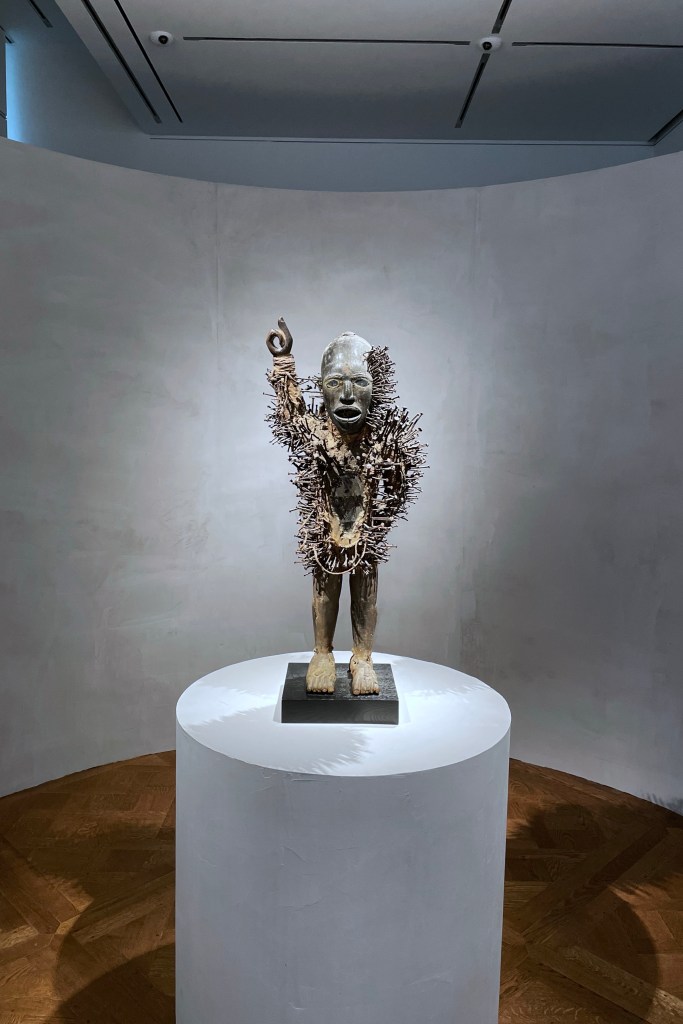
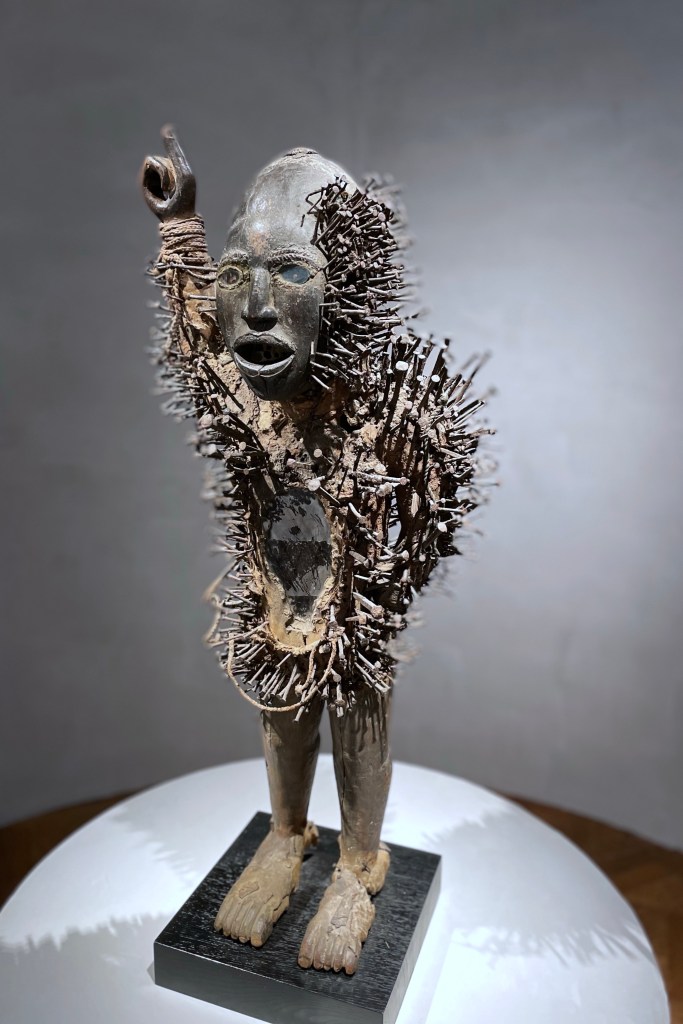
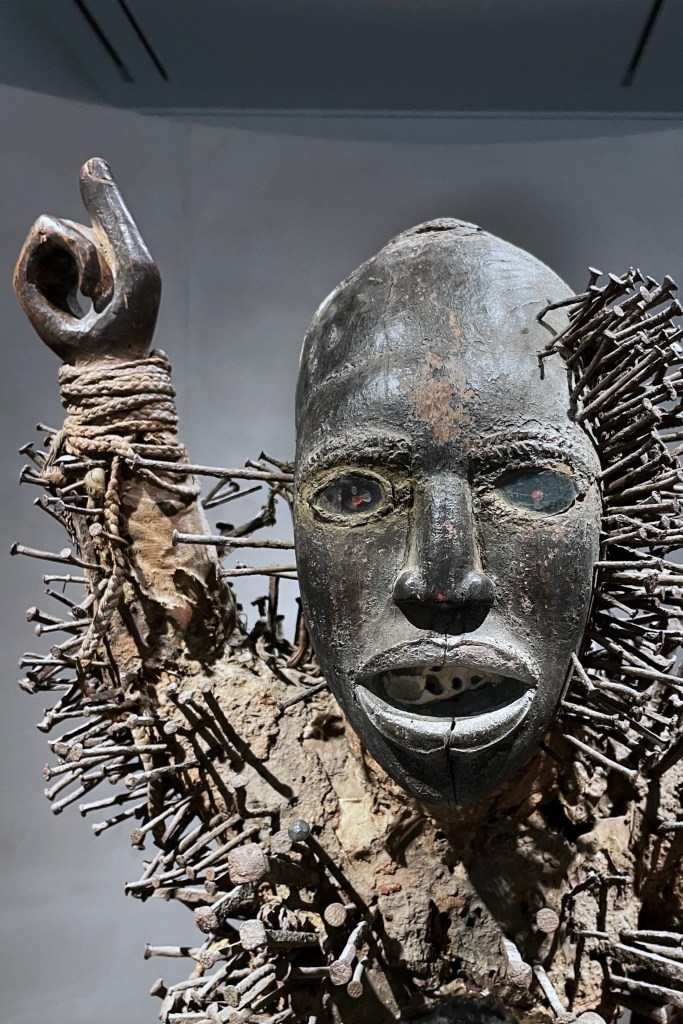
Then came one of the ‘big guy’ of the sale: the nkisi n’kondi figure (Democratic Republic of the Congo) was sold for a record 9 millions euros. With his raised hand that once hold a spear and his howling face (check his mouth below), the nailed fetish of the Barbier-Mueller collection stands among the most expressive of this corpus.
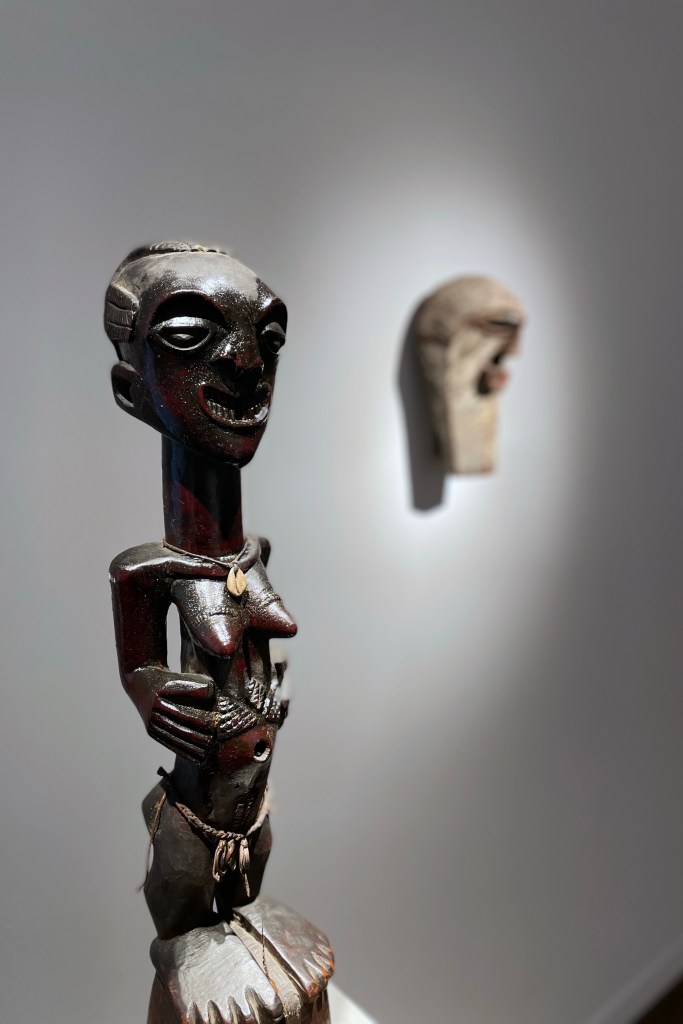
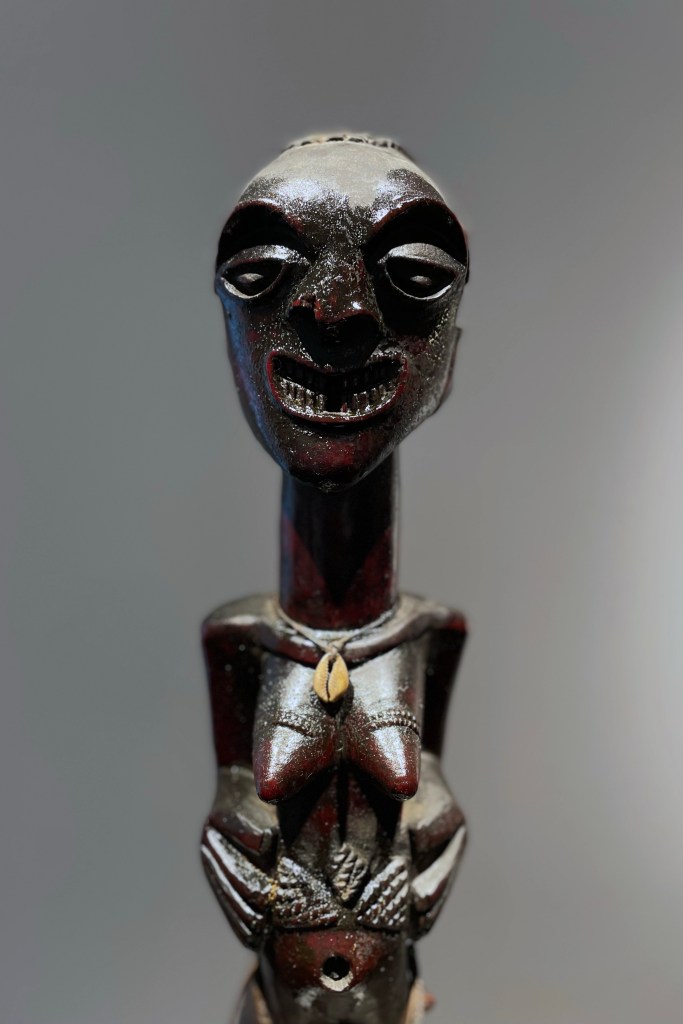
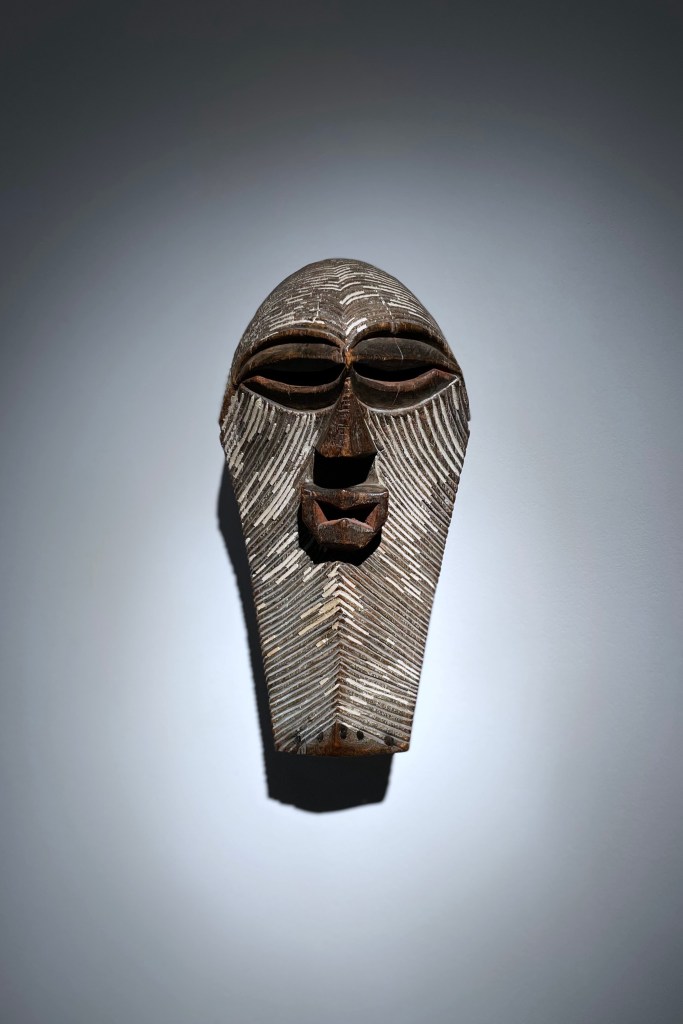
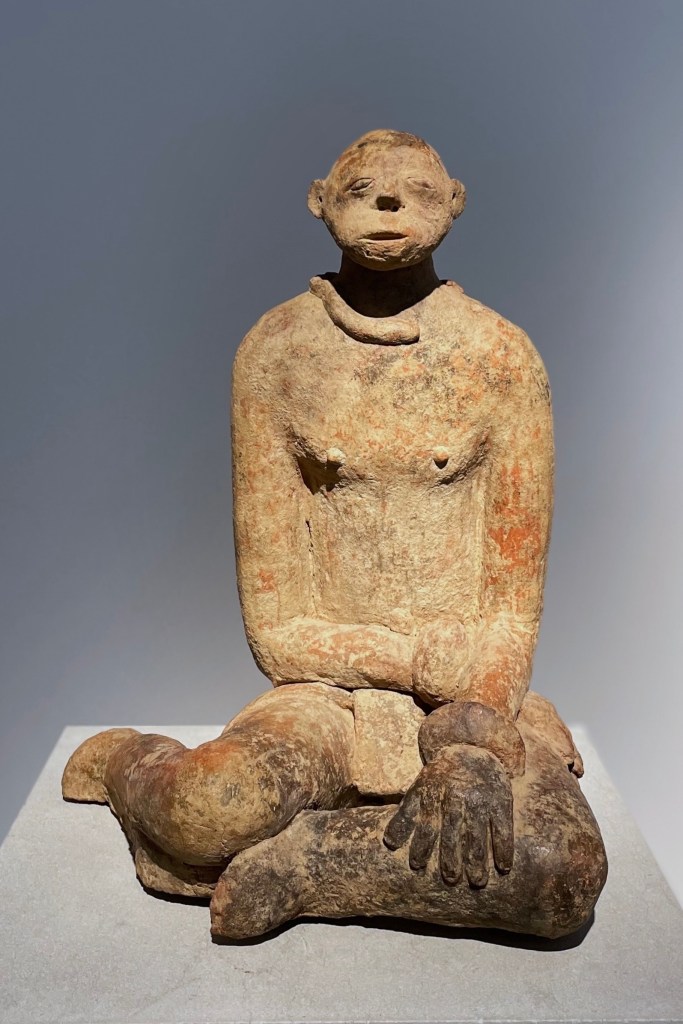
Let’s stay in the Democratic Republic of the Congo with a nkisi figure and a kifwebe mask, both well preserved and beautiful representative works of the Songye people’s art.

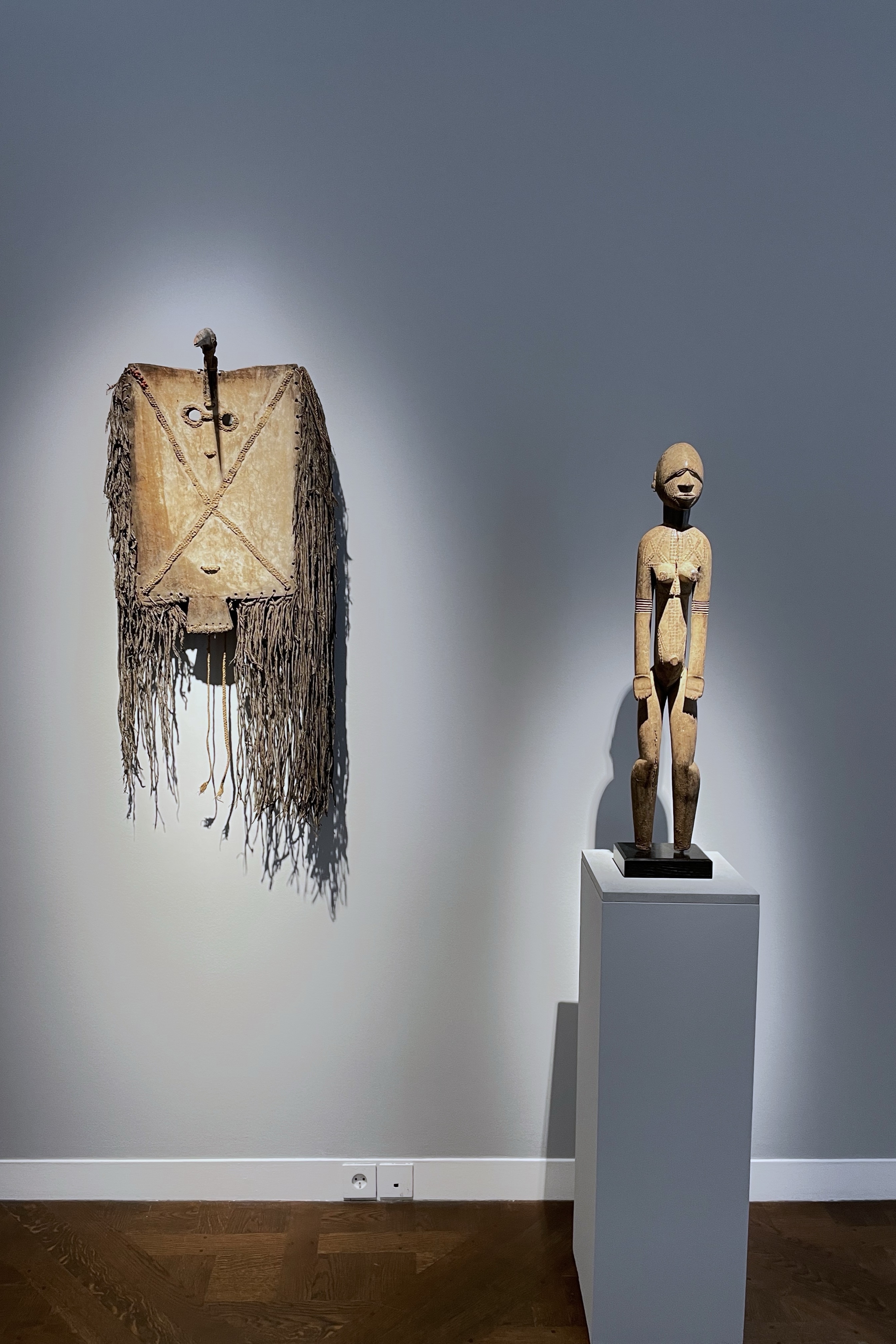
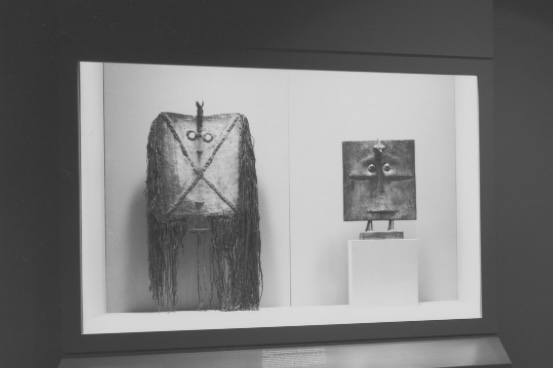
The Tusayan zoomorphic mask (Burkina Faso) in the same room was part of the ‘”Primitivism” in 20th Century Art‘ exhibition at the MoMA in 1984-1985, curated by William Rubin, and was even chosen for the cover of the show catalogue.
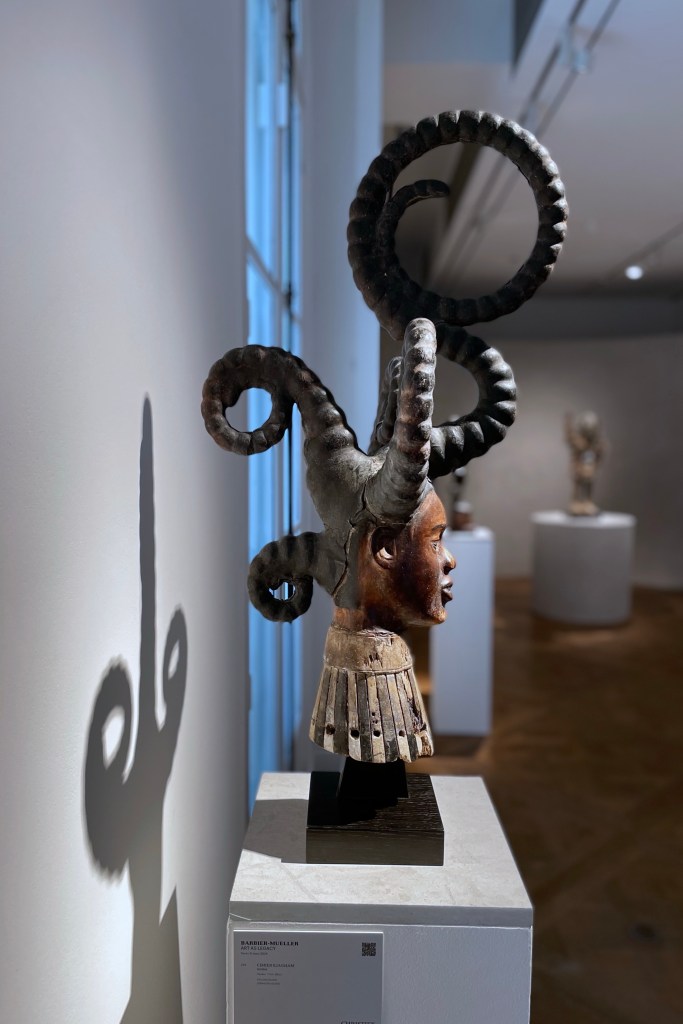
Salon Matignon I
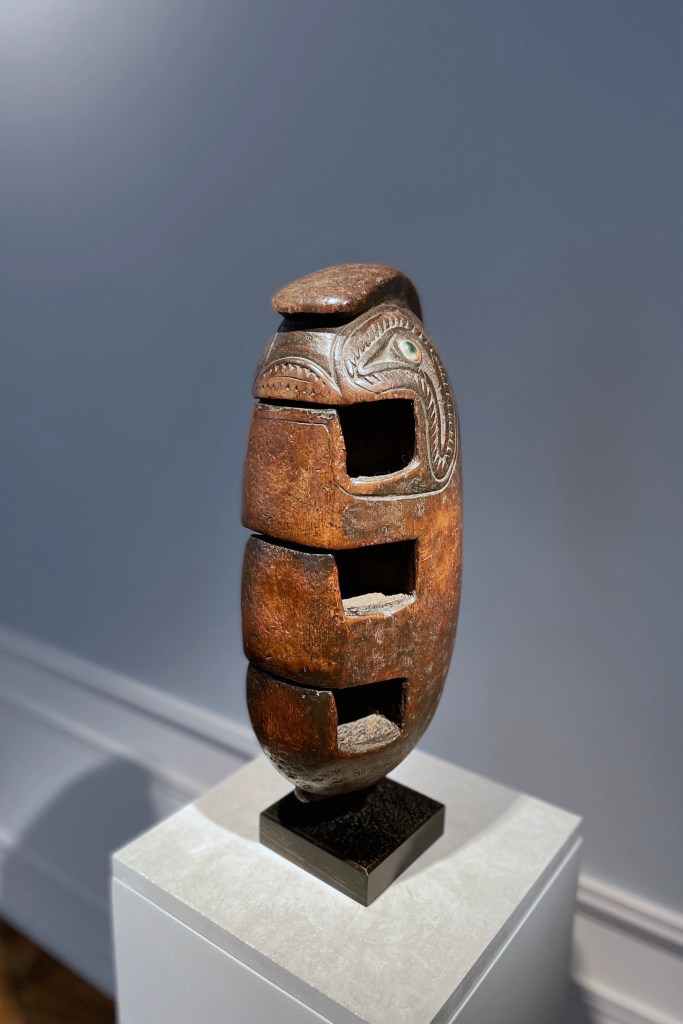
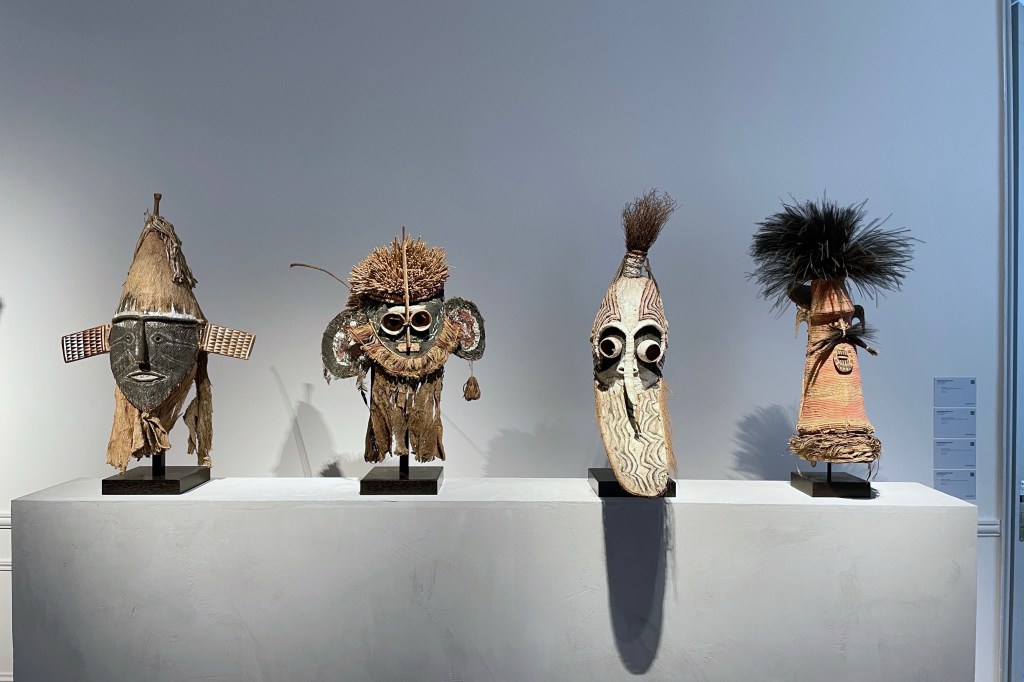
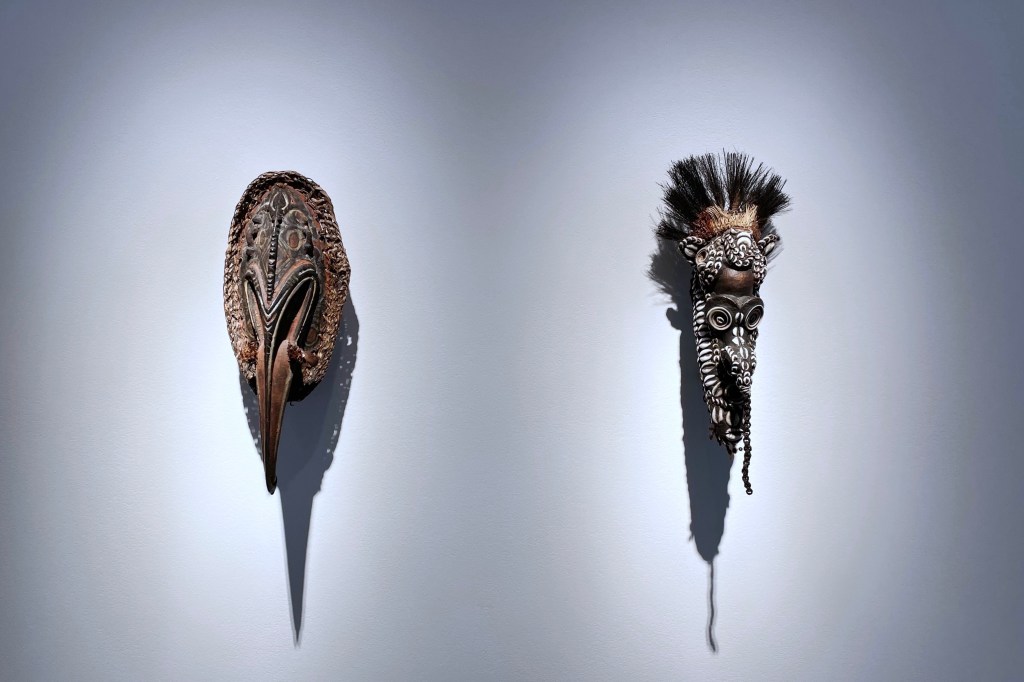
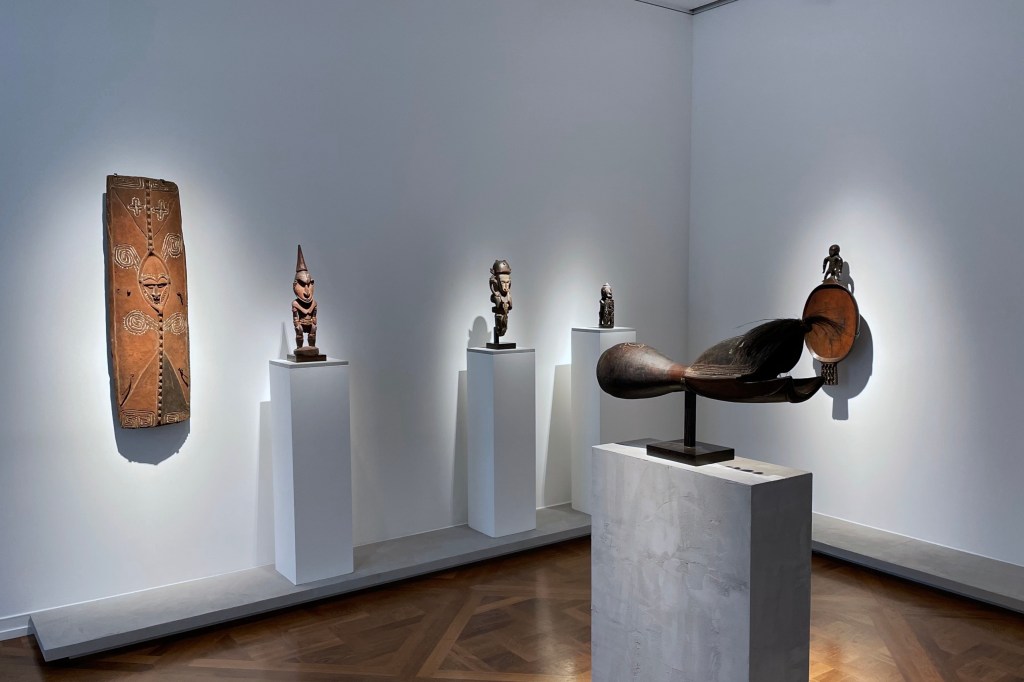
The first salon along the Matignon avenue was dedicated to the oceanic art with some fine uli and malangan figures (Papua New Guinea), a livika friction drum (New Ireland) – called the fiddle of the dead by the Germans in the early 20th century – and various masks from New Ireland and New Britain.
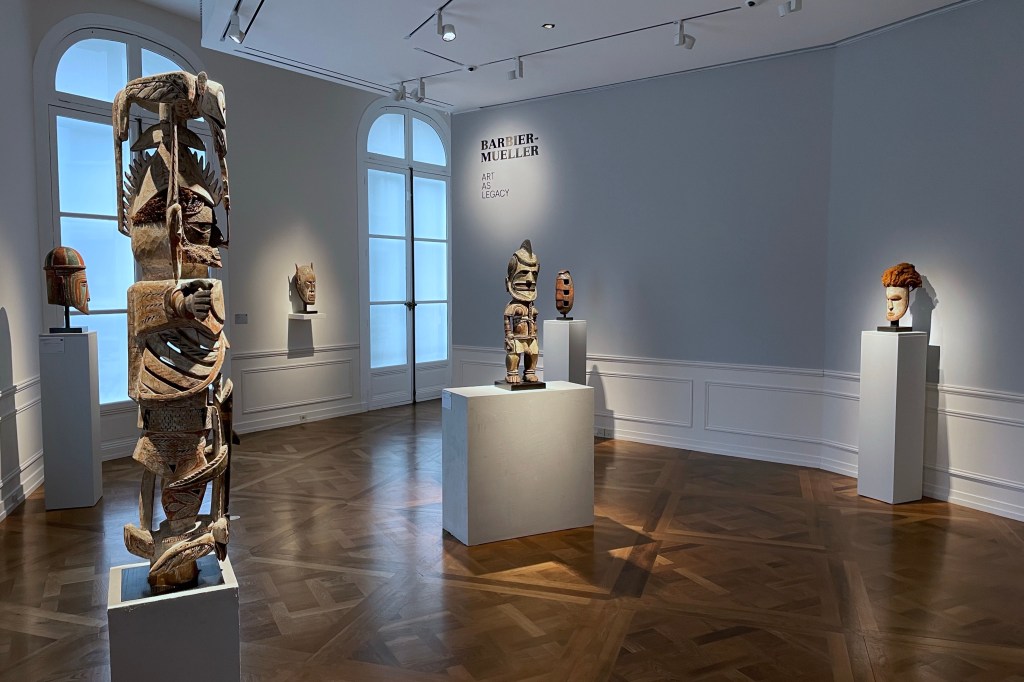
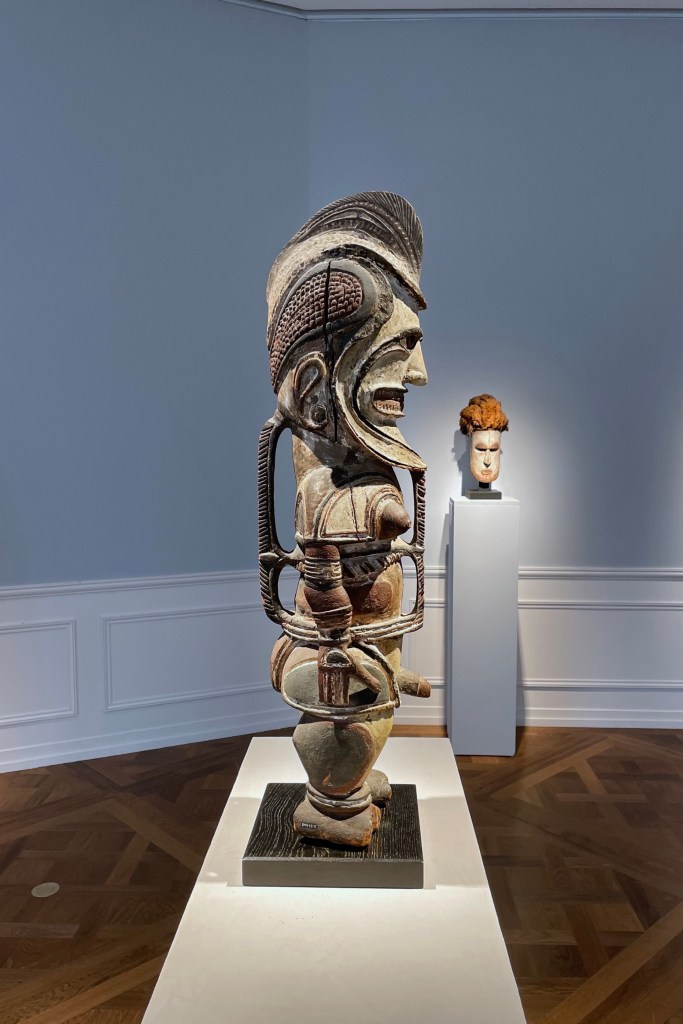
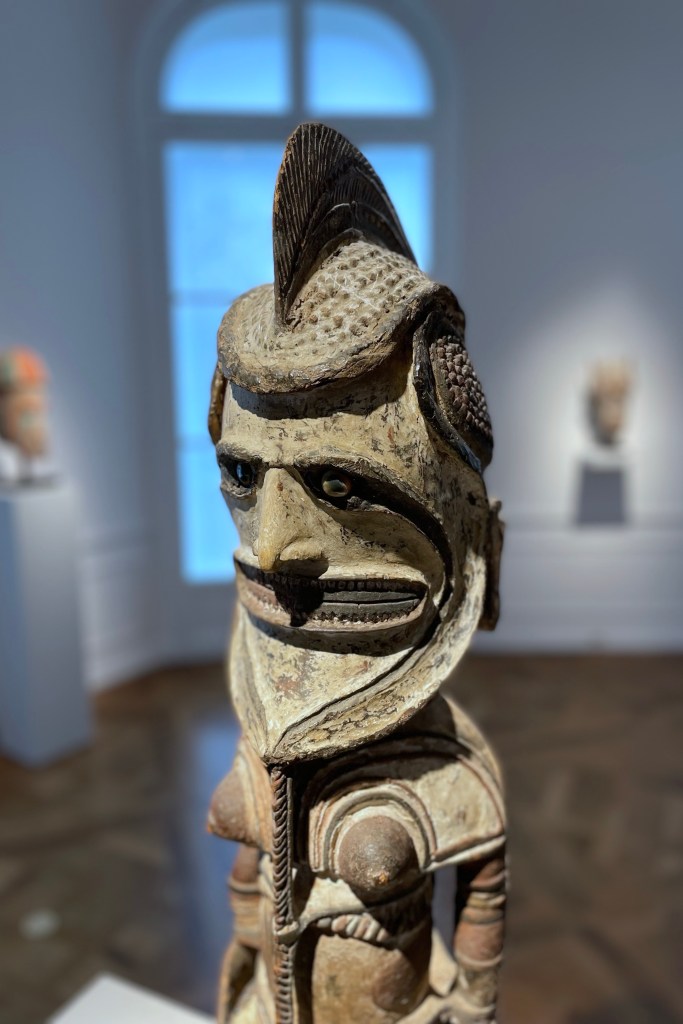
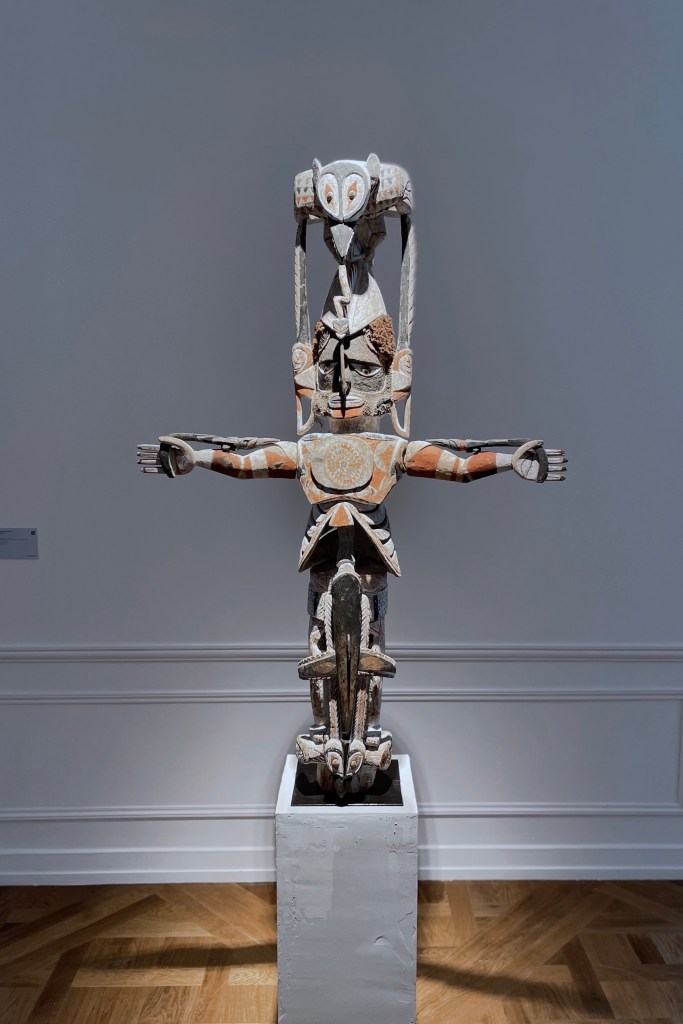
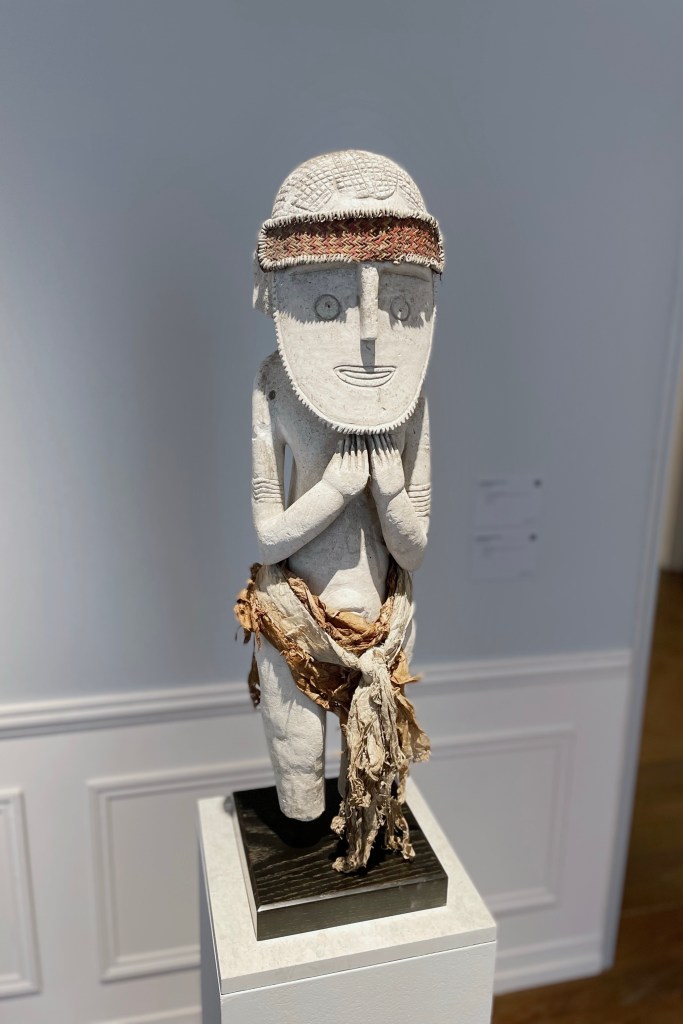
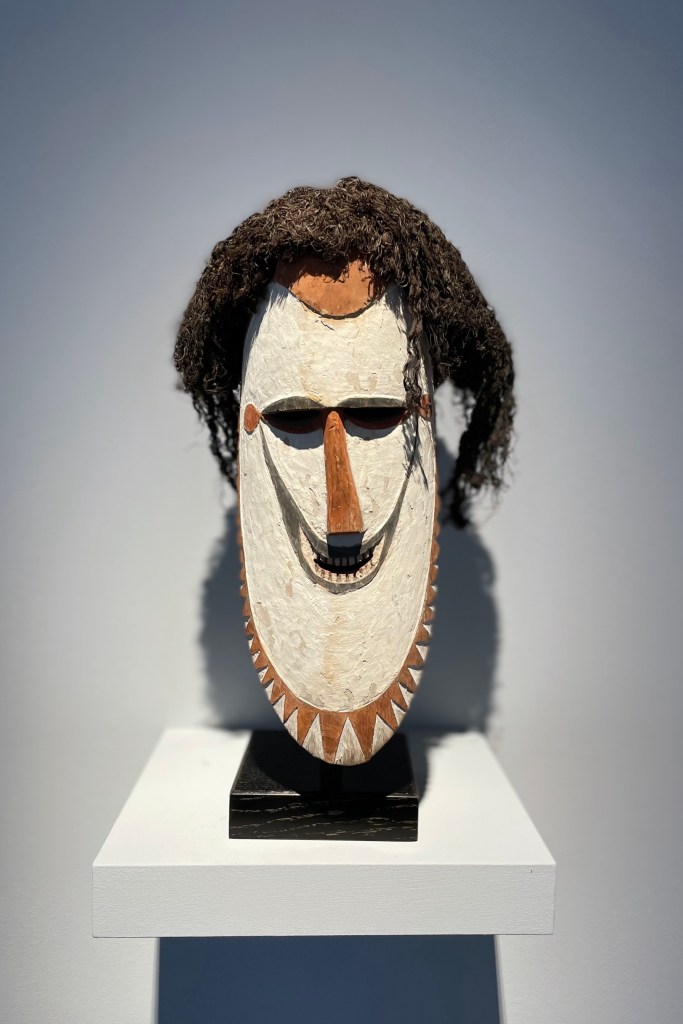
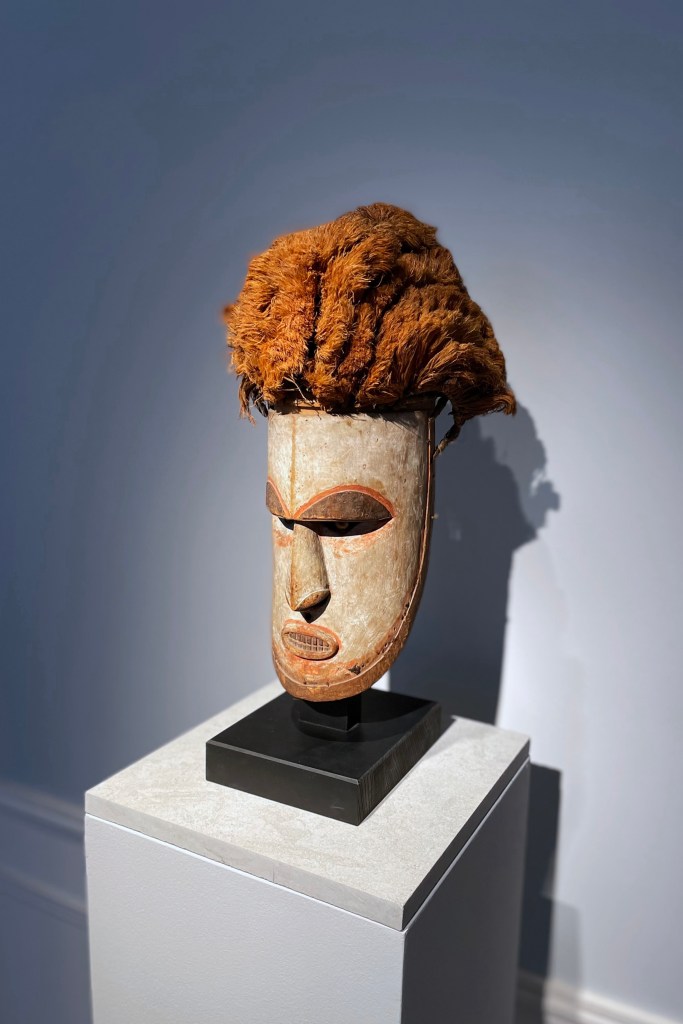
Salon Matignon II
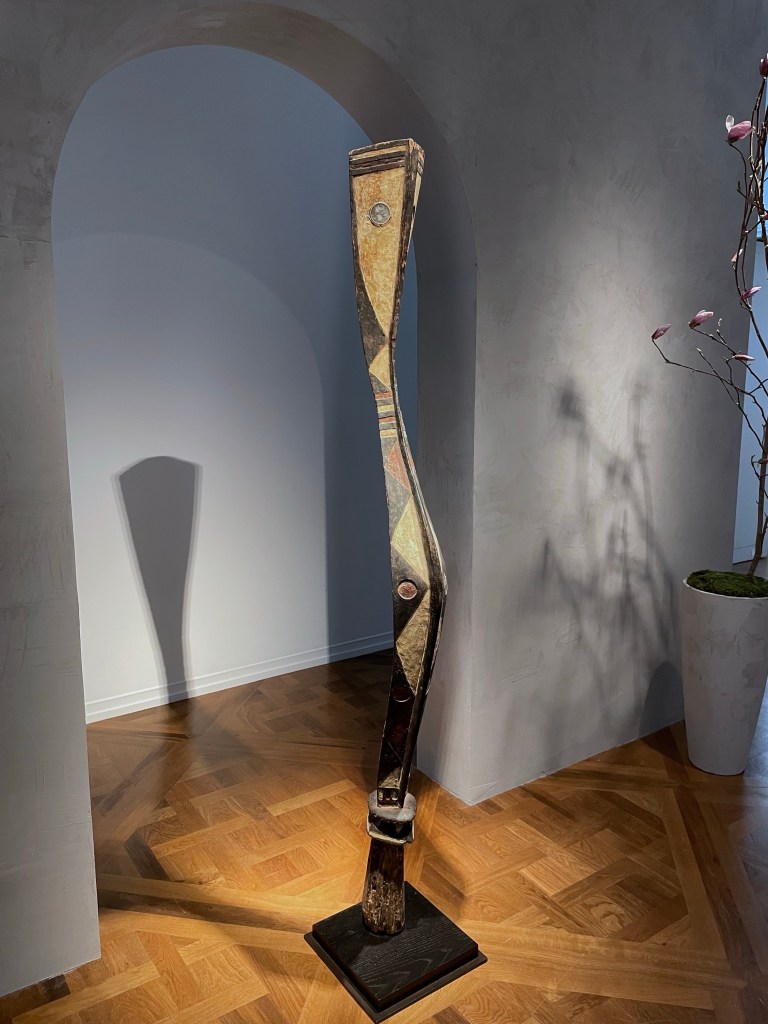
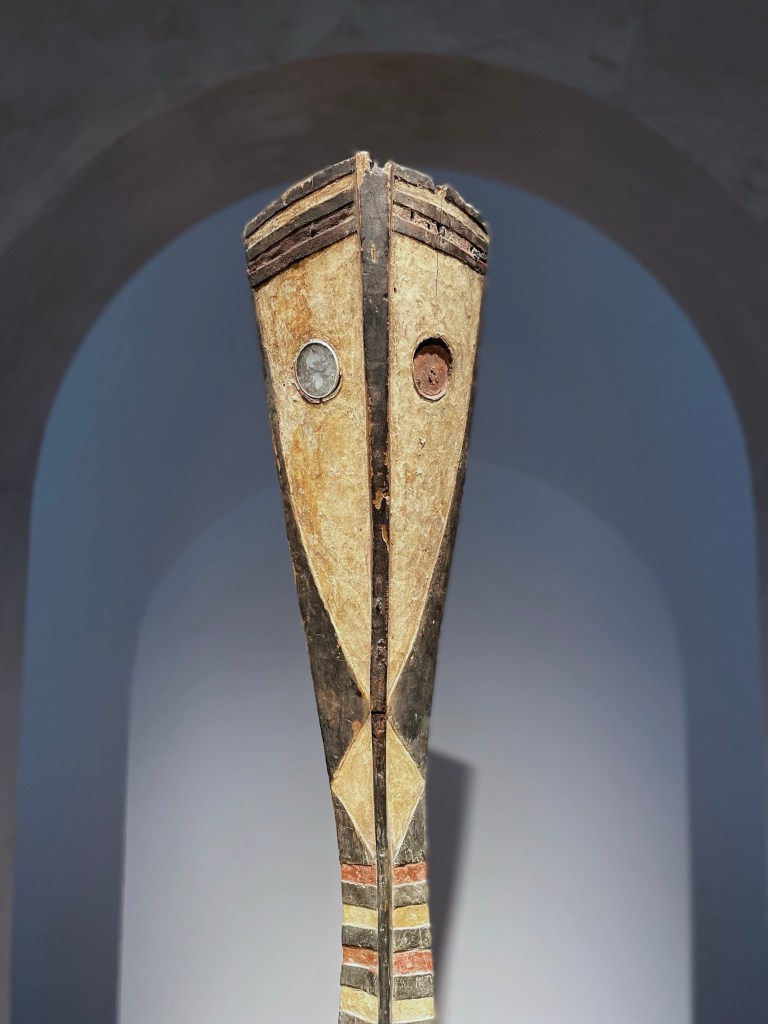
In the next salon on which the stairs arrive are usually exhibited the highlights of Christie’s sales. An hypnotic Baga snake figure (Guinea) – which embodies the snake-spirit a-mantsho-ña-tshol (“master of medicine”) according to Iris Hahner-Herzog
in African Masks. The Barbier-Mueller Collection – faced the visitors.
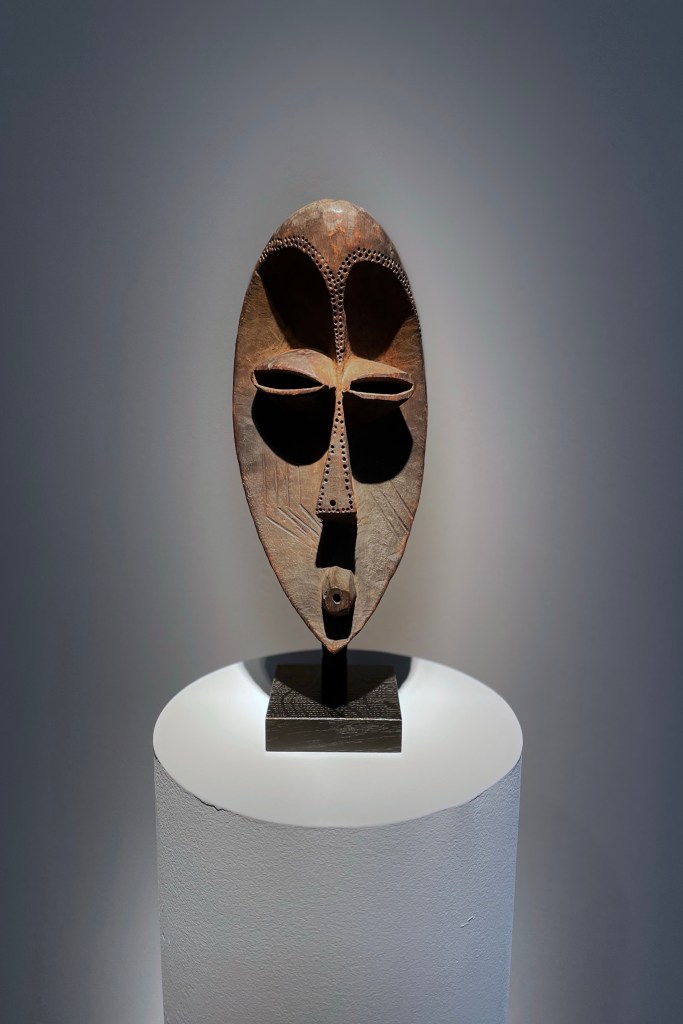
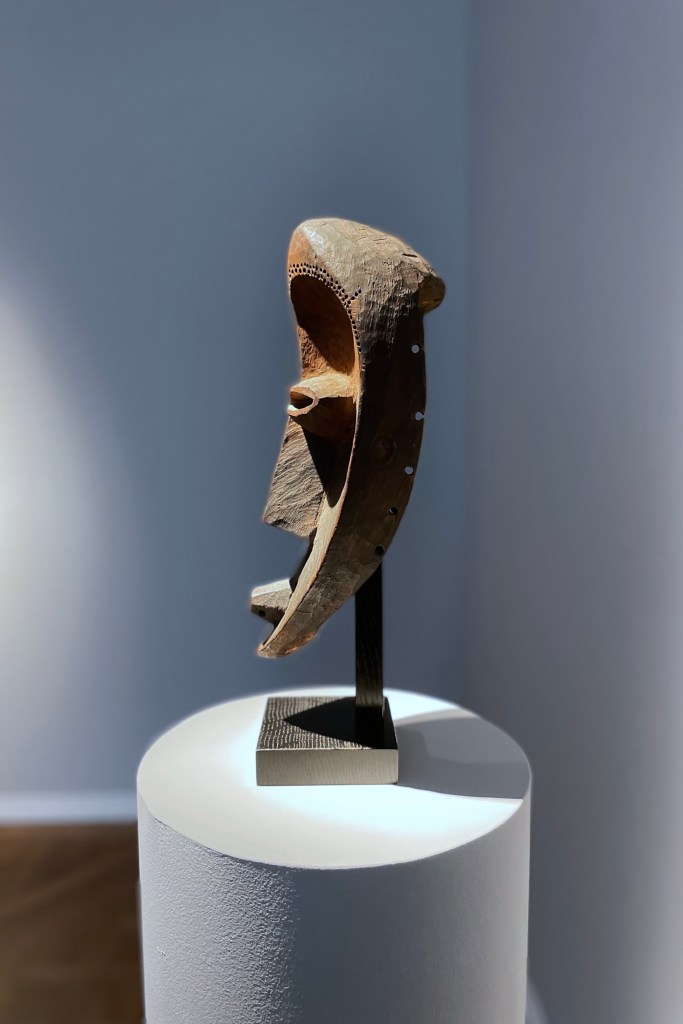
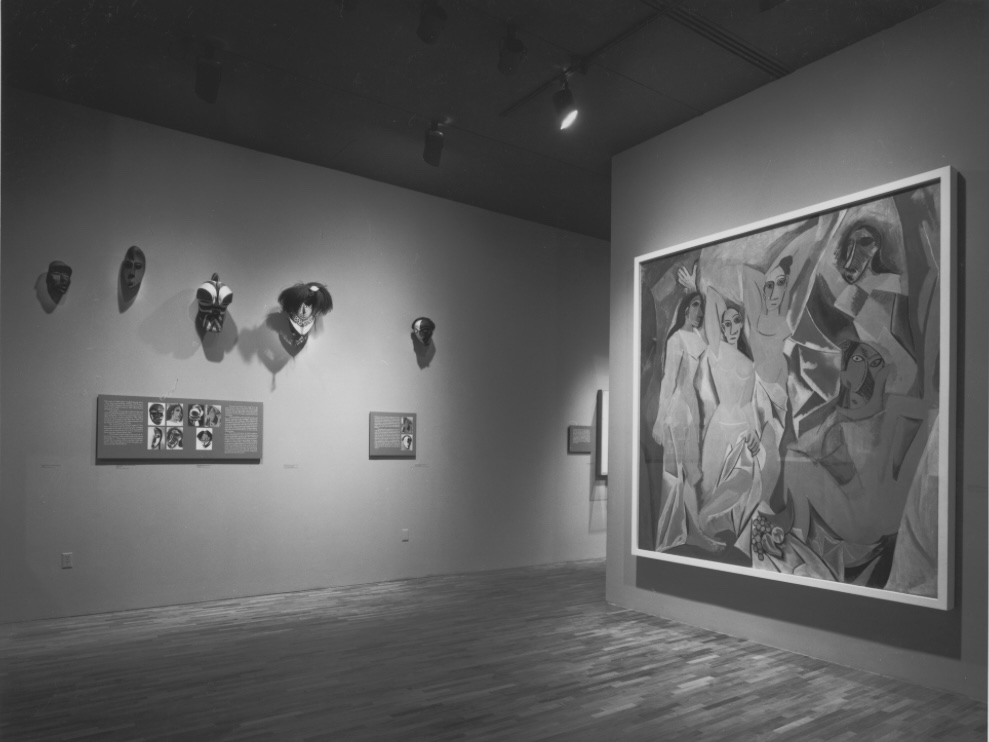
Next standed the famous Mahongwé-Ngaré mask (Democratic Republic of the Congo), sold for 4,15 millions euros: acquired by the MoMA in 1939, some writers hypothesized that mask had inspired Pablo Picasso to paint one of the face of his ‘Demoiselles d’Avignon’ in 1907. It has been shown since that it was a misunderstanding – the mask arrived in France in 1930 – nevertheless, this false idea remained in the minds, especially after the exhibition ‘”Primitivism” in 20th century Art‘ at the MoMA in which both works were exhibited near (on the picture below, the Mahongwe mask is the second from the left).
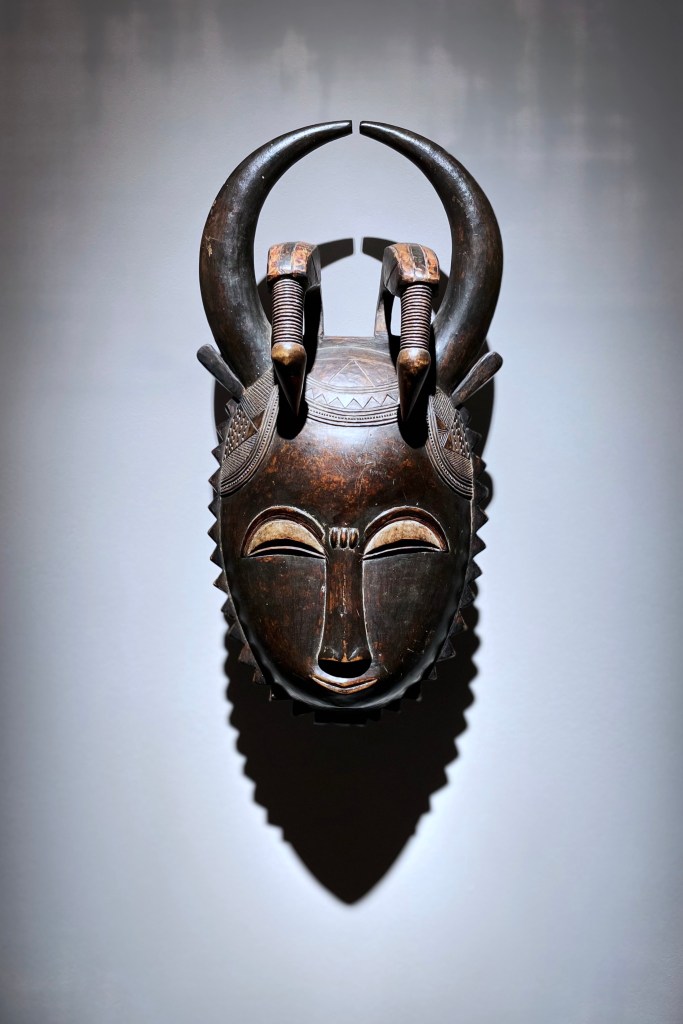
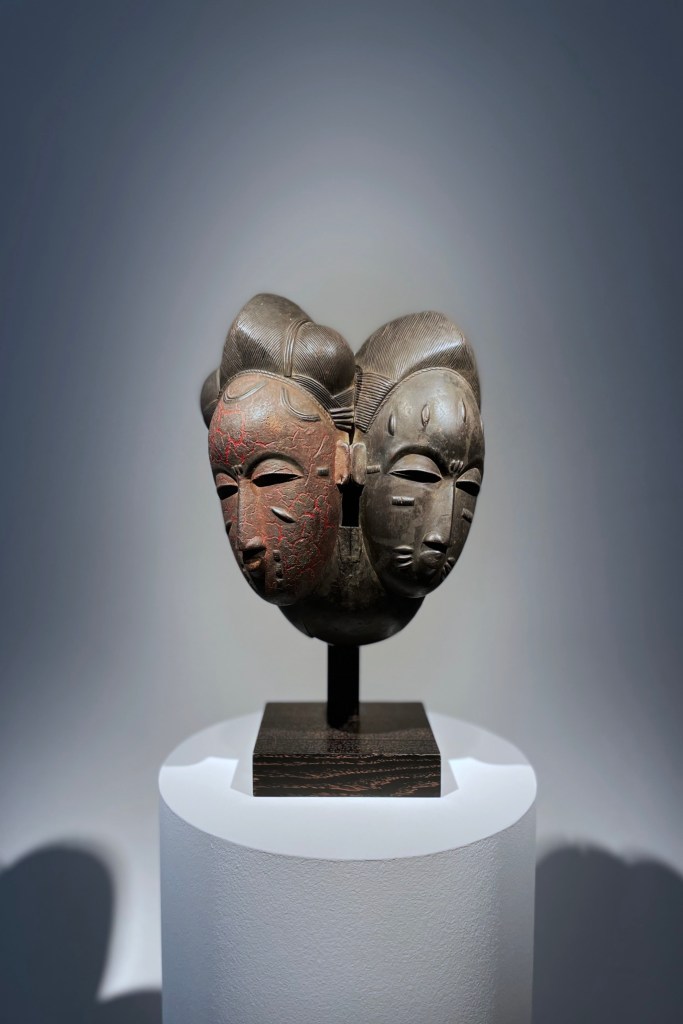
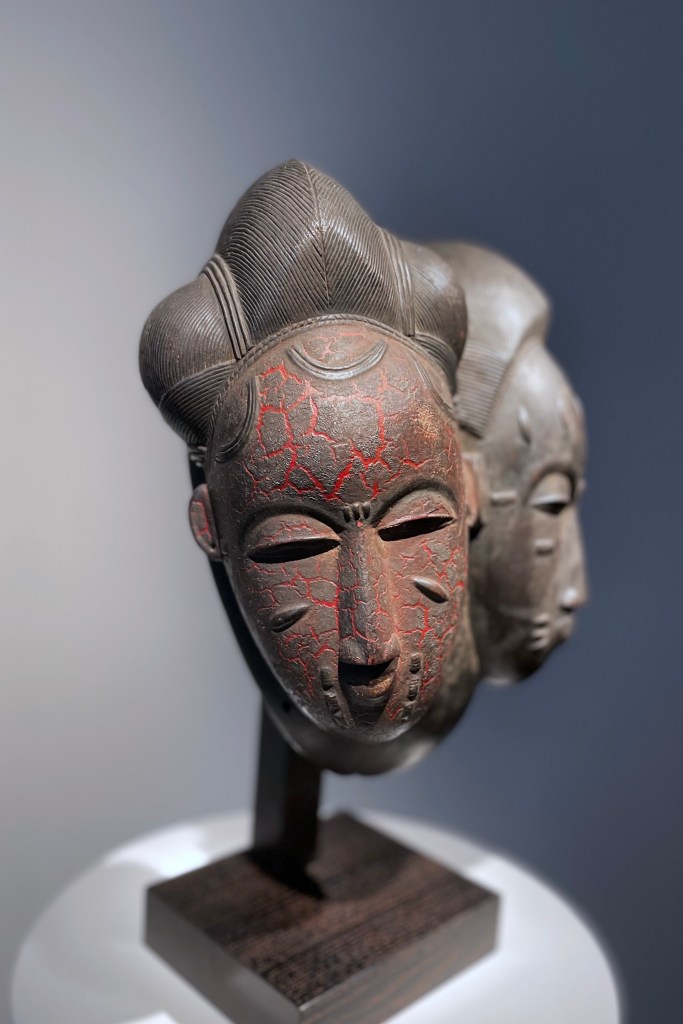
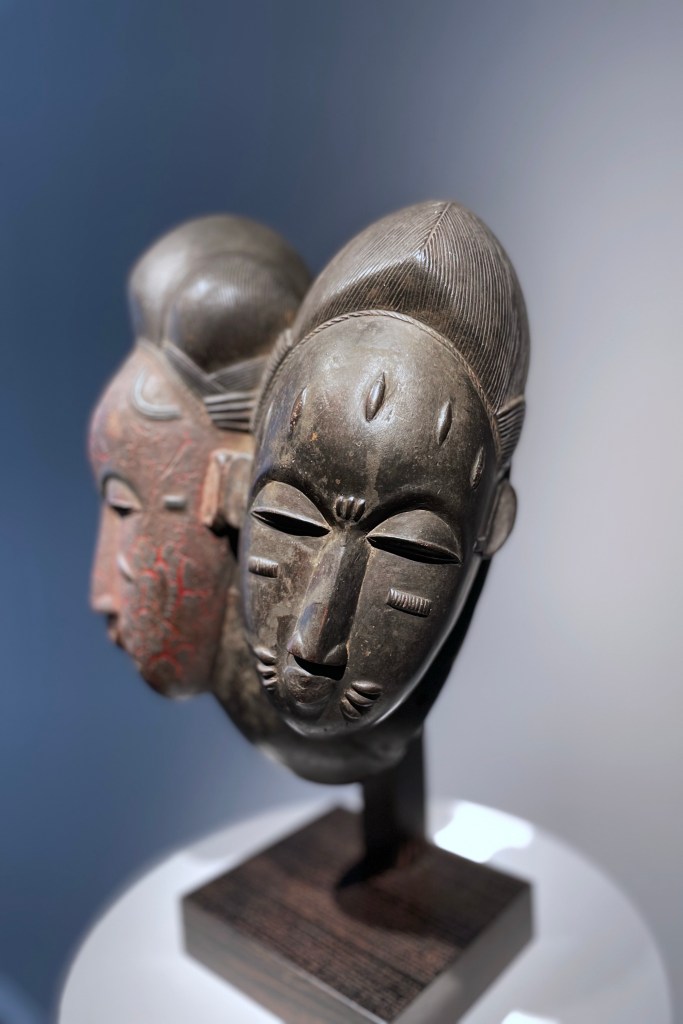
Another jewel of the Barbier-Mueller collection was listed in the sale with this beautiful Baule nda twin mask (Côte d’Ivoire) sold for 6,60 millions euros. Besides its exceptional esthetic quality, the mask has a great provenance as it once belonged to Roger Bédiat (1897-1958), a famous collector who lived in Abidjan in the 1920s. Bédiat sold it to Hélène Leloup (1927-2023) and Henri Kamer (1927-1992) in 1955, before Monique and Jean-Paul Barbier-Mueller acquired it in 1978.
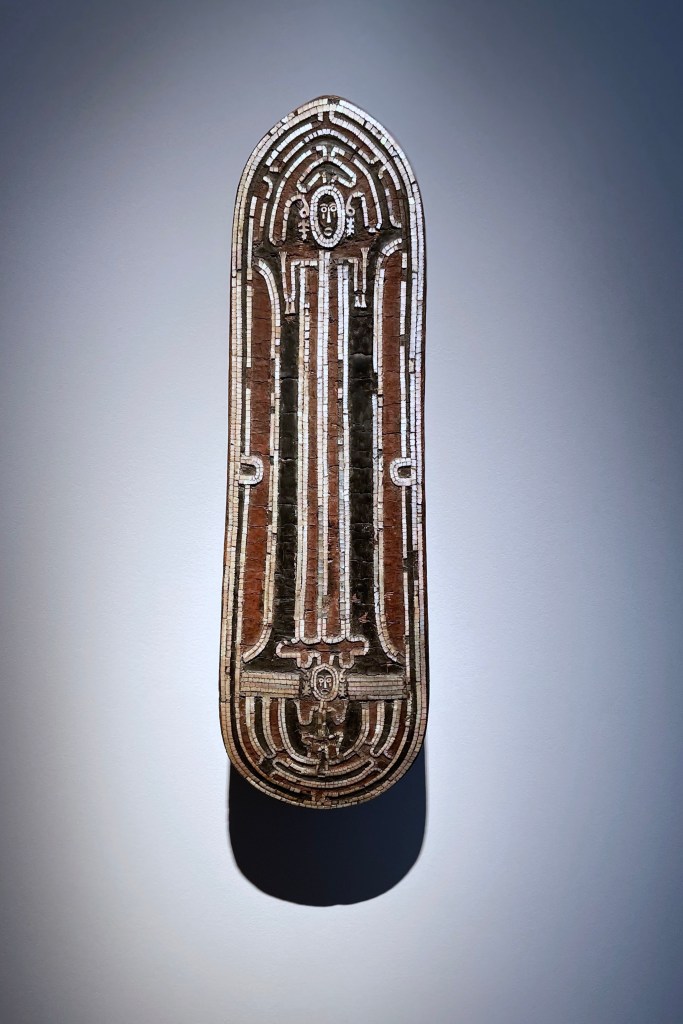
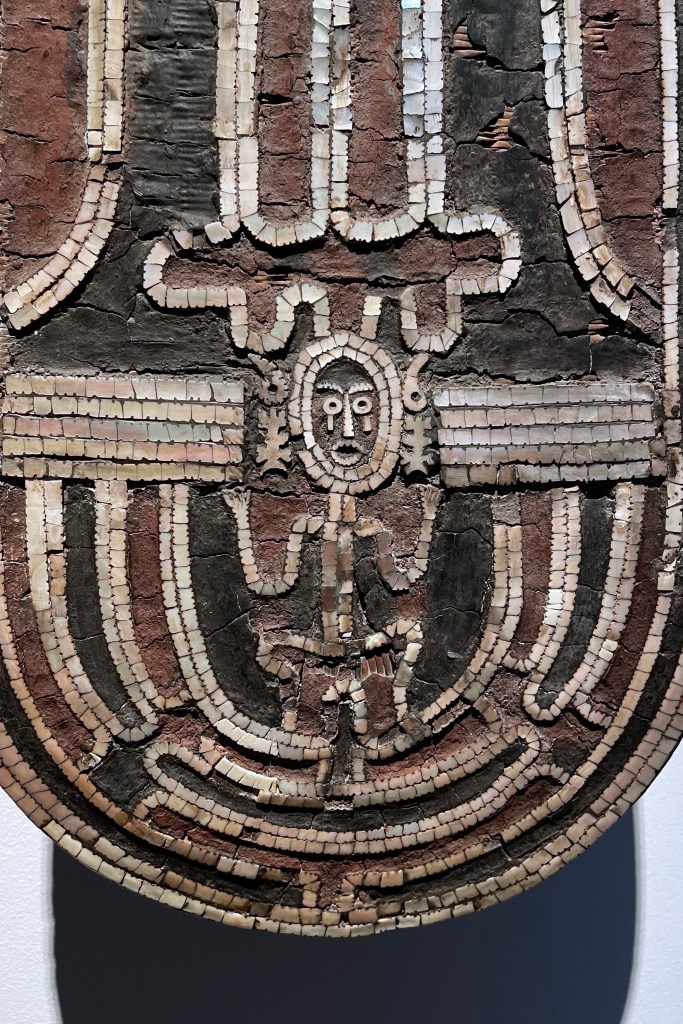
The two other important lots presented in this room were a magnificent Dogon figure (Mali) covered by a thick red ritual patina, and a finely decorated prestige shield from the Solomon Islands.

Salon Matignon III
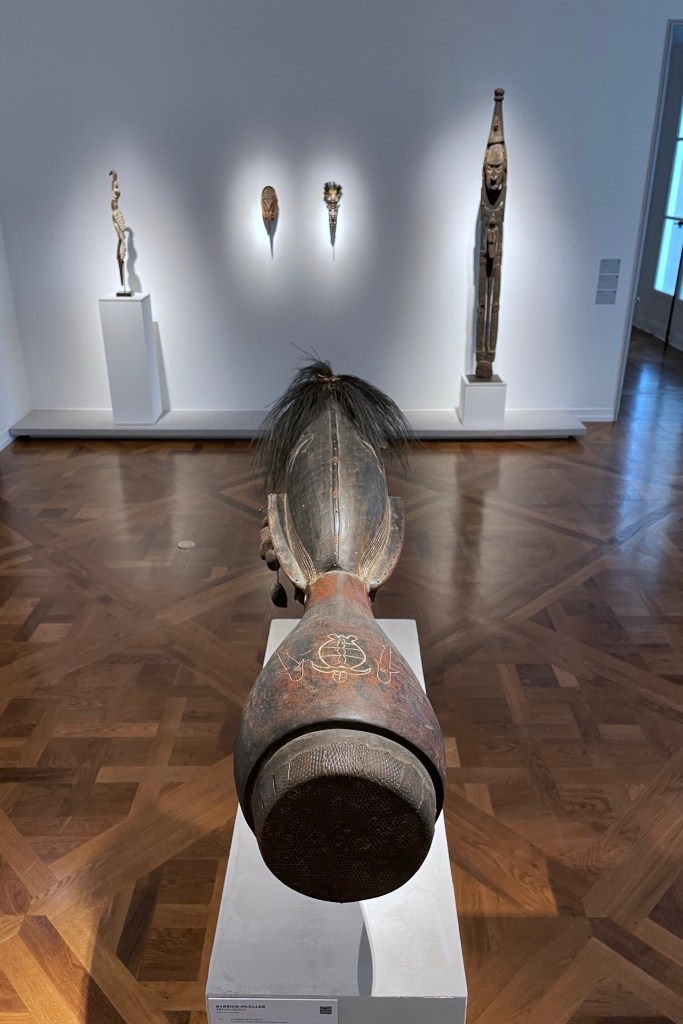
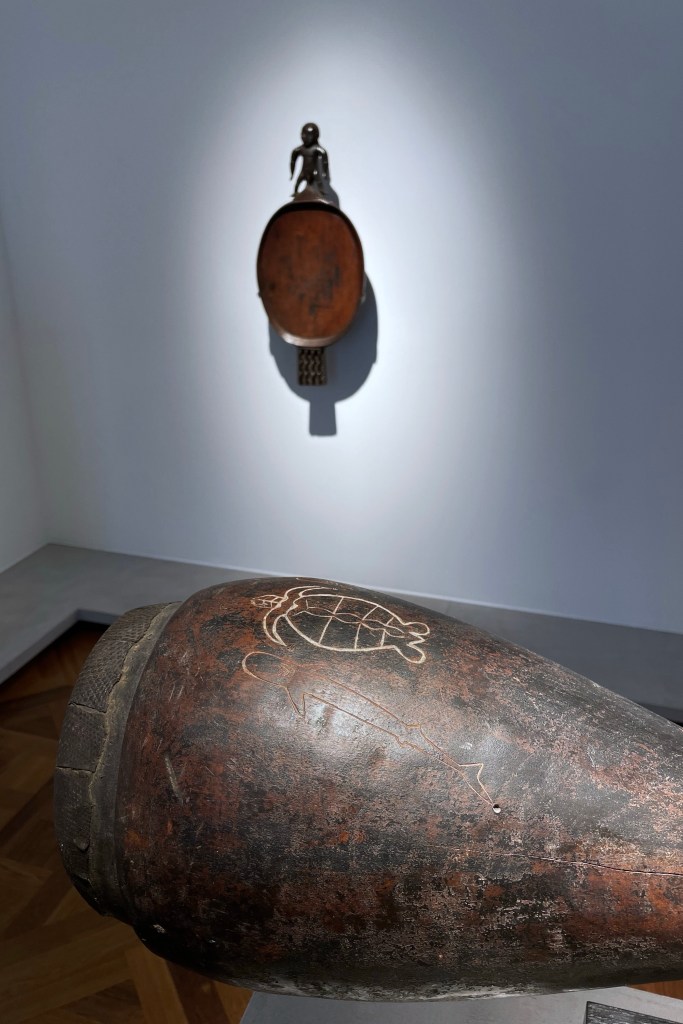
Let’s sail back to the South Seas through the Torres Strait in the next salon with an elegant warup drum and a mask from the Saibai Island, one of the most expected lot of the sale which reached 5,57 millions euros. Both quite rare in private collections, similar works can be seen at the British Museum.

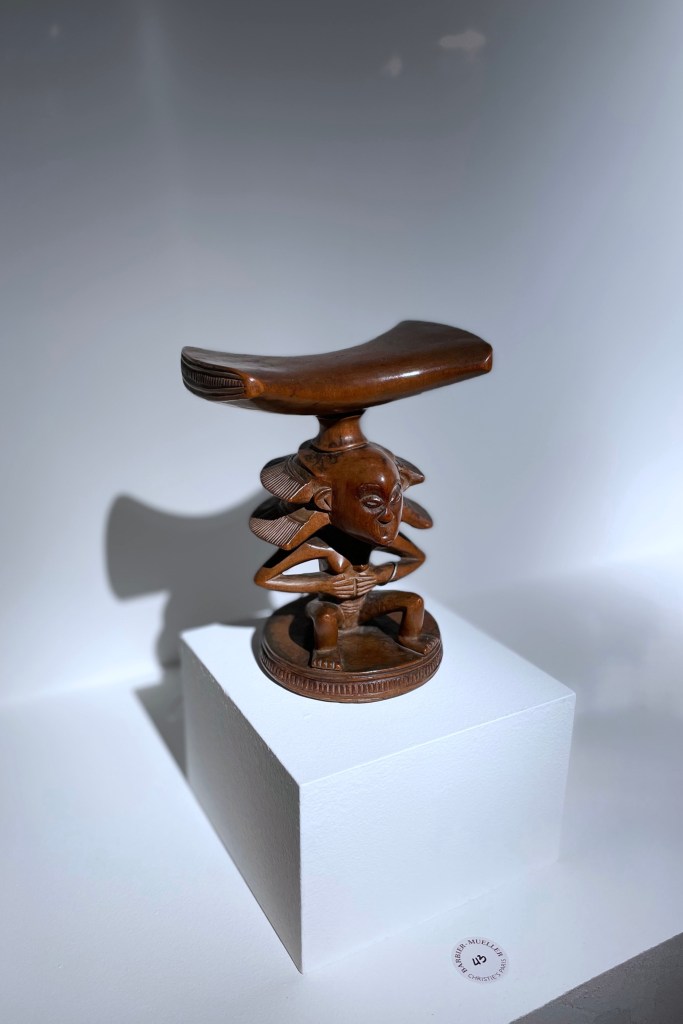
Another lot which went beyond its highest estimation (600,000€ – sold for 1,67 million euros) was this superb Luba-Shankadi headrest (Democratic Republic of the Congo), part of a small group of works from an artist to whom William Fagg and Margaret Plass gave the name of “Master of the Cascade Coiffures” in 1964.
Salon Matignon IV
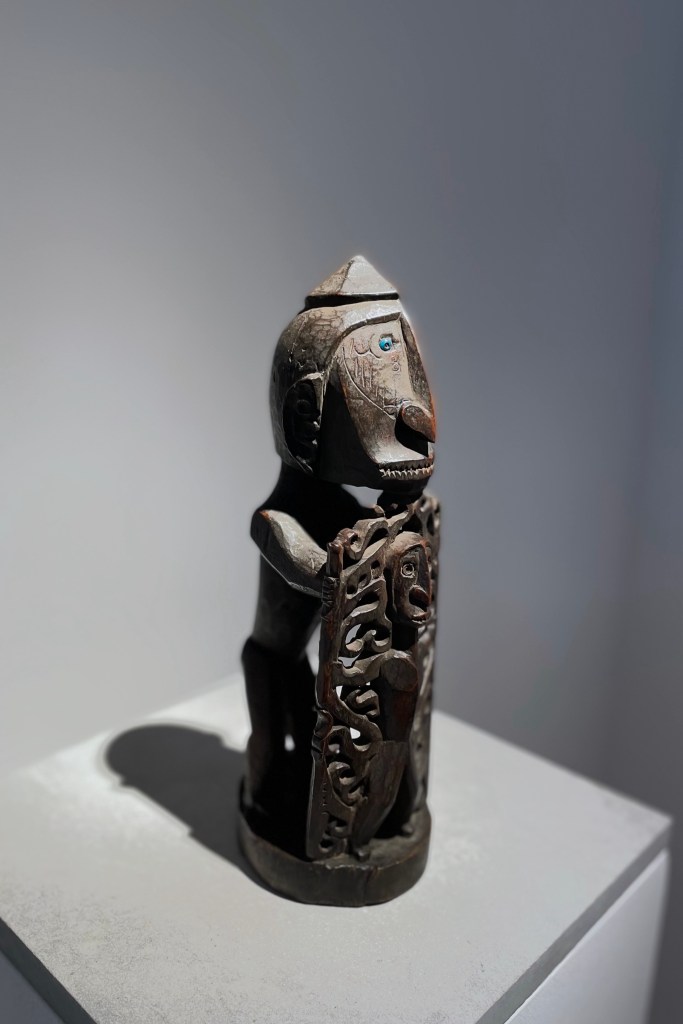
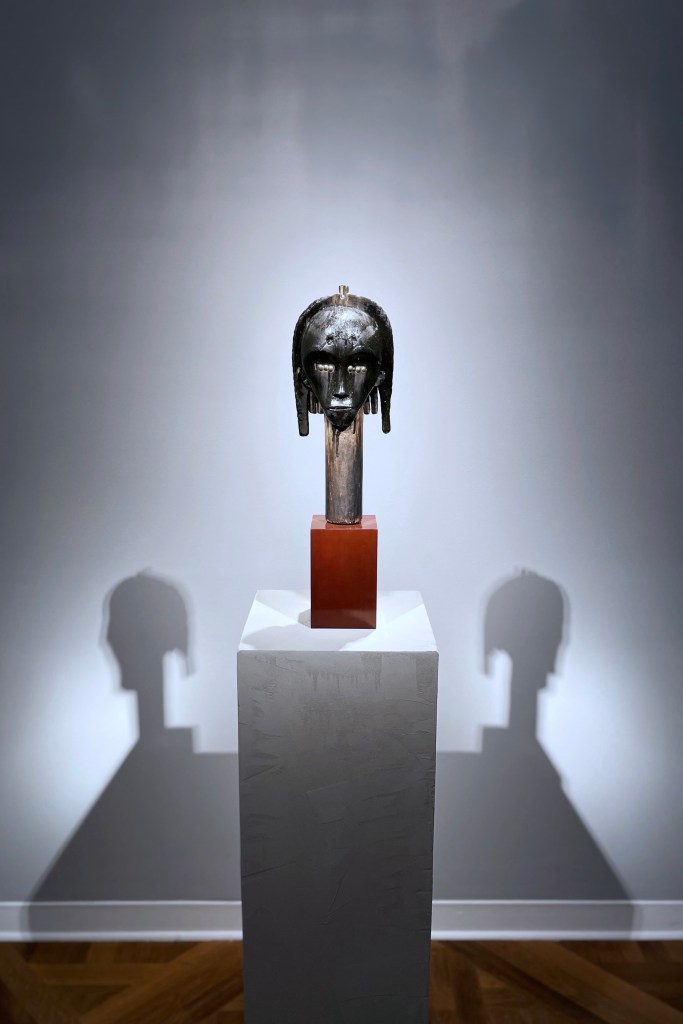
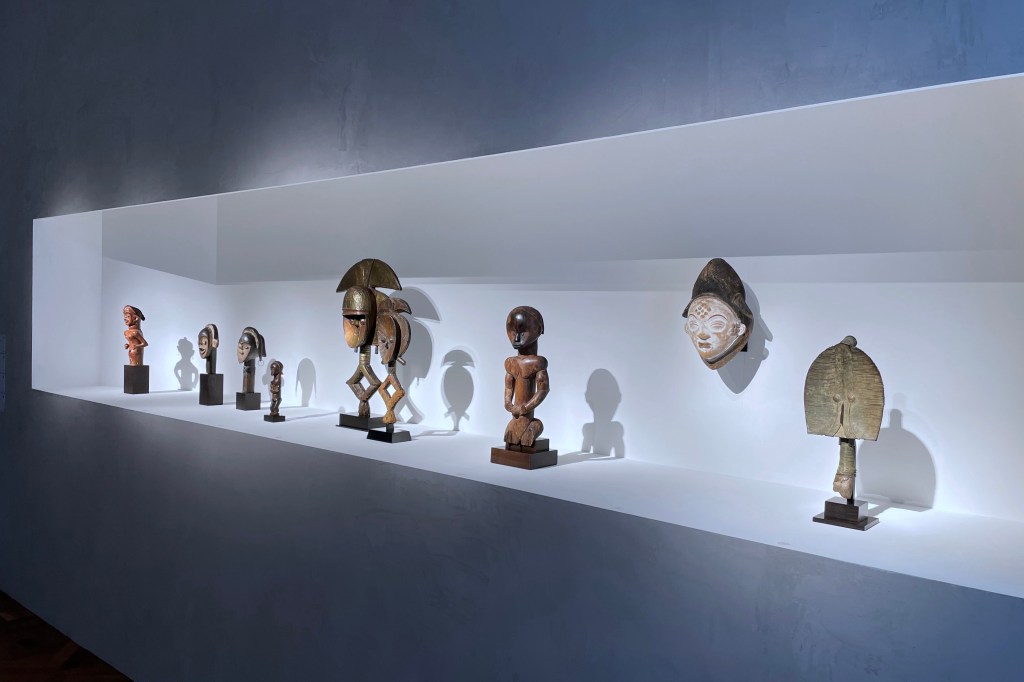
Eventually, the last exhibition room presented several reliquary heads and figures, Kota, Fang and Mahongwe, among which the highest priced lot of the auction at 14,77 millions euros, new record for an African or Oceanic artwork: the Fang-Betsi head (Gabon) was acquired by Josef Müller in January 25th 1939 from Antony Innocent Moris (1866-1951). The ‘Père Moris’, as he was nicknamed, was one of the first dealer-collector of tribal art in Paris in the 1920s-1930s and a well known figure among enthusiasts, whose collection had been acquired by Charles Ratton and mainly by Pierre Verité. Close to two other heads which belong to the Musée du Quai Branly-Jacques Chirac and the Dapper collection, the Moris/Barbier-Mueller head is a real masterpiece of the Fang art.
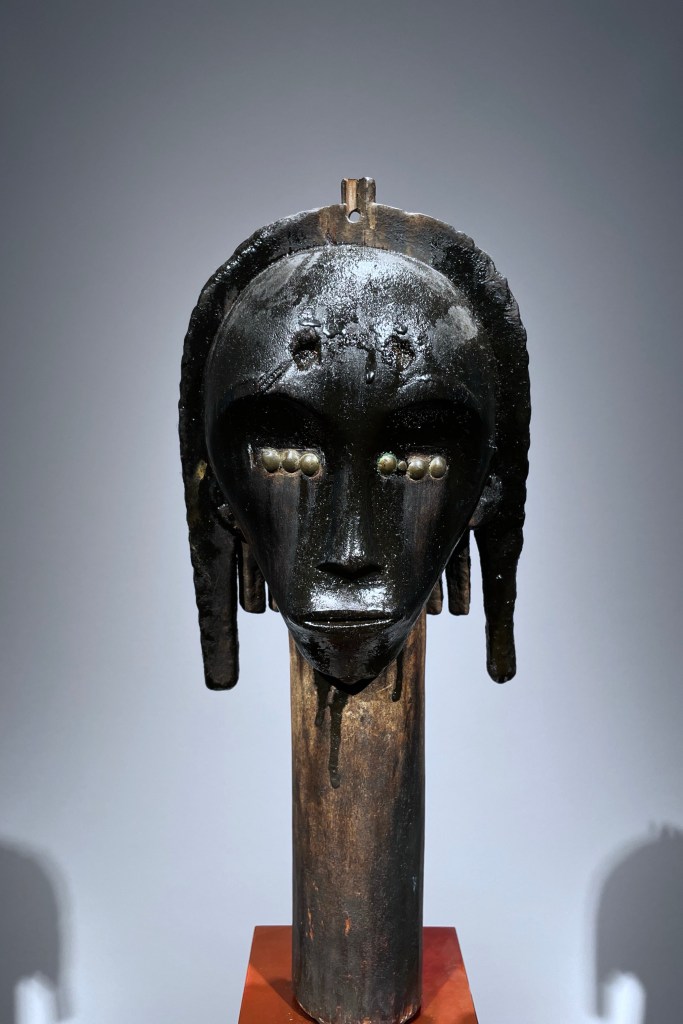
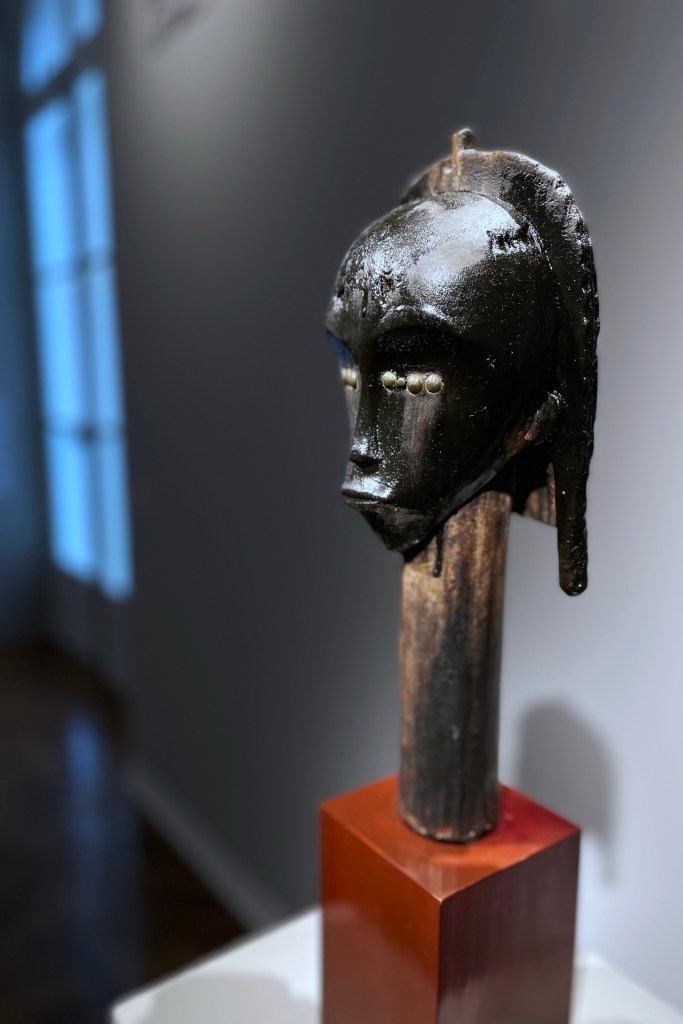
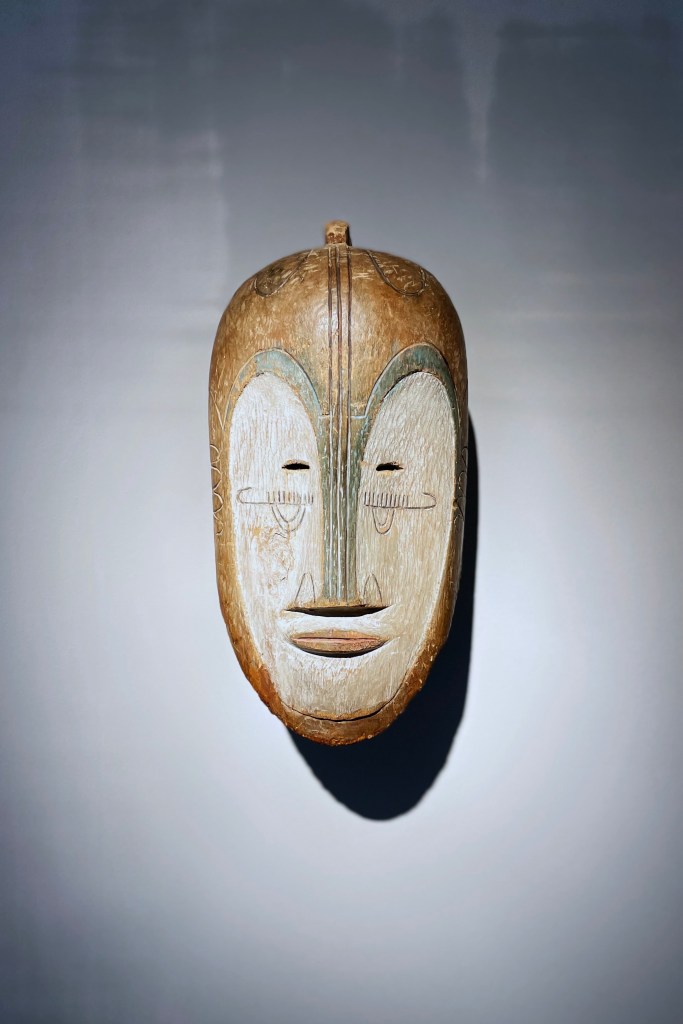
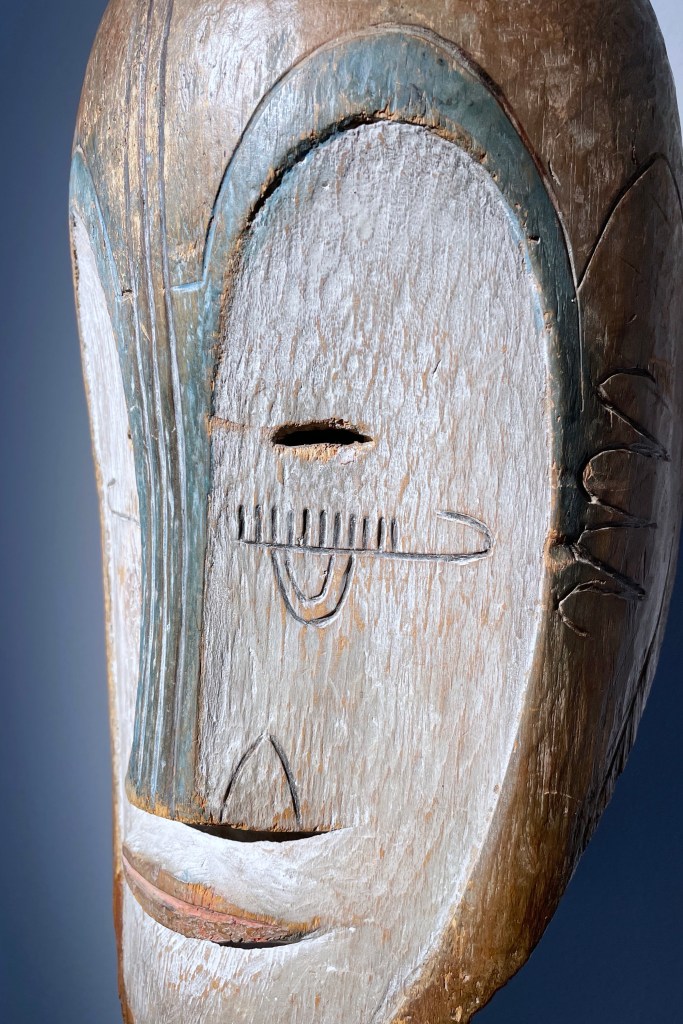
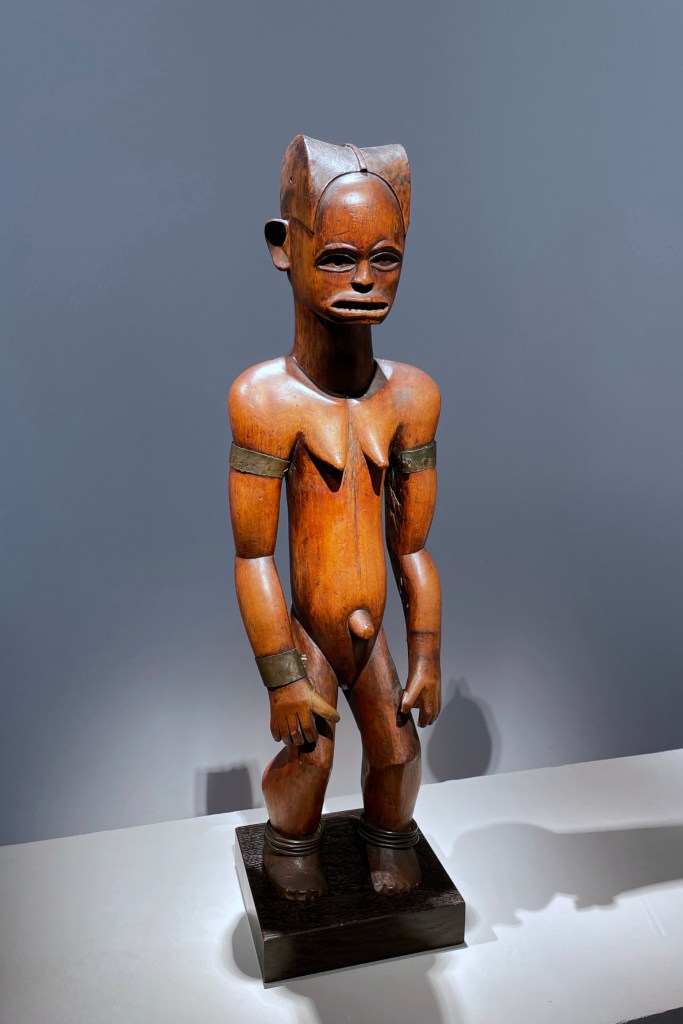
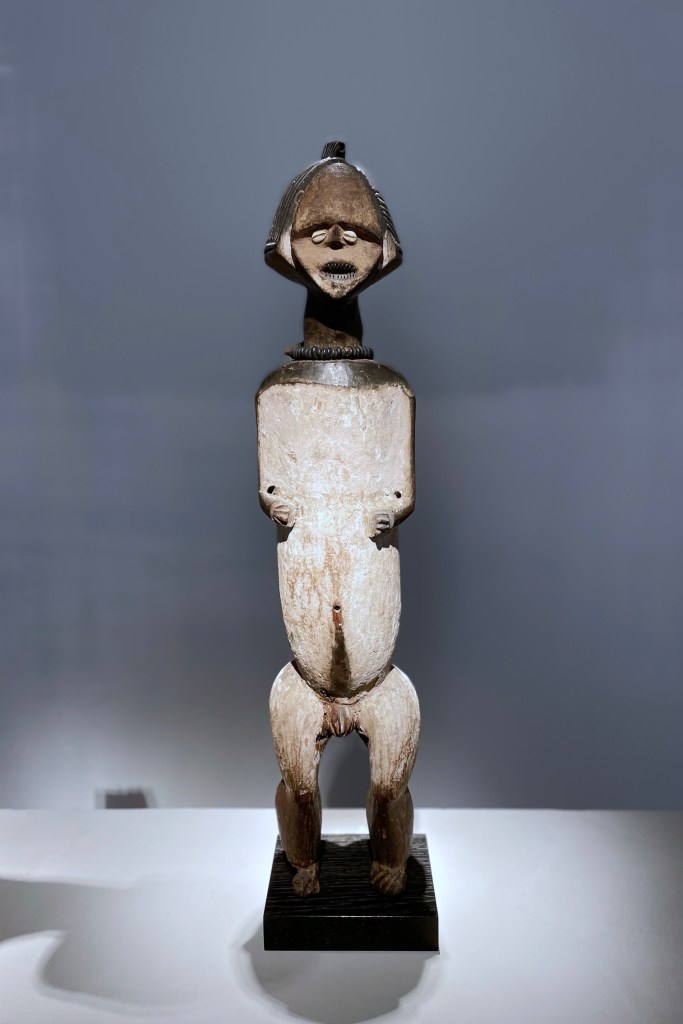
Two other remarkable lots closed the exhibition: a Fang-Mabea reliquary figure (Cameroon) and a Mbete figure (Gabon), powerful portraits of male ancestors – both sold for 1,85 millions euros each.
Sources:
- ‘Barbier-Mueller: Art as legacy’, Christie’s Paris, March 6th 2023 sale
- “Primitivism” in 20th Century Art: Affinity of the Tribal and the Modern, exhibition at the MoMA, New-York, Sep 27, 1984–Jan 15, 1985
- Josef Müller and Jean-Paul Barbier-Mueller in the archives of Le Monde and Monique Barbier-Mueller in La Gazette Drouot (in French)
Photos credits (when not mentioned): @elegantinparis
 Elégances Parisiennes