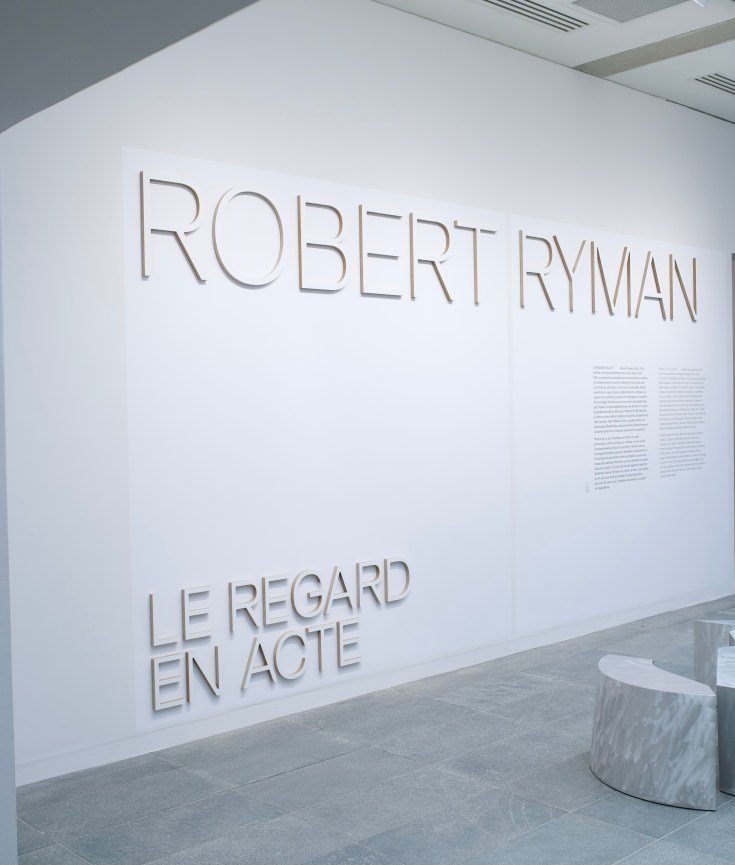

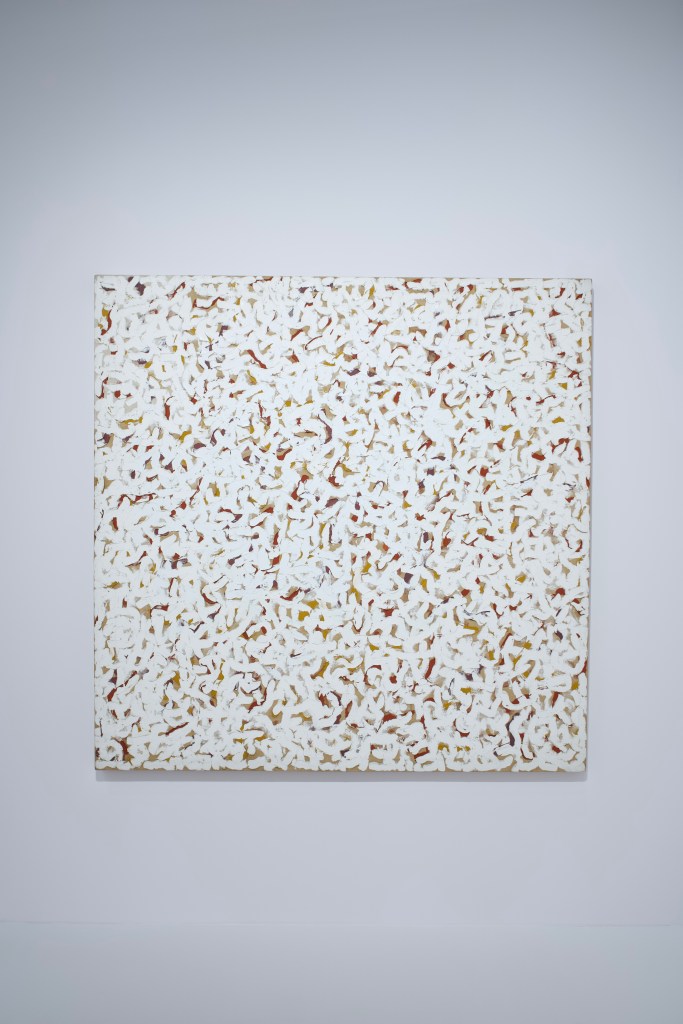
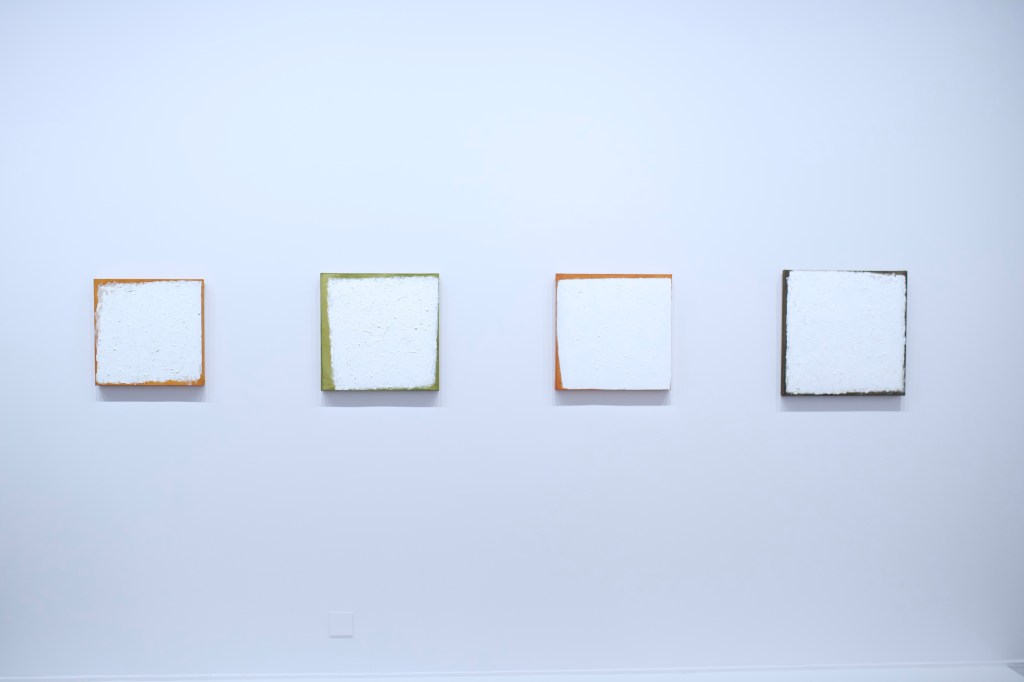
White squares… Like the plain white sleeve of the Beatles’ ‘White Album‘ (1968). Or the ones painted by Kazimir Malevitch on his ‘Suprematist Composition: White on White‘ (1918). Robert Rauschenberg also showed some interest in this thematic with his ‘White Paintings‘ (1951). But Robert Ryman (1930-2019), him, decided to go further: during almost sixty years, he experimented various sizes, materials and media to realize paintings of the same shape (square) and (non-)color.
Between March 6th and July 1st 2024, the Musée de l’Orangerie gathered around forty paintings of the American artist in ‘The act of looking‘ exhibition, the first in a French museum since 1981.
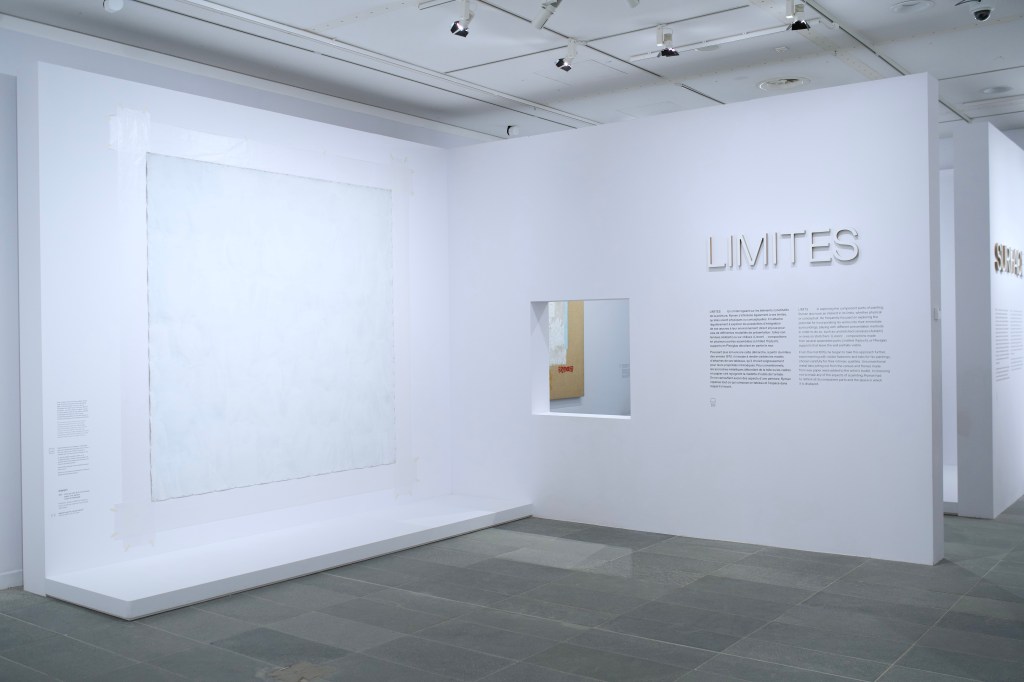
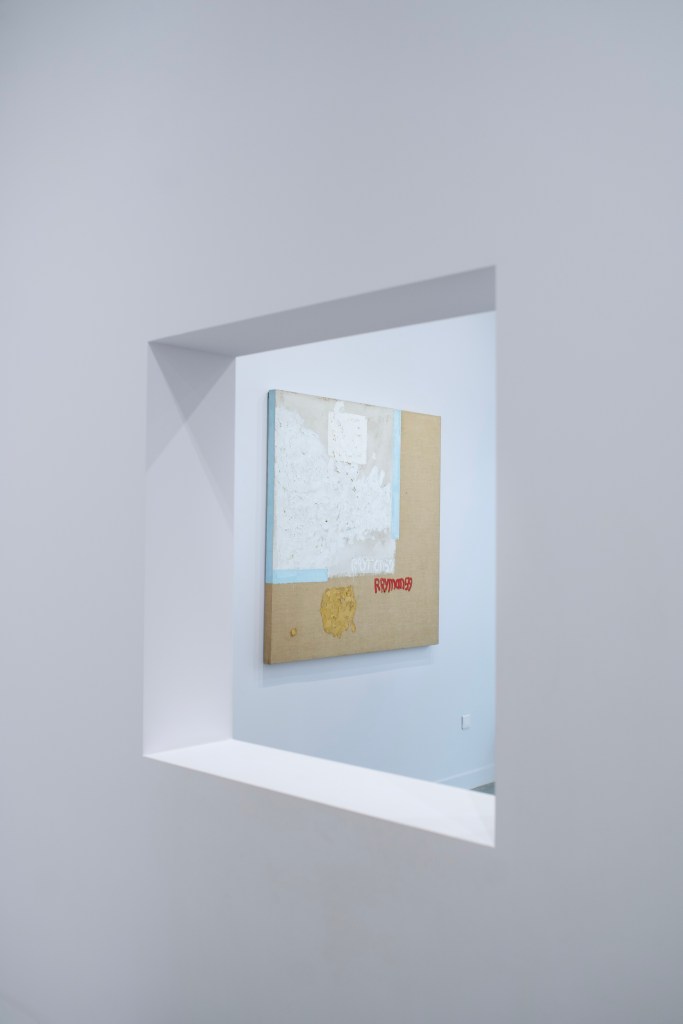

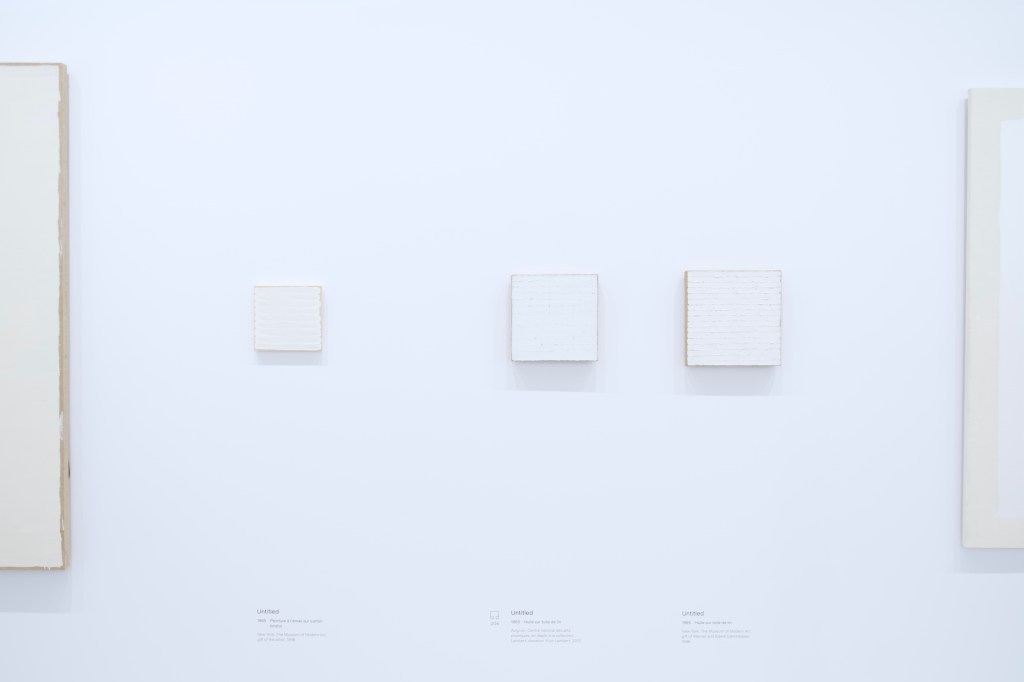
Born in Nashville, Tennessee, Ryman studied music and played the tenor saxophone before moving to New-York in 1952. As he worked as security guard at the MoMA between 1953 and 1960, surrounded by the newly acquired works of Mark Rothko, Willem de Kooking and Jackson Pollock, he started to paint – the earliest works from the show are from 1959.
Inspired by abstract expressionism, his monochromatic – or achromatic – works are marked by his research on the medium and the material. Yet he has often been listed as minimalist, a movement which emerged in the mid-1960s (Frank Stella, Donald Judd, Carl Andre, Robert Morris or Sol LeWitt) in reaction of expressionism and pop art, Ryman rejected any theorical ties to this movement.
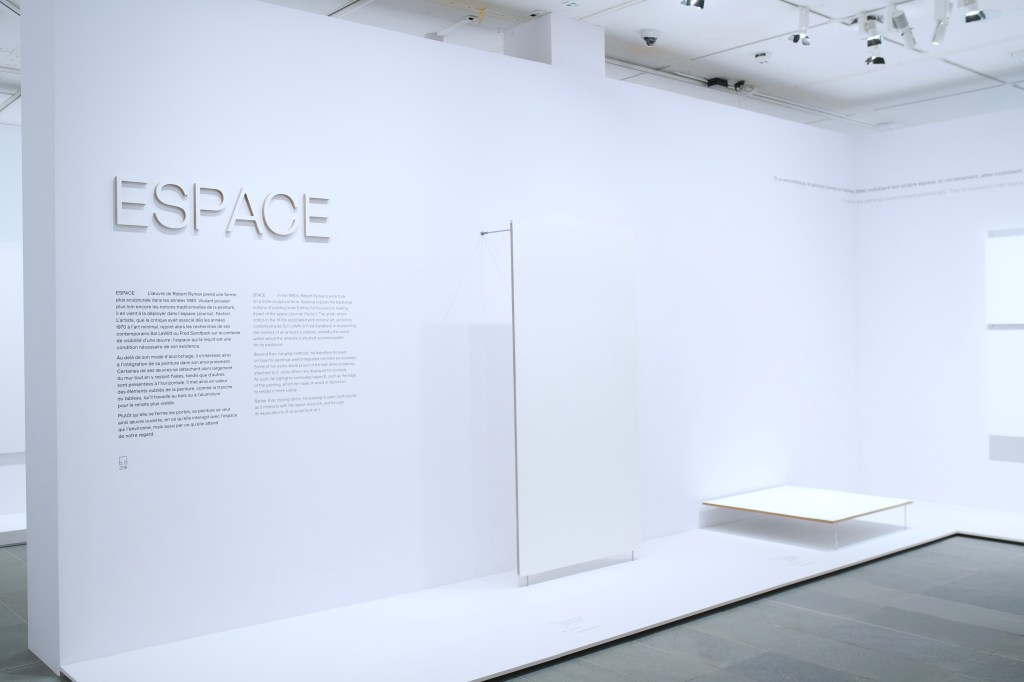
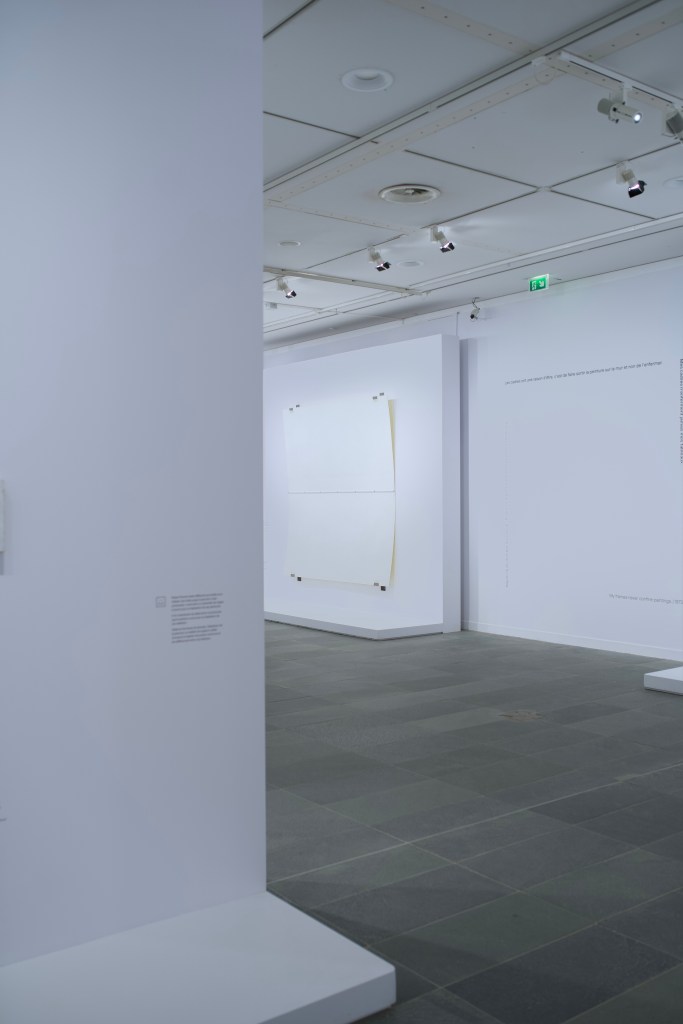
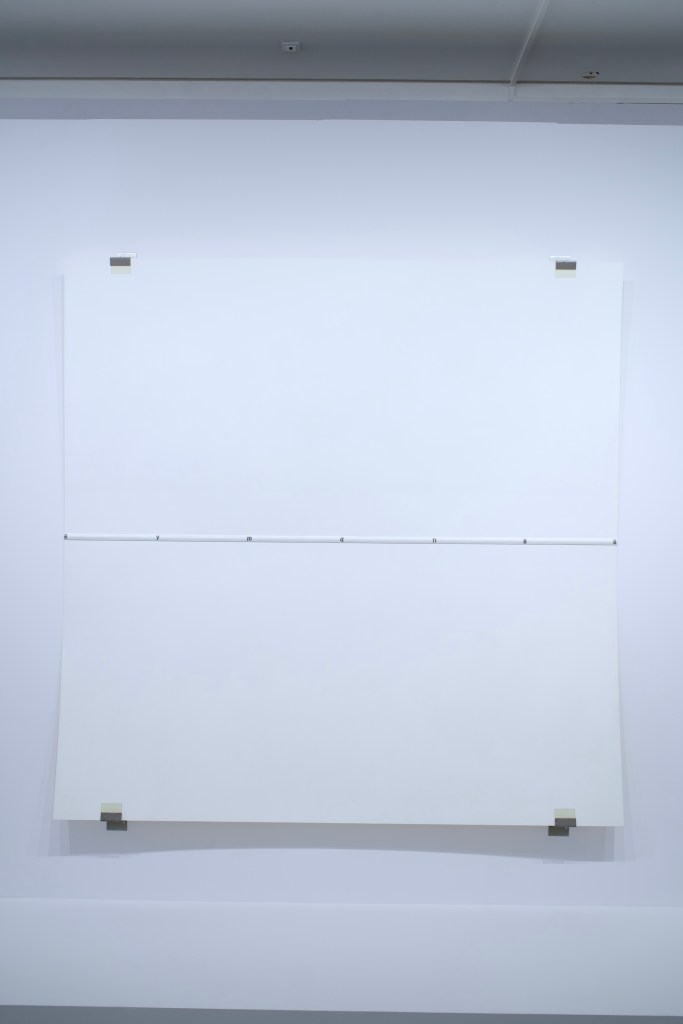
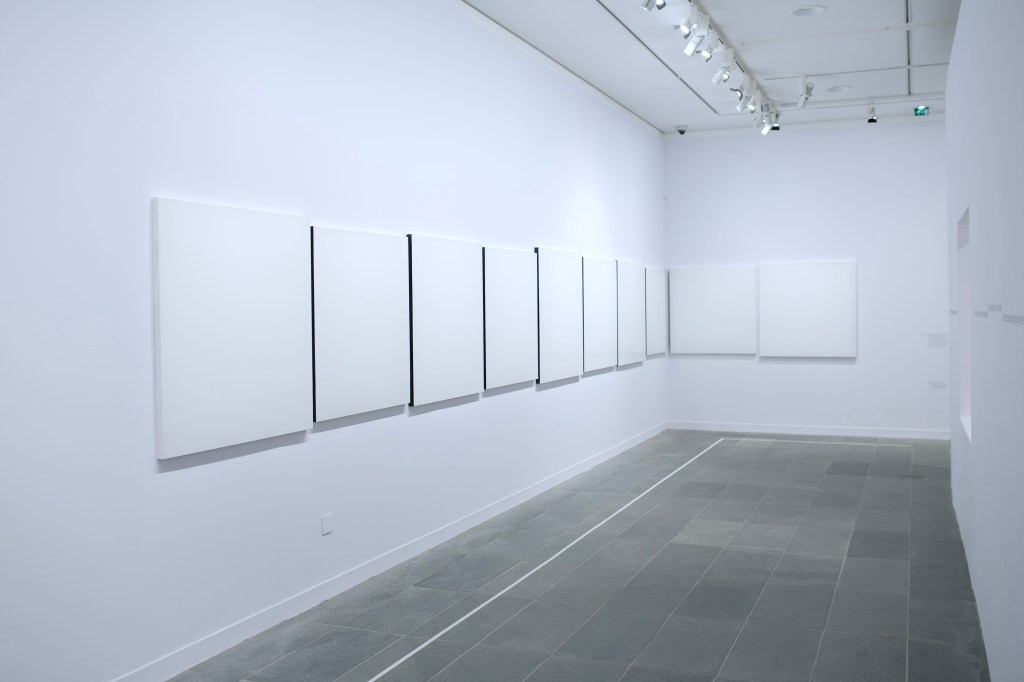
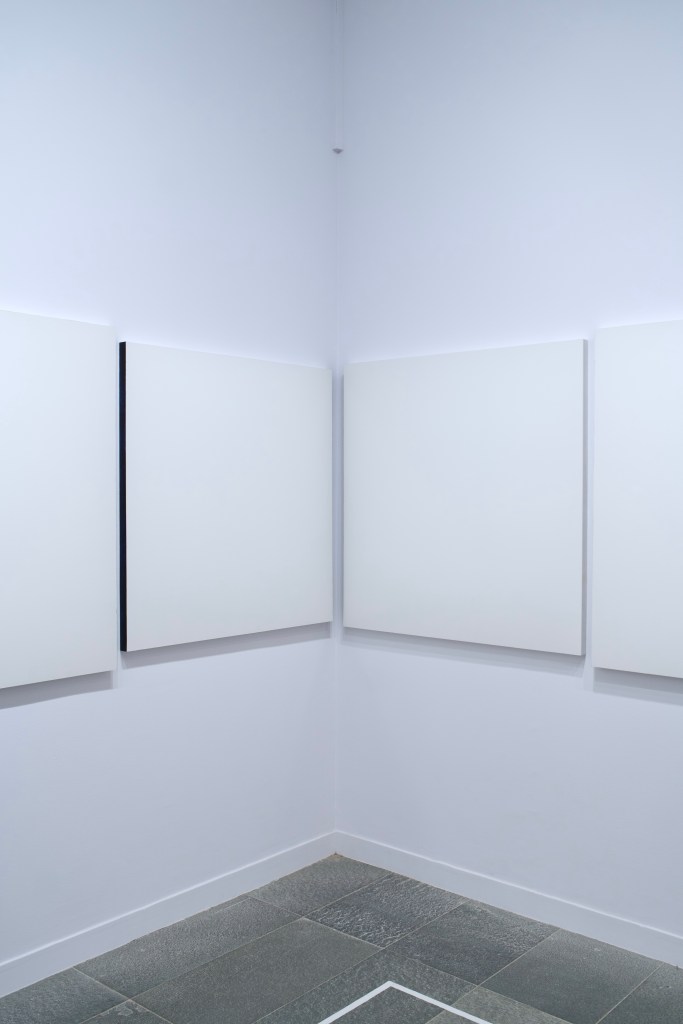
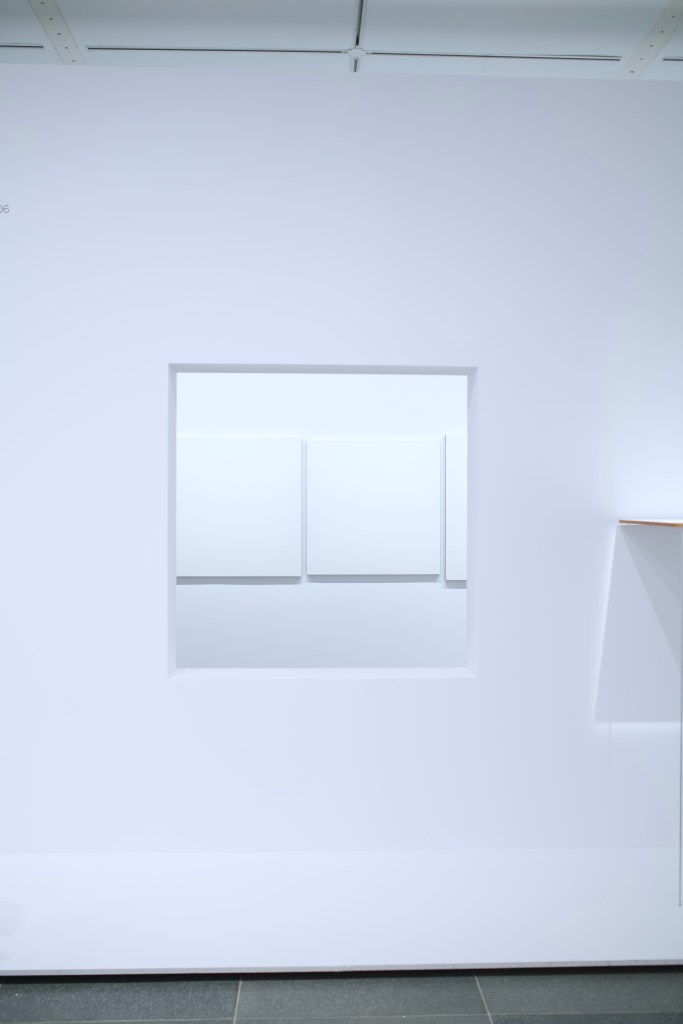
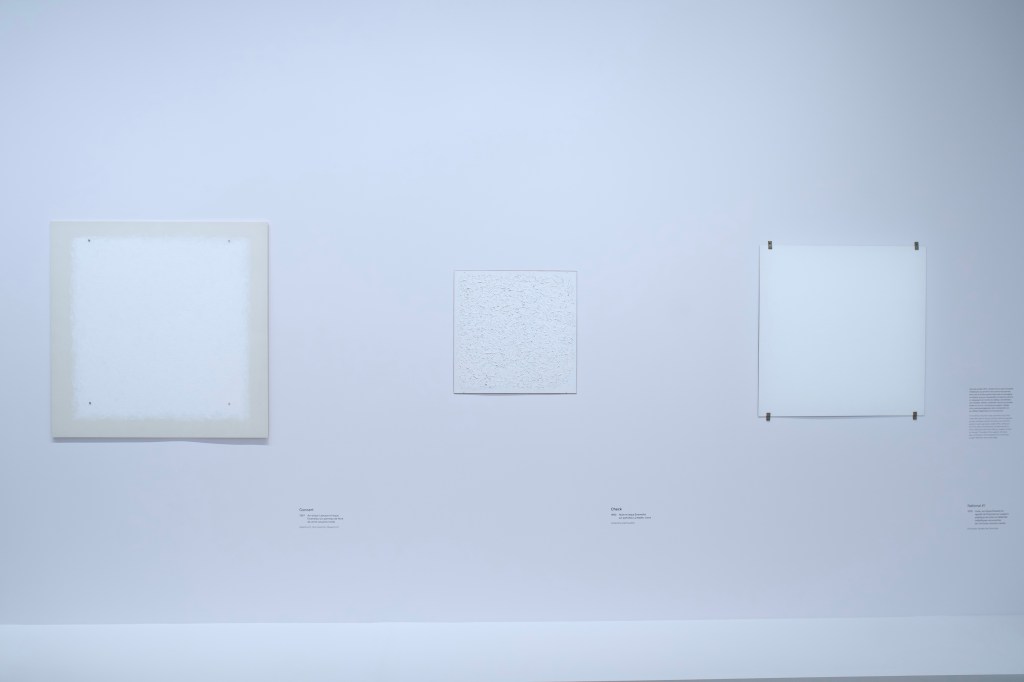
With enough space between each work, the exhibition allowed to highlight the specificities of Ryman’s painting:
- Light – the American painter wanted the lighting to be as neutral, uniform and natural as possible.
- Material – oil paint, graphite pencil, charcoal, acrylic paint, enamel paint, chalk, synthetic polymer-based paint, fiberglass… are some of the various materials he tried all over the years.
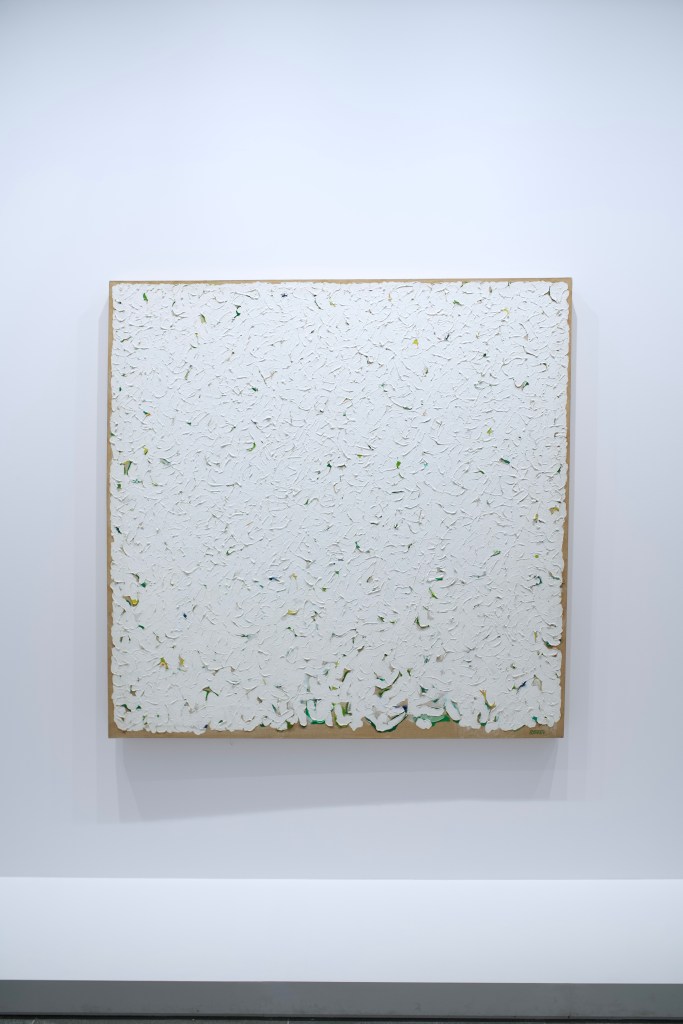
- Space – dismissing the traditional formats of painting (portraits and landscapes), with or without frame, Ryman payed attention to how his works were displayed. Thus, some of the works presented were hung with metal clasps or placed on small metal bars.
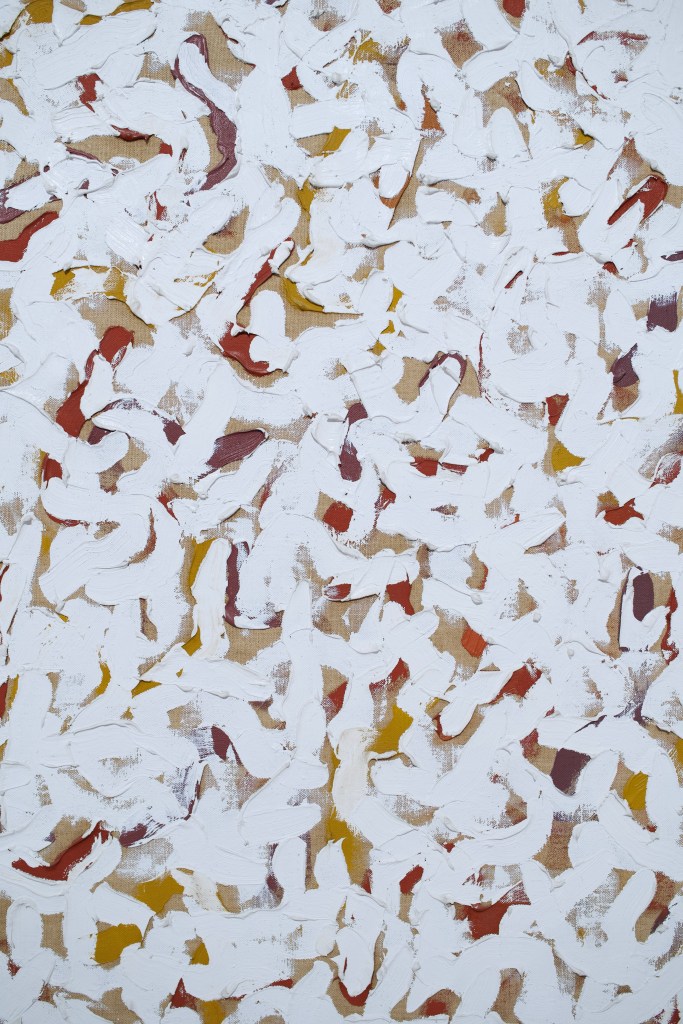
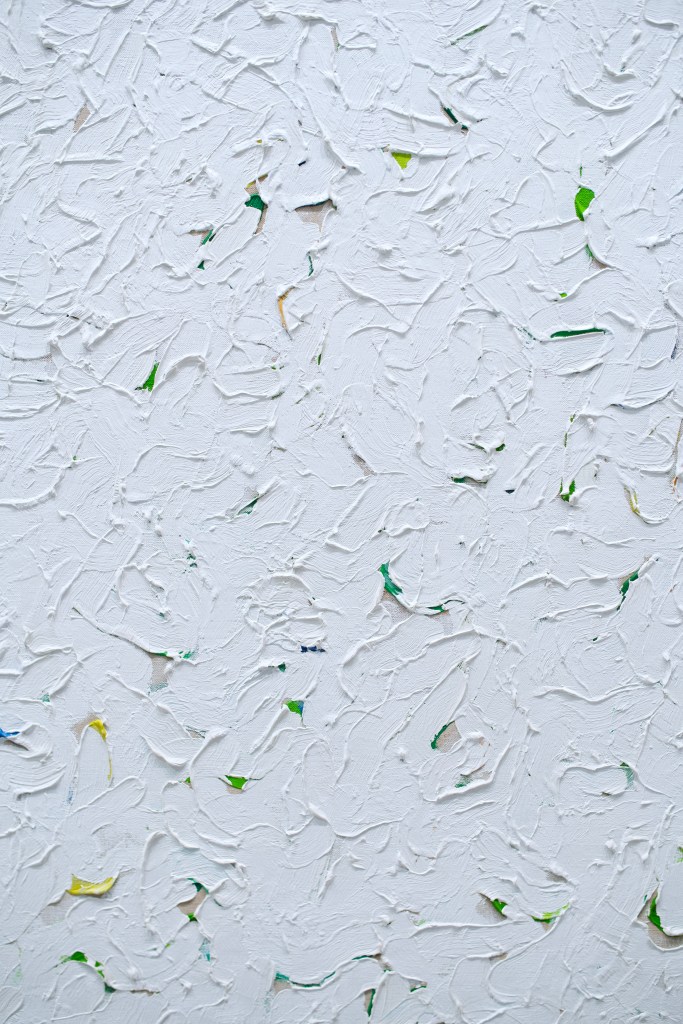
- White – most of his works are not plain white, but one can see the different shades, and sometimes a bit of colour under the white brushstrokes. Ryman liked to play on the variation of consistency, transparency and tonality (warmer or colder), making each painting different. In his latest works, a little colour can even be seen on the edge.
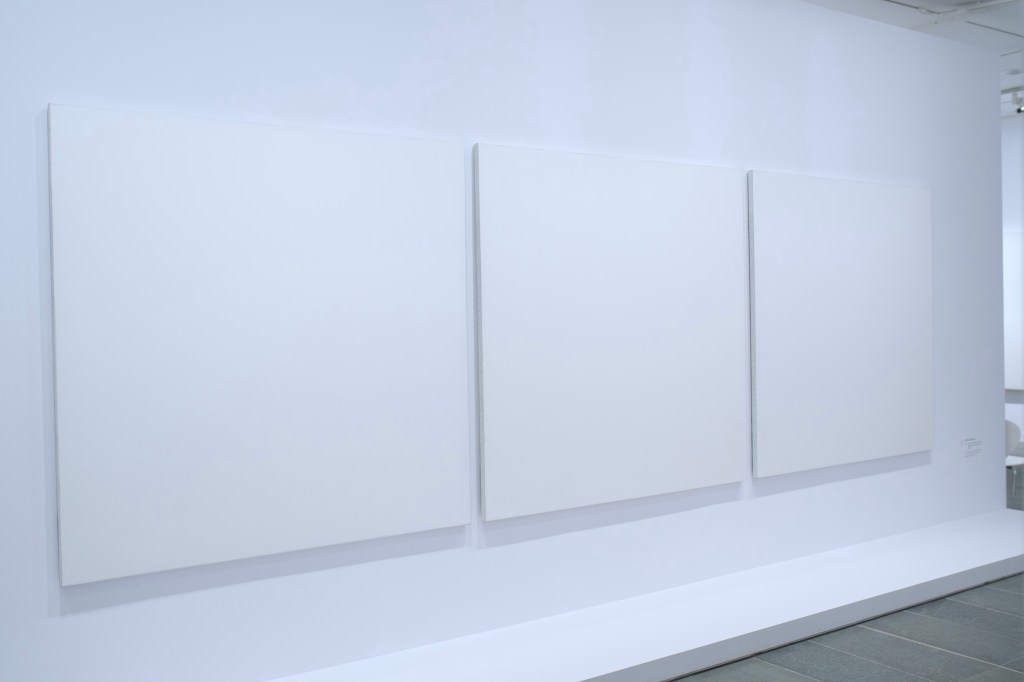
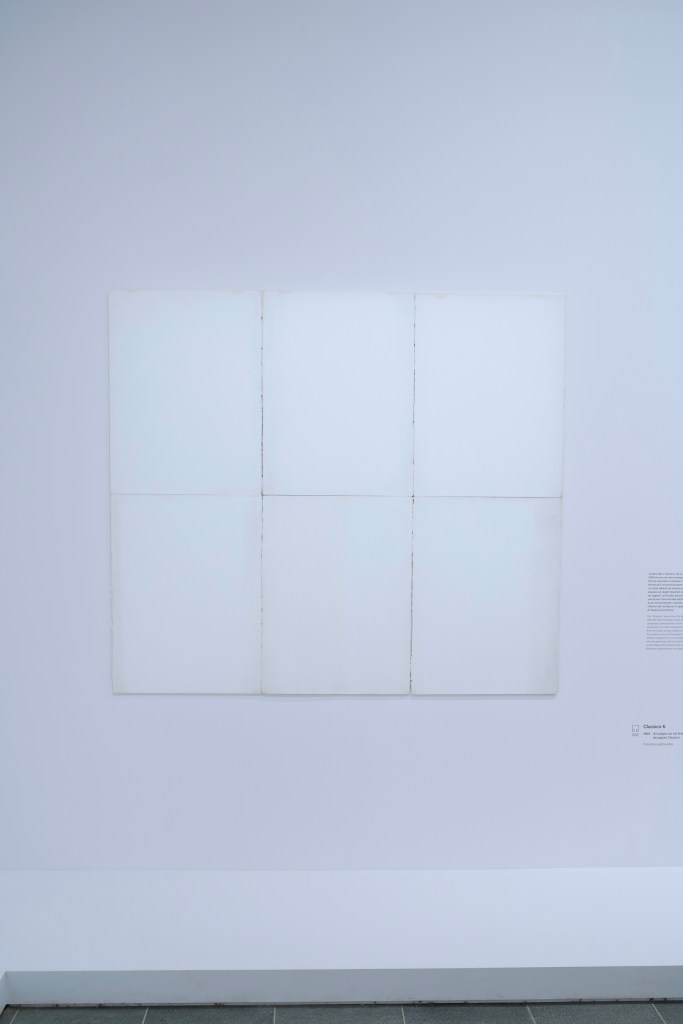
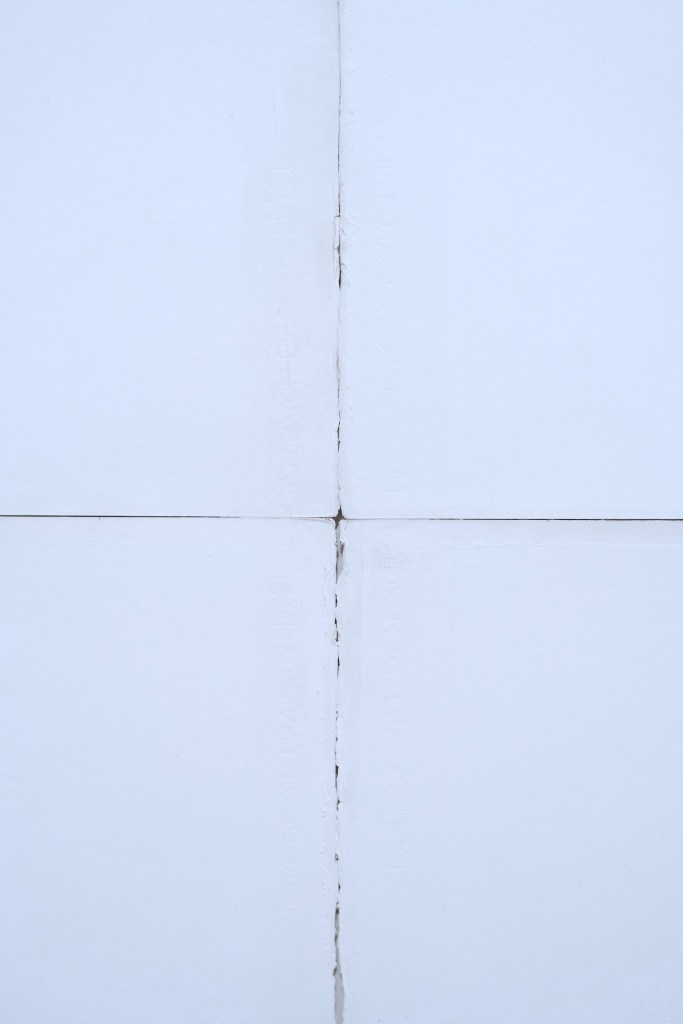
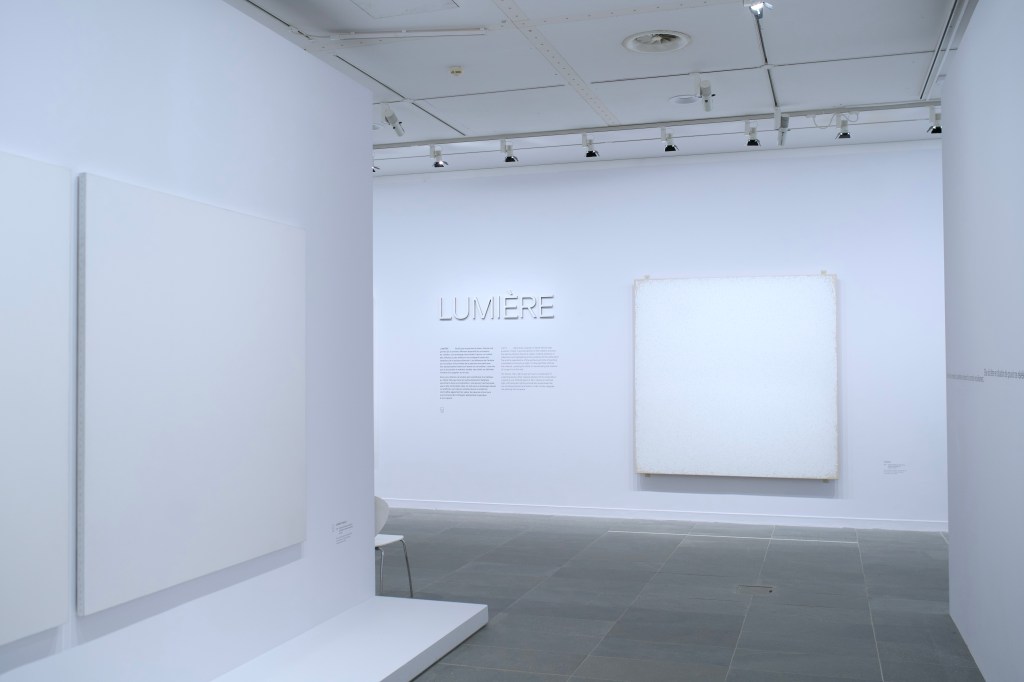
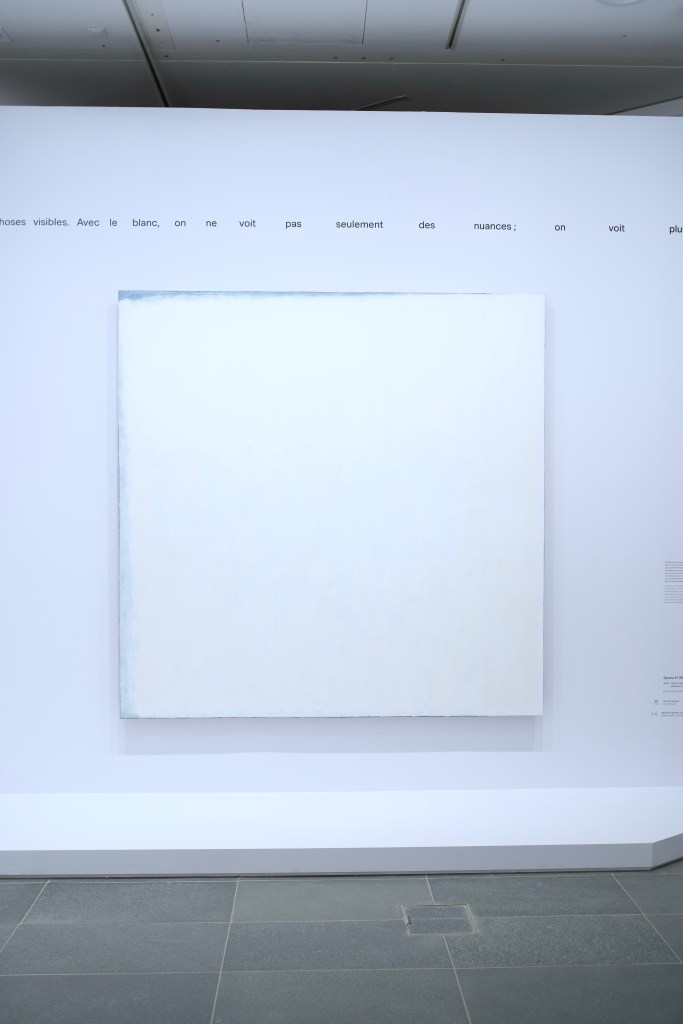
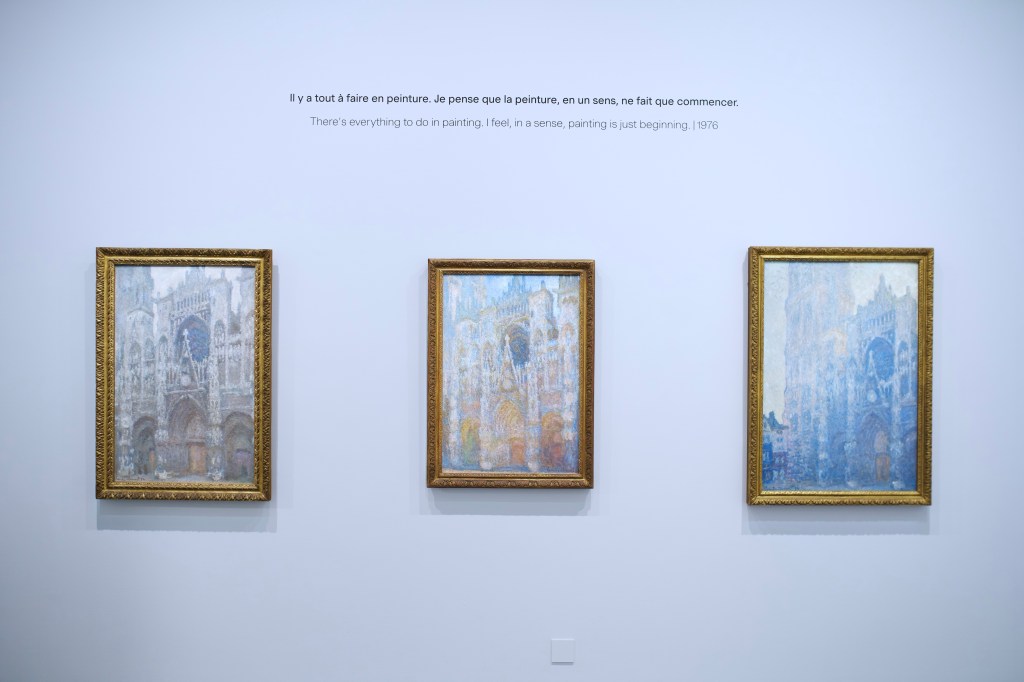
The exhibition ended with an unexpected reunion: next to some of Ryman’s latest works, three paintings of the ‘Rouen Cathedral‘ by Claude Monet reminded the research on the light made by both painters.
Photos credits: @elegantinparis
 Elégances Parisiennes