
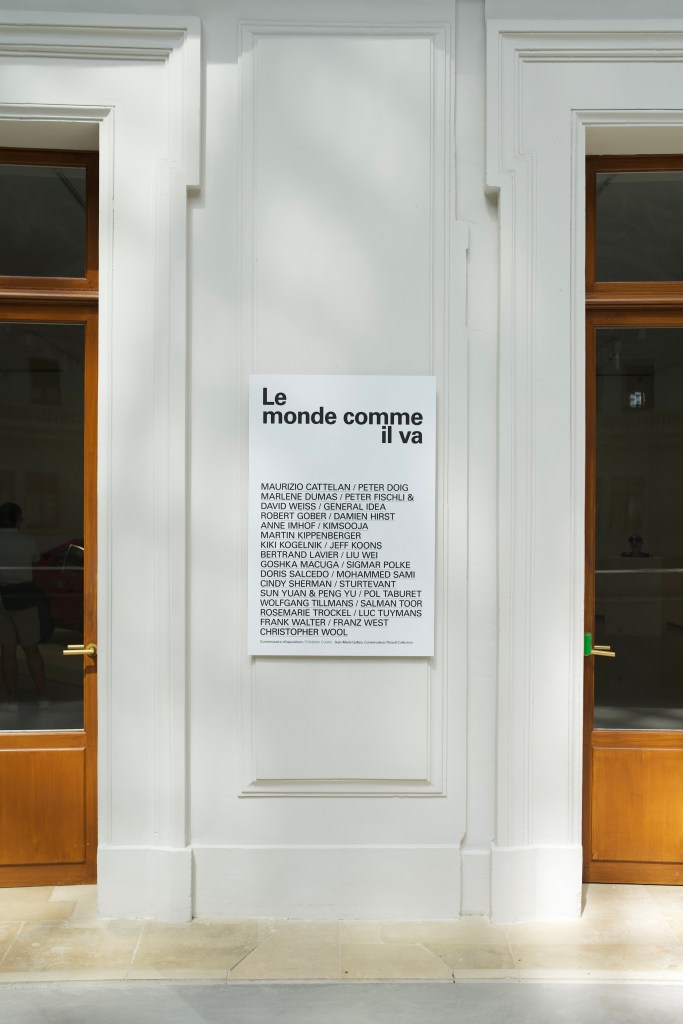
How is the world going? That is the question that the Bourse de Commerce Pinault Collection tries to answer with the exhibition ‘Le Monde comme il va‘ (The World as it Goes‘ in English) from March 20th until September 2nd 2024. Through a selection of artworks made from the 1980s to nowadays, the chosen artists express their own vision, thoughts or fears related to our society and the crises it has to face.
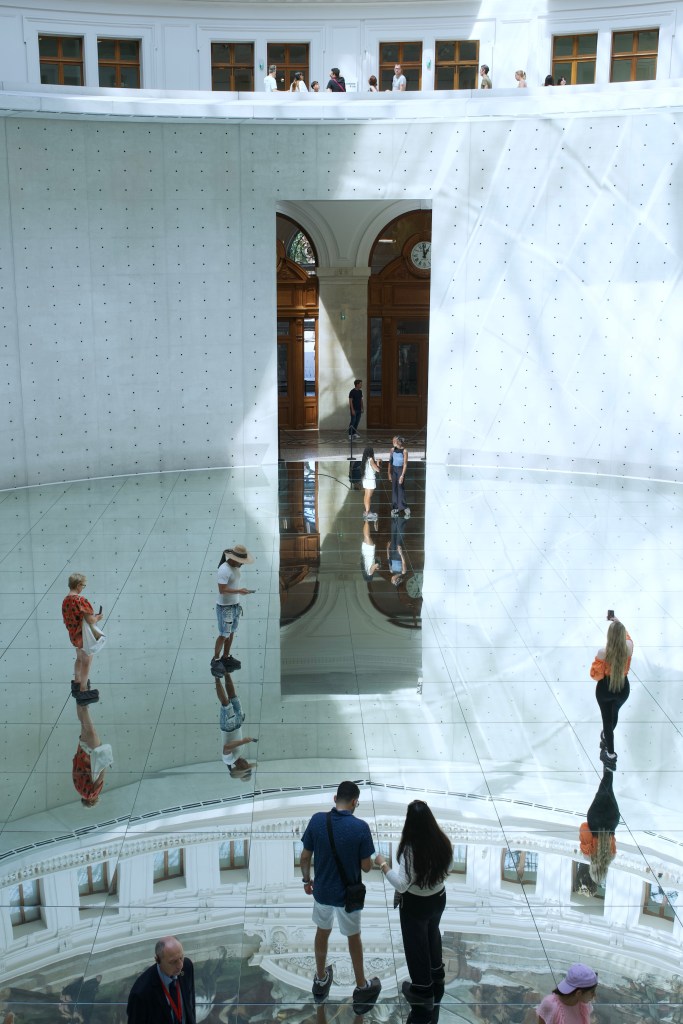
For this show, the Pinault Collection gave carte blanche to the South Korean conceptual artist Kimsooja (born in 1957) who has covered the floor of the rotunda designed by Tadao Ando with mirrors in an installation named To Breathe – Constellation, which creates a link between the floor and the sky through the reflection of the glass dome above, but also as a mirror for the visitor to watch his other self.
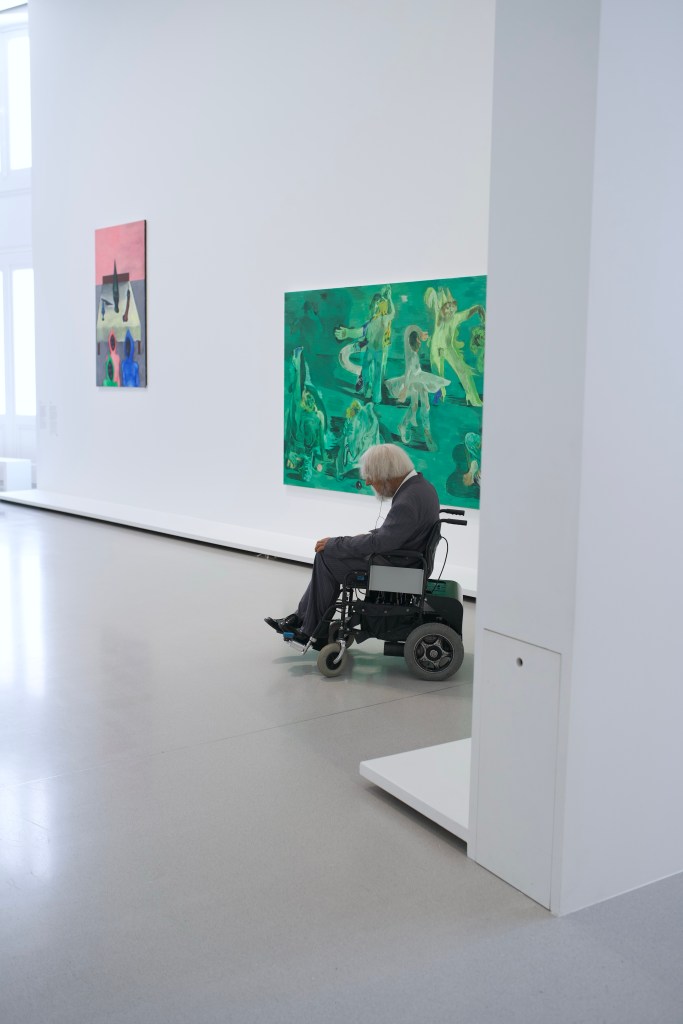
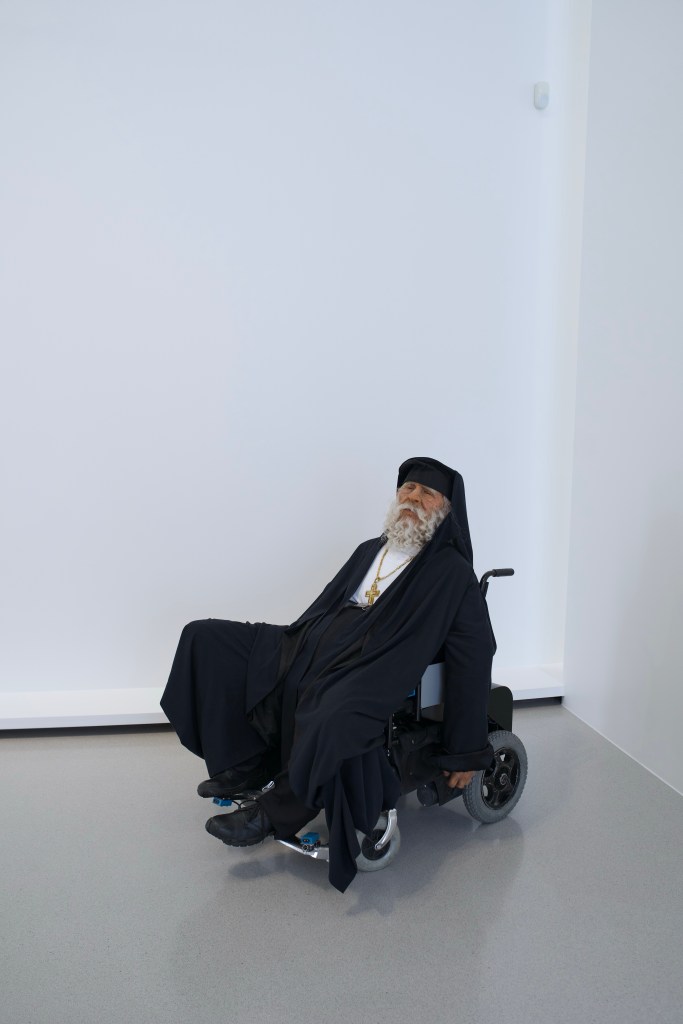
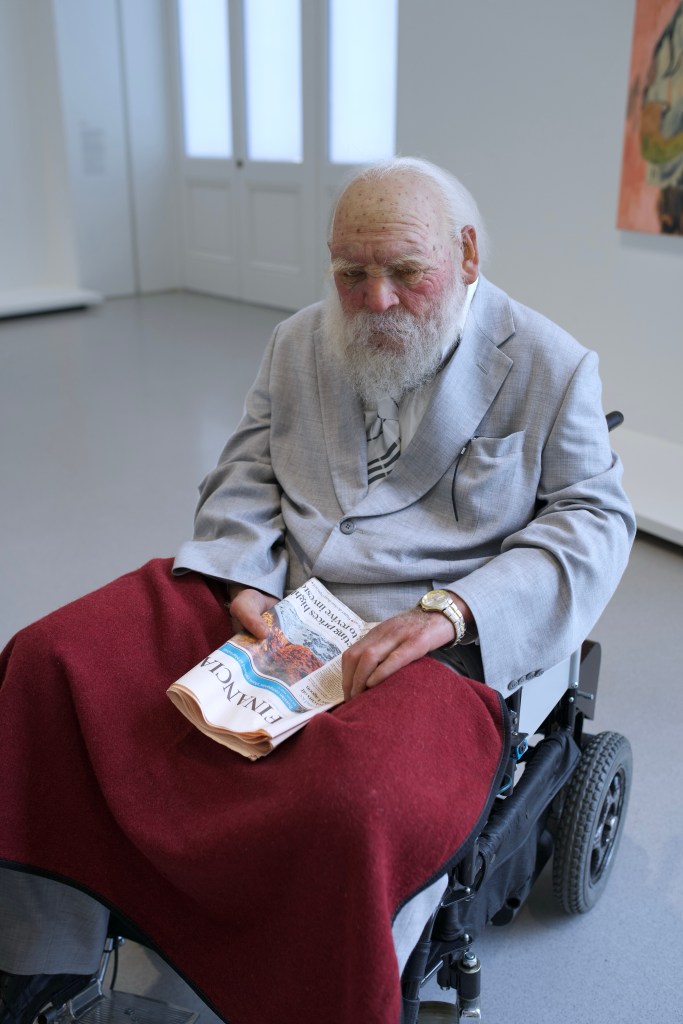
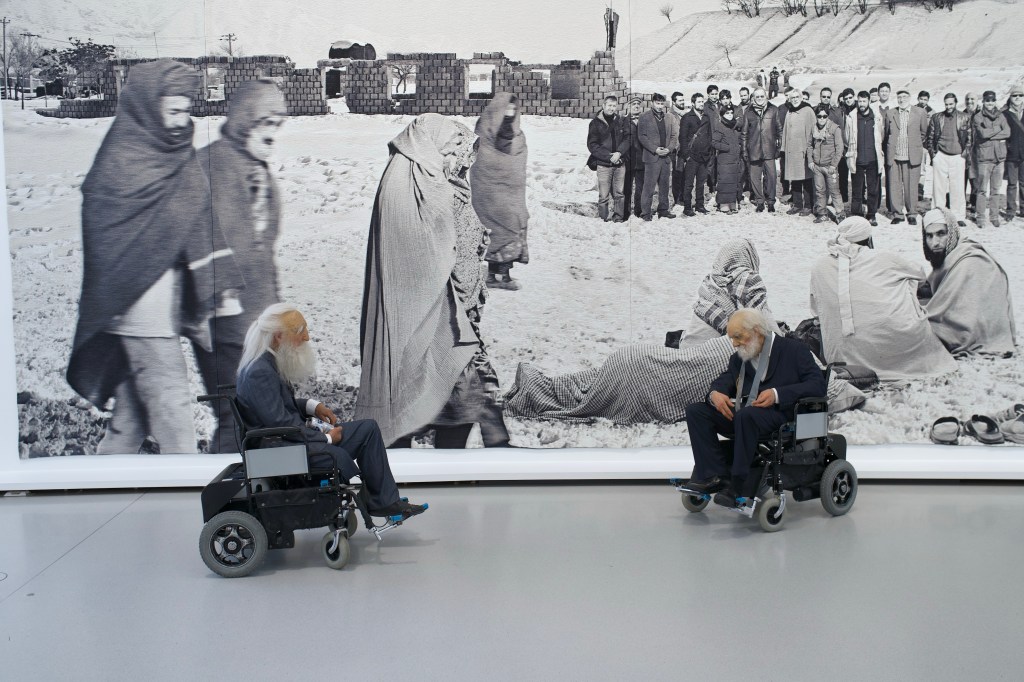
In the ground floor gallery, the automats of the Chinese duo Sun Yuan (born in 1972) and Peng Yu (born in 1974) are rolling and bumping, surrounding by works from Goshka Macuga, Sigmar Polke and Salman Toor. The thirteen old senile men in wheelchairs of Old Persons Home depict political or religious authorities as a grotesque parody of the United Nations Security Council.
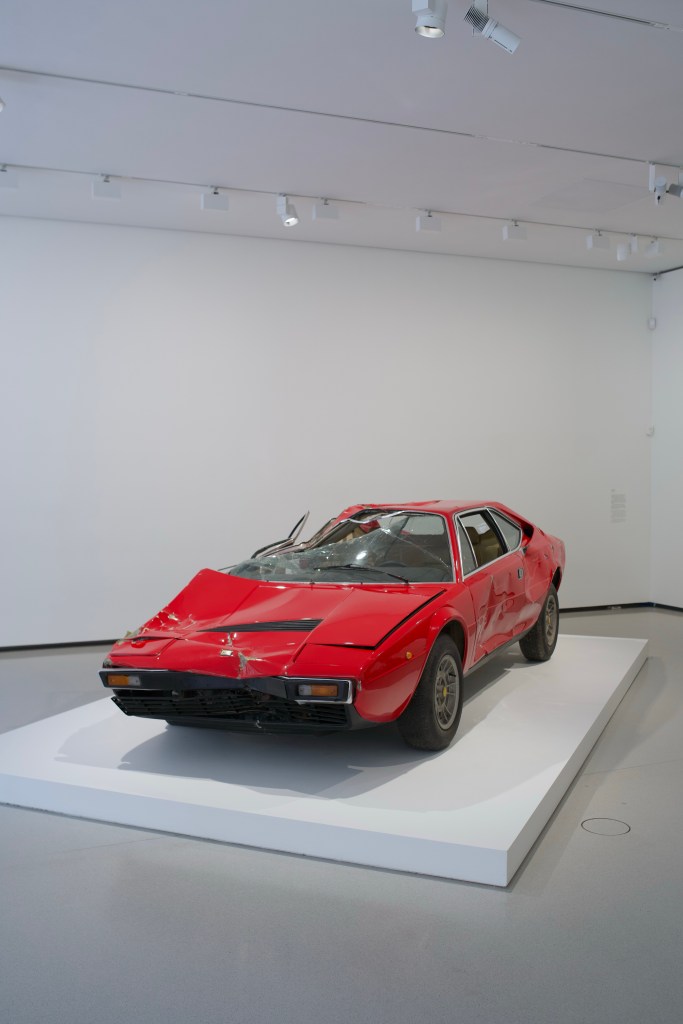
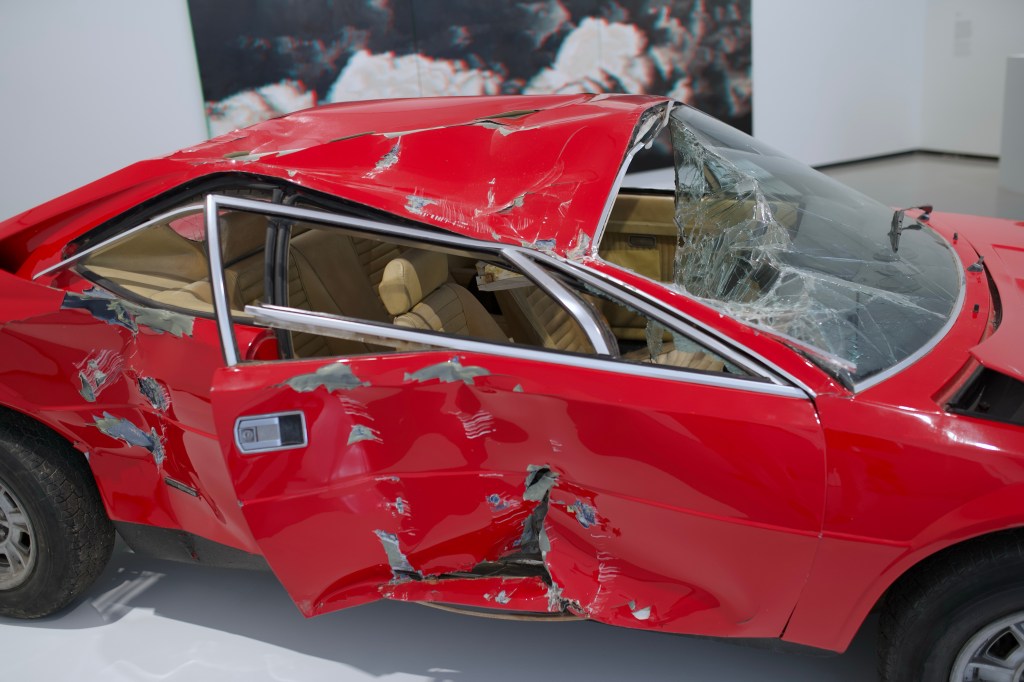
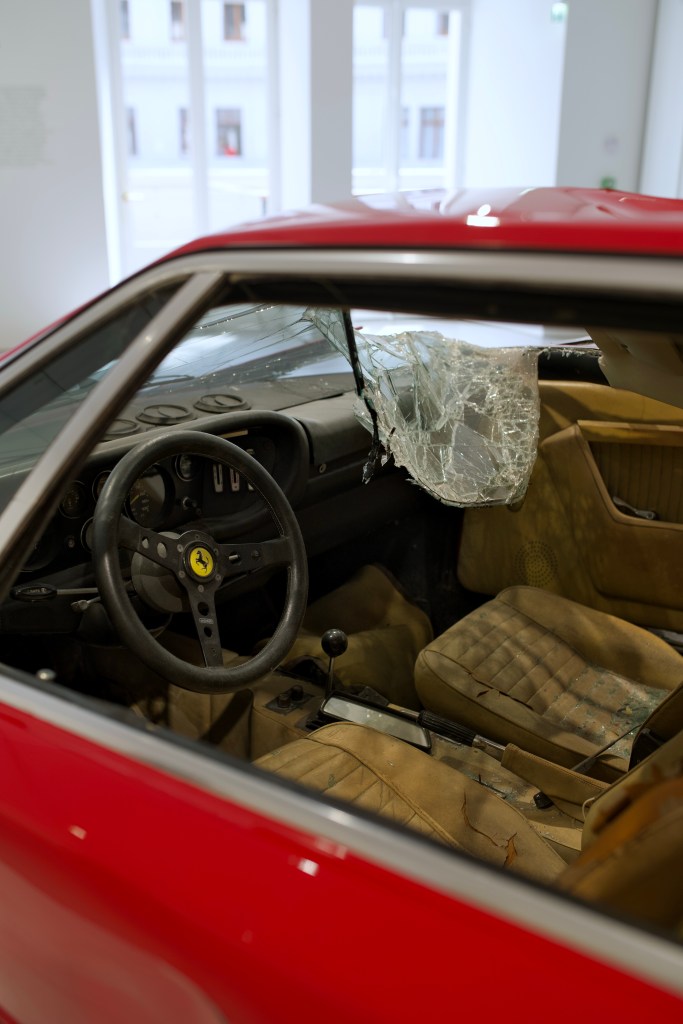
For the French artist Bertrand Lavier (born in 1949), the world might hit a wall as suggested by the wreck of a Ferrari Dino 308 GT4 he first presented in 1993. Among the various interpretations of this sculpture, Ferrari evokes the motorsport, the speed but also the danger, as a metaphor of how the world is running.
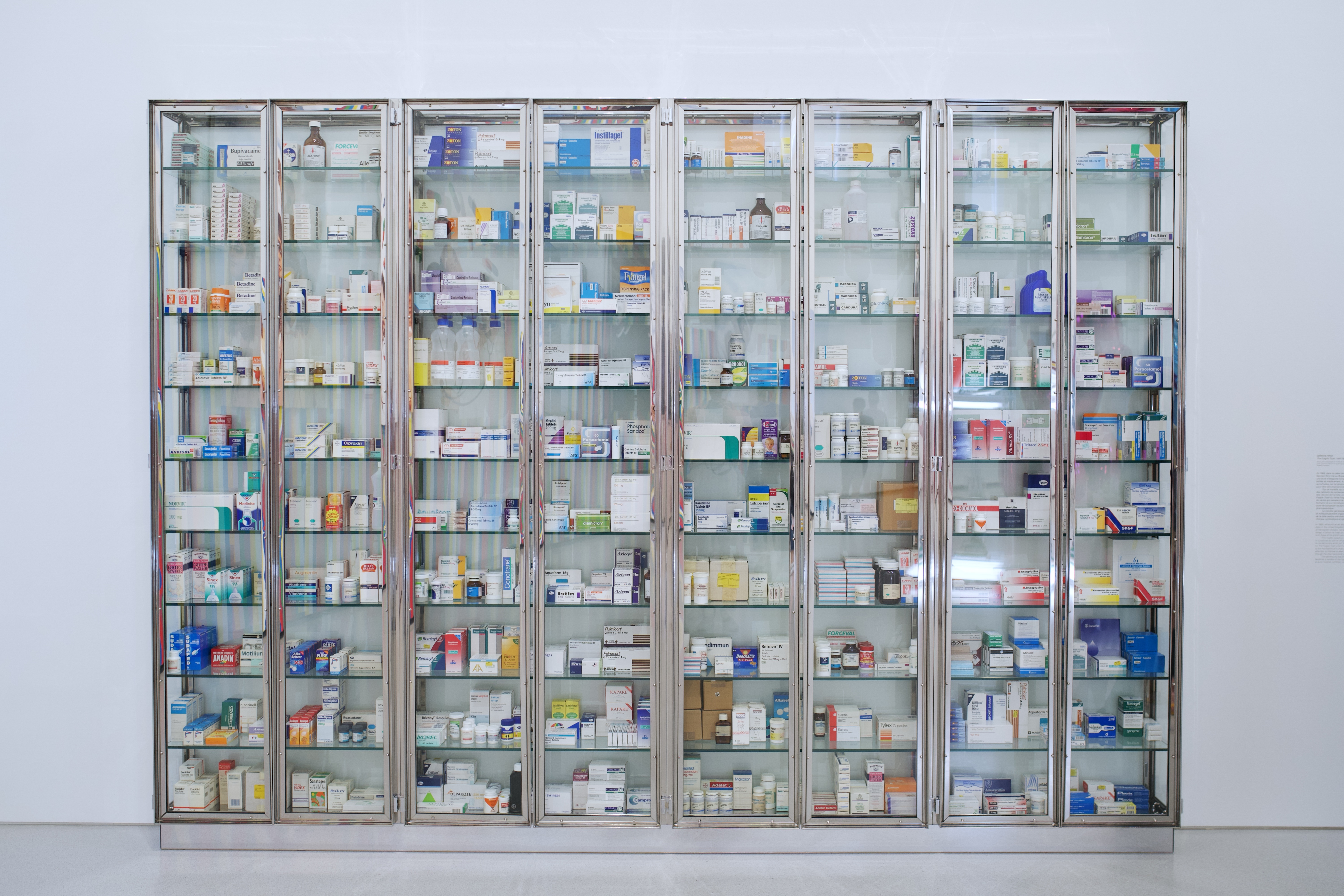
“You can only cure people for so long and then they’re going to die anyway. You can’t arrest decay but these medicine cabinets suggest you can,” said the British artist Damien Hirst (born in 1965). The Fragile Truth, a large medicine cabinet, was once part of the decoration of the Pharmacy, the concept-restaurant designed by Hirst in Notting Hill, London, opened between 1997 and 2003, and was sold for £1.2m during an event sale in 2004 (record for Hirst at that time).

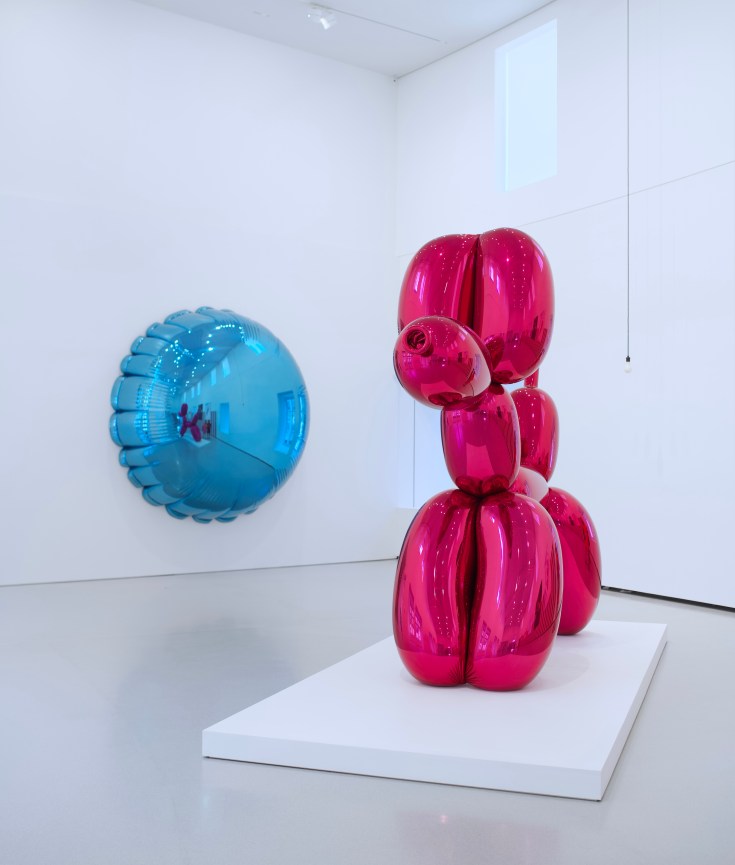
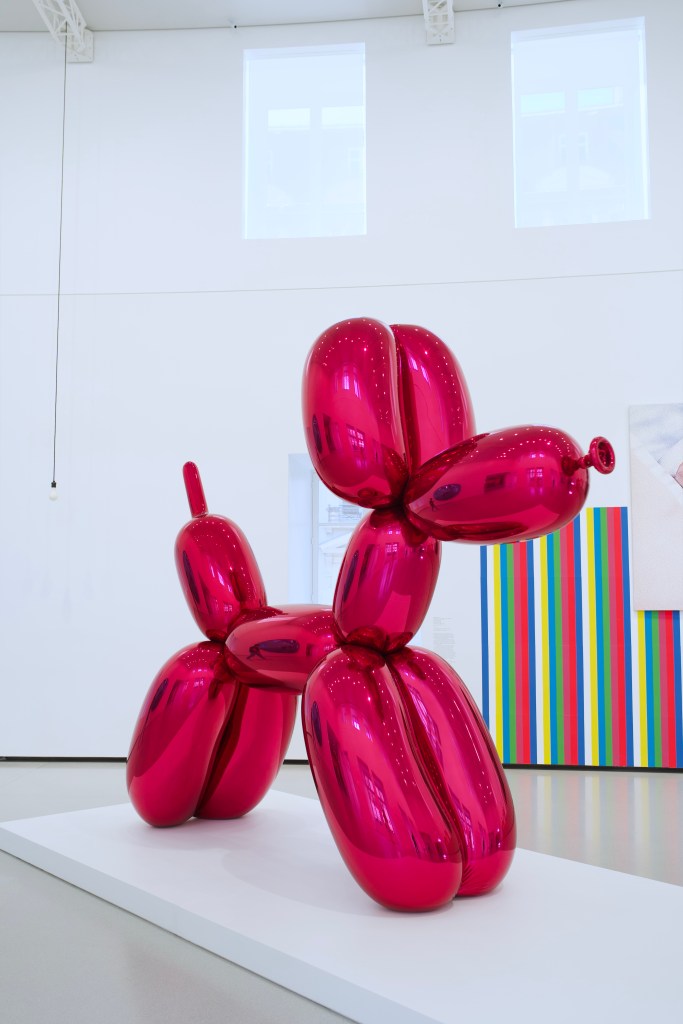
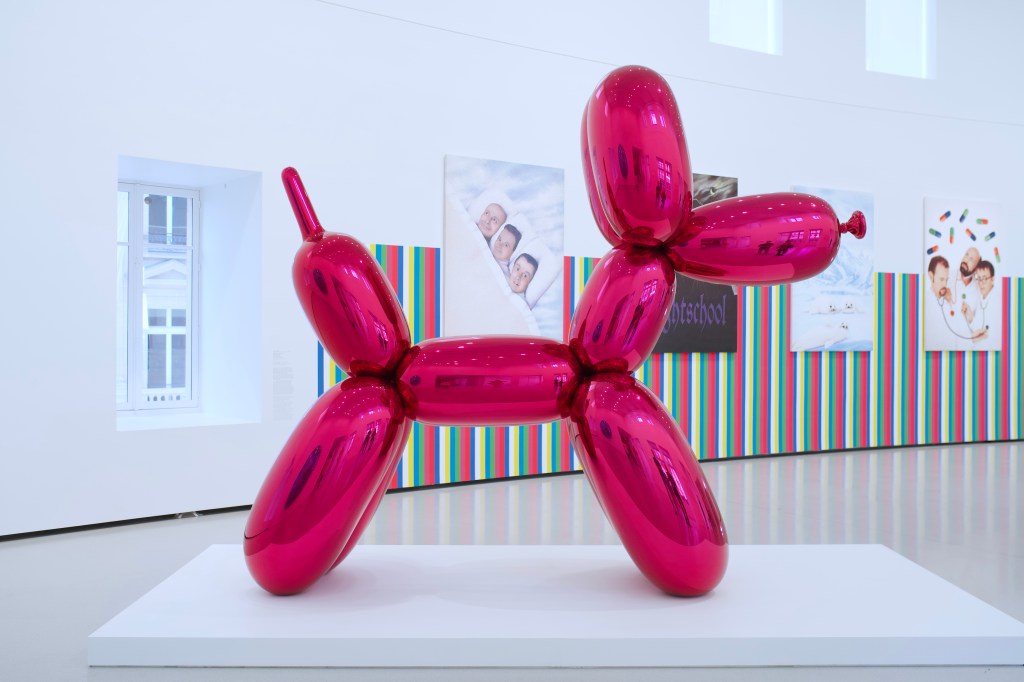
Part of the Celebration series made by Jeff Koons (born in 1955) at the end of the last century, Balloon Dog is likely the most famous sculpture of the controversial American artist and one of the most recognizable artwork of the last thirty years. Besides the play reference, his inflatable bright animals can be compared to humans when they inhale – symbol of happiness and proudness – according to Koons. On the other hand, a deflated balloon refers to exhaling and death.
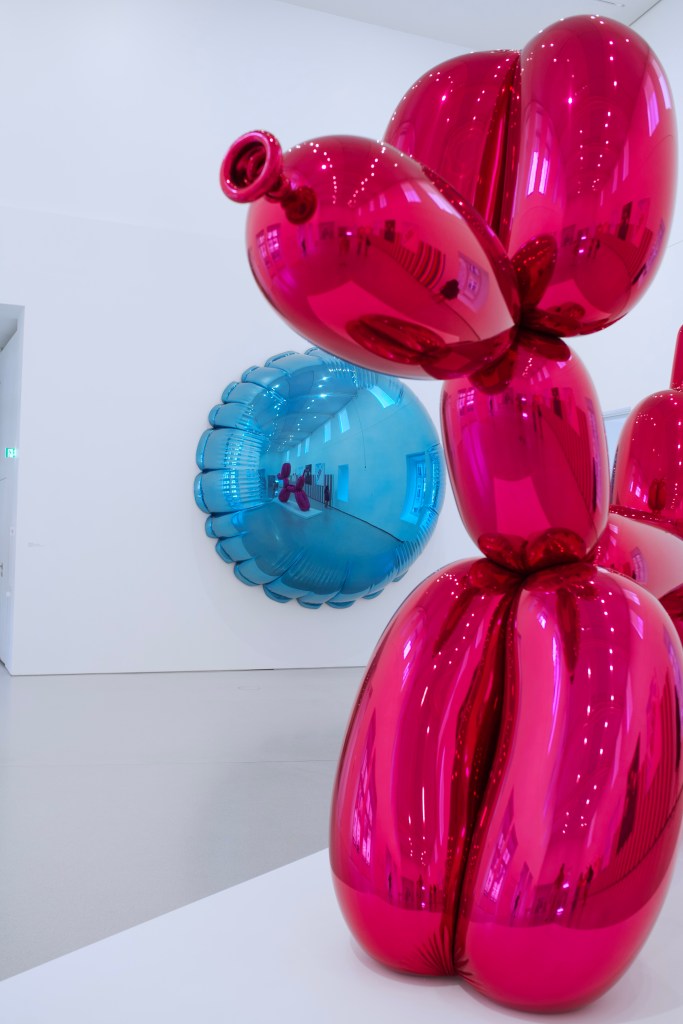
Moon (Light Blue), 1995-2000
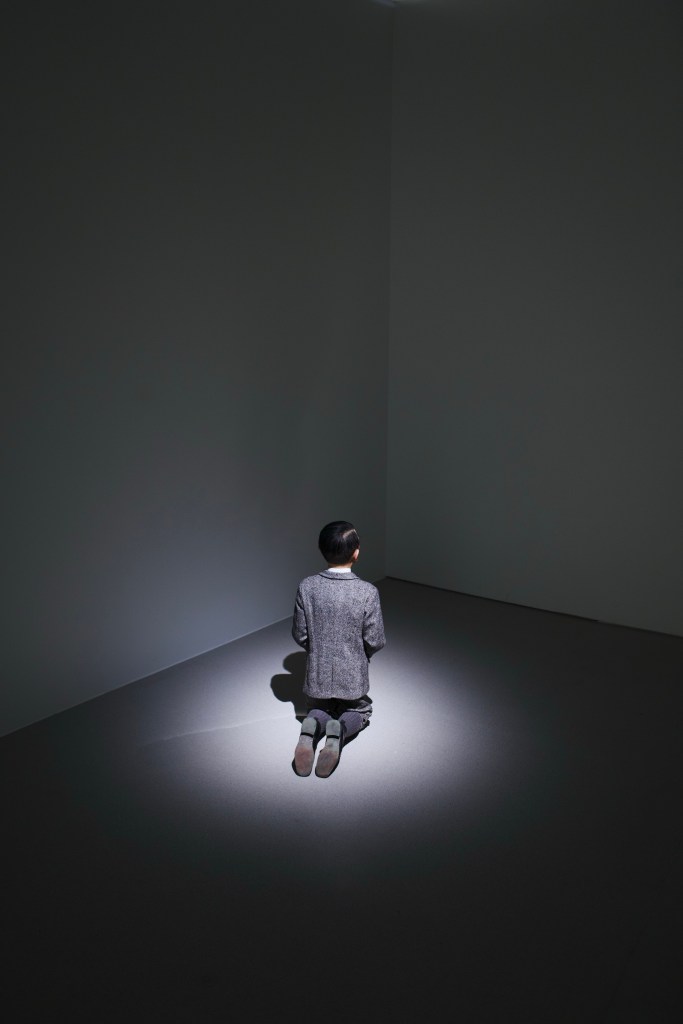
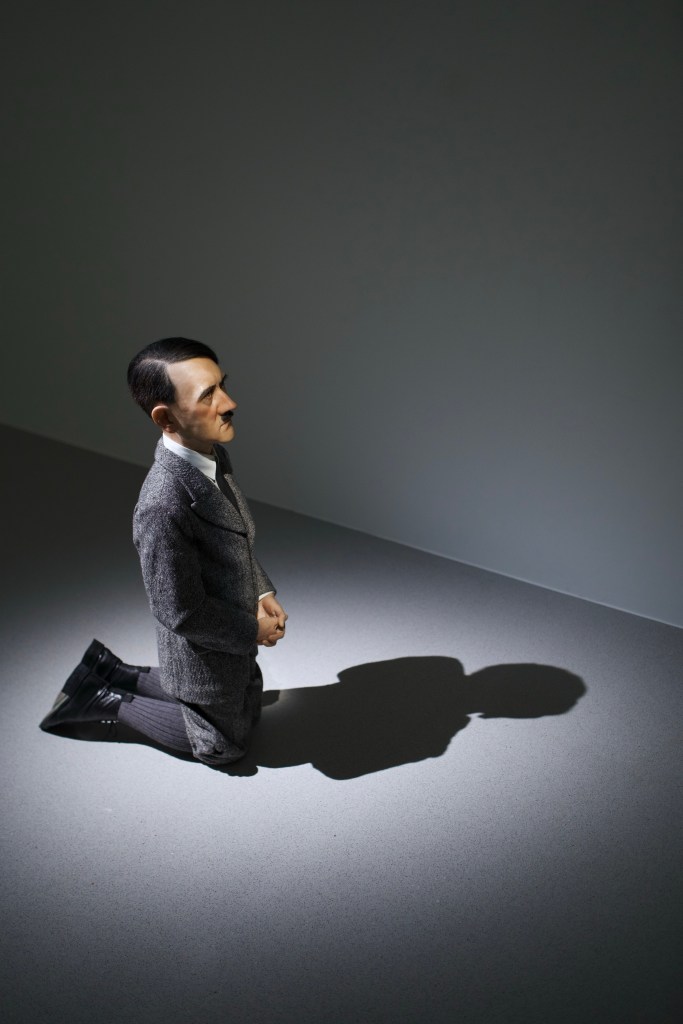
In the next gallery, one can see what looks like a little boy on his knees, face to the wall, in an empty room, shrouded in an atmosphere of contemplation. Is he praying? Is he punished? The installation of Maurizio Cattelan (born in 1960) invites the visitor to take a few steps to discover who is “Him“… The statue of the infamous German dictator provoked controversy as it was exhibited in the former Warsaw Ghetto in 2012 and was sold for 17m$ by Christie’s New York in 2016.
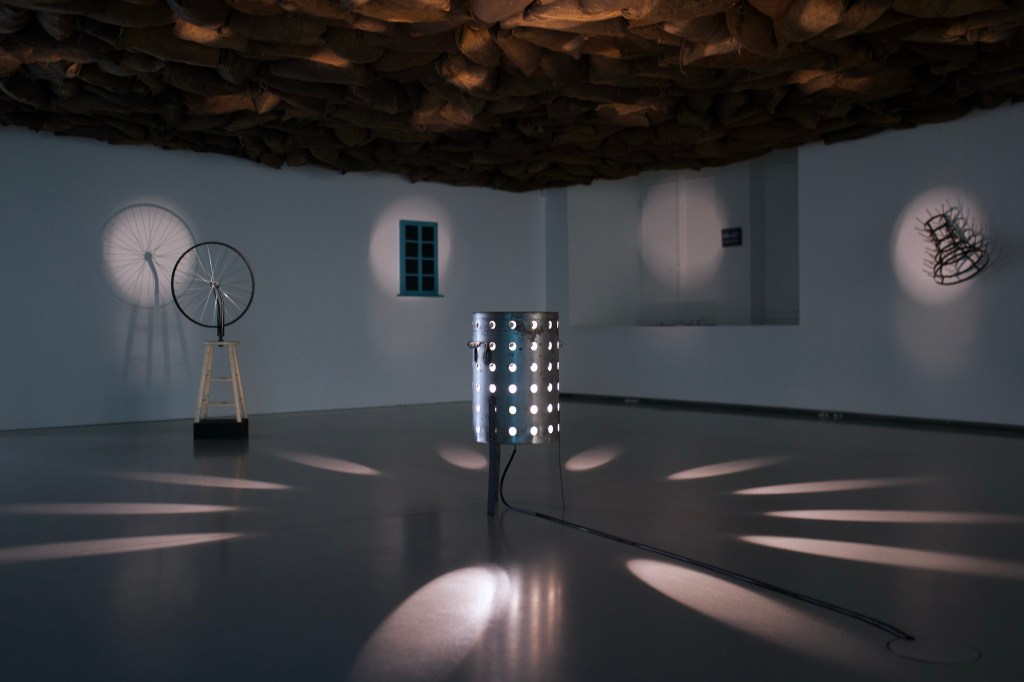
Elaine Sturtevant (1924-2014), also known as just Sturtevant, realized in 1973 a reproduction of Marcel Duchamp’s installation 1200 Coal Bags (1938). Including also charcoal stoves, bottle holders, a bicycle wheel and various other objects, Sturtevant’s work is not a perfect copy of the original, since she made it from memory, questioning the notion of copyright.
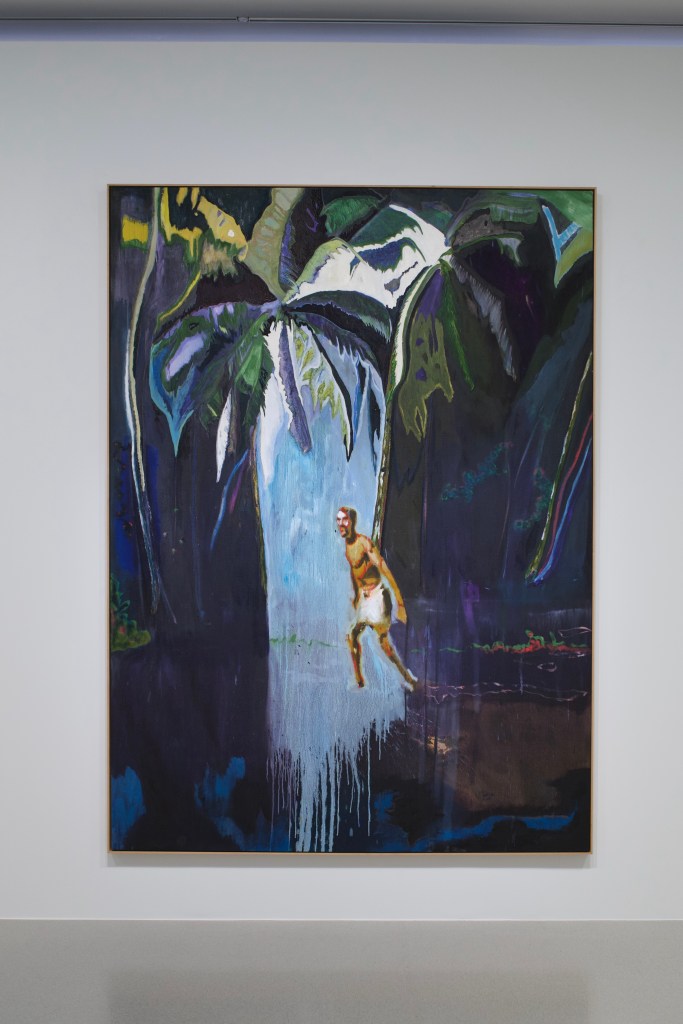
Settled in Trinidad, the Scottish painter Peter Doig (born in 1959), as he was cruising on his boat, saw a man killing a pelican to eat it. Marked by the scene and the poverty of the inhabitant, he realized two paintings of the event – one with the man on the beach holding the dead bird in his hand, the other (presented here), in a more luxuriant and enigmatic background, without the pelican.
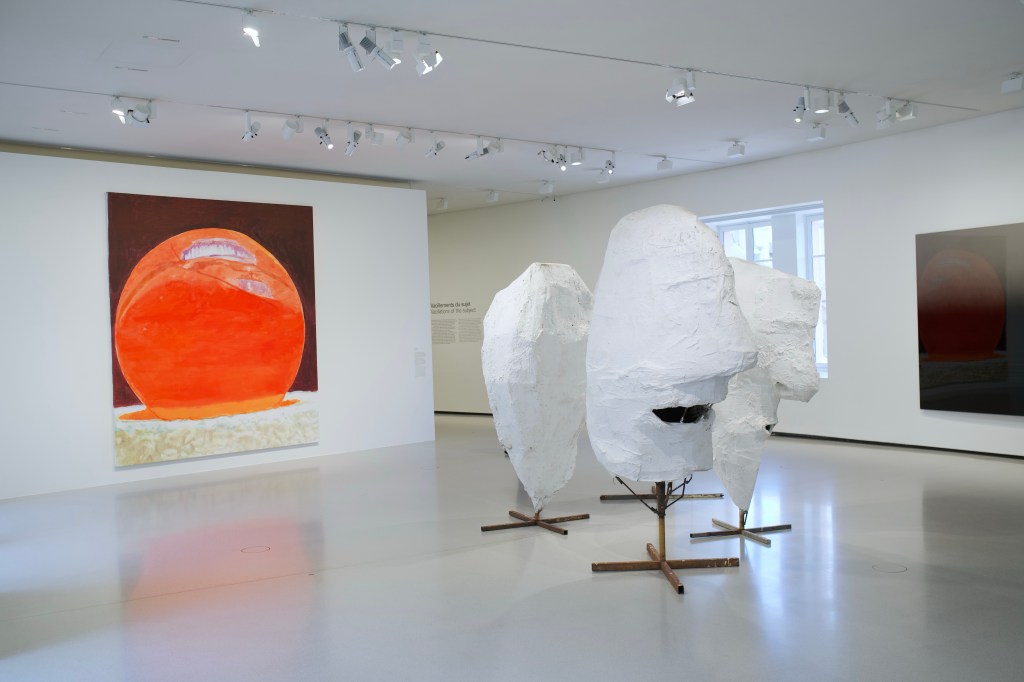
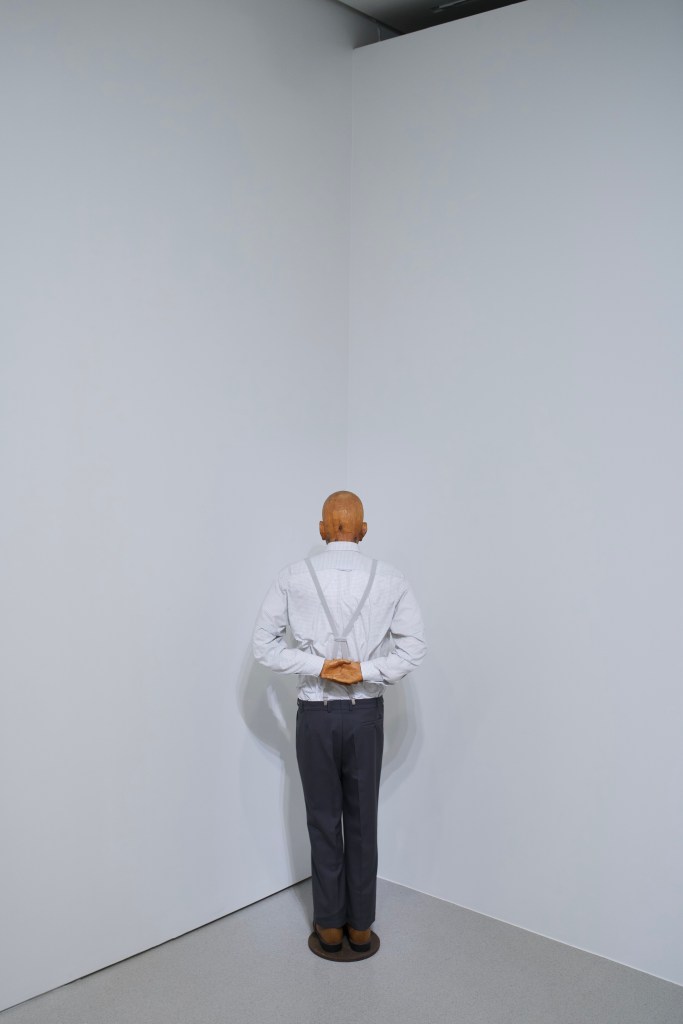
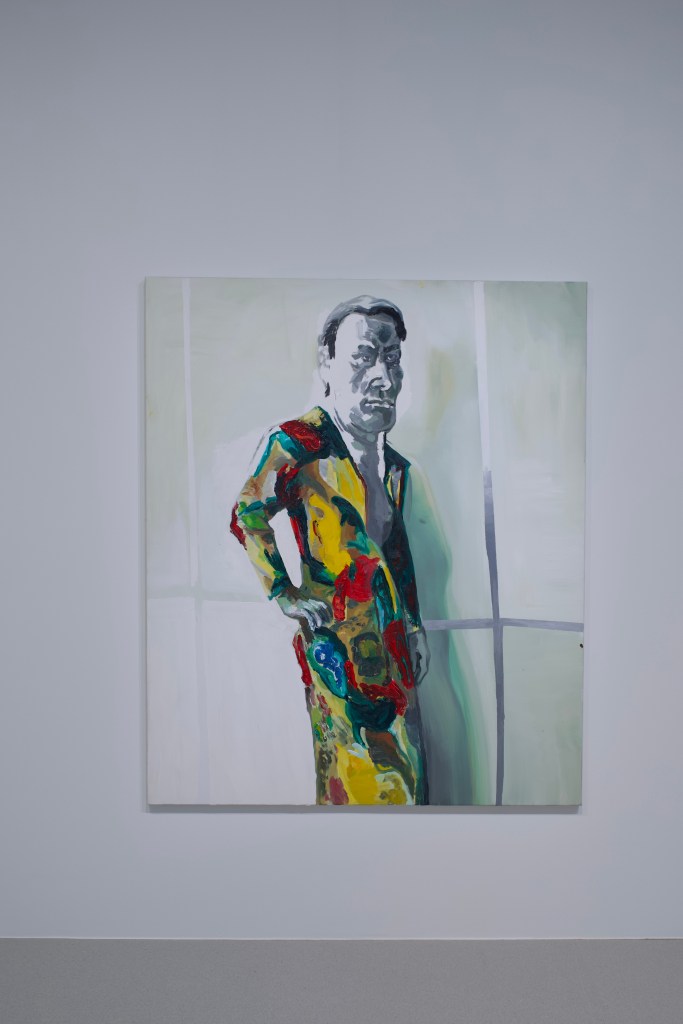
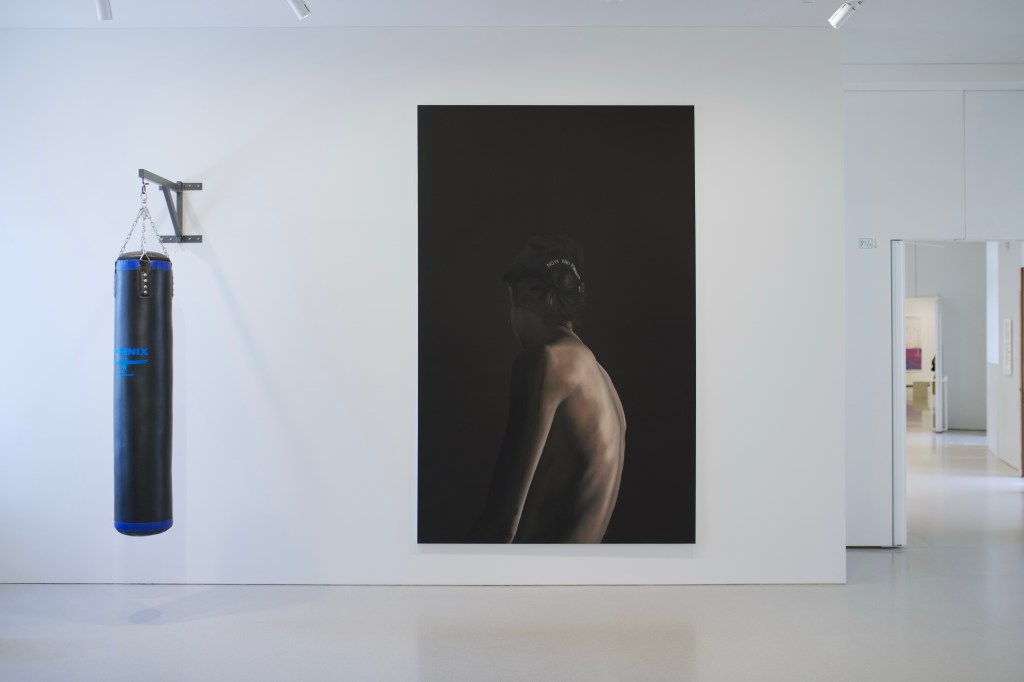
In the next room, four Lemurenköpfe (refering to Lemures, evil spirits in Roman antiquity) by Franz West (1947-2012) are staring at works from Luc Tuymans (born in 1958) – Eternity, a painting inspired by a photograph of the Werner Heisenberg’s glass dome made to model the explosion of a hydrogen bomb -, Martin Kippenberger (1953-1997) – including a wood sculpture of himself, represented as a little boy punished in a corner, after the critics of his works – and Anne Imhof (born in 1978).
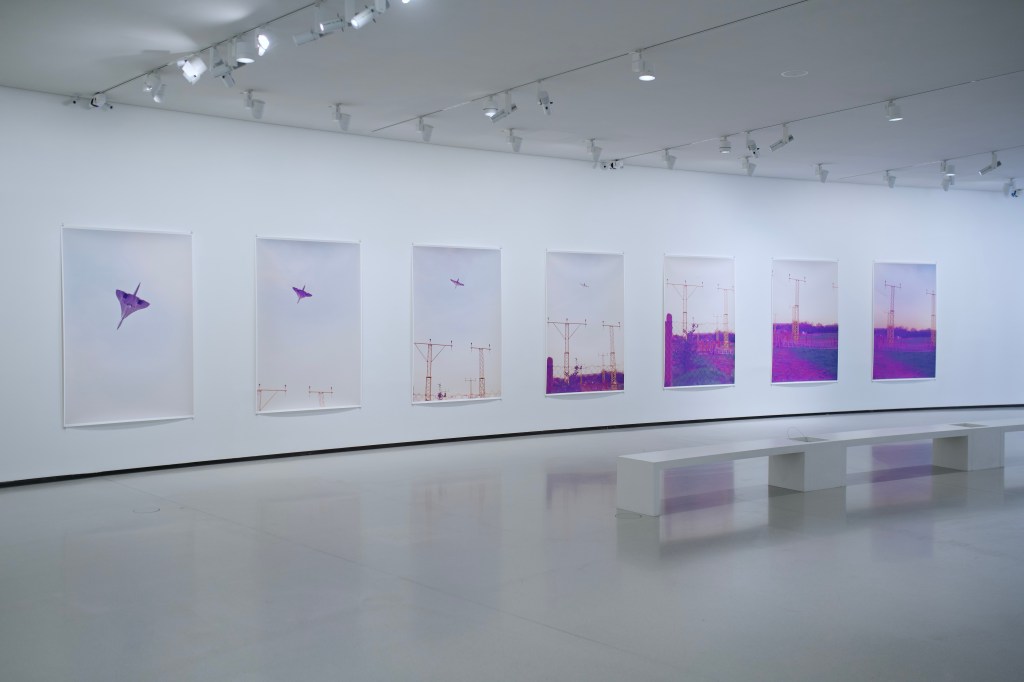
Let’s end with a serie of photographies of the Concorde taken by Wolfgang Tillmans (born in 1968) through the fences of London’s Heathrow airport. A technologic breakthrough and a privilege reserved to the wealthiest, the supersonic airliner was also a commercial failure, and a very noisy and polluting means of transport. Perhaps a symbol of our contemporary era where the hype overshadows more sustainable achievements.
Photos credits: @elegantinparis
 Elégances Parisiennes