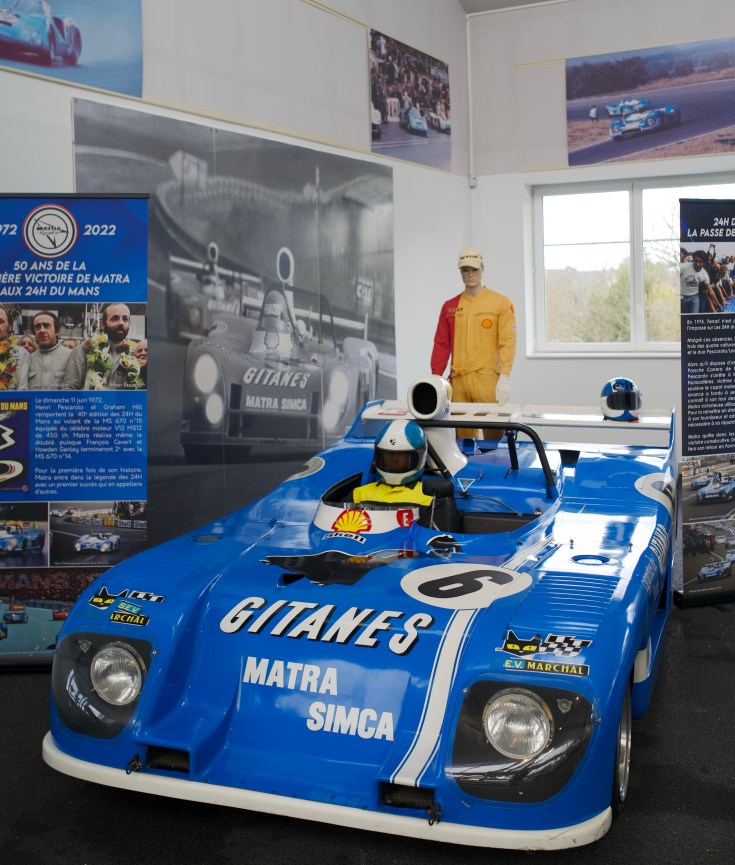

As a child, I spent all my school holidays at my grandmother’s home in Blois, in the Loire Valley, renowned for its Renaissance castles. Back in the 1990s, the department’s two main industries were the Poulain chocolate factory in Blois—which would fill the city with the delicious scent of chocolate when storms were brewing—and, further south, the car manufacturer Matra in Romorantin-Lanthenay.
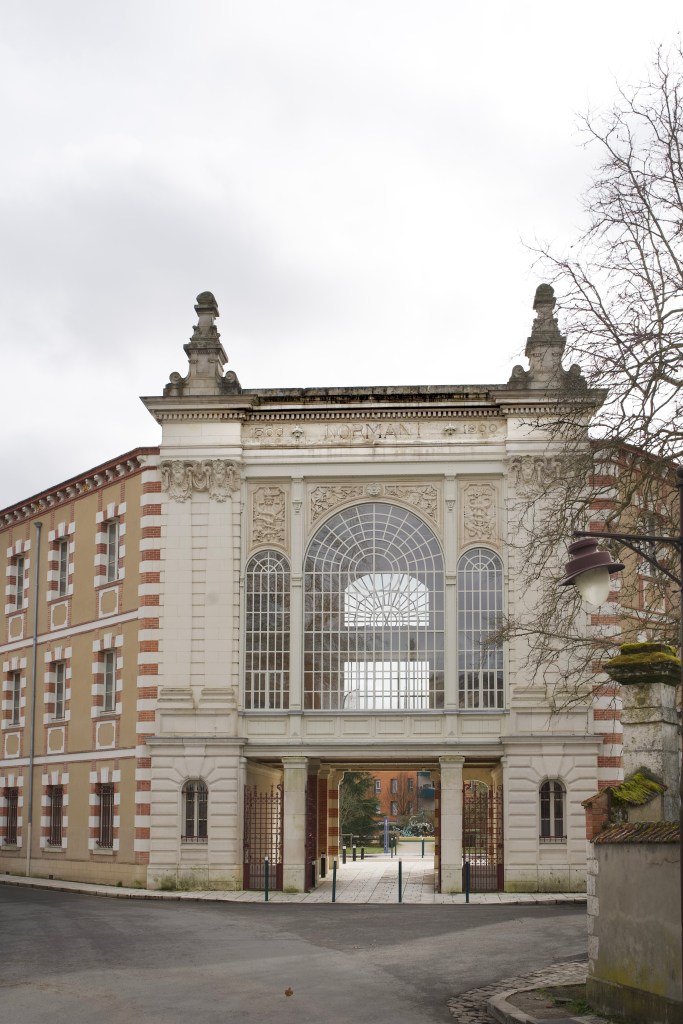
Located in the heart of the Sologne region, the main factory in “Romo”—as locals affectionately call it—was originally the Normant mill. Founded in the early 19th century, it produced sheets and fabrics for the French army and civil administration. After World War II, France’s textile industry declined, and the company ran into financial difficulties. In the early 1960s, car manufacturer René Bonnet moved into part of the site. The Normant mill finally closed in 1969.
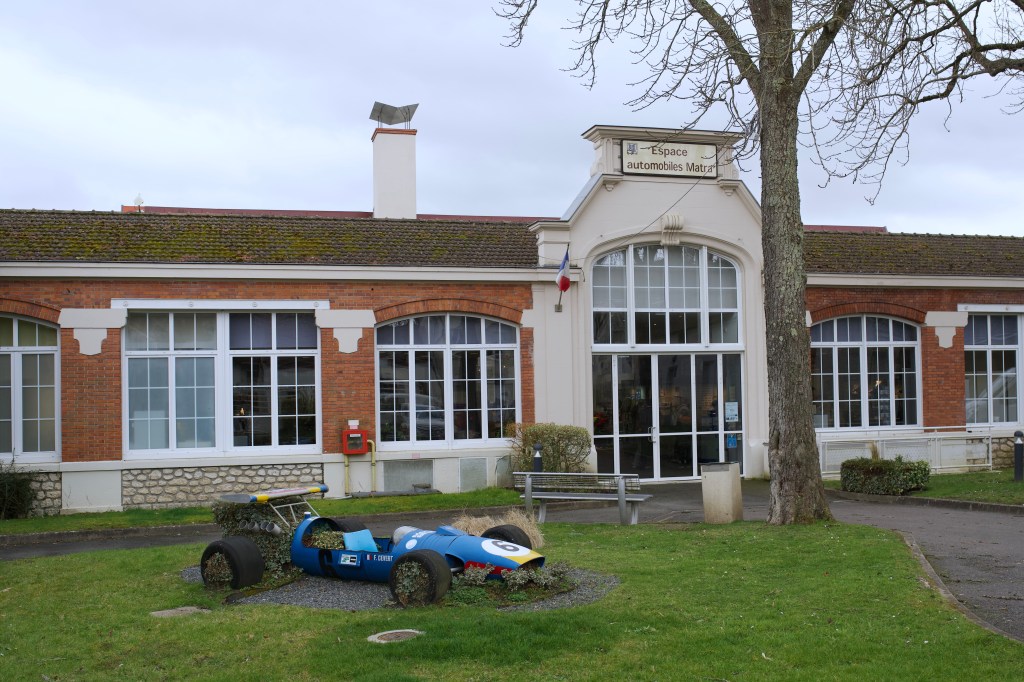
Bonnet and the Djets
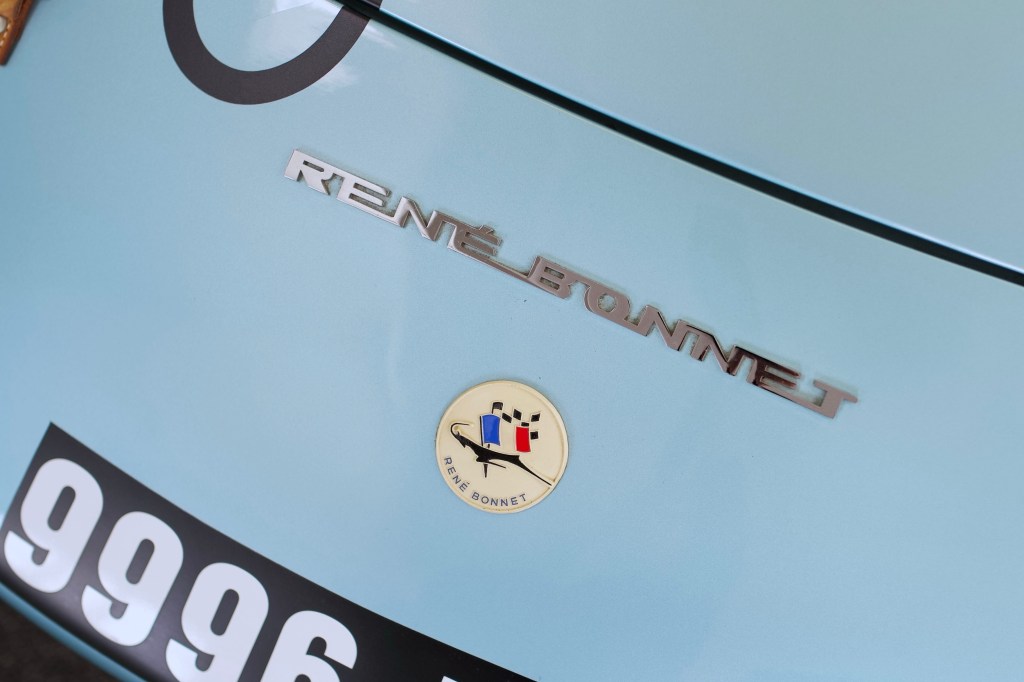
René Bonnet (1904-1983) was a French entrepreneur. Along with Charles Deutsch, he founded the car brand DB (for Deutsch and Bonnet) in 1938 and produced lightweight sport cars which won several races, including five victories at the index of performance at the 24 Hours of Le Mans between 1954 and 1961. Alas, both Bonnet and Deutsch had a strong personality, they split up and the brand disappeared in 1962. Bonnet had created his own brand, the Automobiles René Bonnet. The company settled in Romorantin with its main shareholder, Matra, who supplied the fiberglass bodies for their cars. However, only two years later, due to bad sales, Bonnet had to cede his business to Matra.
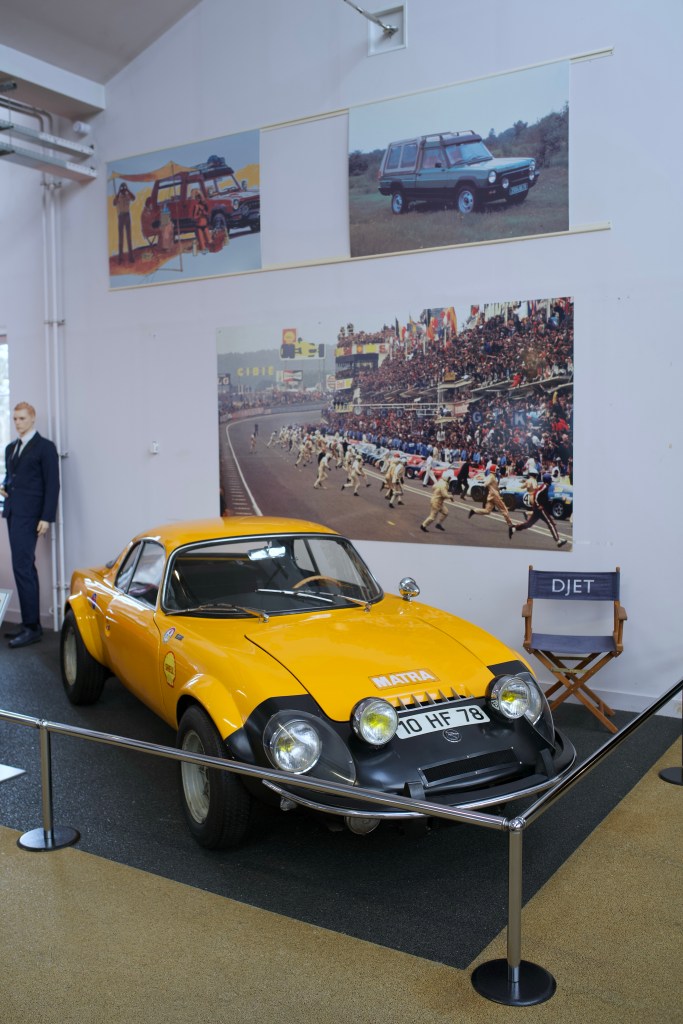
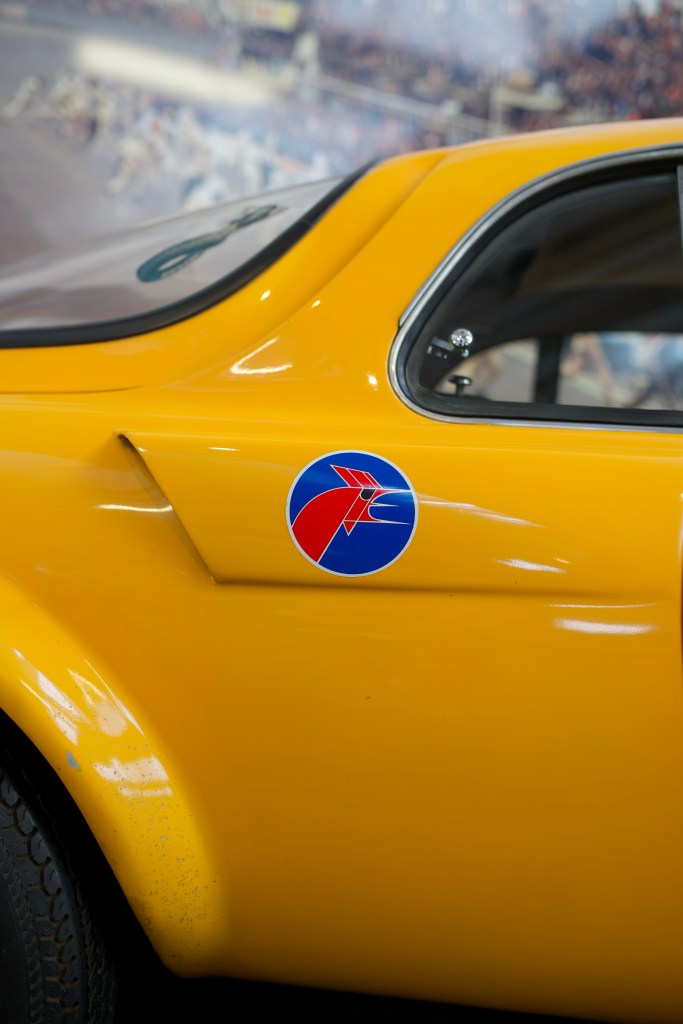
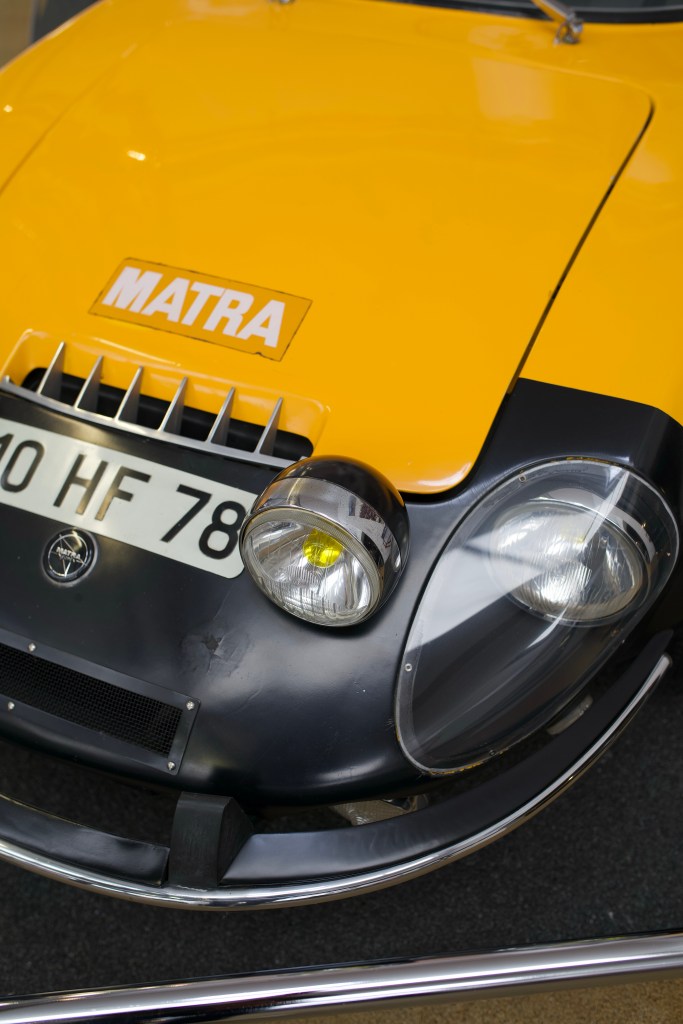
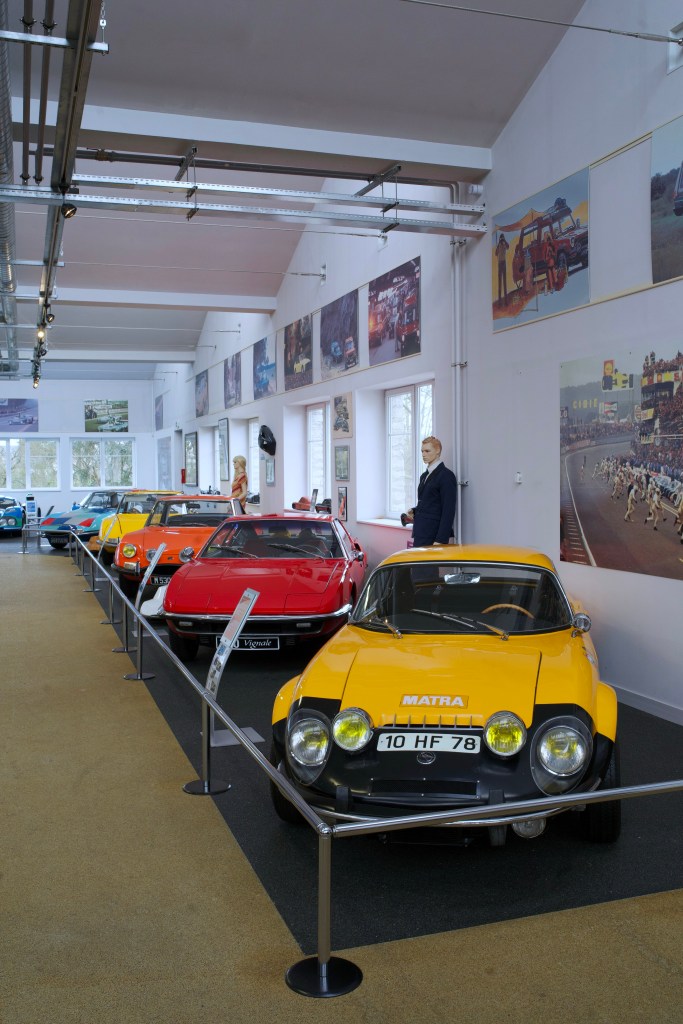
The Djet was introduced in 1962 and became the world’s first rear-mid-engined production road car. Designed and sold by René Bonnet during two years, only 198 Djets were produced in four different versions. The car was powered by a 1,108 cc Renault 8 engine (Djet I), then upgraded to a Gordini engine that allowed a top speed of 190 km/h (118 mph) for the Djet II/III/IV. Amusingly, Bonnet named his model ‘Djet’ to force the customers to pronounce the French word ‘jet’ with an English accent. When Matra took control of the company, they kept on the production and the car was redesigned by the former Simca designer Philippe Guédon (Djet V and Djet V S). During the last years of production, the model had been rebranded as simply ‘Jet’ – without ‘Bonnet’ and using Arabic numerals instead of Roman – with the Jet 5 S and Jet 6. The model was eventually discontinued in 1967.
At the 24 Hours of Le Mans 1962, René Bonnet faced his ex-associate Charles Deutsch who participated with three coupés powered by a Panhard engine. On the other hand, Bonnet came with a new prototype: a coupé with a fiberglass body mounted on a tubular chassis and a 4 cylinders Renault-Gordini engine (996 cc) with a double overhead camshaft. Two of these ‘tubular’ Djet, along with an open-top car, took part. Although two of them had to retire during the race, the prototype driven by the Consten-Rosinski team won the 851 – 1000 cc class, despite having broken two gears for half of the race.
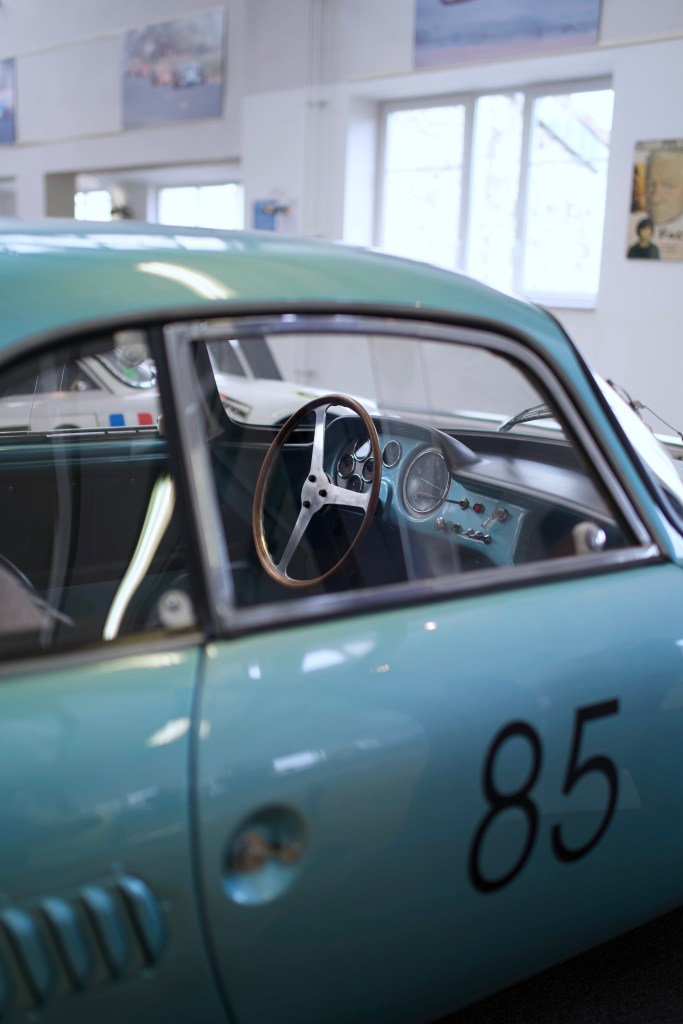
The ‘tubular’ Djet of the museum below was made for the competition and participated to the 1000 km of Nüburgring. The Beltoise-Basini team who drove it unfortunately had to abandon after a clutch problem.
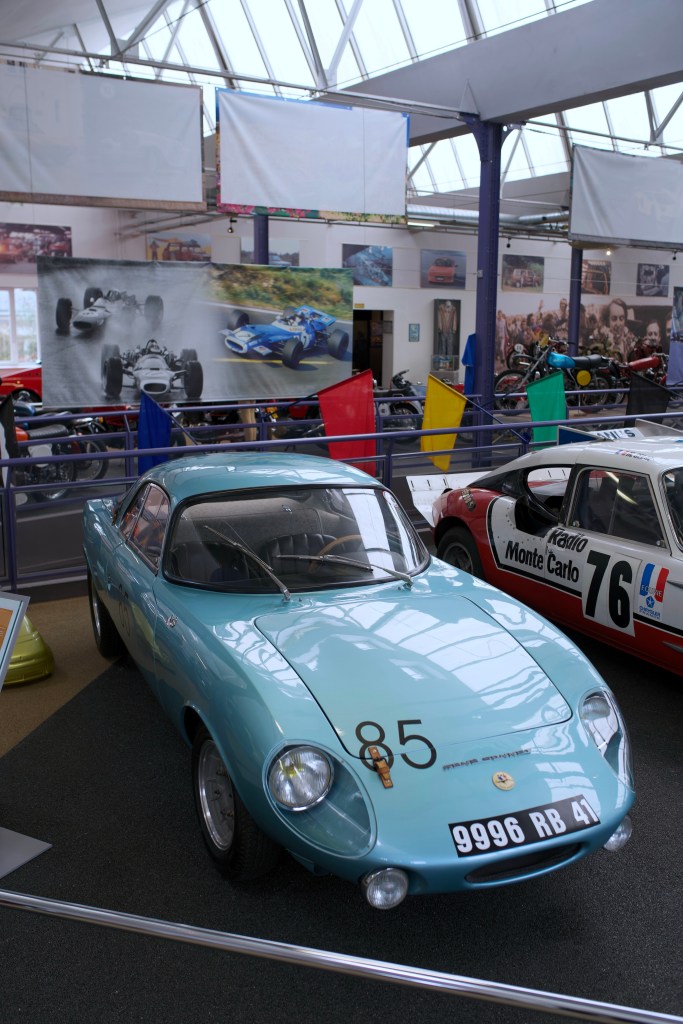
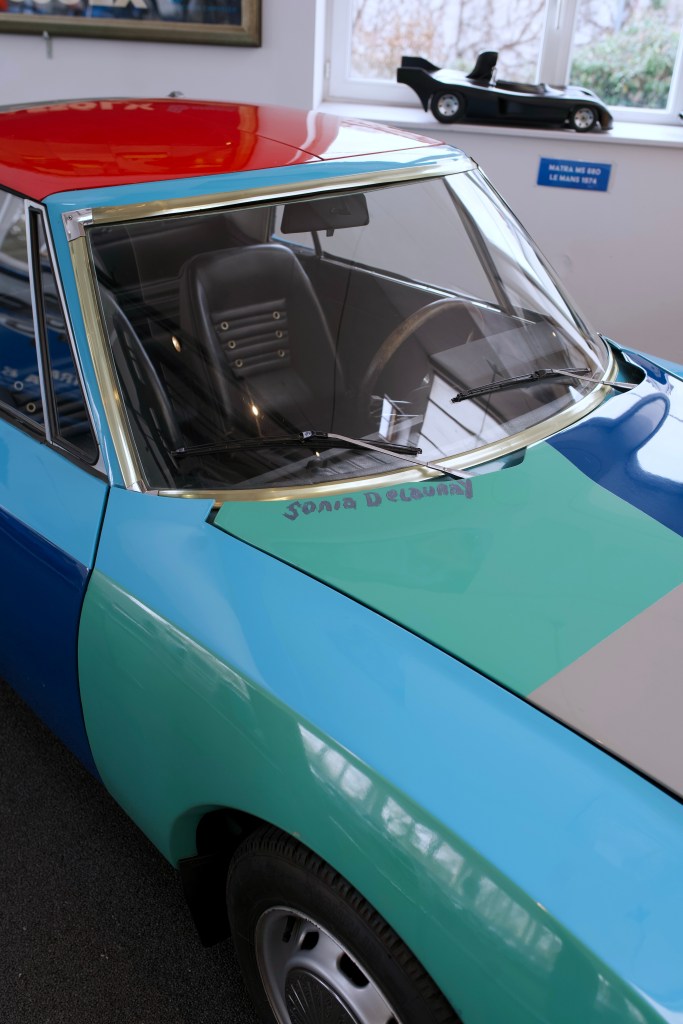
Part of the five cars customized by five contemporary artists, the one painted by Sonia Delaunay (1885-1979) is exhibited in the museum. Reminding the Orphism, the art movement characterized by geometric abstraction and bright colors that she contributed to popularize with her husband Robert Delaunay, the French artist born in Odessa admitted: “I didn’t want that my Matra once moving, caught the eye of the other drivers to the point of provoking accidents by distraction. Thus, I have taken care that the colors, in movement, fade into a slightly brighter blue than the initial blue of the car“.(1)
The first French V12 engine
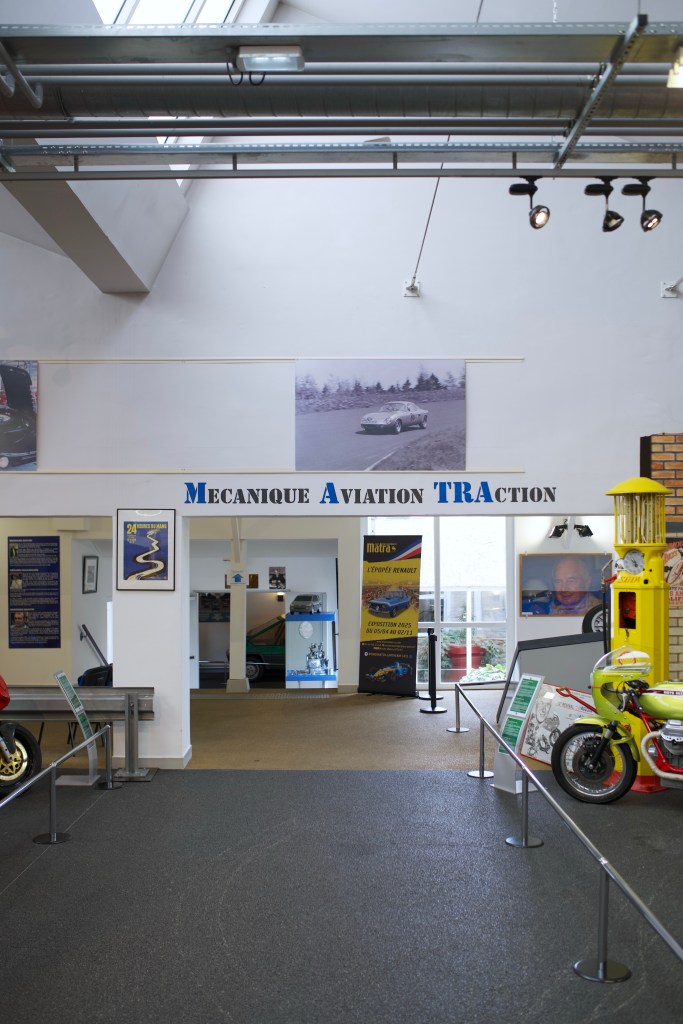
Matra (Mécanique Aviation TRAction) has been founded in 1941 by Maurice Chassagny. Specialized in aeronautics, then in weapons, the company get started in the automotive in 1964 when they bought the Automobiles René Bonnet and created Matra Automobiles to produce race and road cars. To make the name of Matra more appealing to the mainstream who associated it with the arms industry, Jean-Luc Lagardère was hired to lead the new sport division: the Matra Sports team was born. Running under the traditional French blue color, the racing team will reap around 124 victories, notably in Formula One and at the 24 Hours of Le Mans, in only ten years between 1965 and 1974.
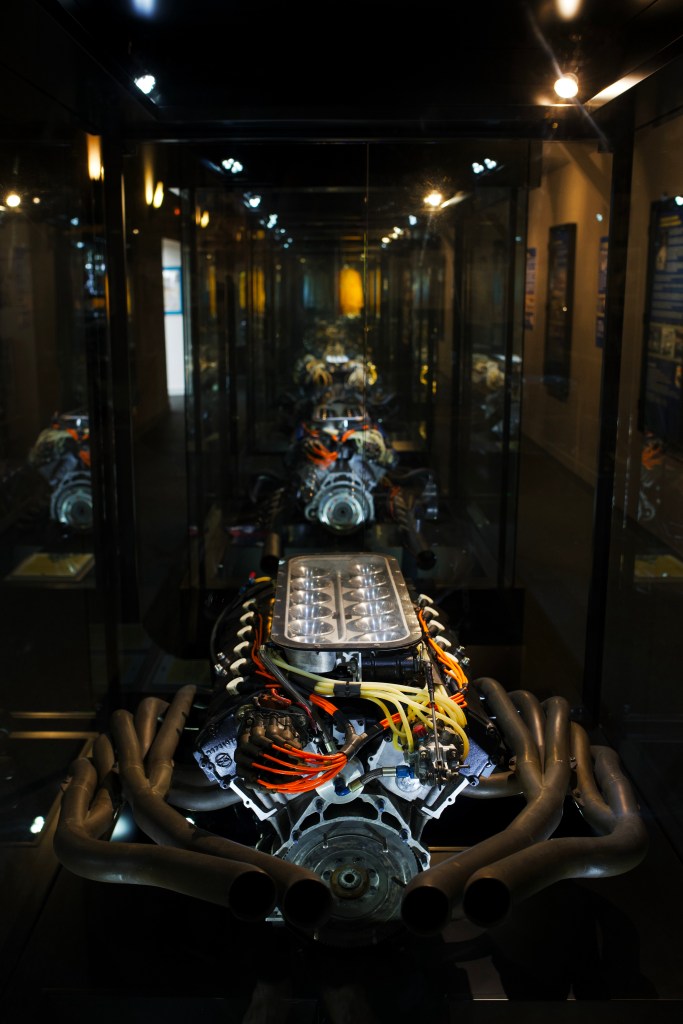
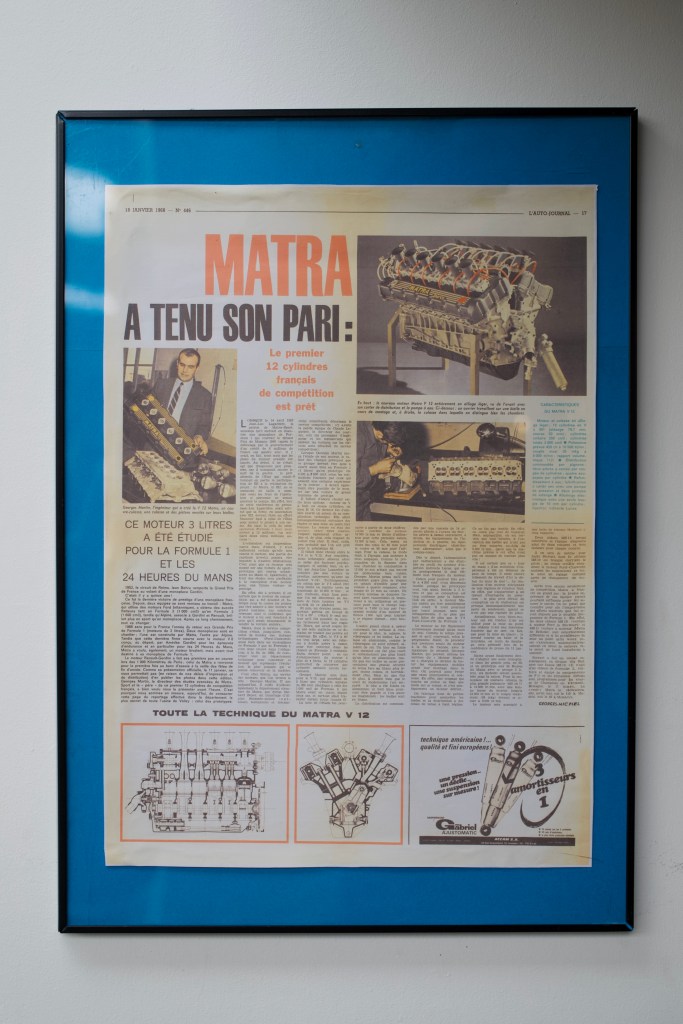
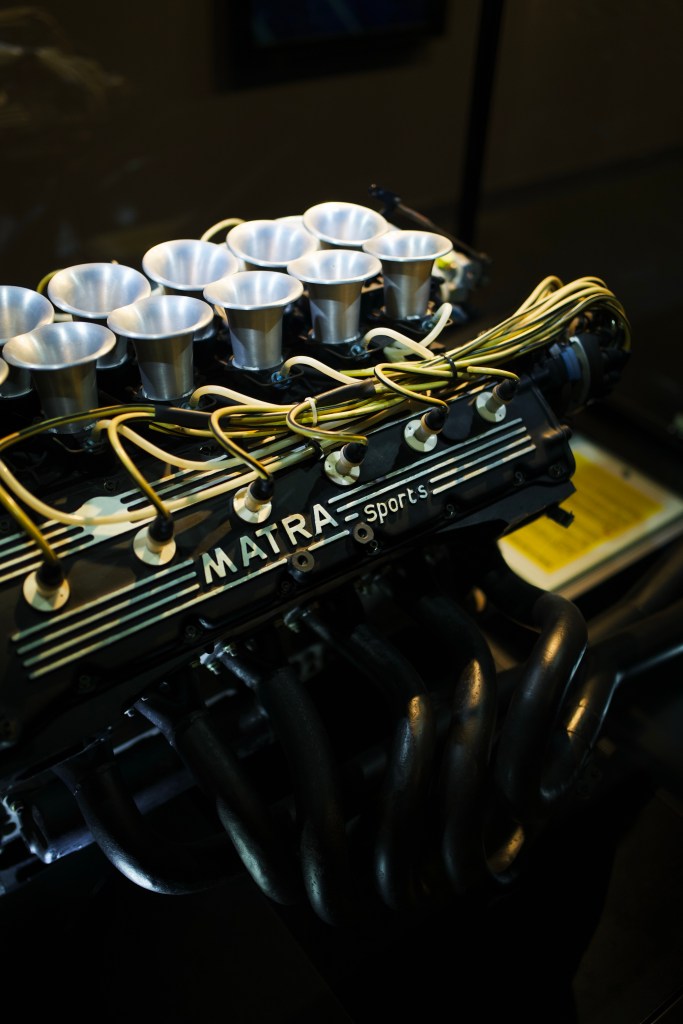
‘Matra a tenu son pari‘ (‘Matra has succeeded in his challenge’) proudly stated an article of the magazine L’Auto-Journal dated from January 18th, 1968, hung on the wall near the engine room of the museum. The challenge for the young car brand was to produce the first French V12 engine. Led by the engineer Georges Martin and funded by a six million francs loan from the French government (approximately nine million euros in 2025), the project gave birth to the MS9, a 12 cylinders 60 degrees V-shape engine of 2,999 cc generating 390 hp at 10.500 rpm. After using Ford-Cosworth or BRM engines during the previous years, Matra Sports was able to engage a 100% French Formula One for the 1968 World Championship.
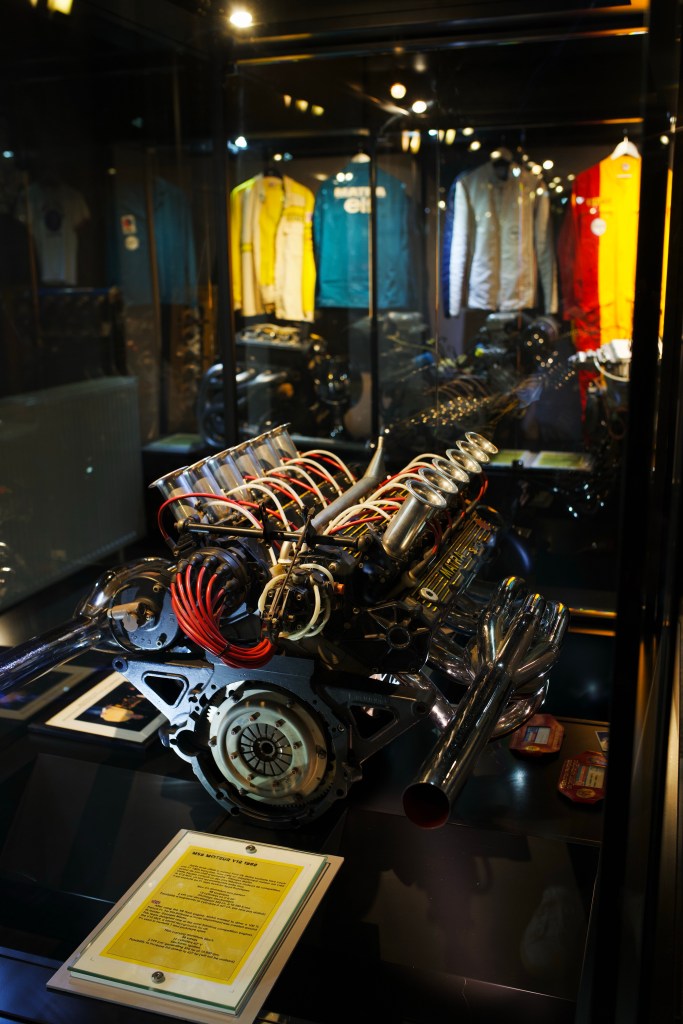
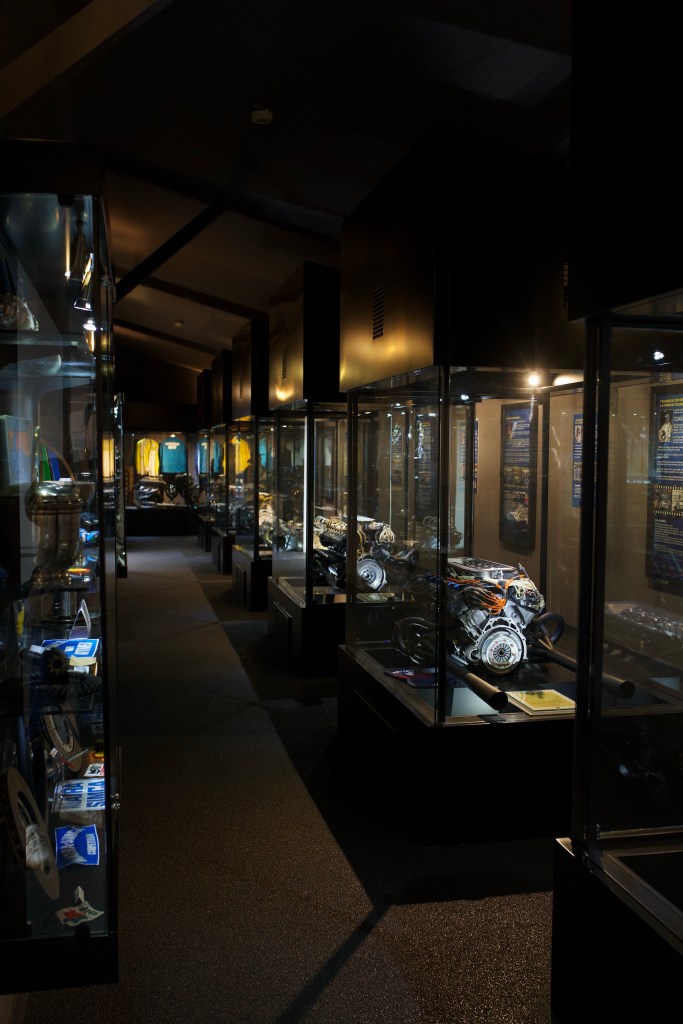
For the 1970 season, the objective was to win in Formula One Grand Prix and to get a result at the 24 Hours of Le Mans. Therefore, the Matra engineers improved their V12 engine, designing a self-carrier motor block with narrower valve angles (34 degrees instead of 56) and lighter pistons, to produce the MS12, a 3-liters engine developing 420 hp at 11,000 rpm (whereas Ferrari’s one was around 8,000 or 8,5000). Various evolutions of the MS12 engine will be made until the beginning of the eighties, used on Matra Formula One and sport cars, and eventually on Ligier Formula One.
Road to the 1969 Formula One Championship
“The Formula Three to learn, the Formula Two to toughen and the Formula One to prevail” was Jean-Paul Lagardère’s motto. The MS1 was build out of lightweight fiberglass, with transversal partitions sealed on an aluminum monocoque, a technique inspired by the aerospace technicians from Matra which gave to the car an exceptional rigidity and power transfer to the ground. Entered in the Formula Three competition in 1965, the first victory came at the Grand Prix de Reims this year, with Jean-Pierre Beltoise at the wheel. Matra will then win three French Formula Three championships in 1965, 1966 and 1967.
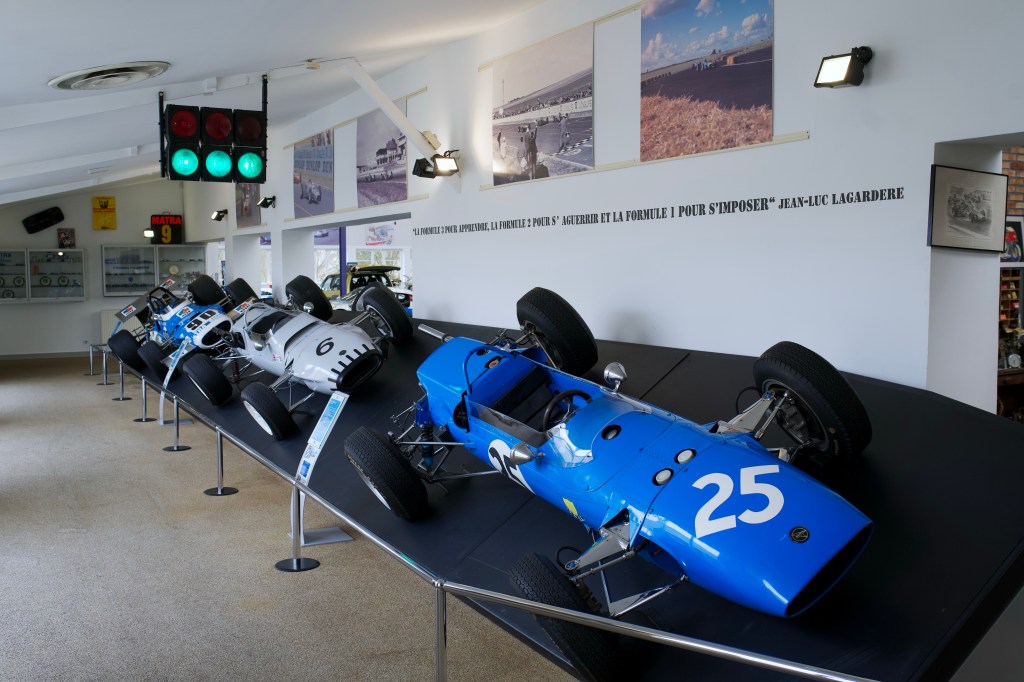
In 1966, Matra engaged to the Formula Two with two teams: Matra Sports with Jean-Pierre Beltoise and Jo Schlesser as drivers, and Matra International – Tyrell Racing with Jackie Stewart and Jacky Ickx, using Ford-Cosworth or BRM straight-4 engines. Along with Beltoise, the Matra roster included other young promising French drivers such as Johnny Servoz-Gavin, Jean-Pierre Jaussaud and Henri Pescarolo, who gained experience and won races and titles in Formula Three. Between 1967 and 1969, these were three new titles of Formula Two Championship which were achieved by the teams of Matra.
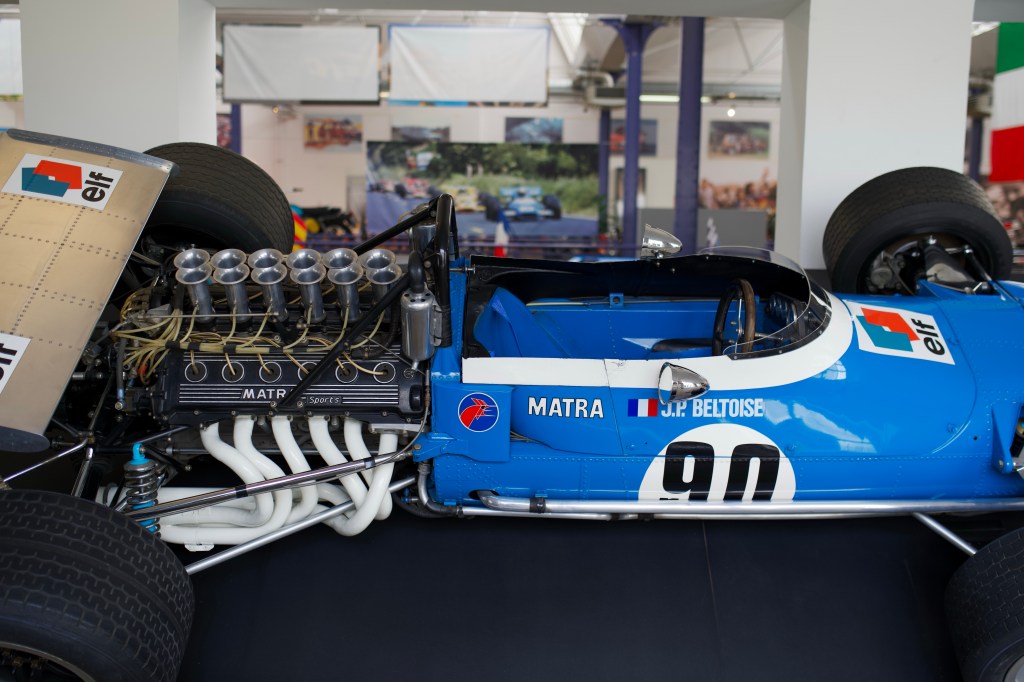
1967 saw the beginning of the partnership with the French petroleum company Elf that will last four years, bringing even more notoriety to the brand through promotional campaigns besides the financial and technical support. Matra entered Formula One in 1968 while its new V12 engine was ready for the competition (see above). However, if the new Matra V12 equipped the MS11 of Pescarolo and Beltoise, Ken Tyrell convinced Lagardère to stick on the V8 Cosworth for the MS10 driven by his protégé, Jackie Stewart. This choice proved to be relevant, as the Scottish driver obtained the best results, finishing second at the end of the season behind the Lotus-Ford of Graham Hill. The consecration came the next year, as the ‘Flying Scot’ won the 1969 drivers’ championship title on the MS80, and Matra-Ford the constructors’ title.
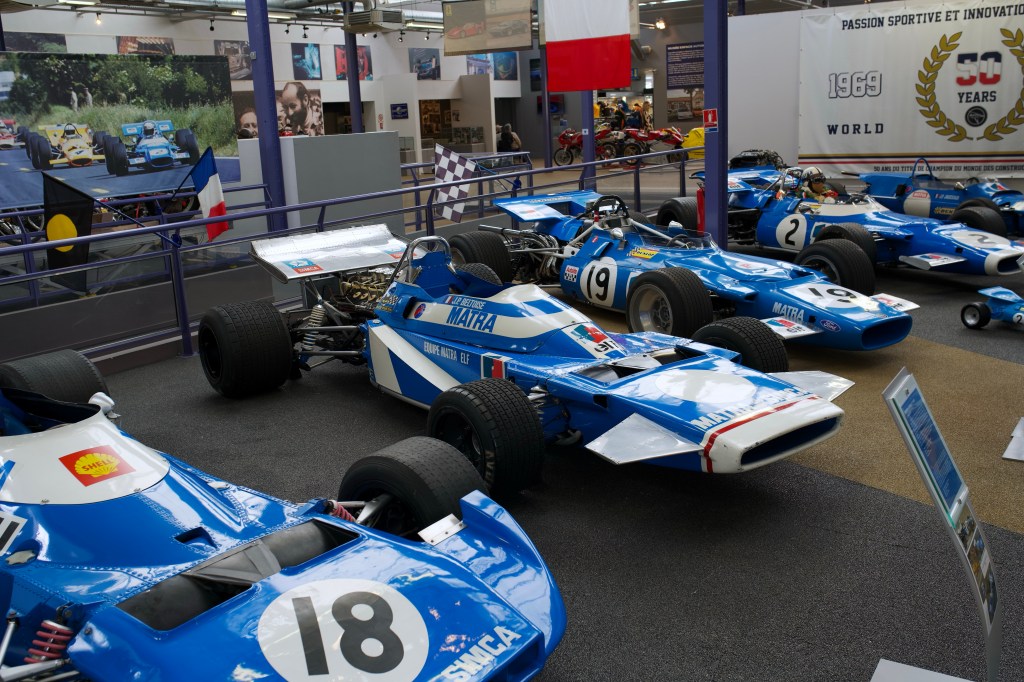
In 1970, due to changes in the championship’s technical regulation, Matra had to modify the structure of its single-seater. At the same time, following a partnership with Chrysler, Matra could not use Ford-Cosworth engines anymore and Tyrell and Stewart left (and won two more championships’ titles in 1971 and 1973 with Tyrell-Ford). Matra participated to three more championships with the MS120 and ended the Formula One program at the end of the 1972 season. Priority was given to the endurance racing.
From an epic rainy night to the hat-trick at Le Mans
Night from September 28th to 29th 1968, 24 Hours of Le Mans circuit. This year, the race has been postponed due to the industrial and civil unrest in France in May. The rain is falling and the windshield wipers do not work properly on the Matra MS630. Servoz-Gavin refuses to resume the race. Lagardère awakes Pescarolo to tell him about the situation. ‘Pesca’ gets mad, does not care about the risks and keeps on the race (!): ‘When I caught a car, I could see its red tail lights in the splashing water and I was unable to tell if it went right, left or in the middle. If I went the wrong way to double it, I found myself in the wet grass, then in the trees!‘ he tells to the French journalist Johnny Rives (2). Early in the morning, after driving 3 hours and with a new wiper motor, he lets the car to Servoz-Gavin at the second position. Unfortunately, the Matra faces two tyres punctures and a fire outbreak start, to eventually abandon less than three hours from the finish…
After entered the most prestigious endurance race two years earlier (without seeing the finish line the both times), the MS630 and its brand new V12 engine was inscribed in the 2-litre prototype category for the 1968 edition, but was clearly not among the favorite against the Porsche 908 or the Ford GT40. Nonetheless, the young French pilots of the Matra team proved they could compete with the best and the epic night of Henri Pescarolo made him entered into the legend of the 24 Hours of Le Mans and in the heart of the French fans.
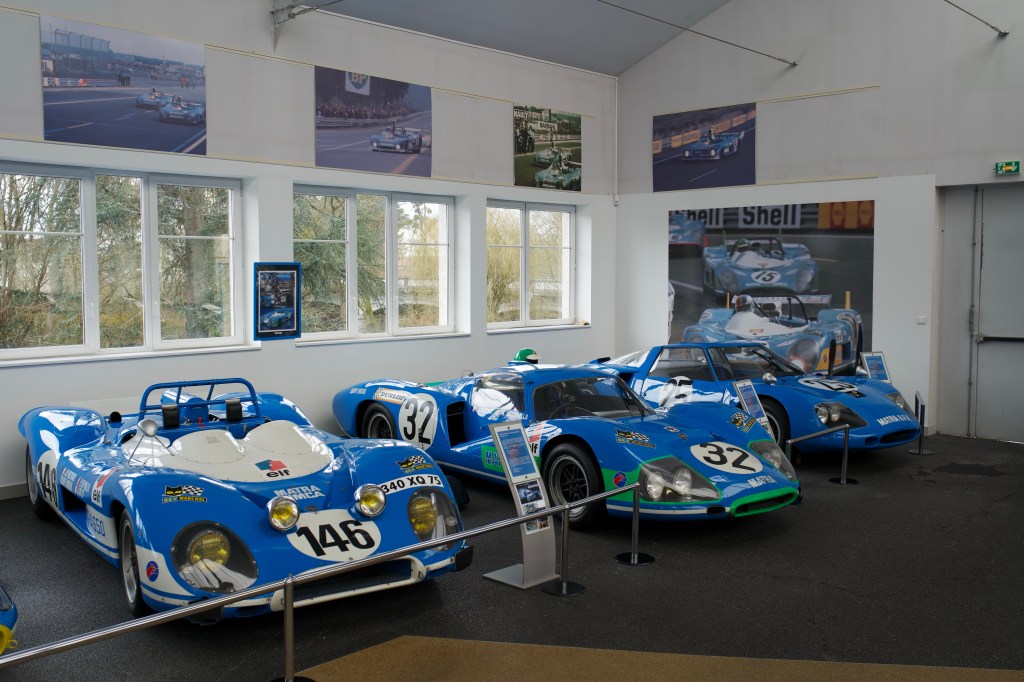
For the next edition of Le Mans in 1969, Matra worked on two prototypes, a spyder (MS650) developed by Bernard Boyer, a former pilot and engineer who arrived at Matra in 1966, and a coupé (MS640) conceived by Robert Choulet, a young aerodynamicist who previously worked with Charles Deutsch. The latter missed the test weekend in March, but Matra, thanks to his connections in high places, arranged a private test in April, along with Alpine Renault. Then disaster strikes, as the MS640 driven by Pescarolo took off, somersaulted in the trees near the Mulsanne straight and caught fire. The hero of 1968 was pulled out alive, but burned to his face and arms, and with two fractured vertebrae in his back. He commentated live from his hospital bed the race for a French TV station, that saw the Matra MS630 and MS650 finished fourth, fifth and seventh.
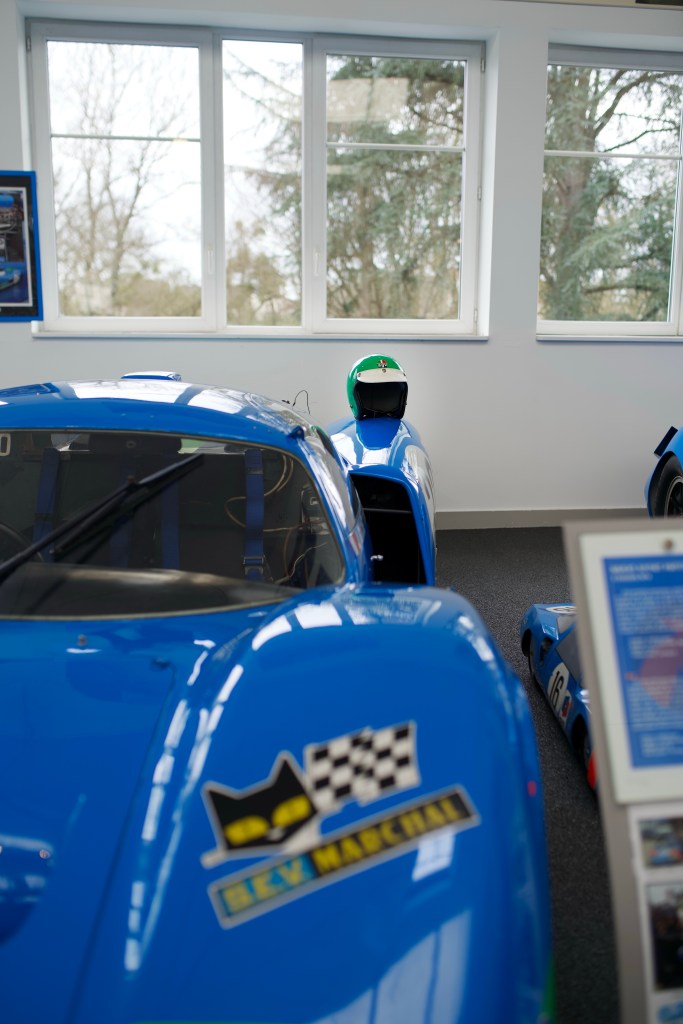
In January 1970, a new regulation ruled out the 5-litre prototypes at the end of the 1971 season, in profit of the 3-litre category to which belong Matra. Bye-bye the Porsche 917 and Ferrari 512S. The next two years were dedicated to development for Matra, though none of the French blue cars had seen the finish line of Le Mans, neither in 1970 nor in 1971, even if the MS660 driven by Chris Amon and Jean-Pierre Beltoise was at the third place before giving up in the morning due to a misfire in the ignition system in 1971.
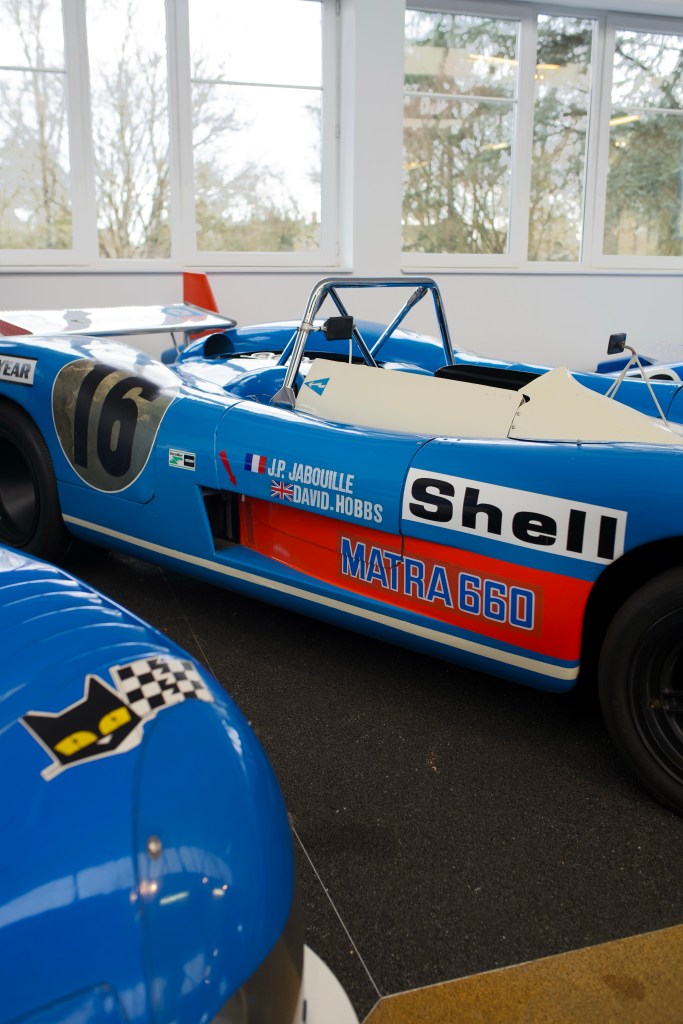
In June 11th 1972, Georges Pompidou was the first French president to give the start of the 24 Hours of Le Mans. After the withdrawal of the Ferrari 312 P/B a few days before the scrutineering, Matra had become the favorite. Despite appearances, the race was not so easy for the French manufacturer and only two out of the four cars engaged made a 1-2 finish. With Henri Pescarolo and the veteran Graham Hill‘s MS670, it was the first victory by a French car since 1950 with Talbot. Hill even achieved to be the only driver to win the Triple Crown in its classic version (victories at the Indianapolis 500, 24 Hours of Le Mans and World Drivers’ Championship of Formula One title), even if this result was tarnished by the loss of his friend Jo Bonnier who was killed after an accident in his Lola T280-Cosworth during the race.
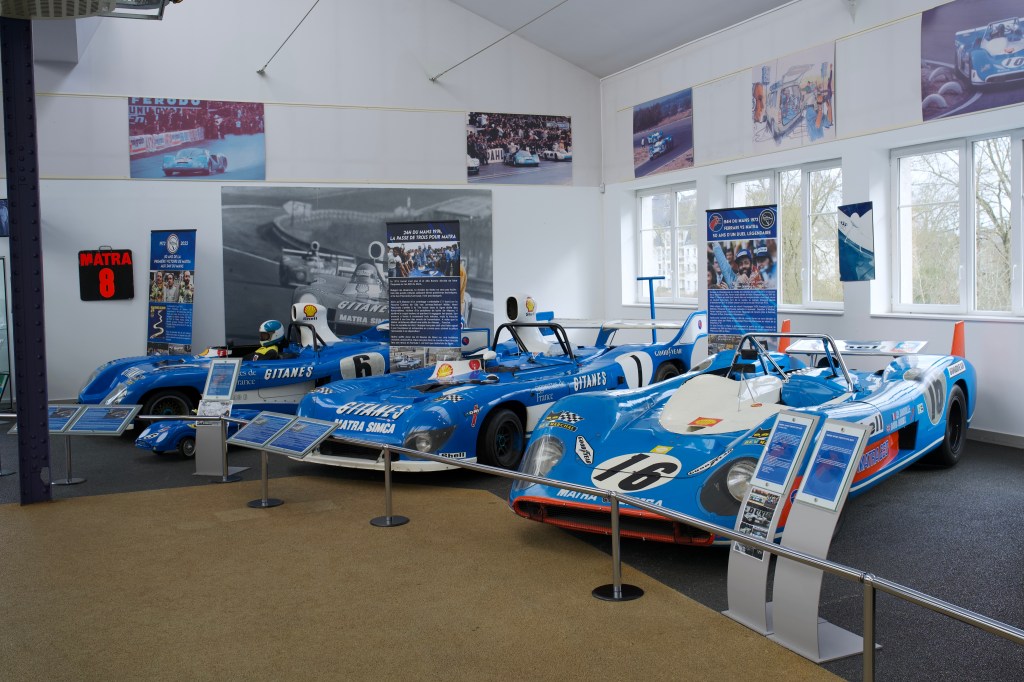
In 1972, Matra withdrew from Formula One to focus on endurance. Ferrari decided to participate to the 24 Hours of Le Mans this year and gave a strong opposition to the title holder. Both manufacturers faced various technical issues during the race. The MS670B of Gérard Larrousse and Henri Pescarolo eventually took advantage of the 312PB of Jacky Ickx and Brian Redman when the latter broke its engine at 2.30 pm. After winning the endurance championship, Pescarolo and Larrousse were awarded with the Légion d’Honneur (highest French order of merit) that they presented later in the summer on the Le Mans circuit.
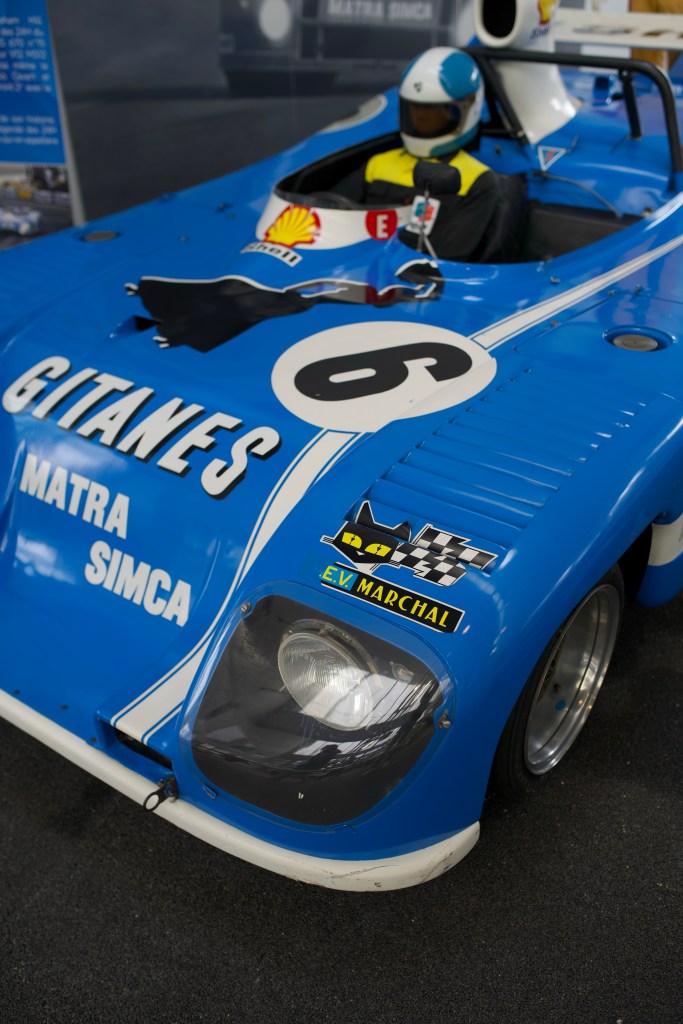
For their third victory in a row at Le Mans, Matra came with four cars, three long-tail MS670B and the new MS680. Ferrari was not there this year, as the Scuderia gave priority to the Formula One for the 1974 season. Nevertheless, things had not been so easy for the French team, with engine issues on three of the cars. For Pescarolo, it was a gearbox problem that forced him to stop his MS670B on the Mulsanne straight, before doing a quick fix himself and driving back the car to the pits, where the gearbox internals were rebuilt. After forty seven minutes of repair, when Larrousse got back on the track, the Porsche 911 RSR of the Martini Racing Team was only one lap behind. But finally, Pescarolo and Larrousse won the race like the previous year. Pescarolo became the third man to ever win Le Mans three times in a row, after Woolf Barnato on Bentley in 1928-29-30 and Olivier Gendebien on Ferrari in 1960-61-62.
Matra Sports’ epilogue
On December 10th 1974, Jean-Luc Lagardère announced the end of the adventure for Matra Sports. In less than ten years, the newcoming French manufacturer achieved a Formula One title (both Driver and Constructor in 1969), two World Championship for Makes (1973 and 1974) and a hat-trick at the 24 Hours of Le Mans (1972-1974). Despite the V12 engine had never won a Grand Prix, Matra kept on as motorist for Shadow (1975) then Ligier (1976-78 and 1981-82).

Matra built road cars – the Matra 530, the Bagheera, the Murena and the Rancho – and made a partnership with Renault to produce the Espace in the 1990s, which was a commercial success. In the early 2000s, the sale of the next car made for Renault in Romorantin’s factory, the Avantime, was not as good and led Matra Automobiles to bankruptcy. Sadly, eighteen years after the closing down, a court decision forced the Matra museum to auction the MS670 winner of the 1972 24 Hours of Le Mans in 2021.
Source:
(1) Matra museum exhibition panel
(2) ‘Henri Pescarolo, Johnny Rives, Souvenirs partagés’, l’Autodrome editions, 2018
Further reading and other sources (mostly in French):
- Museum website
- Tazio Magazine #11, summer 2024, ‘Gunning for glory – Matra’s 10-year target’, story by Richard Lieberman
- Le Mans, The Official History of the World’s Greatest Motor Race, 1970-1979, Quentin Spurring, Evro Publishing, 2011
- René Bonnet at the 24 Hours of Le Mans, (24 Hours of Le Mans website)
- René Bonnet ‘tubular’ Djet prototype auctioned at Artcurial
- La saga Matra (Auto-Hebdo magazine article, August 24th 2014)
- Jackie Stewart, le deal Matra-Tyrell (Pierre Ménard, classiccourses.fr)
- Une nuit en enfer avec la M630 … (Antoine Jimenez, mecanicus.com)
Photos credits: @elegantinparis
 Elégances Parisiennes