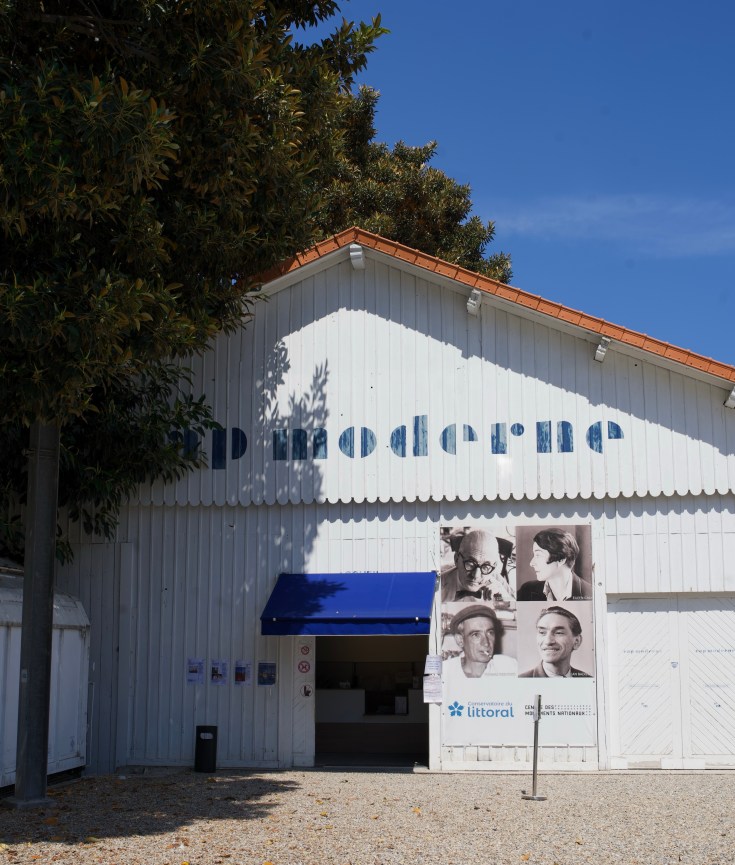

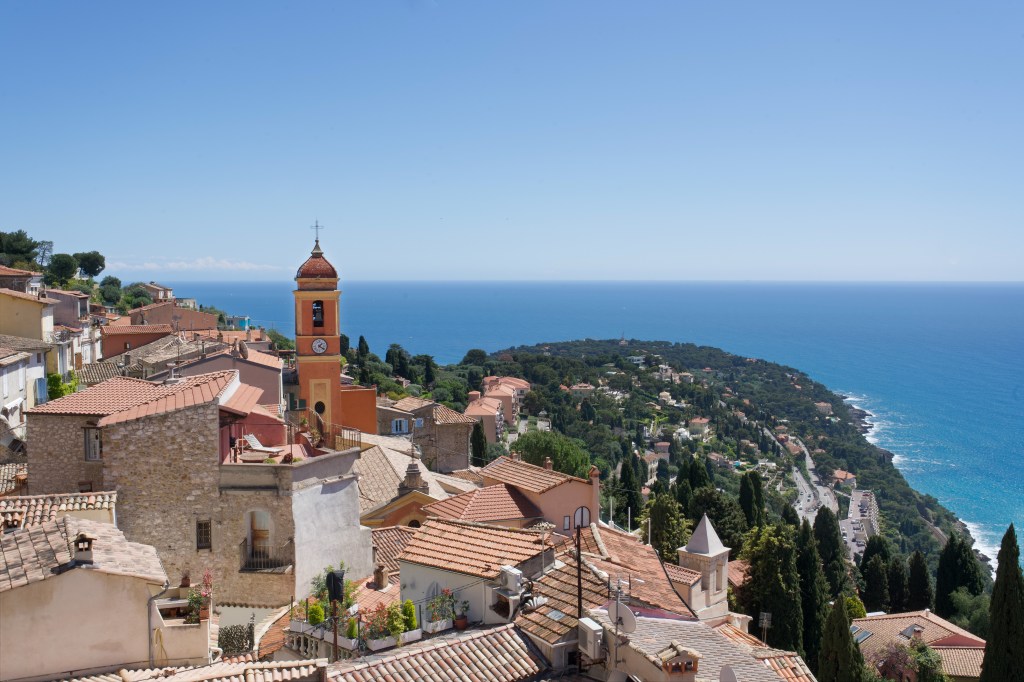
Roquebrune-Cap Martin is a small town located on the French Riviera between Monaco and Menton, 16 kilometers far from the Italian border. The old village and its medieval castle perched on a hill offer a lovely view over the Mediterranean sea and Monaco Bay. Like the two other capes in the region – Cap d’Antibes and Cap Ferrat – Cap Martin has become a favored and discreet vacation spot for the wealthy European aristocrats and American tycoons, who have been building villas here since the mid-19th century.
The site is also known for the Villa E-1027 and Le Corbusier’s Cabanon, two landmarks of the modernist movement that flourished in the first half of the 20th century. The site, which also includes the restaurant-bar l’Etoile de Mer and a group of five holiday cottages, is curated by the Cap Moderne Association and tells the story of friendship – and quarrels – among Eileen Gray (1878-1976), Jean Badovici (1893-1956), Thomas Rebutato (1907-1971) and Charles-Edouard Jeanneret, known as Le Corbusier (1887-1965).
At Villa E-1027: Eileen and Jean
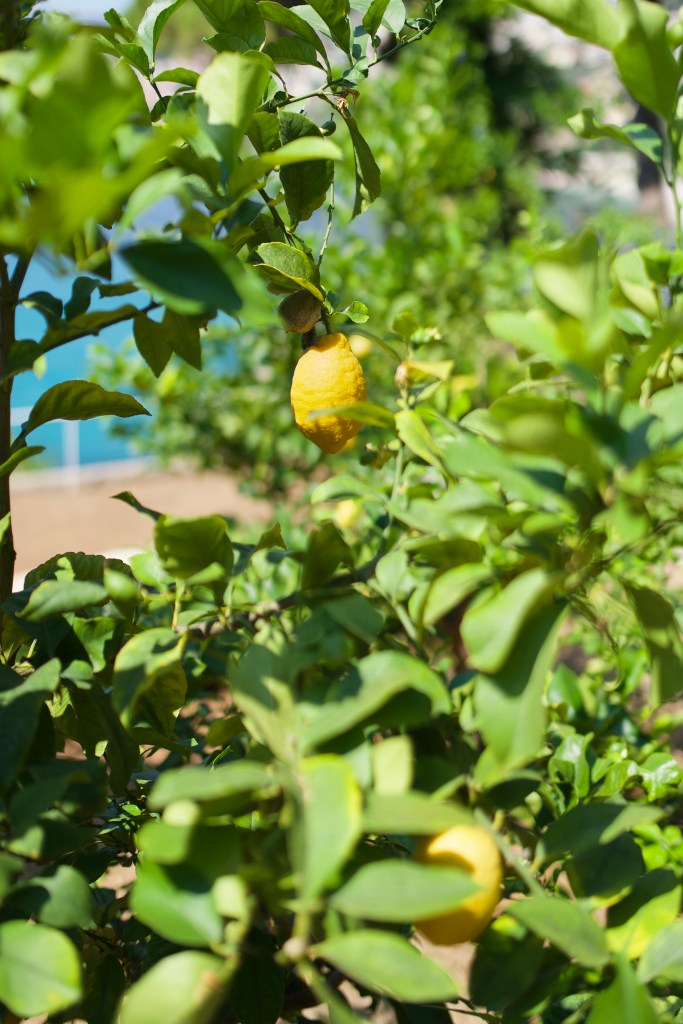
The story of the Villa E-1027 started in 1926, as the Romanian architect Jean Badovici bought two plots planted with lemon trees on terrace, on the rocky coast of Roquebrune-Cap Martin. In 1915, he had arrived in Paris from Bucarest to study architecture. He created the magazine L’Architecture Moderne in 1923 and met Eileen Gray the same year, beginning of a friendship that will last until his death in 1956.
Born in Ireland from an aristocratic family, Eileen Gray moved to Paris in the early 1900s. Driven by an adventurous spirit and a passion for innovation, she became known as an original and eccentric designer of interior and furniture (see her ‘dragons’ armchair‘ from the Yves Saint-Laurent and Pierre Bergé collection sold for a record 21,9 M€ in 2009). Although she initially worked with expensive and exotic materials such as lacquer, ivory or fur, her style shifted toward a simpler and more functional approach in the mid-1920s, when Badovici commissioned her to build a villa on the land he had acquired on the French Riviera.
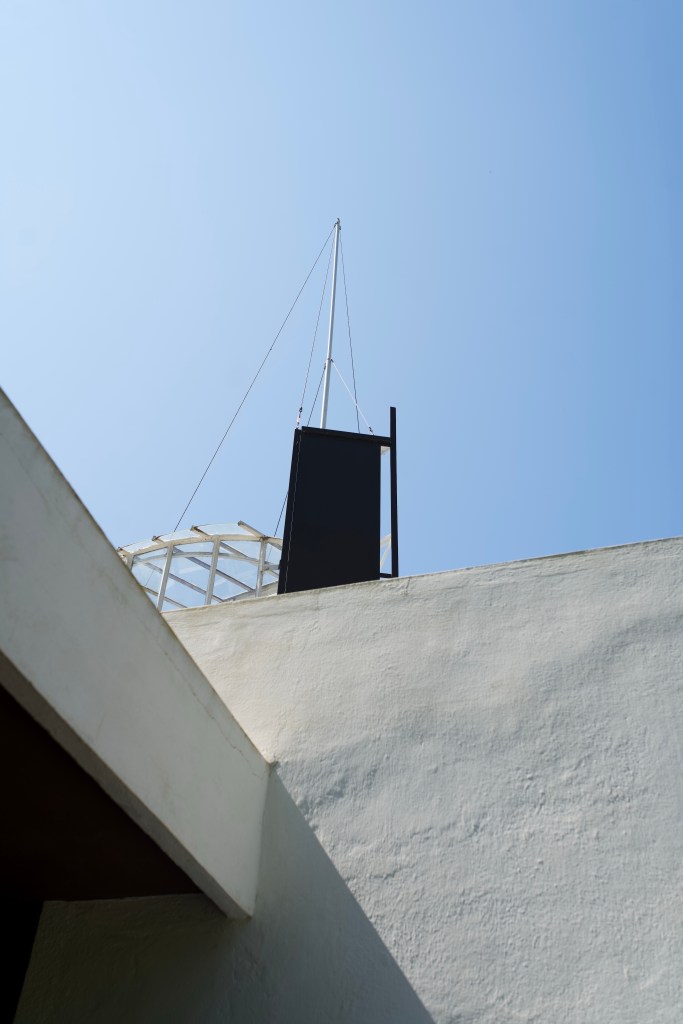
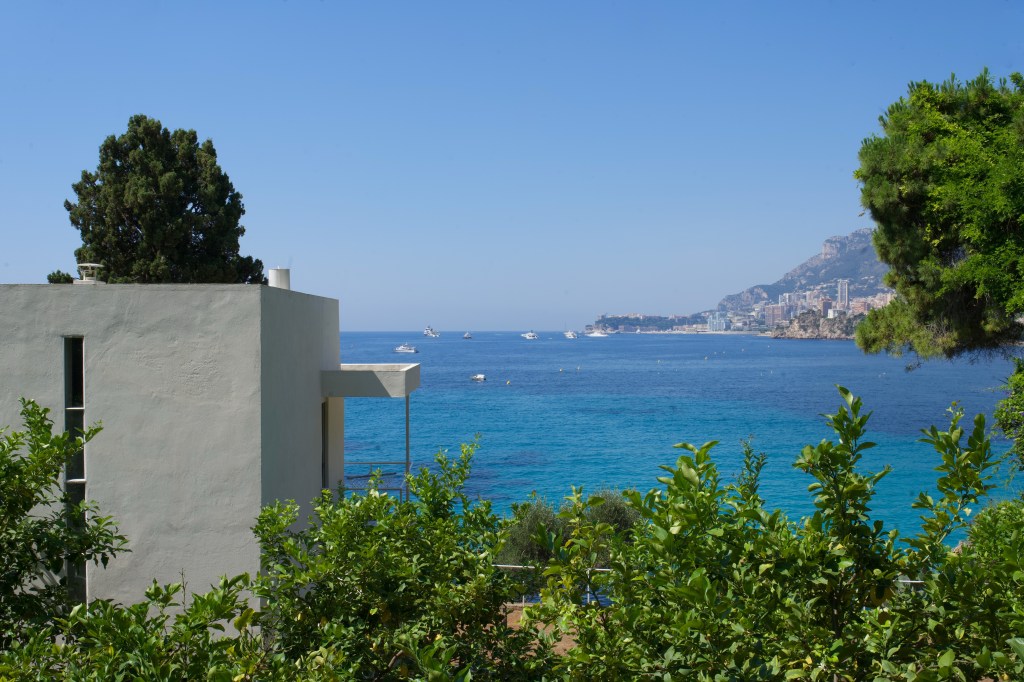
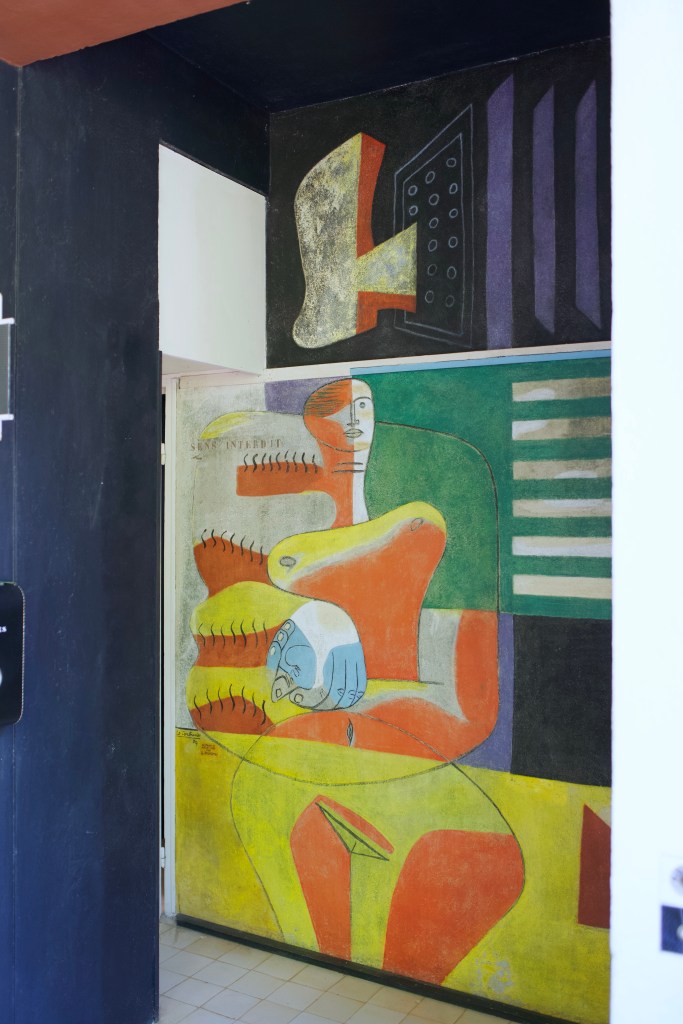
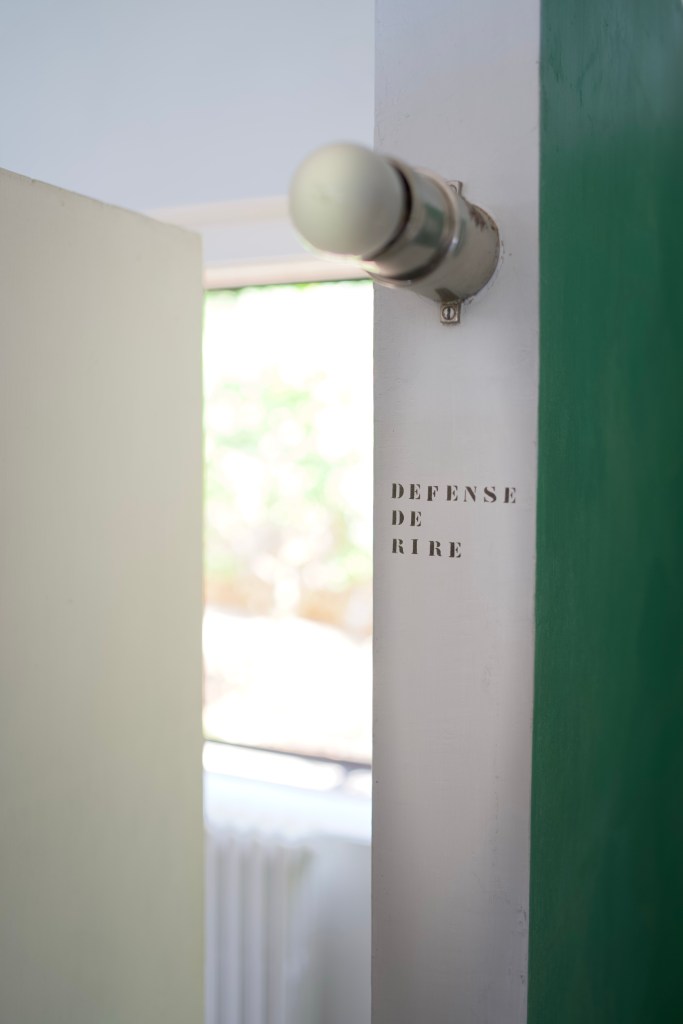
In 1926, neither Gray nor Badovici had never built anything. Yet, finished three years later, Villa E-1027 is an outstanding achievement of modernist architecture and interior design. The building follows Le Corbusier’s five points of modern architecture formulated in the early 1920s: stilts, a free floor plan, an open and unrestrained facade, ribbon windows, and a roof garden. The long white frontage, the blue curtains and the lifebuoy hung on the balcony remind of a ‘motionless liner‘ – as coined by Gray – facing the sea and the harbour of Monaco at a distance.
‘Défense de rire‘ (‘No laughing’) warns the visitor at the entrance of the living room. Built on two levels, the 120 square meters villa has been made by the Irish designer for “a man who enjoys work, sports and hosting friends“. The name of the house, E-1027, is also hosting the names of the two friends: ‘E’ for Eileen, whereas the numbers stand for the place in the alphabet of the letters ‘J’ (for Jean, ’10’), ‘B’ (for Badovici, ‘2’) and ‘G’ (for Gray, ‘7’).
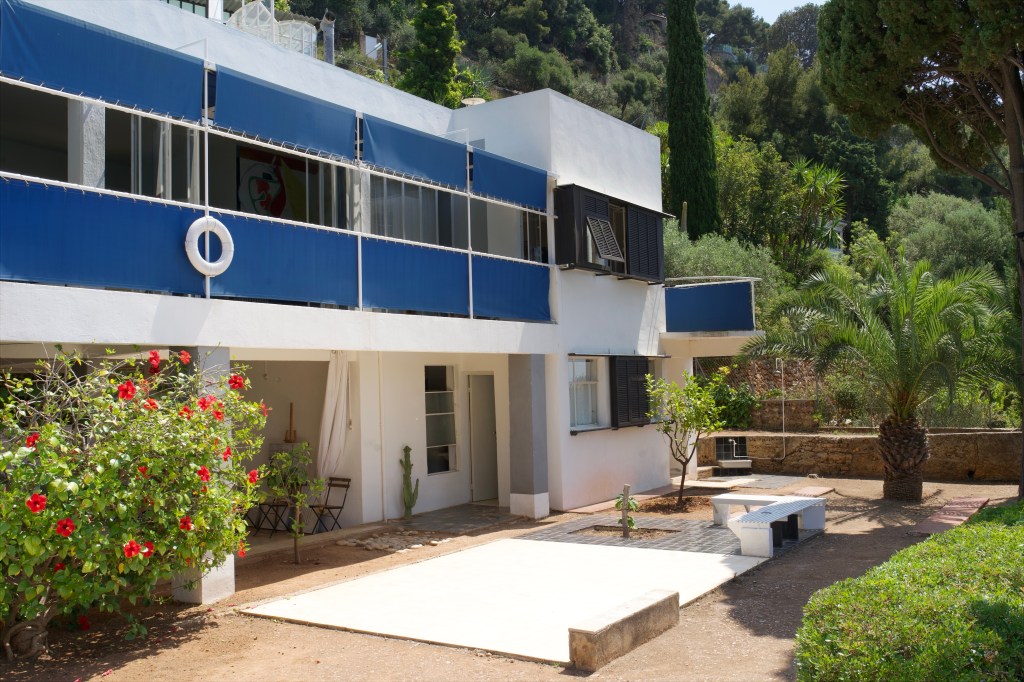
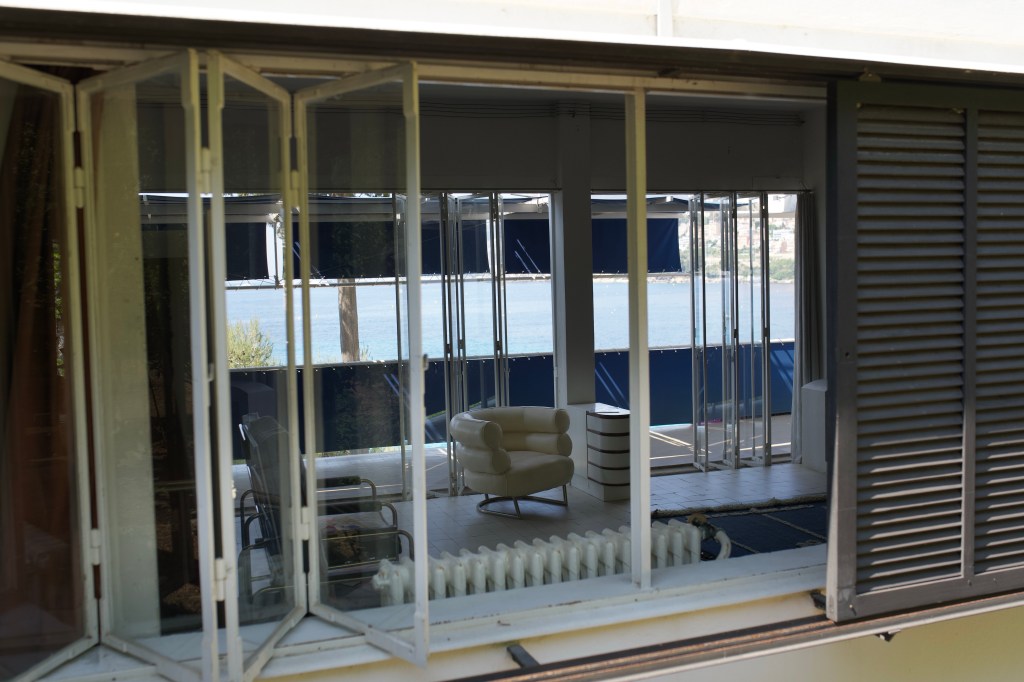
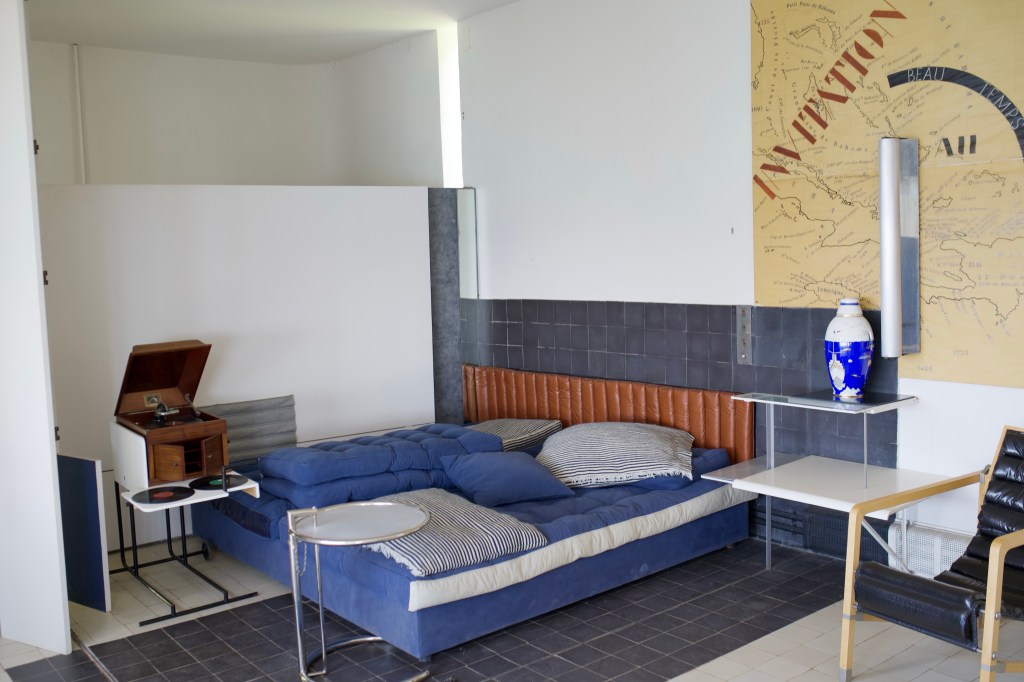
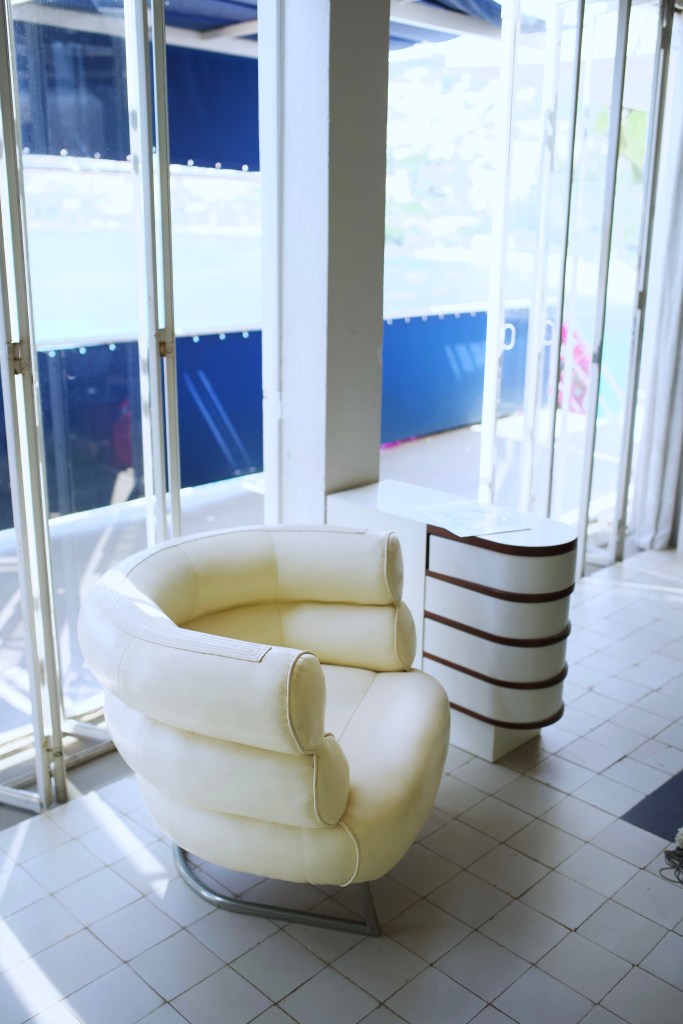
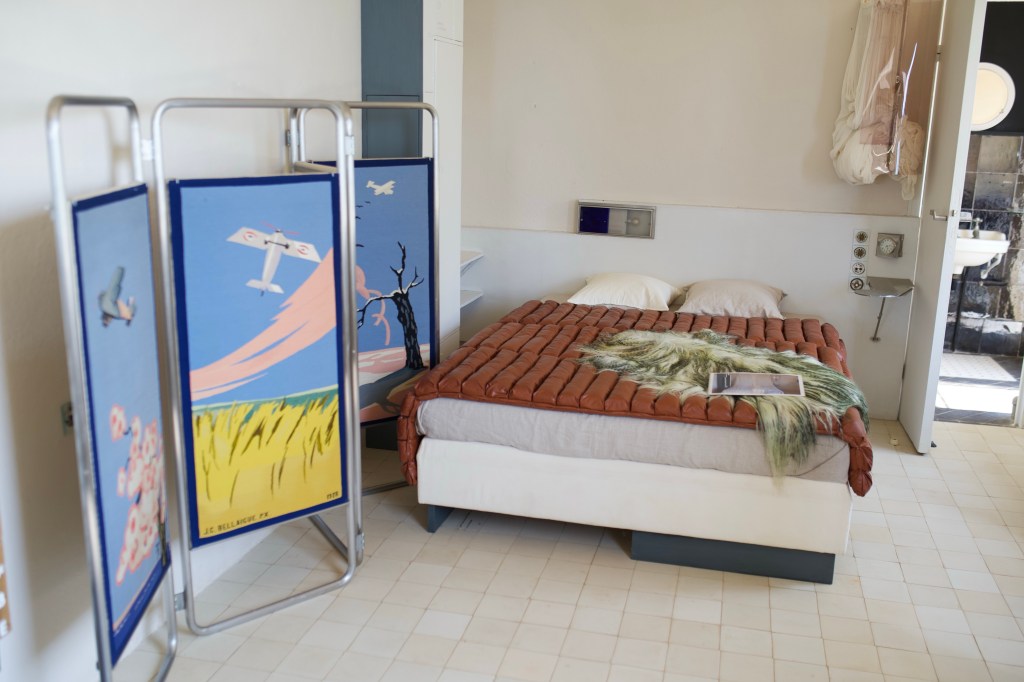
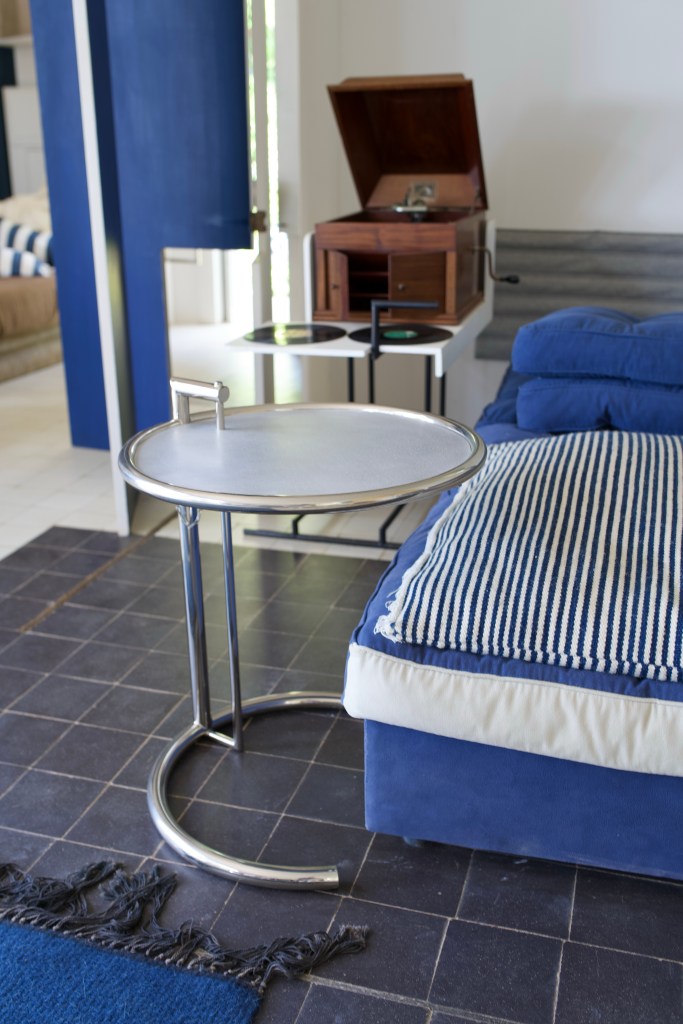
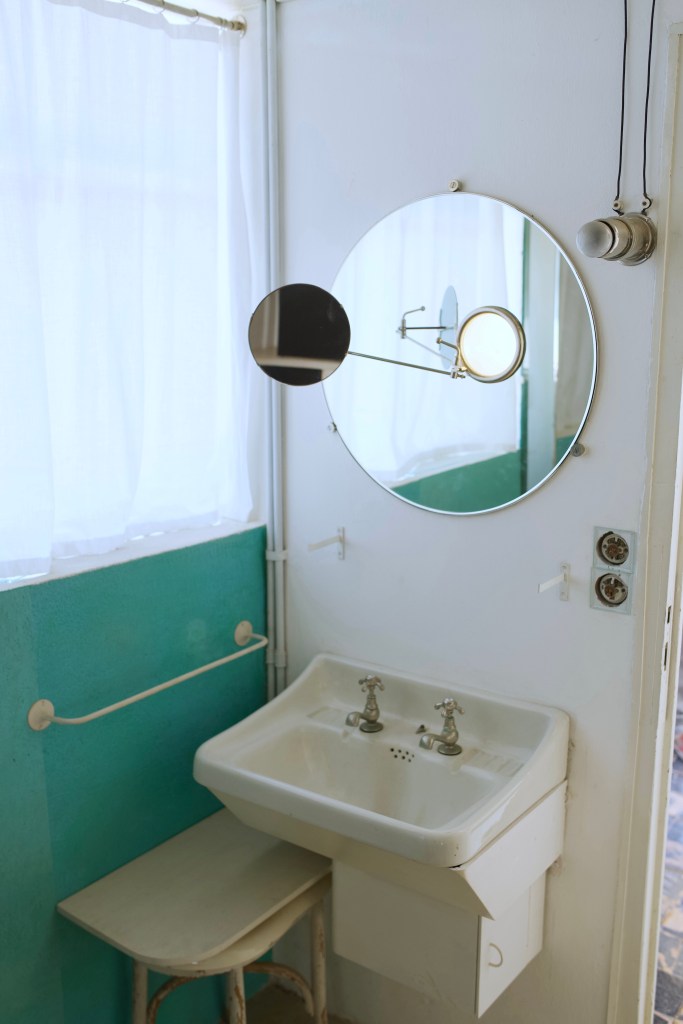
A remarkable work has been made to restore the interior as it was in 1929, including modern reeditions of Gray’s iconic Bibendum Armchair, Transat Lounger or E-1027 Adjustable Table. Comfortable and functionnal, the fixed and mobile furniture of the villa is a manifesto of the ‘camping style’ she developed to store things in a minimum of space. On the lower floor, the guest room’s bathroom is also equipped with an ingenious mirror that includes a smaller, lighted, movable one called ‘Satellite Mirror’, designed by Badovici.
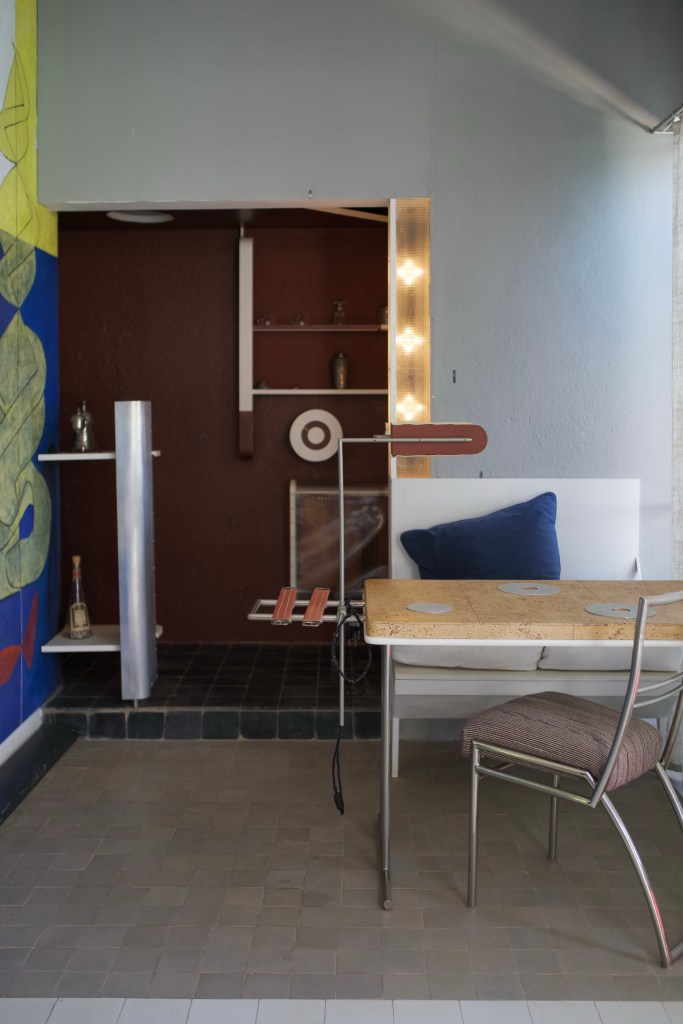
Despite maintaining a strong bond throughout their lives, their relationship had its ups and downs and Eileen Gray left the house in 1932. Meanwhile, Le Corbusier, a friend of Badovici, was regularly invited to the villa. He stayed there several times between 1937 and 1939, and painted (‘daubed’ as he wrote himself) seven murals in the villa, regardless of Gray’s clean aesthetic inspired by the De Stijl movement. At the beginning, Badovici was enthusiastic and even encouraged his friend. As for Gray, it seems she only knew about them in the late 1940s, probably when Le Corbusier published some photos of his works in a book named New World of Space. One can imagine she has been furious, and the relationship between Badovici and Le Corbusier has deteriorated for a while after this episode. Three of the murals have disappeared but the remaining ones have been restored, though the painting in the living room has been hidden to preserve the original design of 1929.
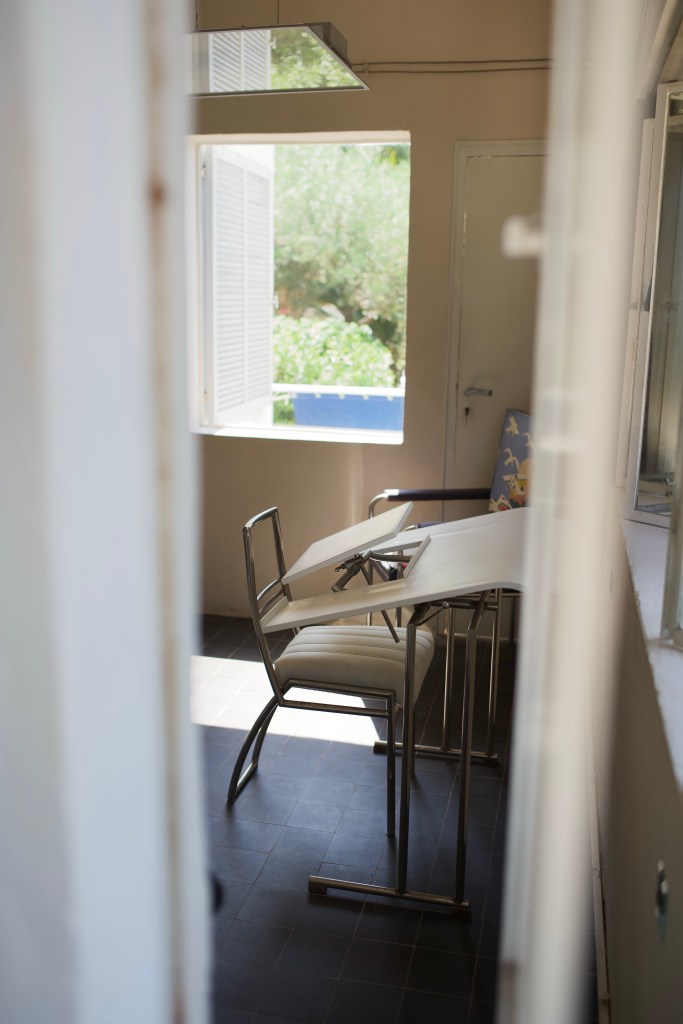
After the death of Badovici in 1956, Le Corbusier wheeled and dealt in favour of a friend of his, Mrs Marie-Louise Schelbert, who bought the house, allowing the Swiss architect to keep on enjoying the place occasionally. When she passed away, she bequeathed it to her doctor, Peter Kägi, in 1974. This latter, a drug and gambling addict, disregarded the villa and auctioned most of the furniture. He has been found stabbed in the salon of E-1027 in 1996.
Then, the place has been abandoned until the Conservatoire du littoral (a public organization which ensures the protection of the French coasts) acquired it in 1999. Squatted and vandalized, the ‘white villa’, as coined by the locals, was in a critical condition. The restoration took place in two phases, first between 2004 and 2012, then in 2014 until 2021, not only to rehabilitate the foundation and the facade of the building, but also to return the interior to its original condition. These works raised heated debates between architectural historians and experts about the restoration and the maintaining of Le Corbusier’s paintings, that some consider as a violation of the original spirit of the place. Nevertheless, the rebirth of E-1027 has permitted to highlight and rehabilitate the role of Eileen Gray in the story of modern architecture.
L’Etoile de Mer and the Cabanon: Corbu’s peaceful Haven at Robert’s
Thomas Rebutato, an Italian born plumber of Nice, bought the plot located at the North-East of the Villa E-1027 in 1948. He used to spend his free time fishing and planned to build there a hut to store his equipment and cook his catches. With the help of his wife Marguerite, he quickly turned the place into a casse-croûte (snack-bar) called “L’Etoile de Mer – Chez Robert” to welcome campers and tourists at the cape. ‘Robert‘ was the nickname he had given himself and the name he gave his son. At the opening in July 1949, one of his first clients was the host of the neighboring villa, who came to arrange meals for himself and his team for a week: it was the first encounter between Le Corbusier and Thomas Rebutato, who would go on to become friends. Renting a room in the nearby village, Le Corbusier returned the following year with his wife, Yvonne, to enjoy what he described in a letter to his mother as a ‘simple humanity, honest and spiritual’. Inspired by this fraternal atmosphere, he painted his friend Thomas alongside with André, a local sea urchin fisherman, adding the inscription: ‘A l’Etoile de Mer règne l’amitié‘ (‘At l’Etoile de Mer, friendship prevails’).
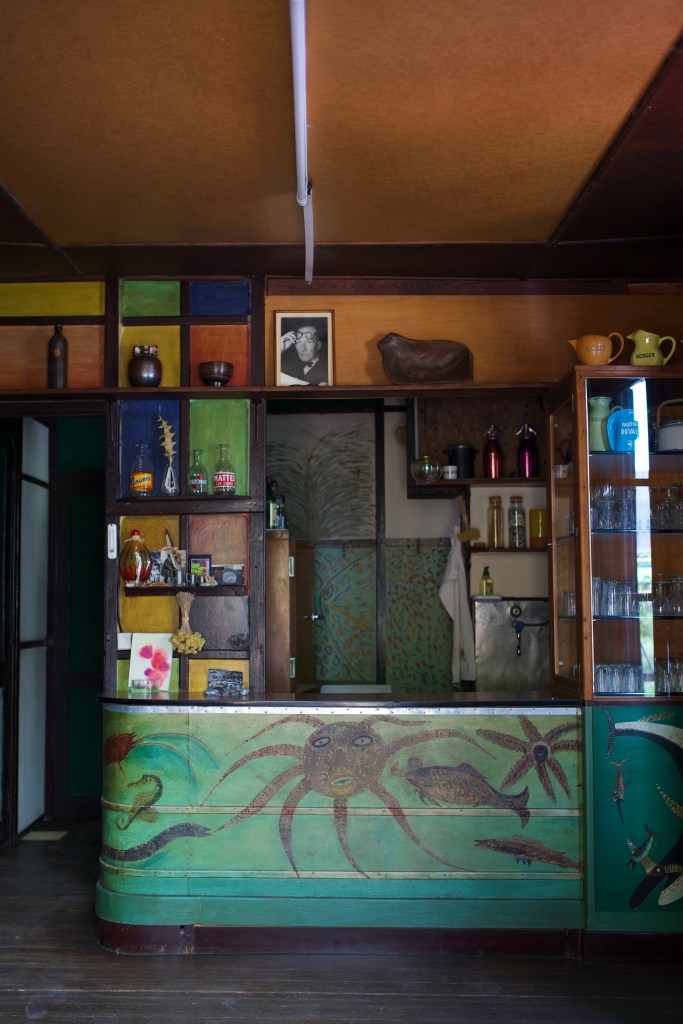

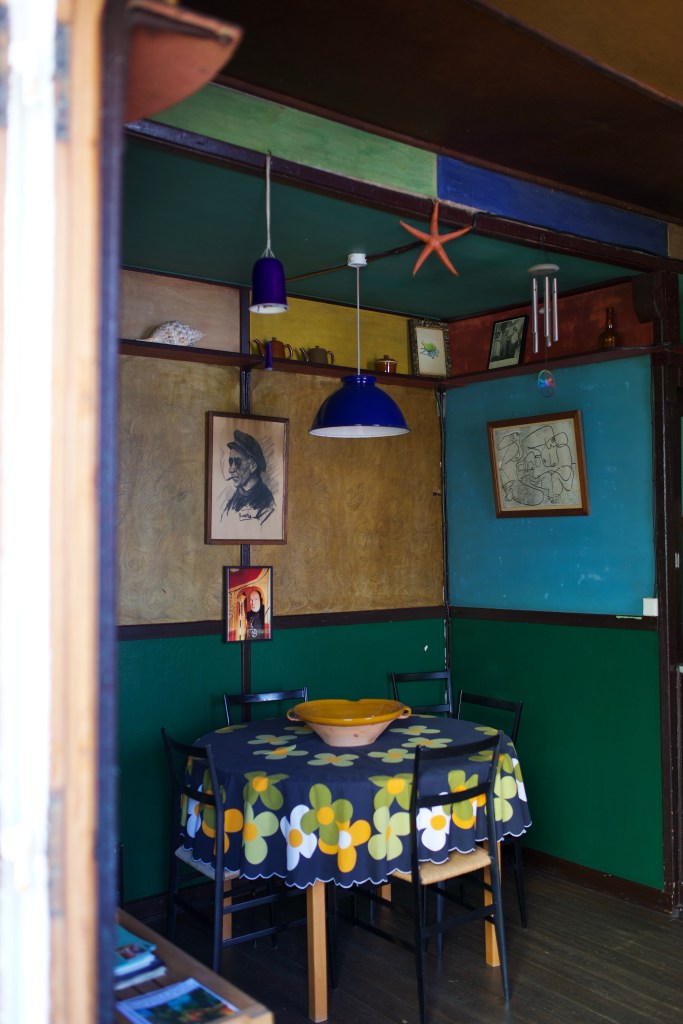
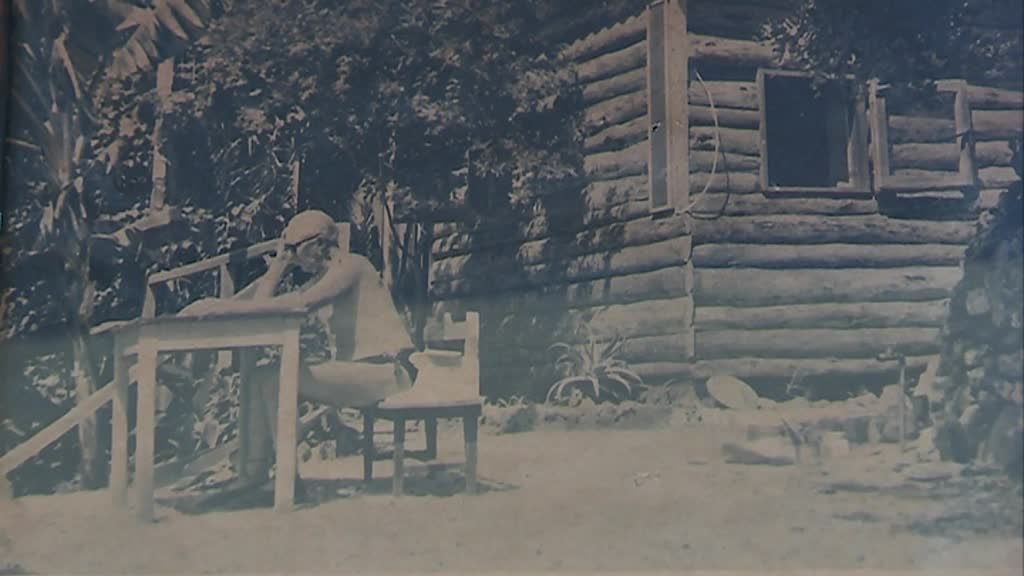
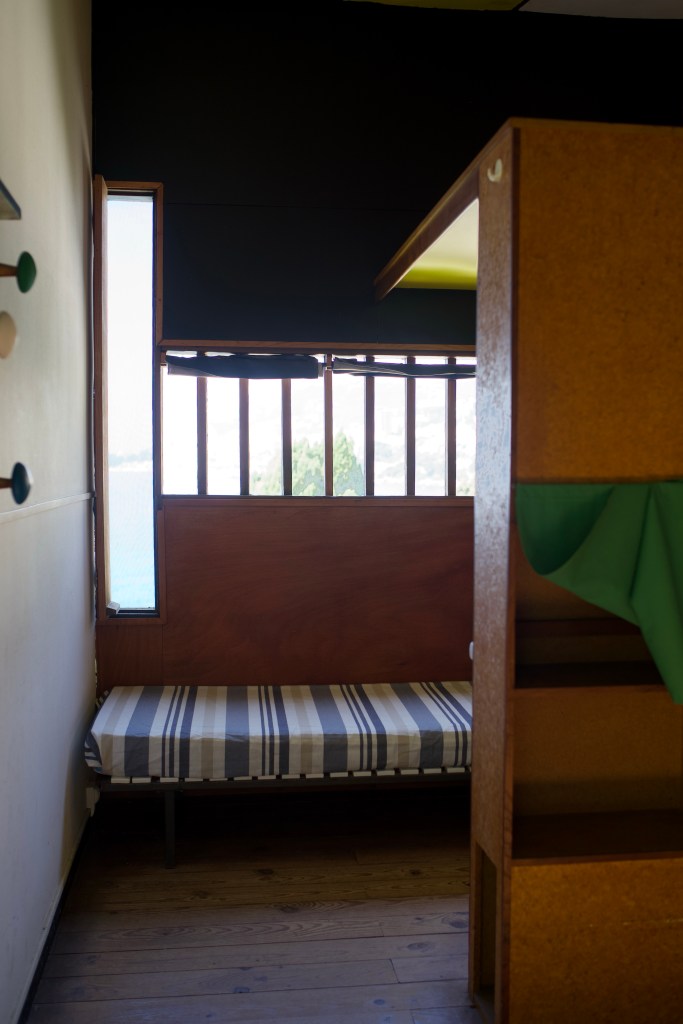
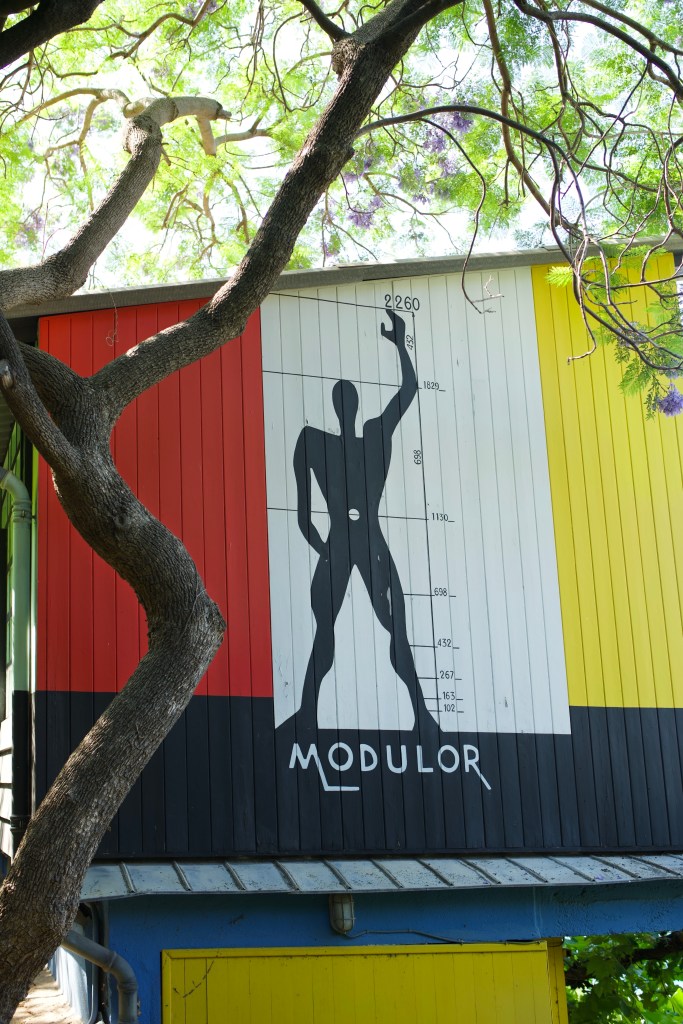
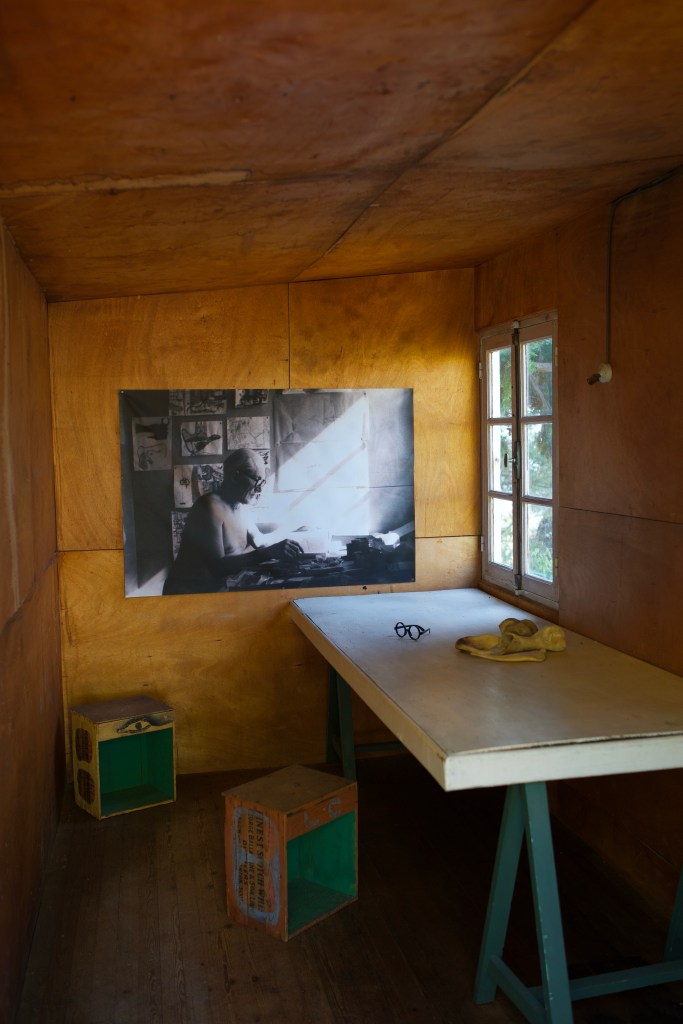
At the end of 1951, Le Corbusier sketched on a napkin the plan for what would become his ‘cabanon’: a 3.66 by 3.66 meters wooden cabin, adjoining the Etoile de Mer and connected to it. The dimensions follow Le Corbusier’s Modulor scale, and the interior layout is arranged according to a spiral pattern. Built in July 1952, Le Corbusier and Yvonne came there the following month. On the side opposite the sea, two single beds and a closet make up the ‘night area’ ; on the other side, a small metal sink, rectangular wooden boxes used as seats, and a fixed table with a view of Monaco Bay form the ‘day area’. Showers were taken outside: the living conditions were Spartan. Meals and social life took place just a few meters away at L’Etoile de Mer. Indeed, the Cabanon aims to offer the minimalist form of accommodation, designed to meet the basic needs of everyday life. In 1954, Le Corbusier had a workshop hut assembled near to store his papers and drawings.
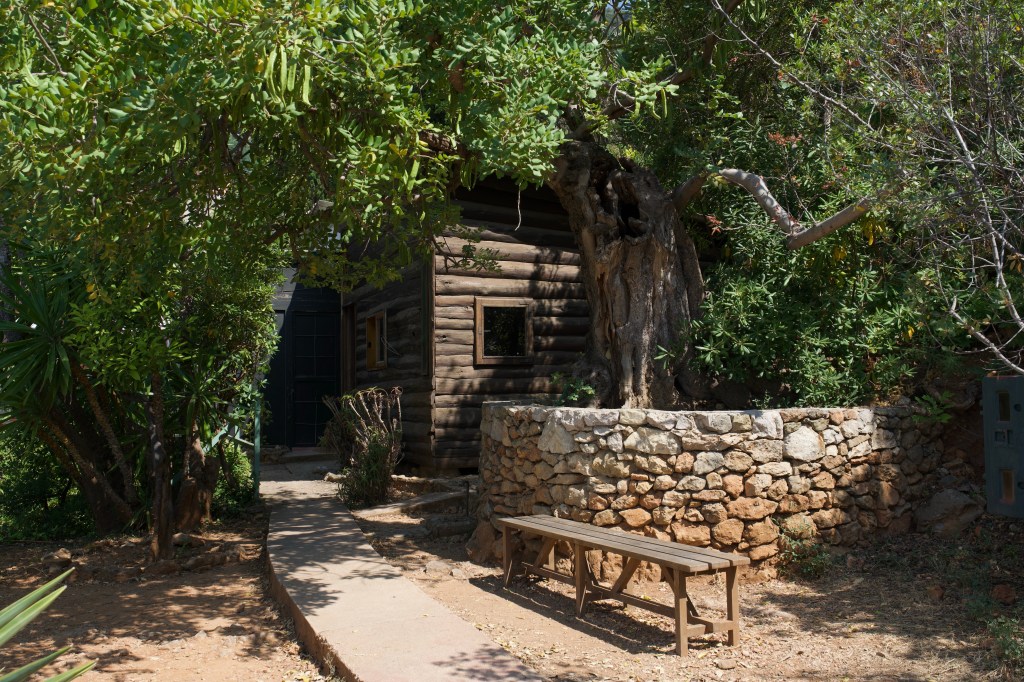
When he bought the field in 1948, Rebutato intended to build several holiday cabins for the campers and passing tourists, to earn a complementary income. Only one of these cabanons would be built, becoming L’Etoile de Mer. During the following years, Le Corbusier jumped into the project and worked with his collaborators on several plans on the rocks below the restaurant. For different reasons – such as blocking the restaurant terrace’s view of the bay and the danger of the waves during storms – these projects were abandoned. Eventually, in 1955, a new project emerged to build five ‘camping units‘ on the pétanque court to the west of L’Etoile de Mer. They were realized by Le Corbusier the following year, in payment of the plot where he had built his Cabanon. Designed on the same principles as the Cabanon, the 8-square-meter cabins are built on stilts, offering simple seaside holiday living.
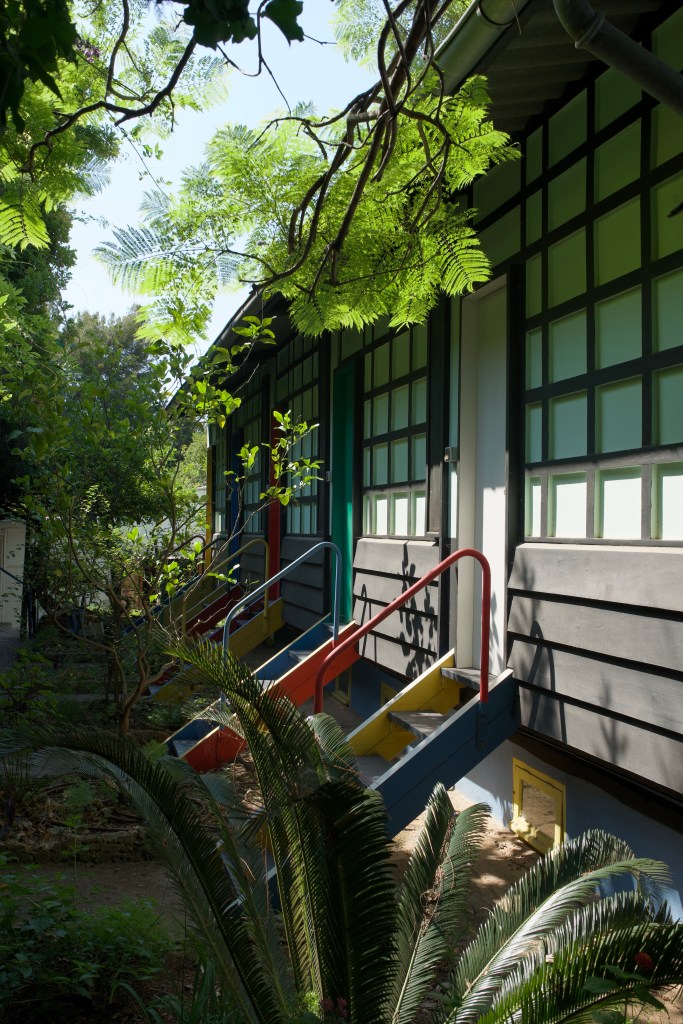
From 1952 onward, Le Corbusier and Yvonne spent most of their summer holidays in Roquebrune each year, often returning during Christmas and New Year’s. Robert Rebutato (1937-2016), Thomas’ son, became close to the couple during his teenage years and later worked for Le Corbusier’s agency. After the death of Yvonne in 1957, Le Corbusier continued to visit and died on August 27th 1965, while he was bathing at the Plage du Cabbé, just below his Cabanon. He is buried in Cap Martin cemetery. Thomas Rebutato died in 1971. His widow, Marguerite, kept the snack bar and continued hosting vacationers until 1984.
The Fondation Le Corbusier inherited the architect’s property, while the Rebutato family bequeathed l’Etoile de Mer and the camping units. The entire site was purchased by the Conservatoire du littoral, which restored the cabins. The Centre des Monuments Nationaux manage it since 2018, along with Villa E-1027, under the Cap Moderne association.

Links:
- Cap Moderne website: private visits are by online reservation only, and limited to small groups,
- Association Eileen Gray. Etoile de Mer. Le Corbusier website (in French),
Photos credits: @elegantinparis, except the archival photo of Le Corbusier in front of his Cabanon
 Elégances Parisiennes