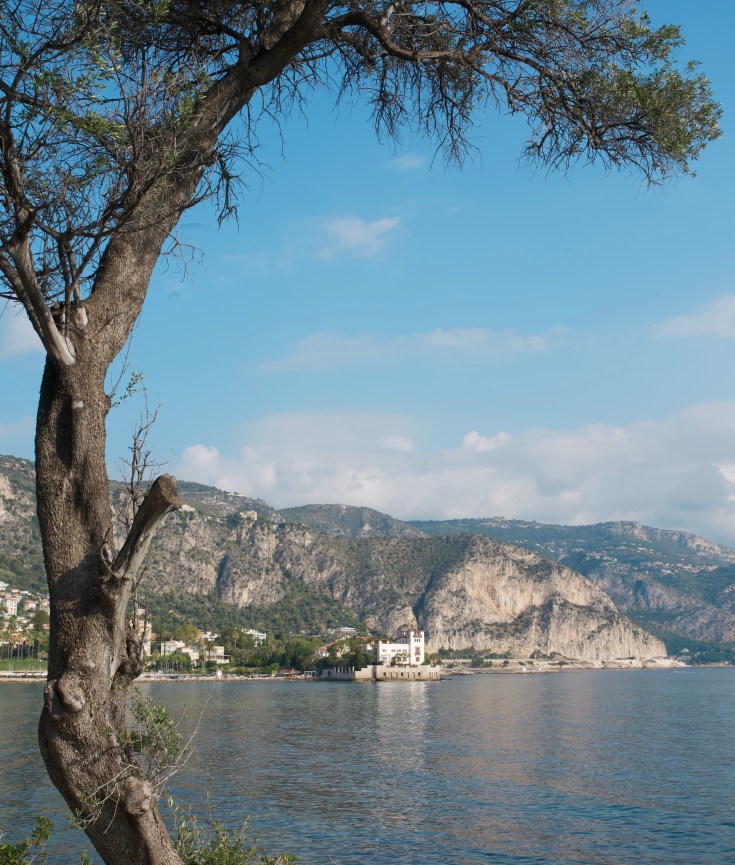

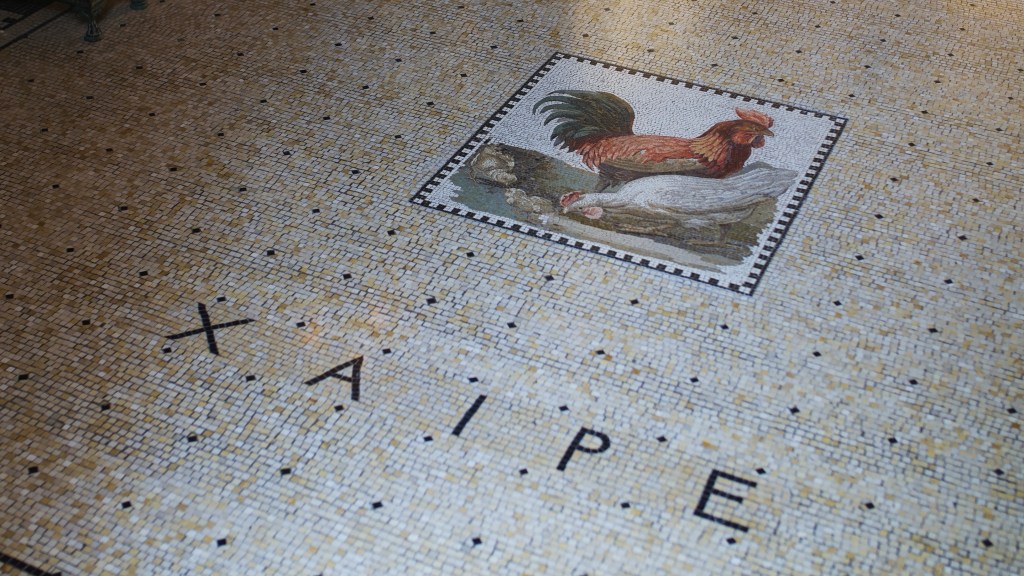
Χαῖρε, ‘Greetings’ in Ancient Greek, welcomes the visitors of this uncommon villa located in Beaulieu-sur-Mer, between Nice and Monaco. Modeled after the homes of Greek nobles on the island of Delos in the second century BC, Villa Kerylos has been built between 1902 and 1908 by the architect Emmanuel Pontremoli (1865-1956).
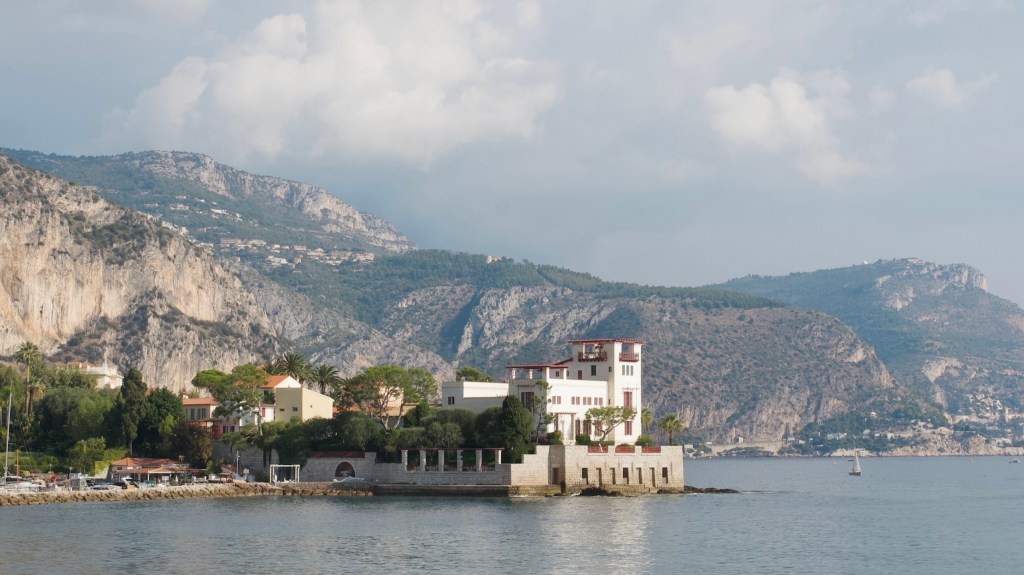
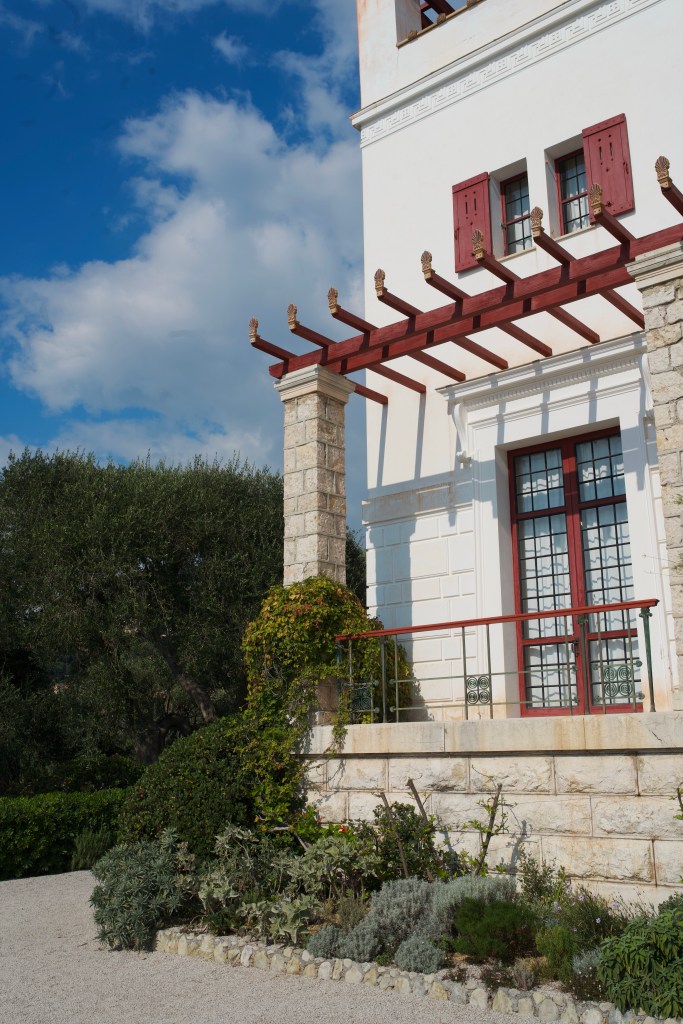
Facing the Mediterranean Sea, Villa Kerylos evokes the legend of Alcyone, in which two lovers were transformed into common kingfishers (‘halcyon birds’, kerylos in Greek) after the husband, Ceyx, perished at sea and his wife, Alcyone, threw herself into the waves. The myth has become synonymous with calm, beauty, and serenity, giving rise to the Halcyon days, a period in winter when storms do not occur.
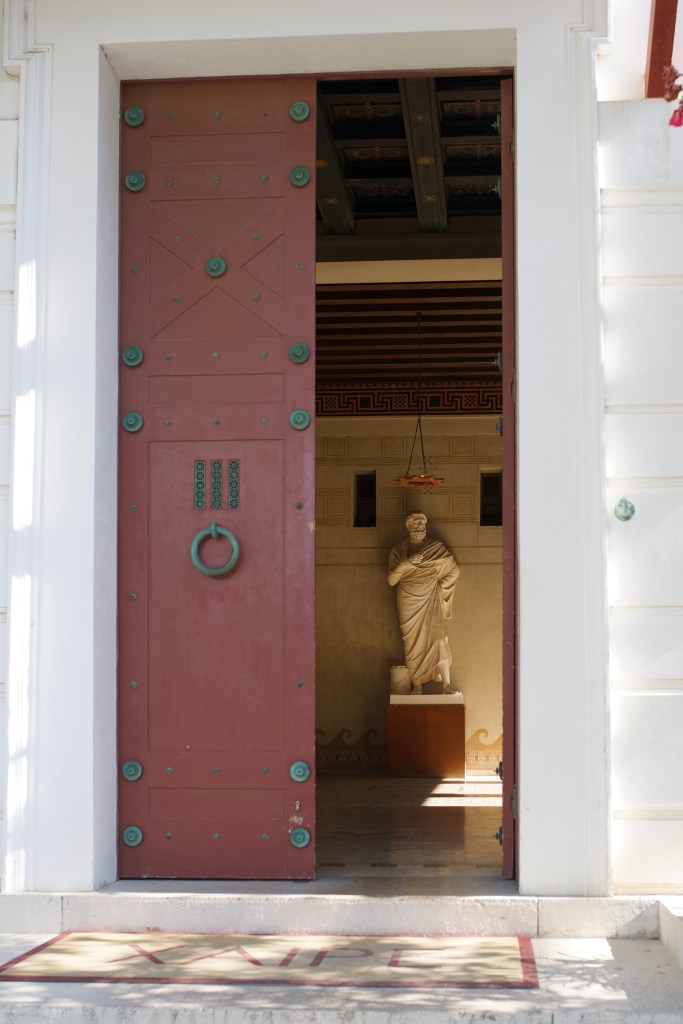
The patron, Theodore Reinach (1860–1928), was a French politician and historian, born into a Jewish family of bankers and intellectuals. An archaeologist and renowned Hellenist, he commissioned a villa that was a faithful interpretation of a Greek home, equipped with modern comforts such as electricity, heating, and bathrooms. He used to spend his holidays there with his family, as shown by several archival photographs of his grandchildren displayed in the house. Upon his death in 1928, he bequeathed the villa to the Institut de France, the national French learned society of which he was a member, and his children and grandchildren continued to live there until 1966.
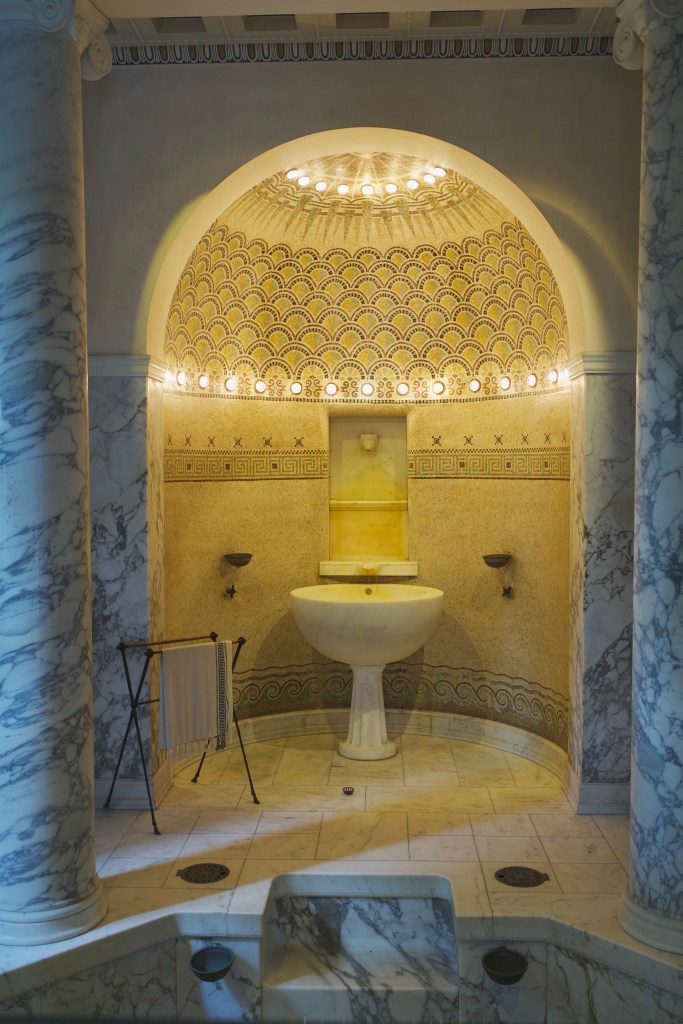
Balaneion – thermal baths
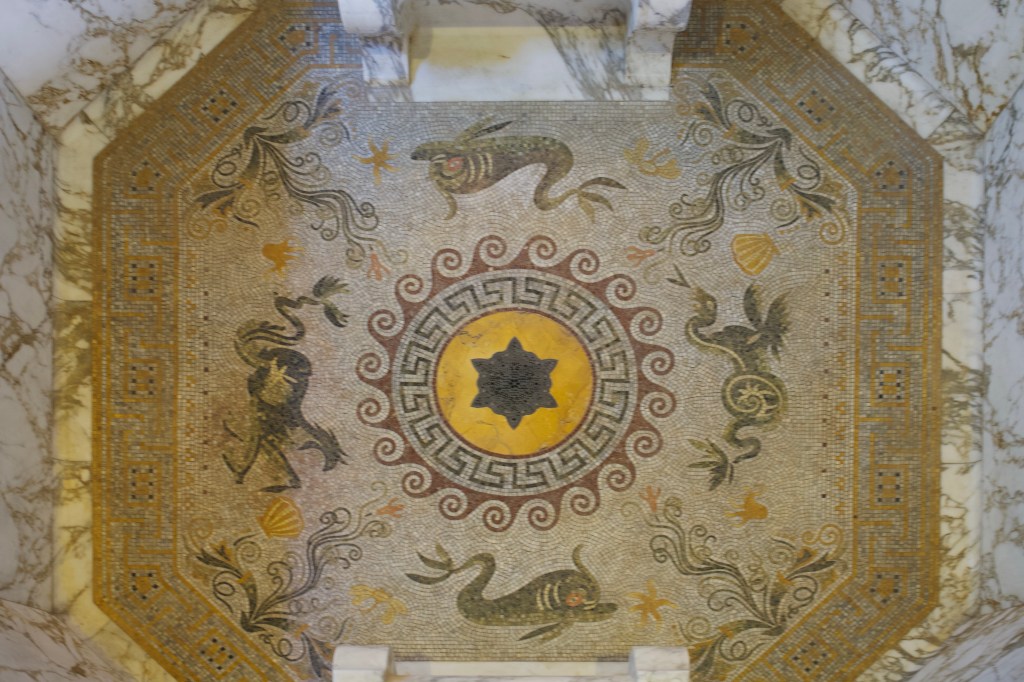
Besides personal hygiene, the Greeks — unlike the Romans — also used baths as a ritual of physical and spiritual purification. Immediately to the left upon entering the villa, they offer an intimate space, with a magnificent mosaic depicting legendary sea creatures at the bottom of the basin.
Peristyle
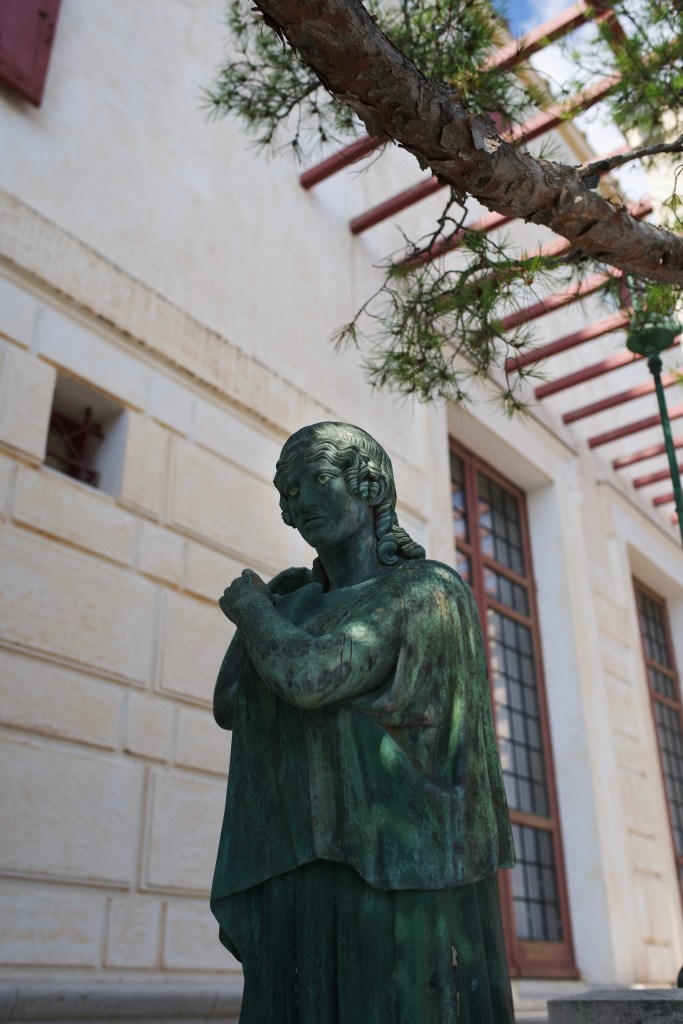
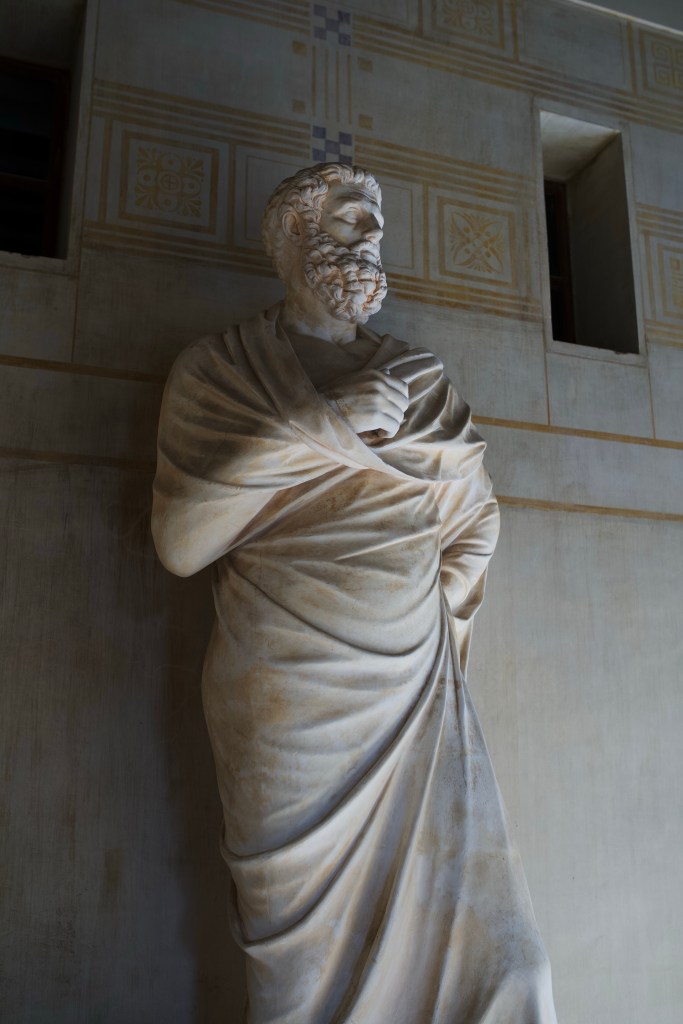
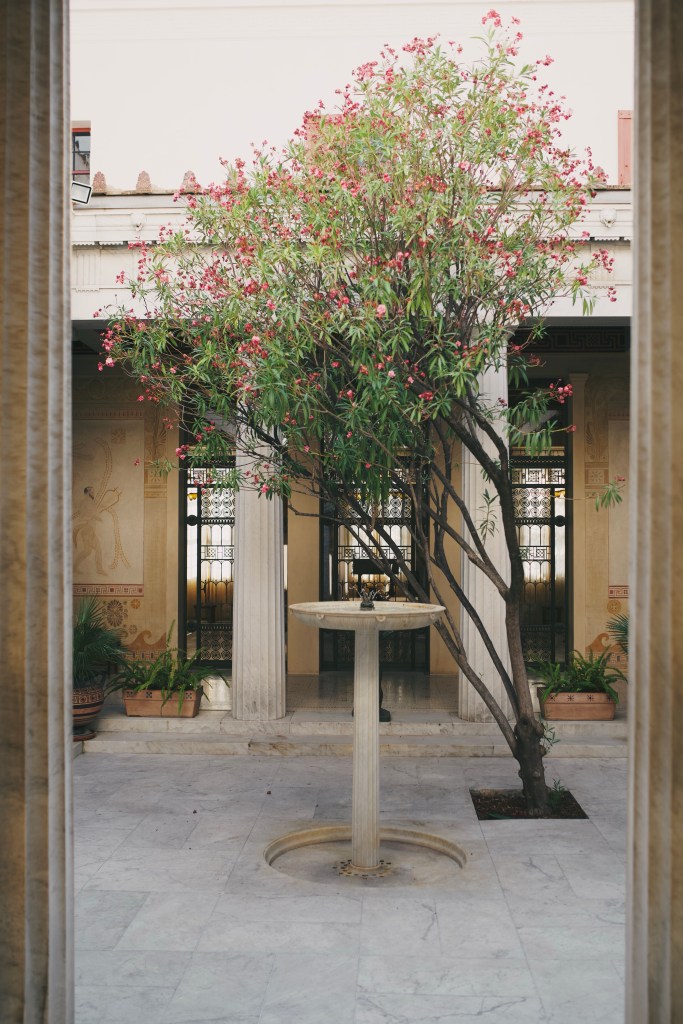
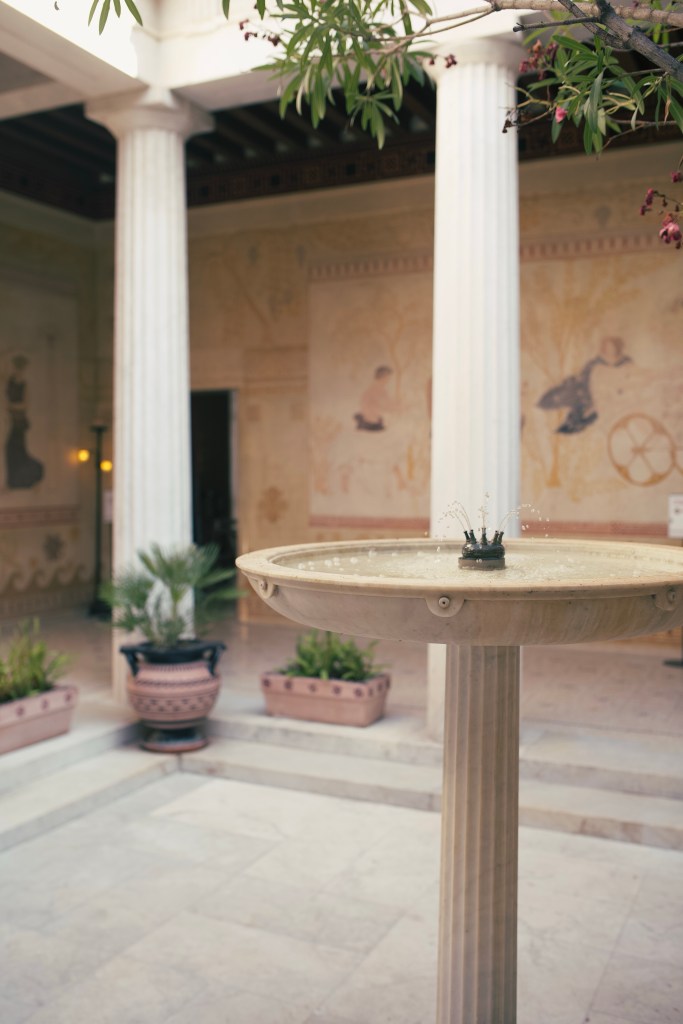
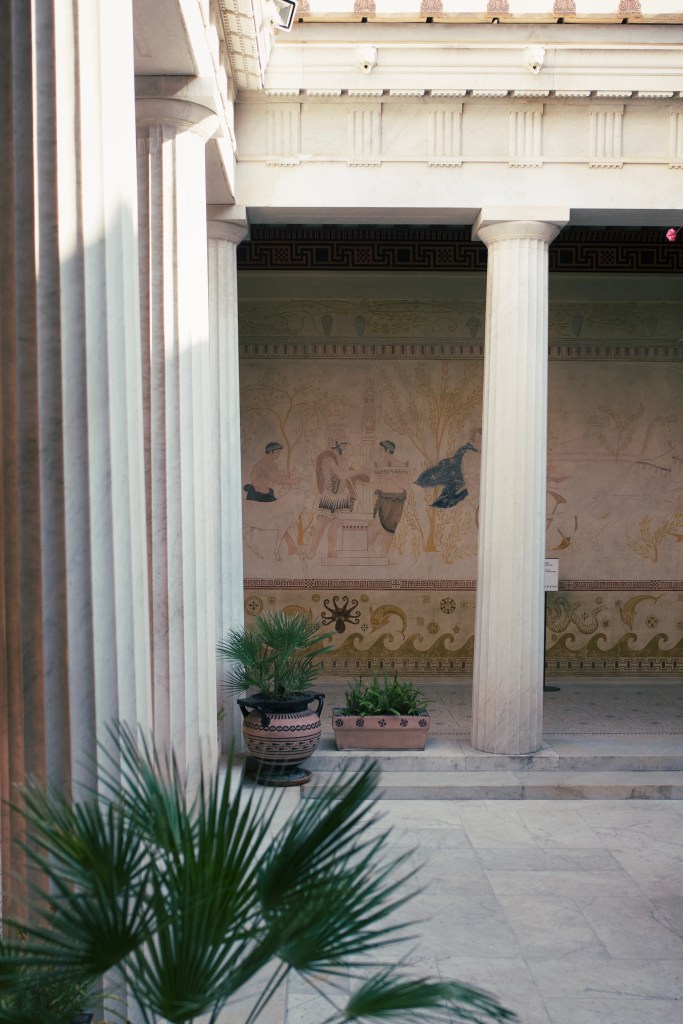
After passing the austere figure of Solon in the vestibule (see above) — an Athenian statesman and poet who lived in the 6th century BC — we enter the peristyle, around which the house is built, the central feature of ancient Greek homes. Surrounded by six frescoes and twelve Carrara marble columns, the small central fountain evokes a sense of calm and serenity.
Triklínos – dining room
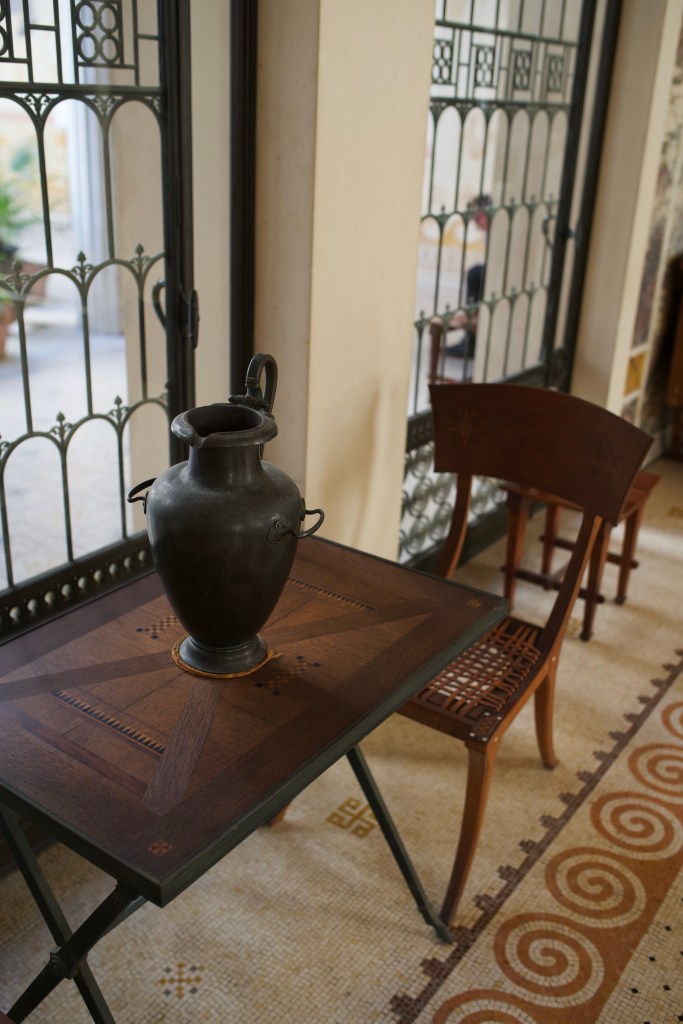
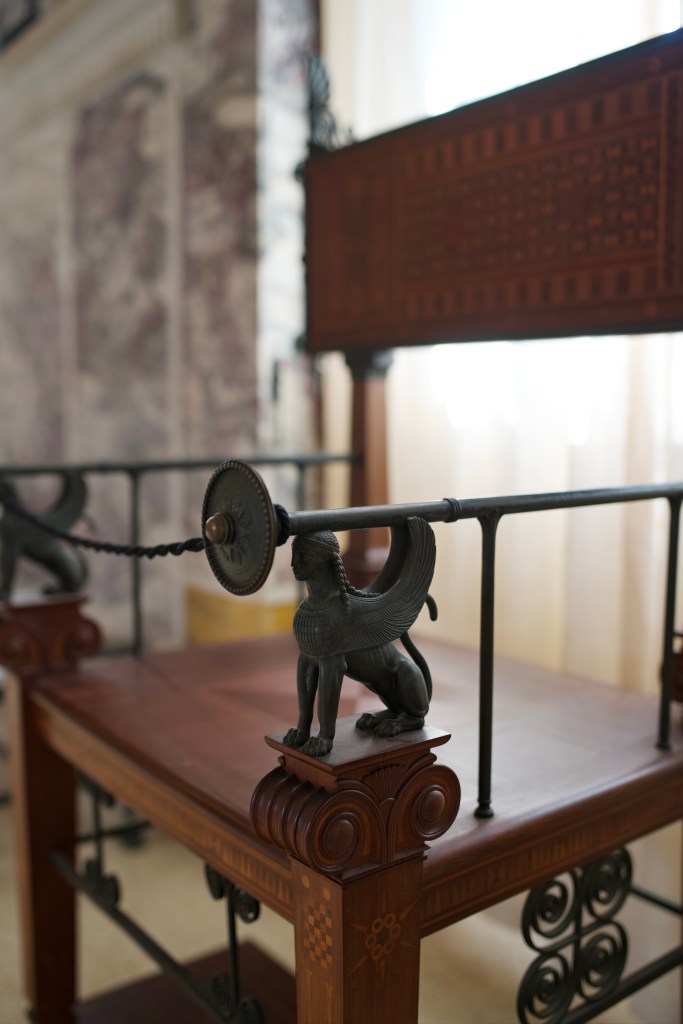
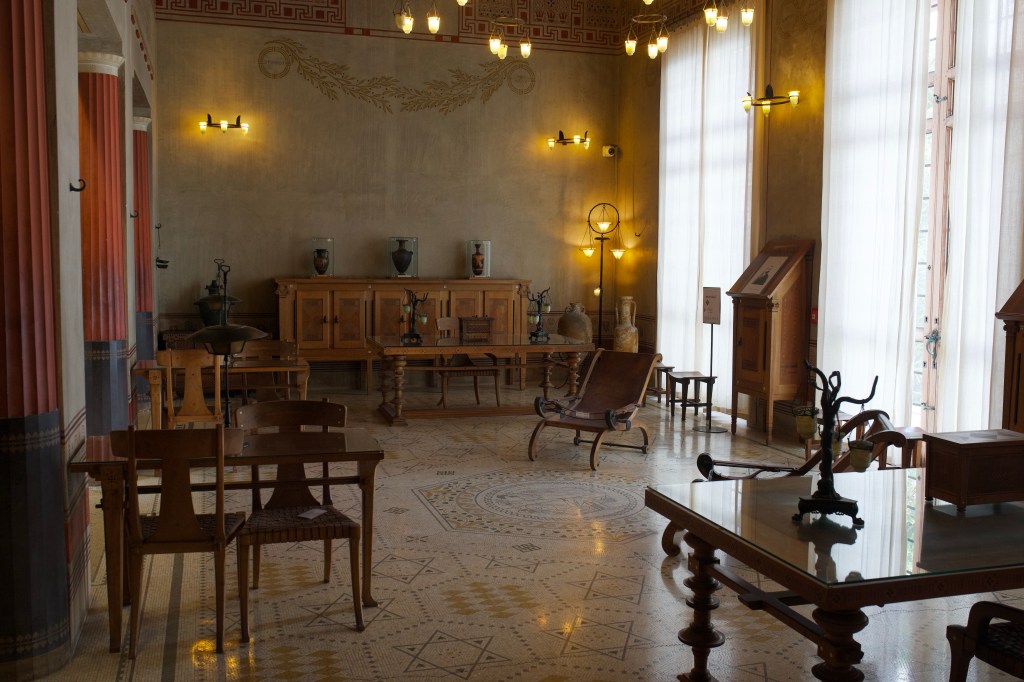
Around the peristyle, the triklínos was the room dedicated to meals. Its name derives from the three (tri) couches (klinai) on which men or guests reclined to eat. The villa’s furniture was specially made for the house between 1902 and 1908, as a modern reinterpretation of ancient Greek craftsmanship.
Andron – men’s salon
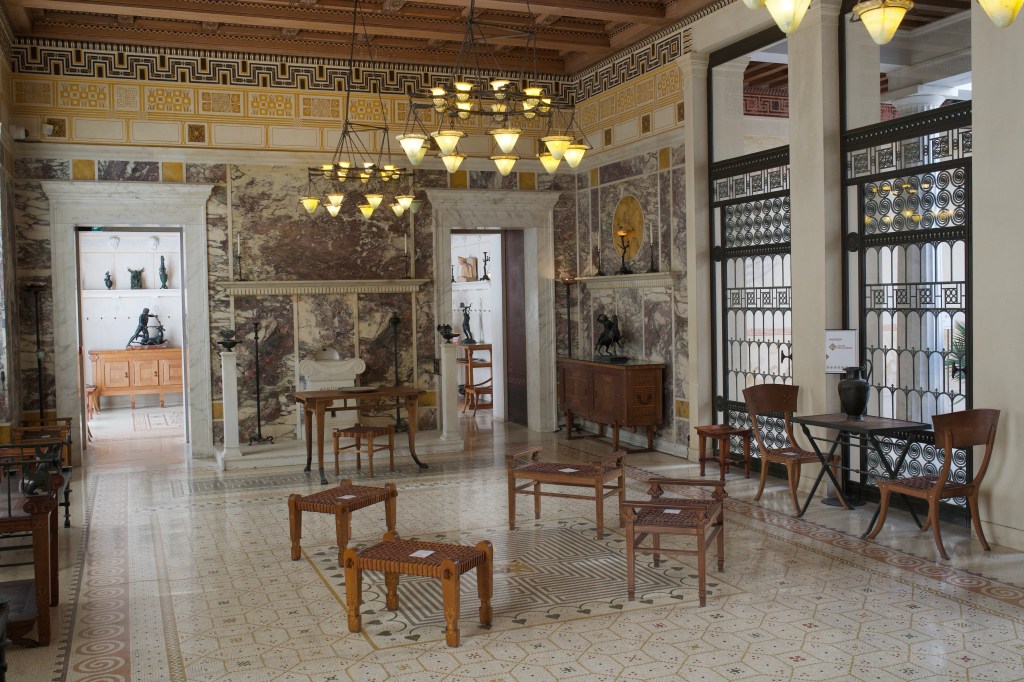
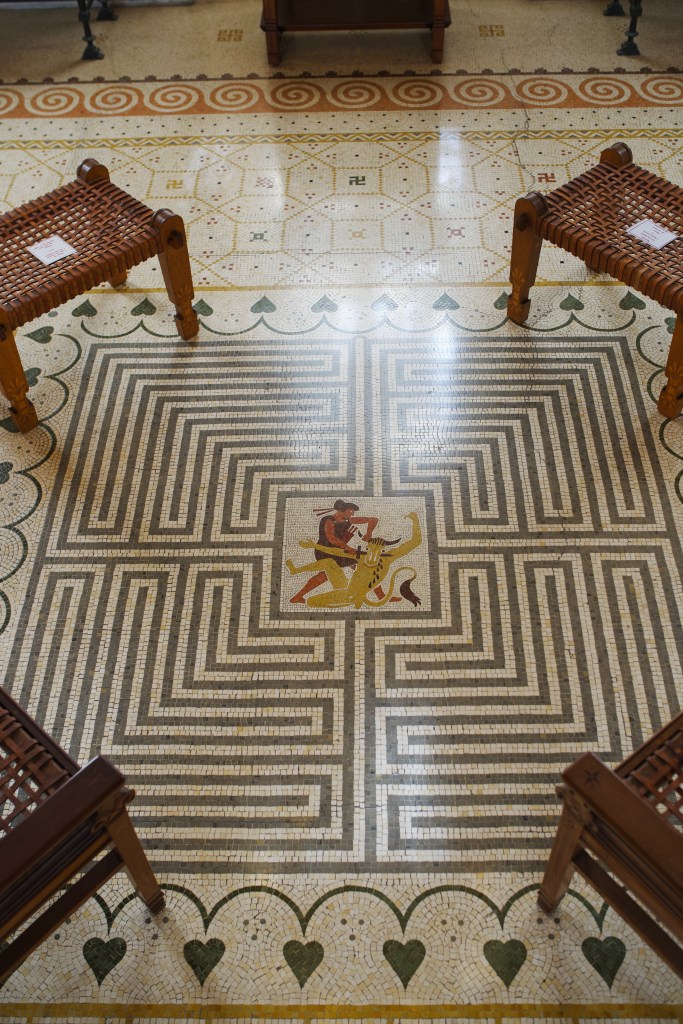
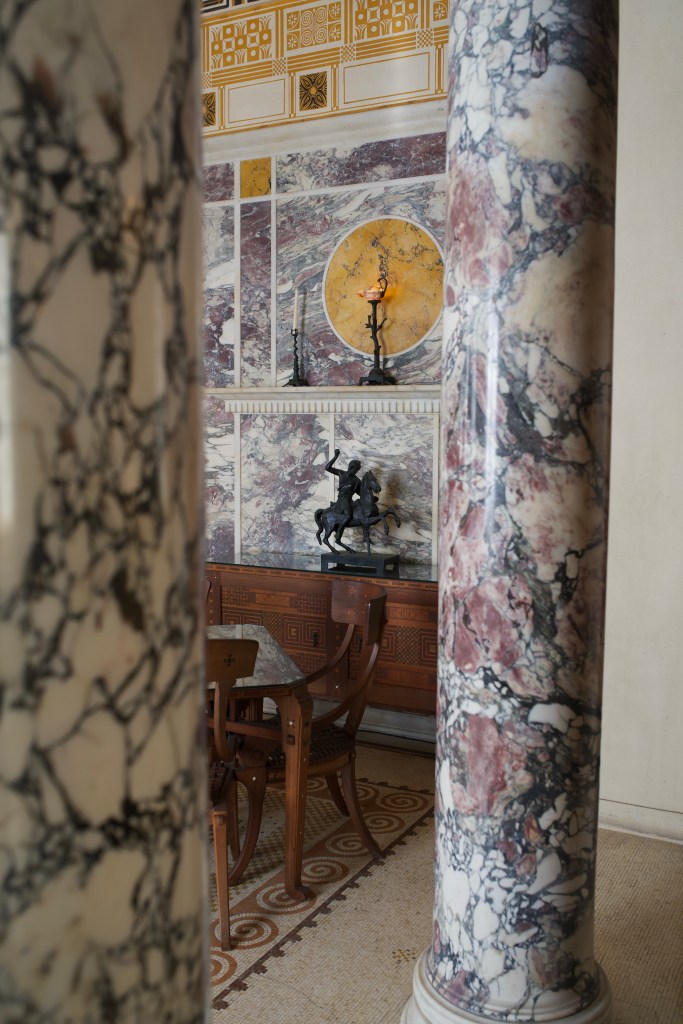
The Andron, literally the ‘men’s room’, was the place where the master of the house hosted his male guests to talk, drink, listen to music, and watch dancers or acrobats. Facing the sea on the south side, the space is richly furnished, with Italian marble on the walls and a mosaic illustrating a labyrinth leading to Theseus defeating the Minotaur.
Oikos – arts salon
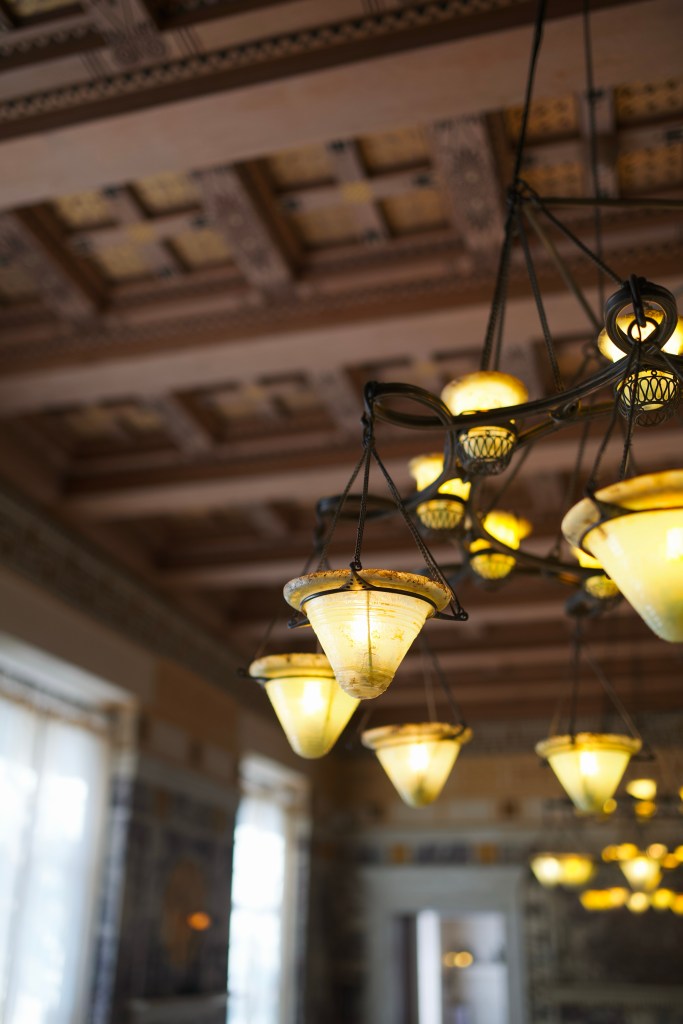
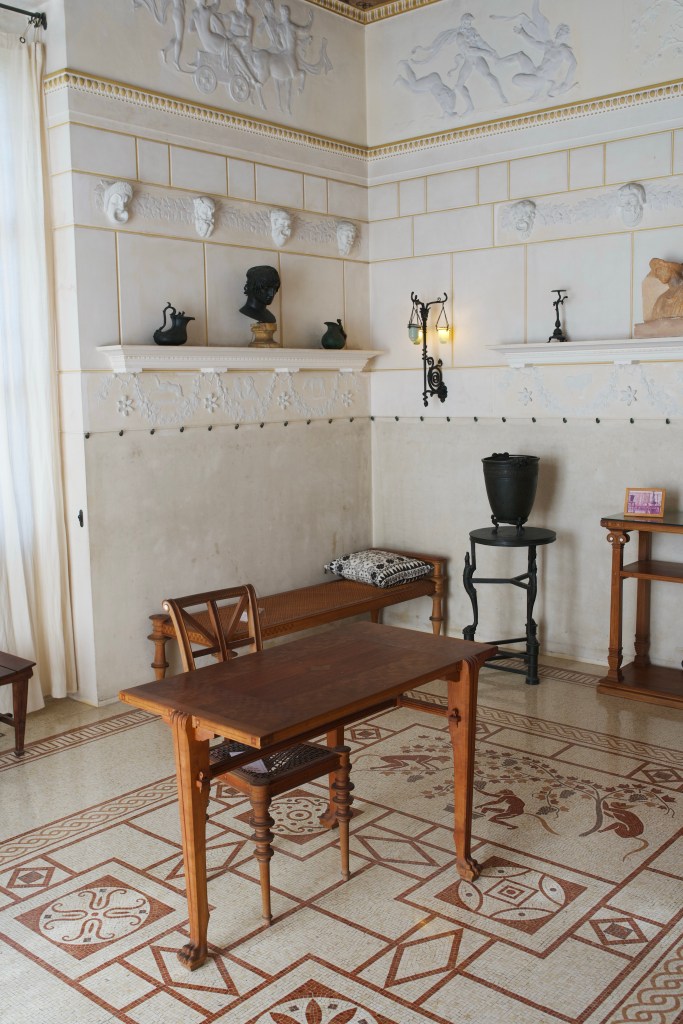
The Oikos was the heart of family and domestic life. Decorated with a stucco frieze representing masks and musical instruments, the room was dedicated to the arts.
Library
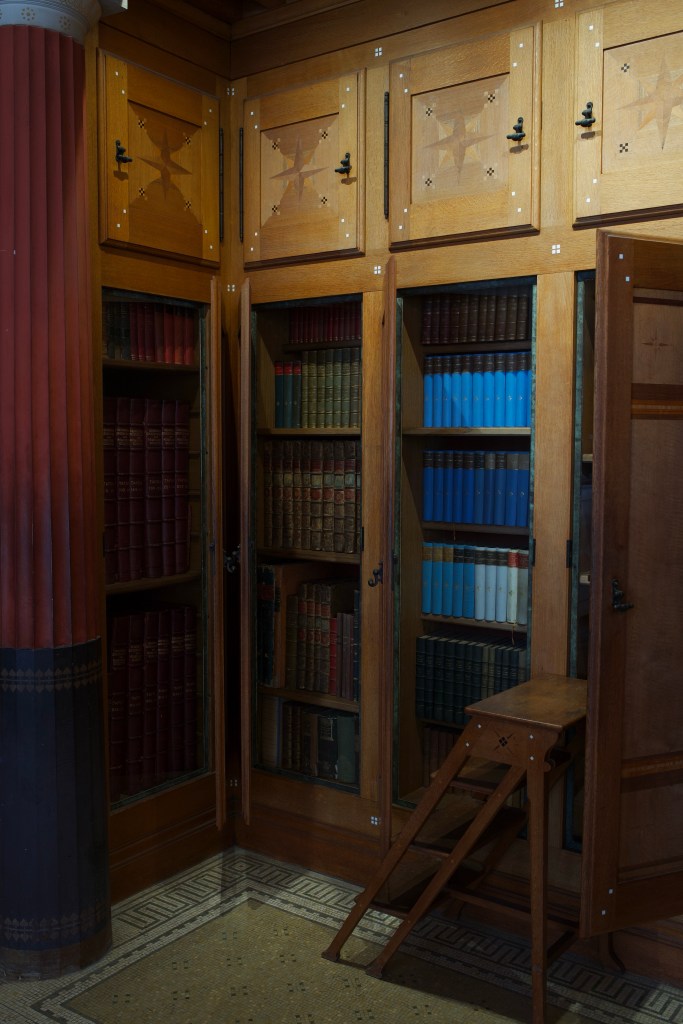
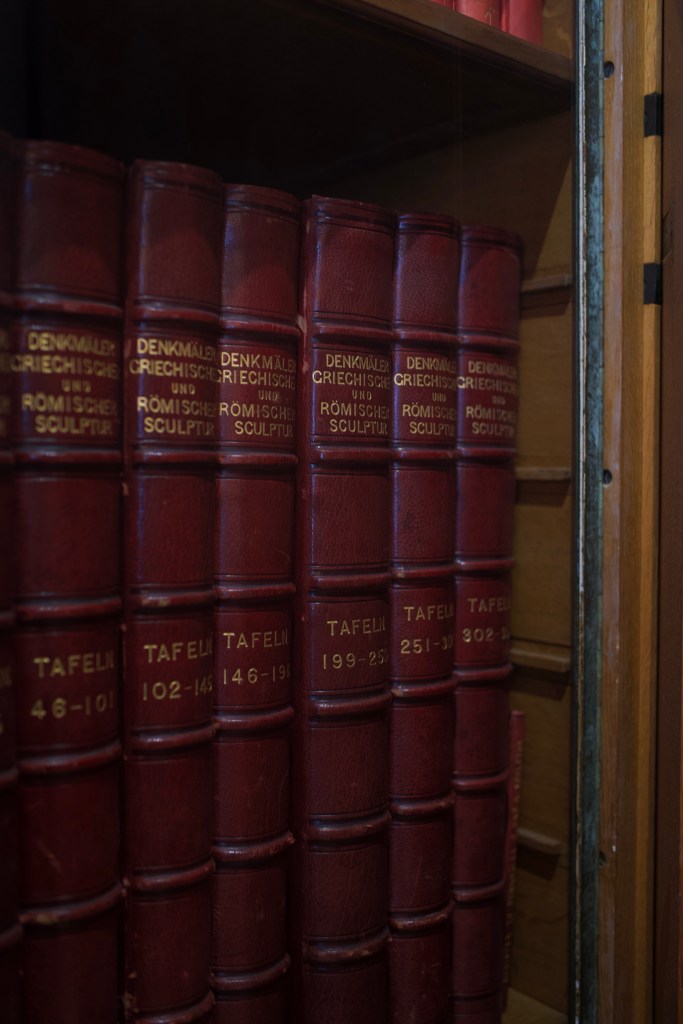
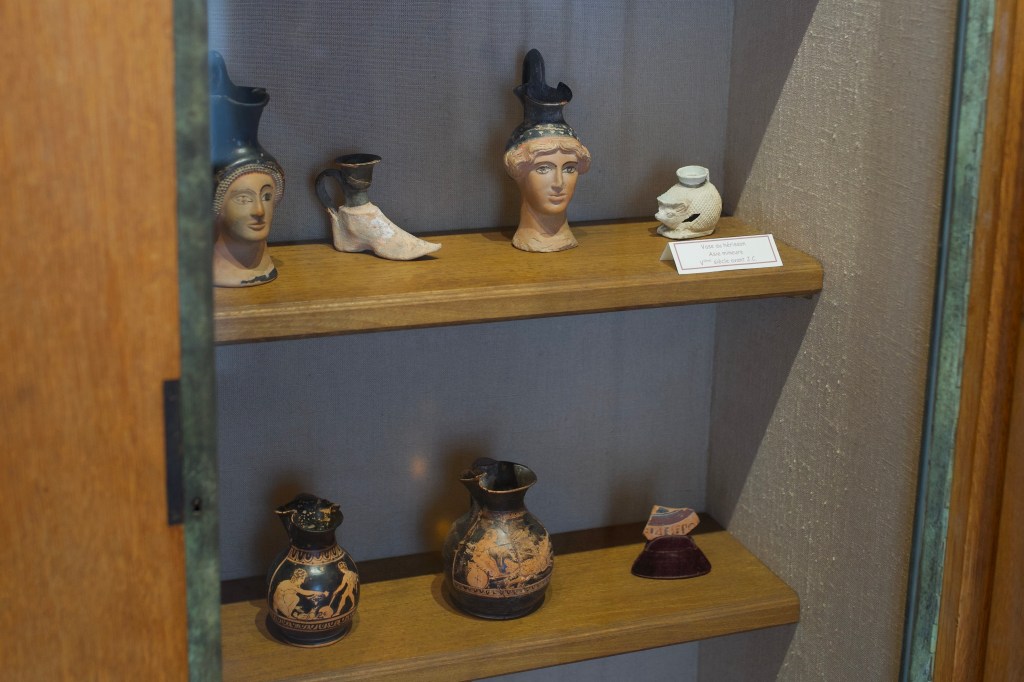
Surrounded by ancient objects and scholarly books displayed in oak cabinets, the library must have been Théodore Reinach’s favorite place, where he worked or welcomed friends to discuss his latest research and archaeological excavations.
Let’s go upstairs to visit the Reinach couple’s apartments on the first floor. The second one, which once housed the children’s and guests’ rooms, is not open to the public.
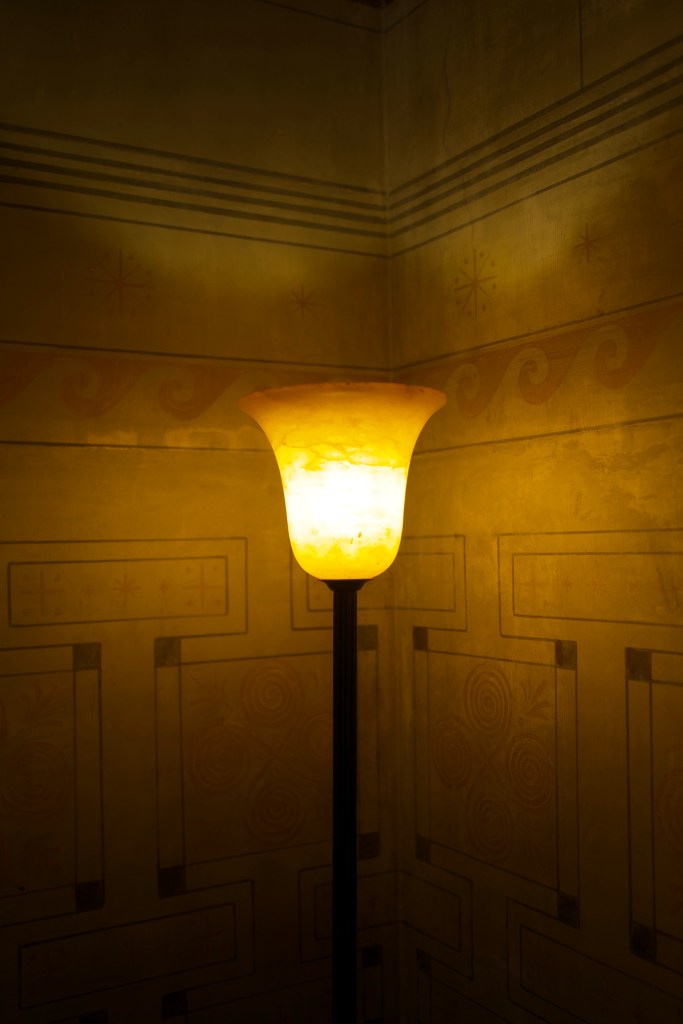
Mrs. Reinach’s apartment
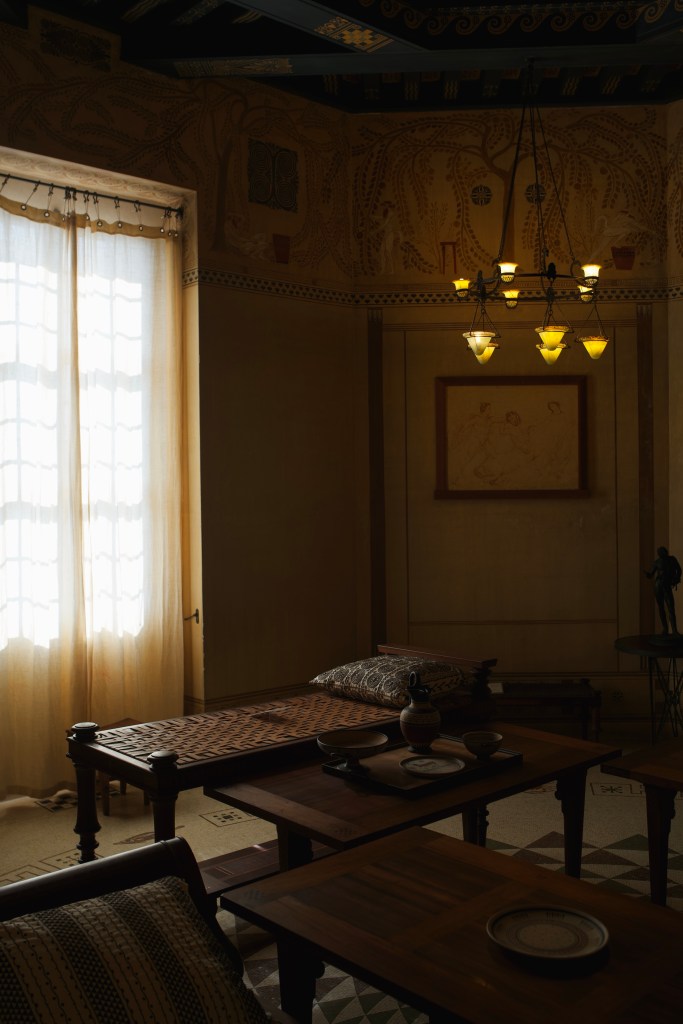
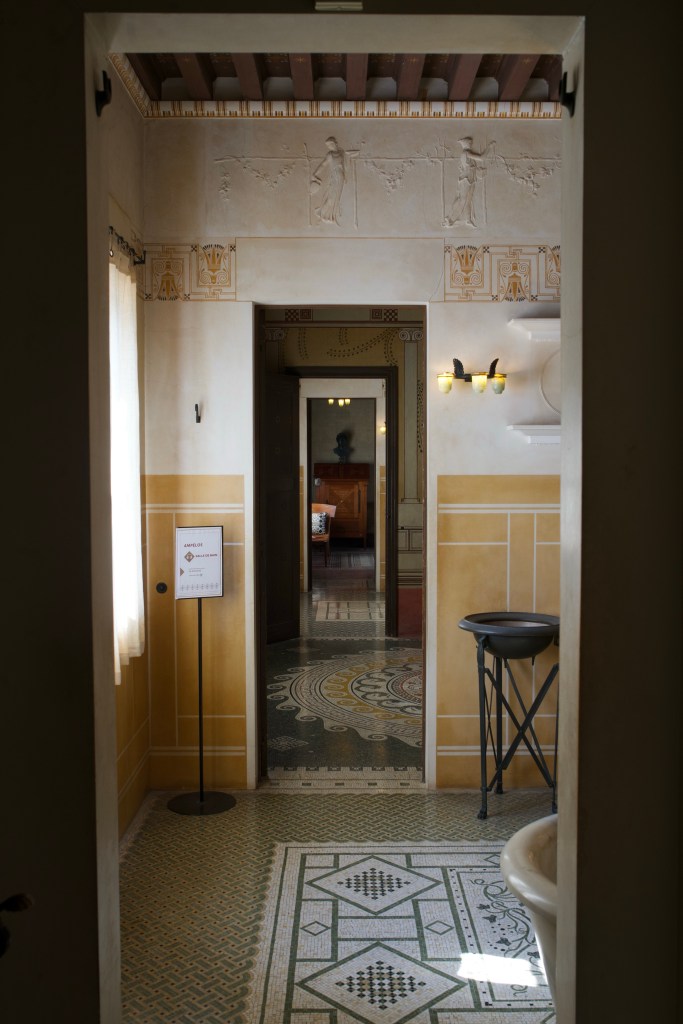
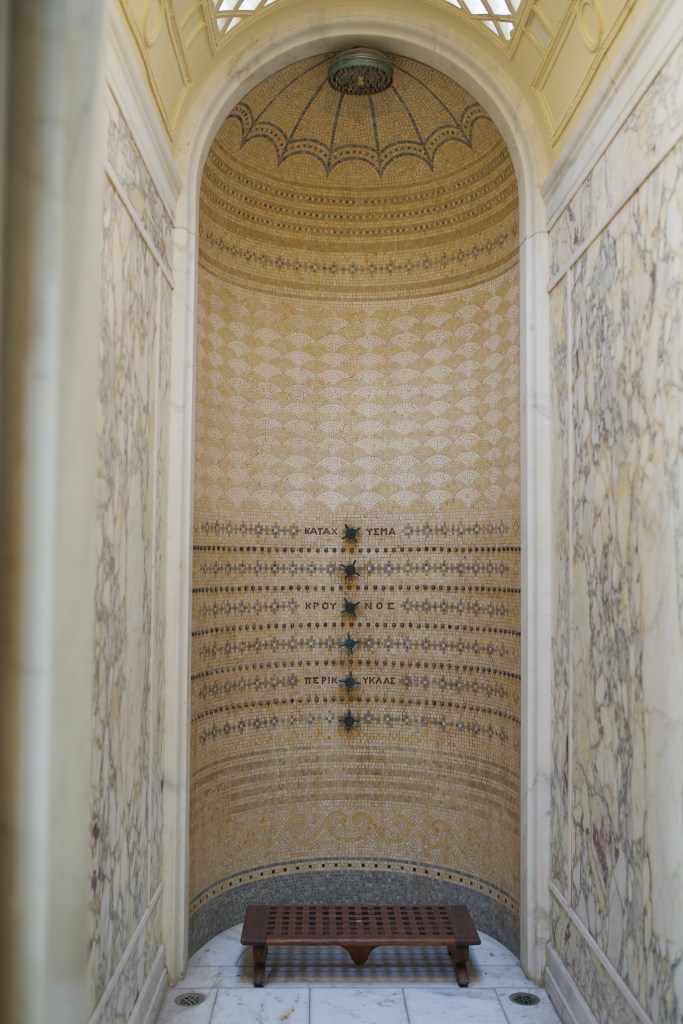
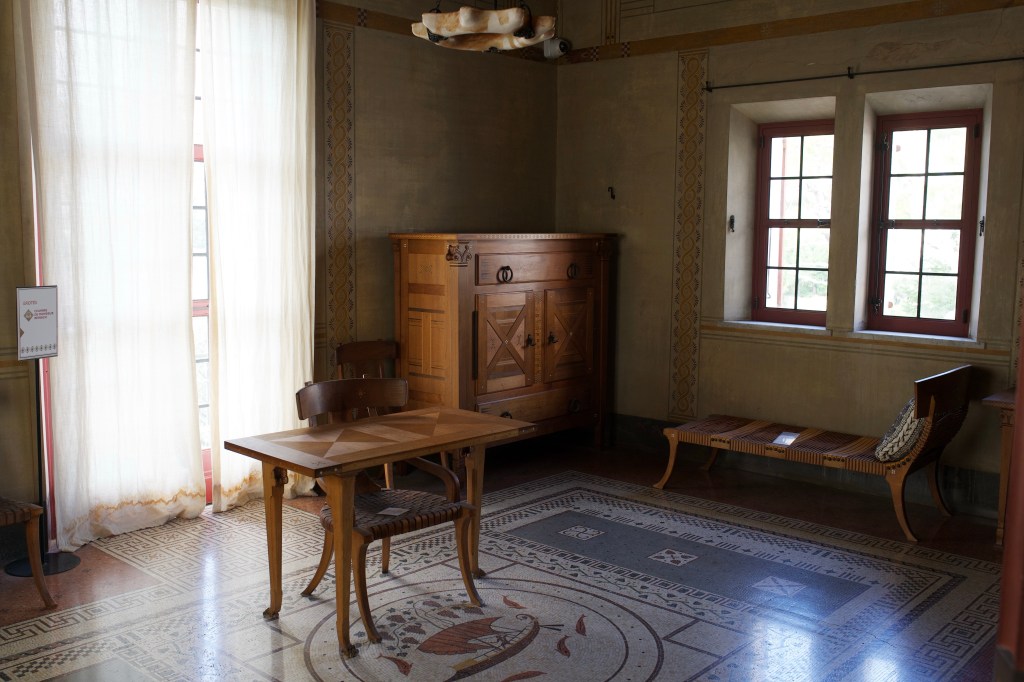
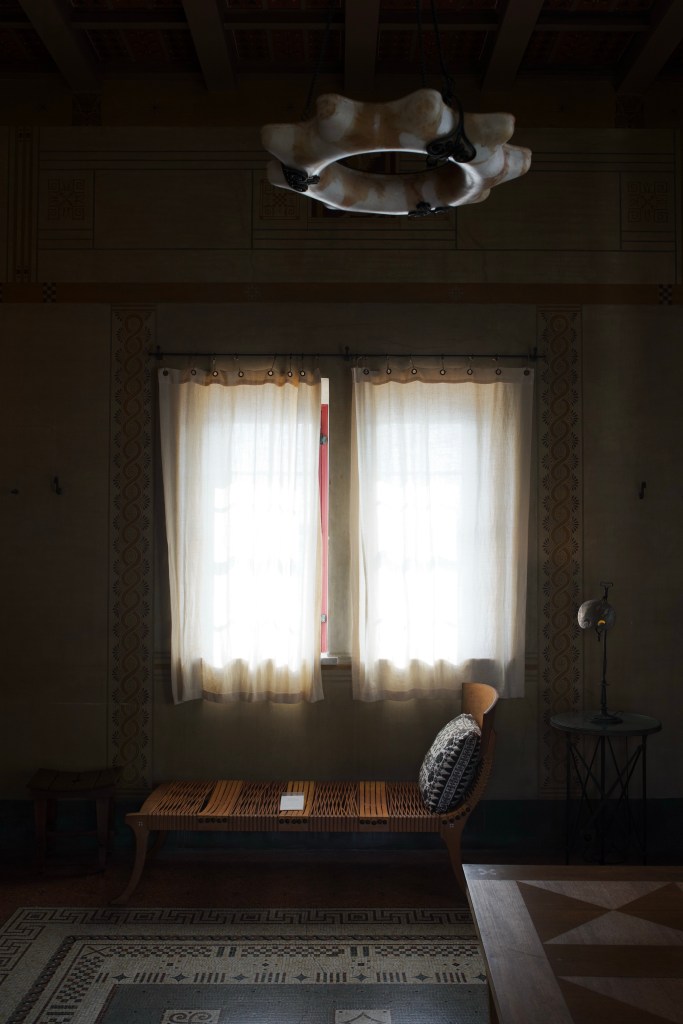
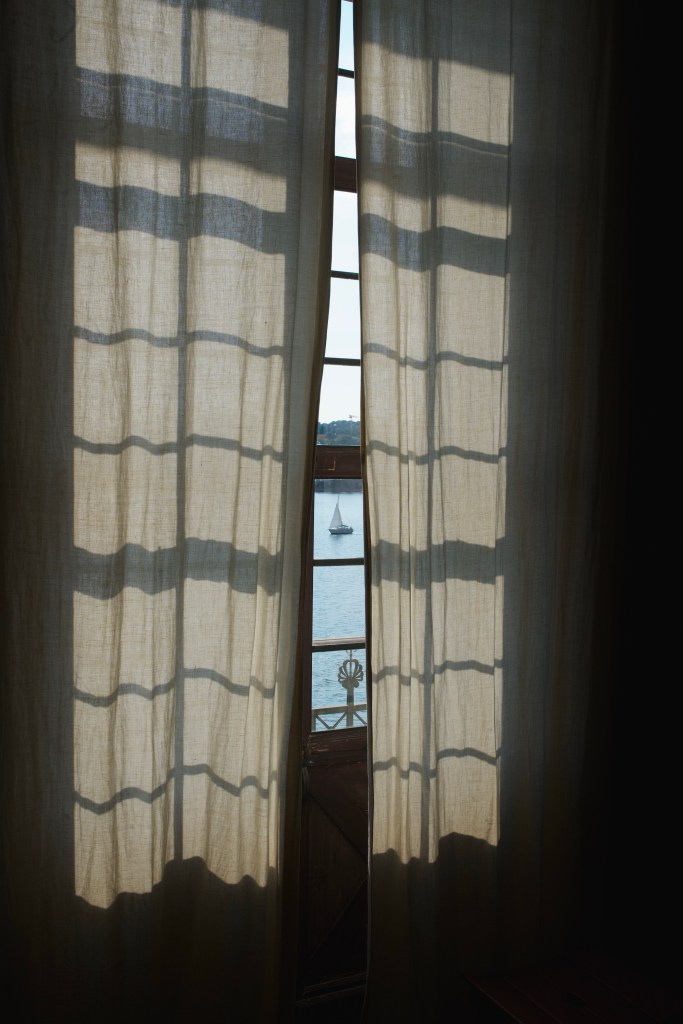
The couple’s apartments consist of five rooms in a row. The first one is Mrs. Reinach’s bedroom, named Ornithes, referring to the birds – peacocks and swans – painted on the walls. During my visit, her room and her husband’s were bathed in an intimate light due to the low October sun. Next comes a shower, followed by Ampelos, her personal bathroom, also called ‘the Grape’.
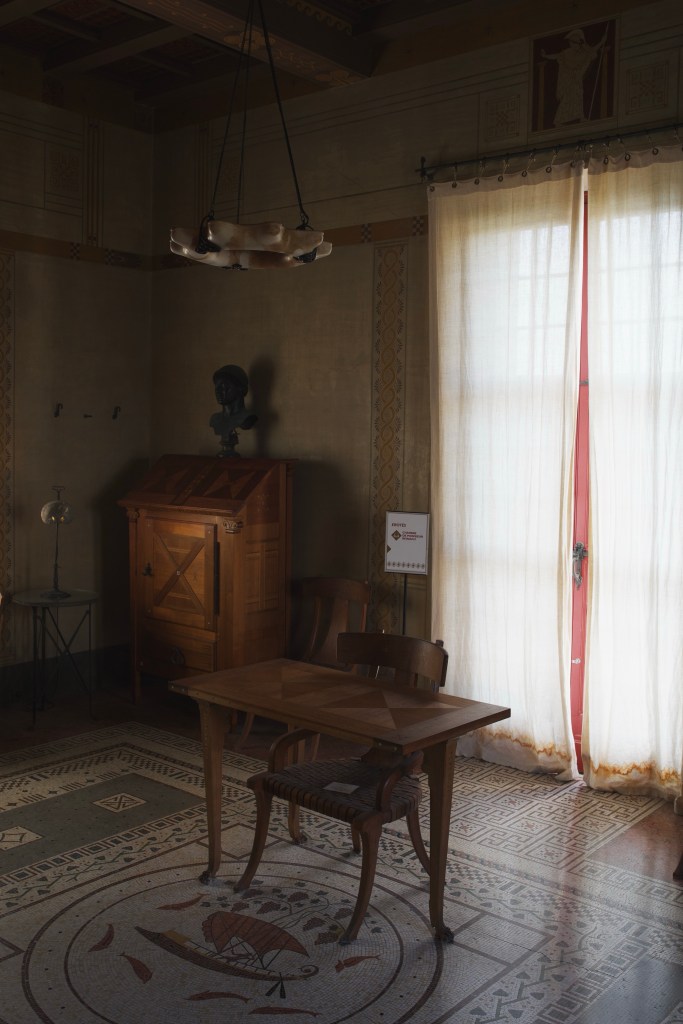
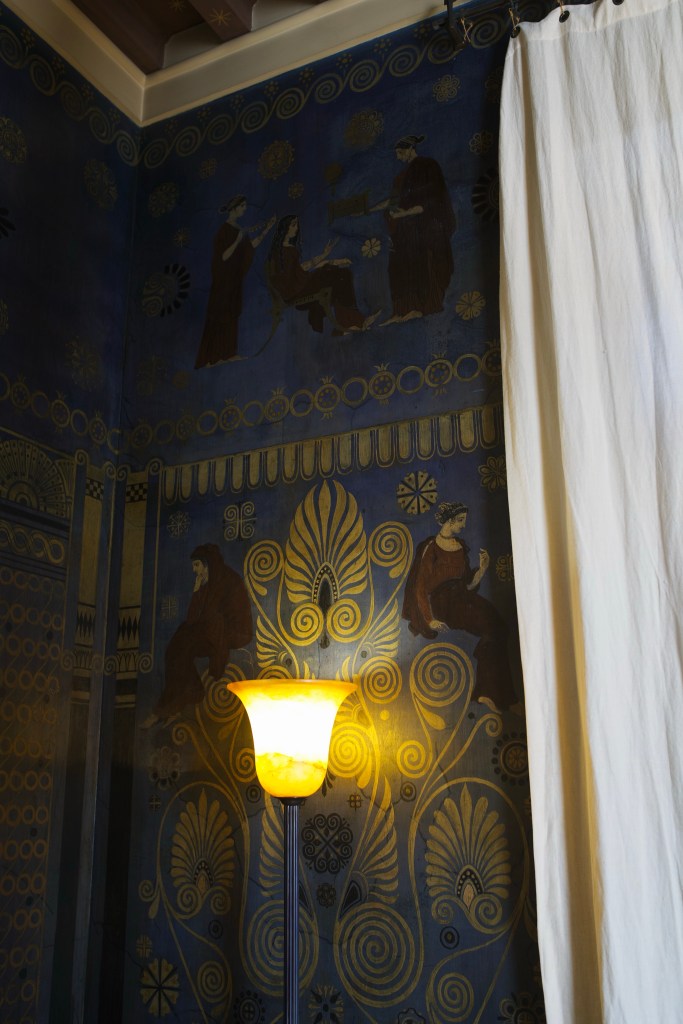
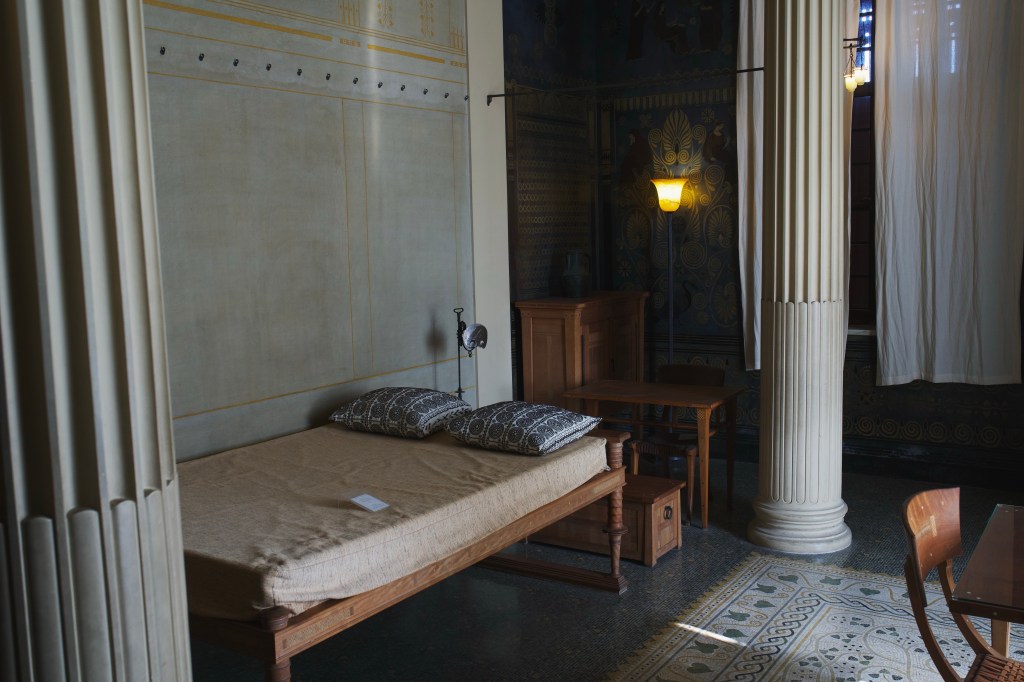
Mr. Reinach’s apartment
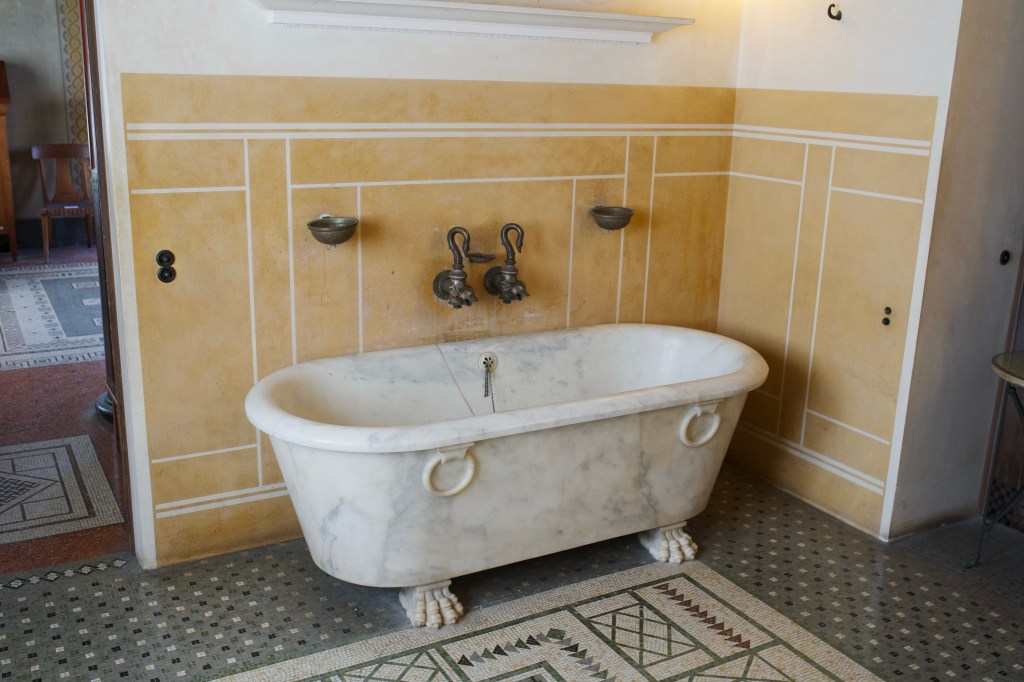
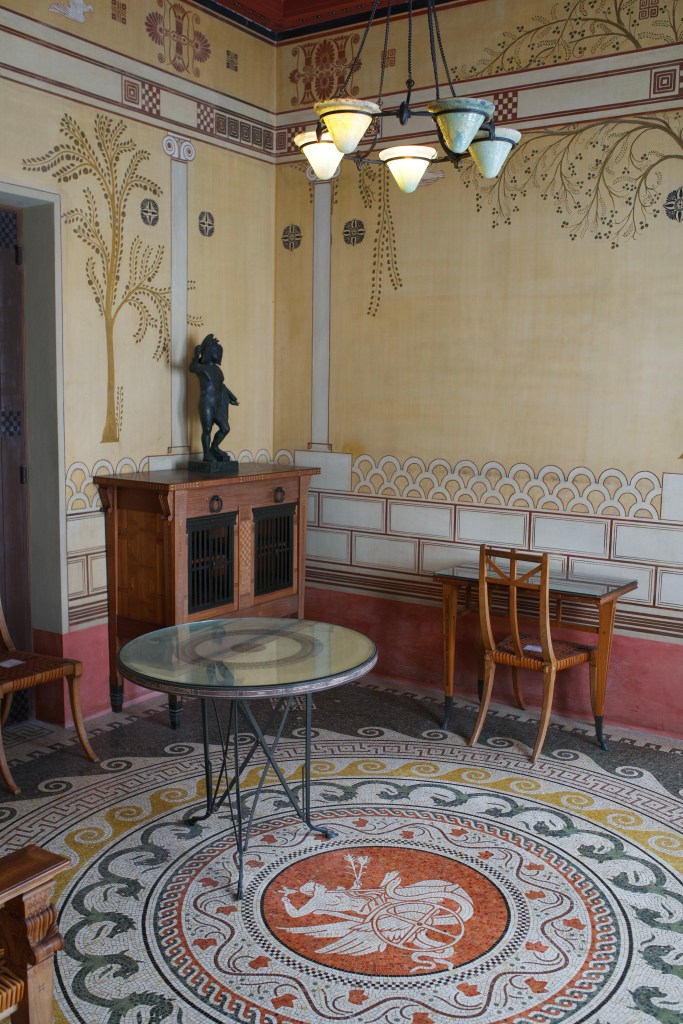
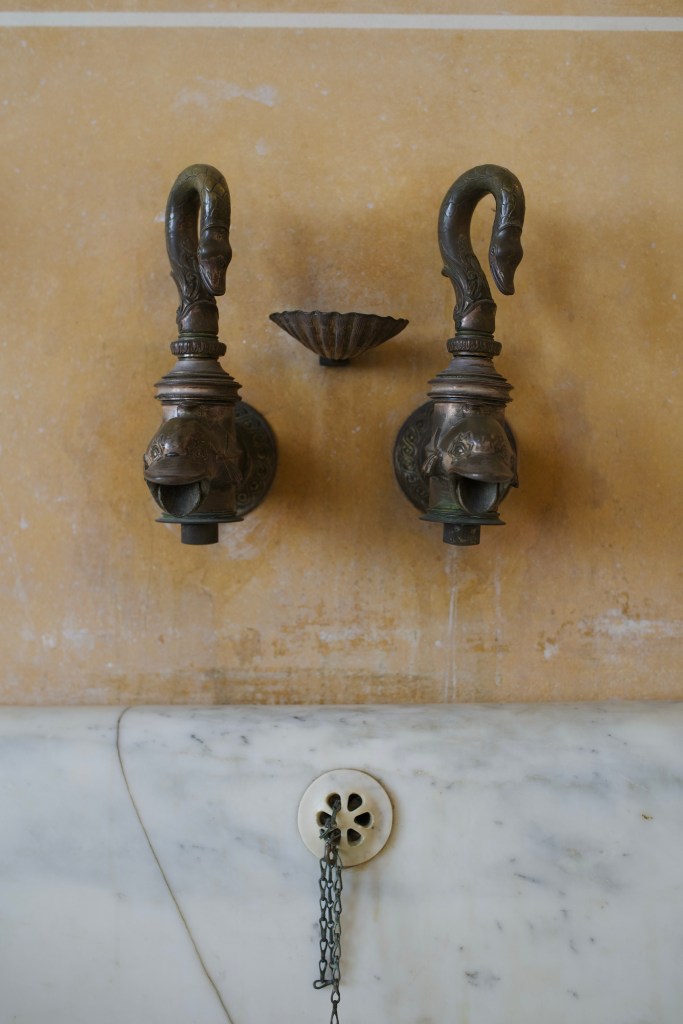
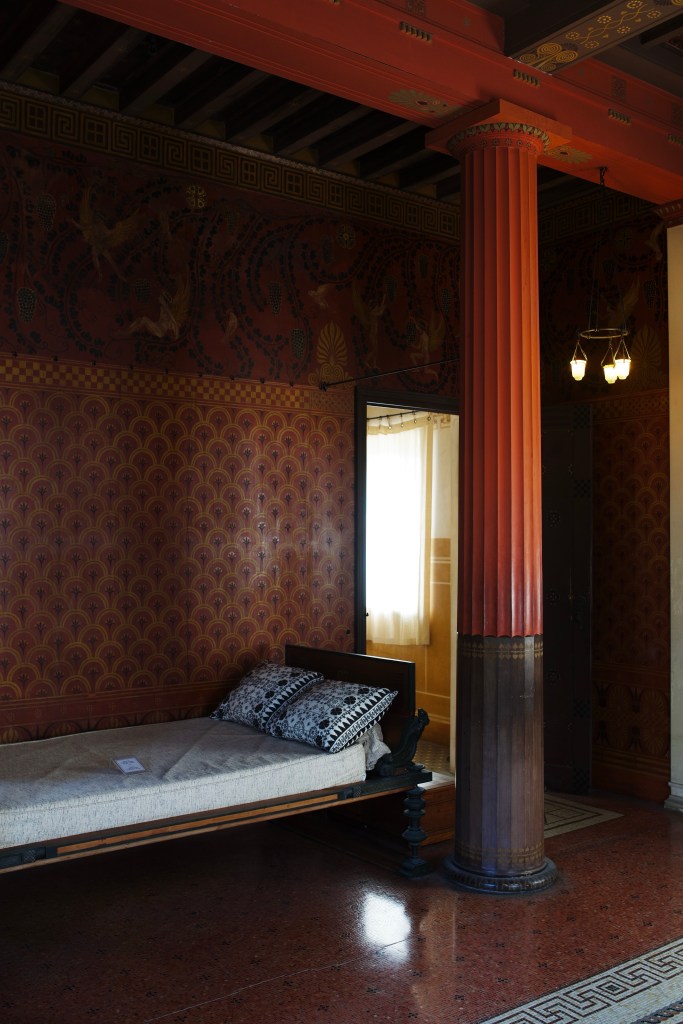
Both apartments are separated by a small lounge, in which a central mosaic depicts the mythological hero Triptolemus. Nikai, the ‘Victories’, is Mr. Reinach’s bathroom, equipped with swan-necked faucets and dolphin-head taps. Finally, Erotes, his bedroom, is dedicated to Eros, with its crimson color reminiscent of the palace at Knossos in Crete.
Antics Gallery
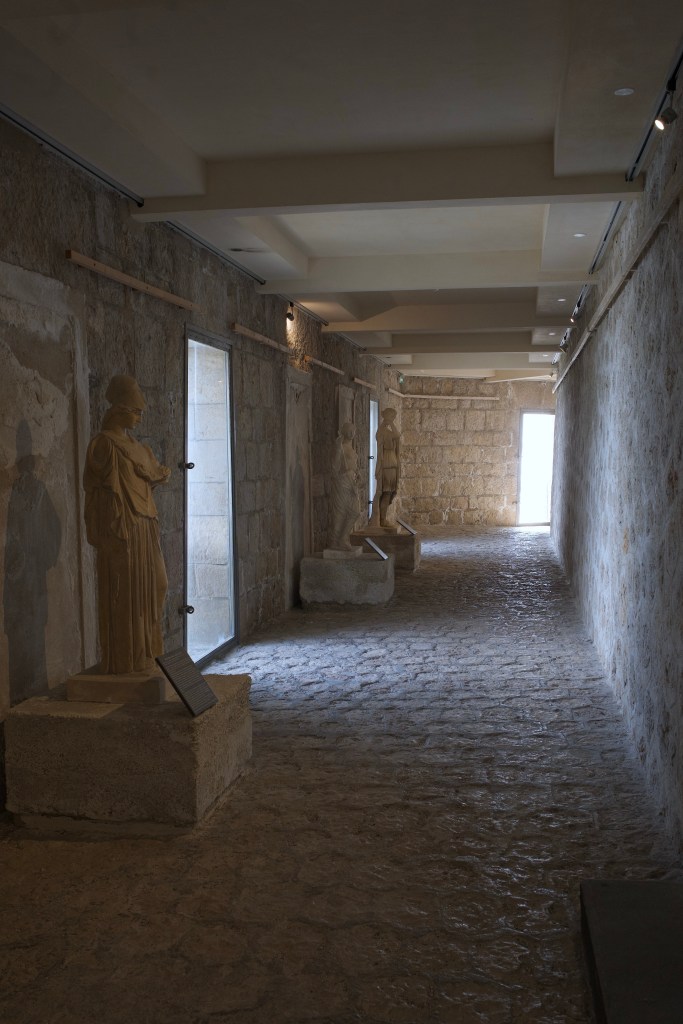
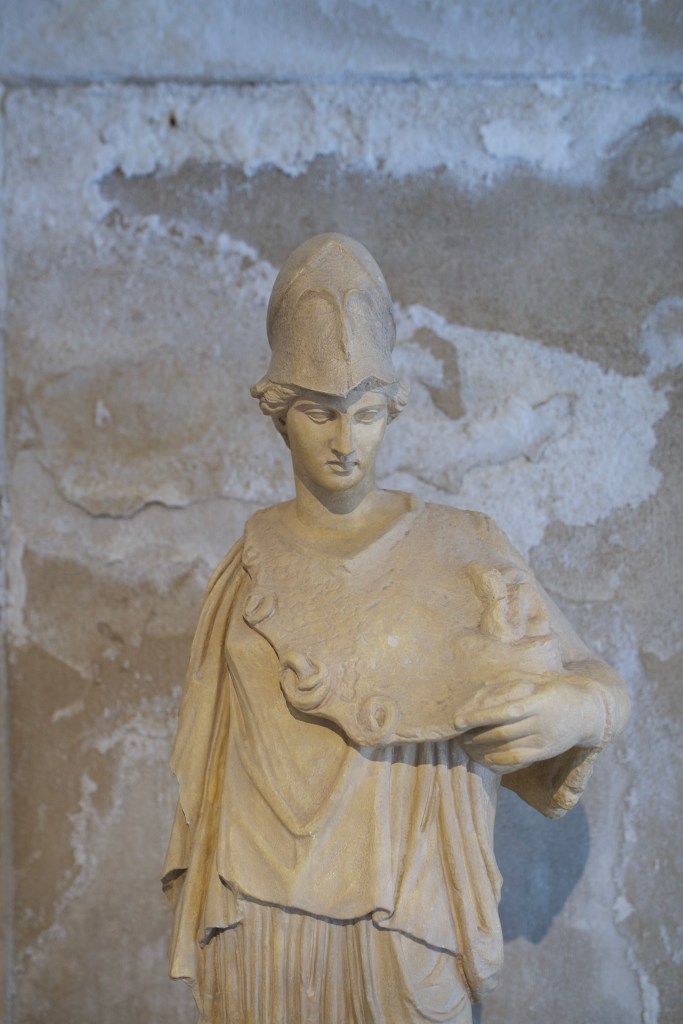
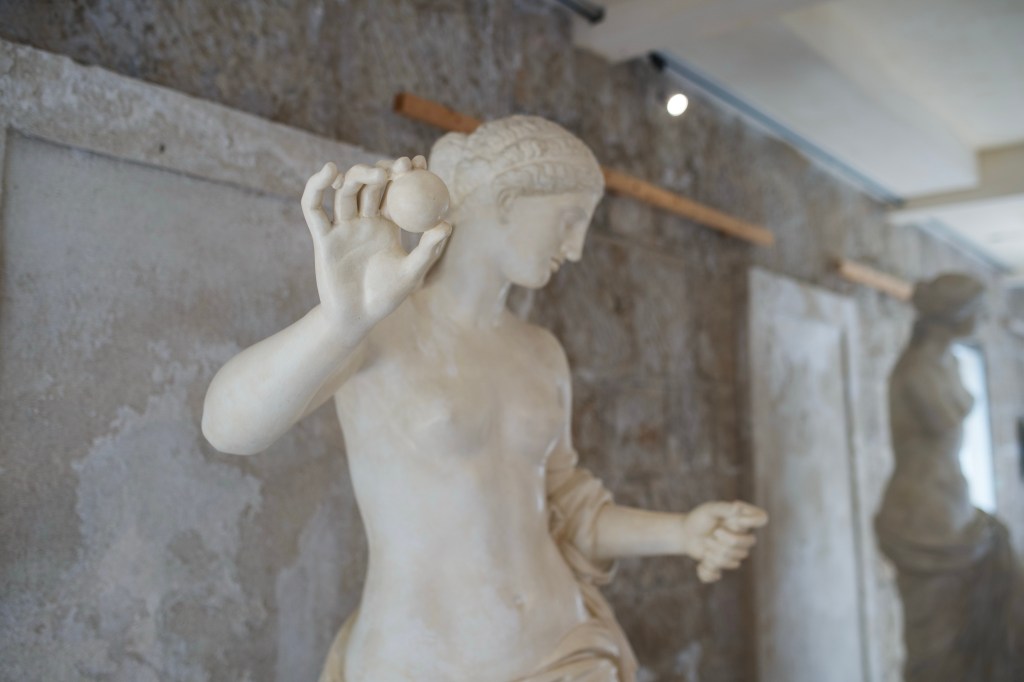
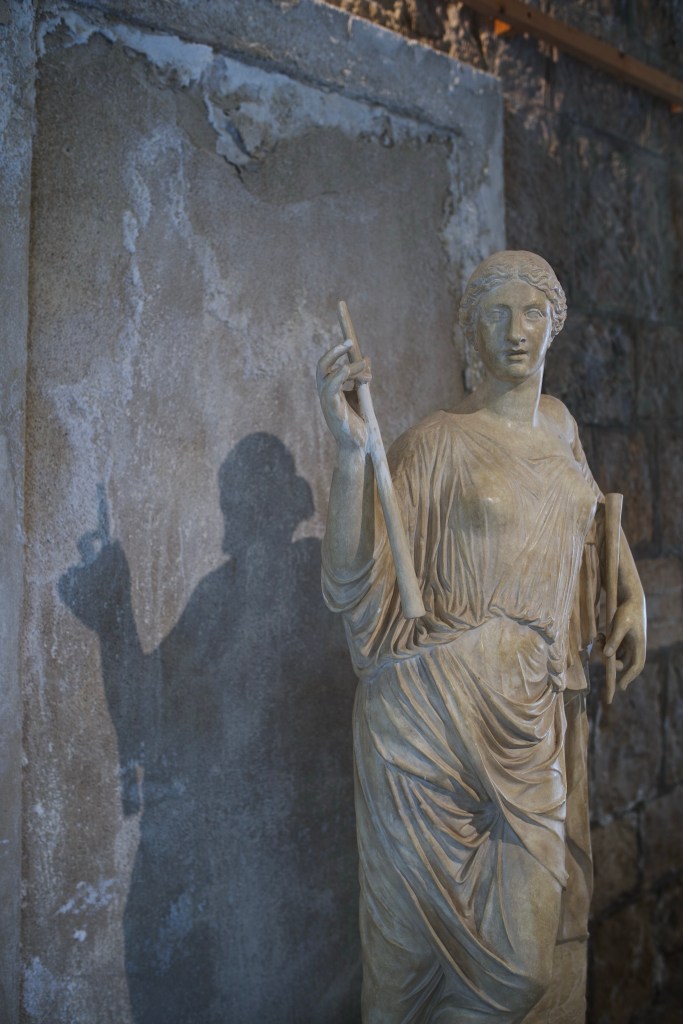
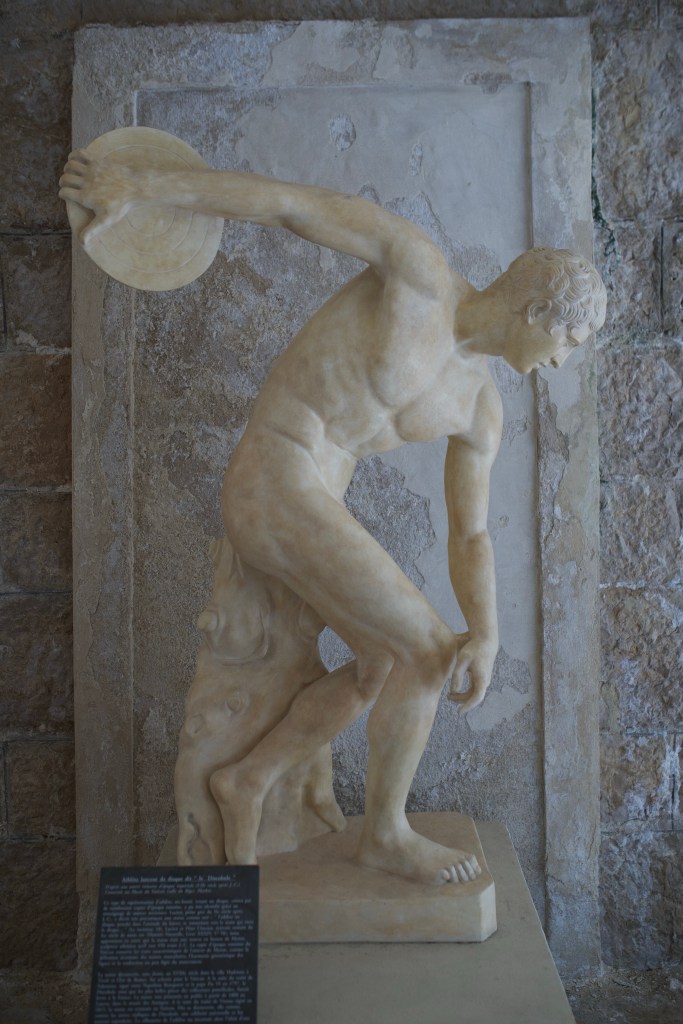
Accessible from the garden downstairs, this gallery built at sea level showcases various casts of Greco-Roman sculptures to conclude the visit.
Final thoughts
Walking back from a stroll around Cap-Ferrat, the coastal trail offers a spectacular view of Villa Kerylos, with the Alps in the background. Compared with other modernist villas built later in the 1920s on the Riviera — such as Villa Noailles in Hyères or Villa E-1027 in Roquebrune-Cap-Martin — Villa Kerylos offers the same comfort as a twentieth-century home (including electricity and heating), but with an architecture that looks to the past. Yet, the approach can be seen as akin to the restomod trend in cars, which involves preserving the charm of a classic design while using modern materials and technologies. Therefore, Theodore Reinach and Emmanuel Pontremoli carried on and updated the dream of the Ancient Greeks more than two thousand years later.
Source: https://www.villakerylos.fr
Photos credits: @elegantinparis
 Elégances Parisiennes