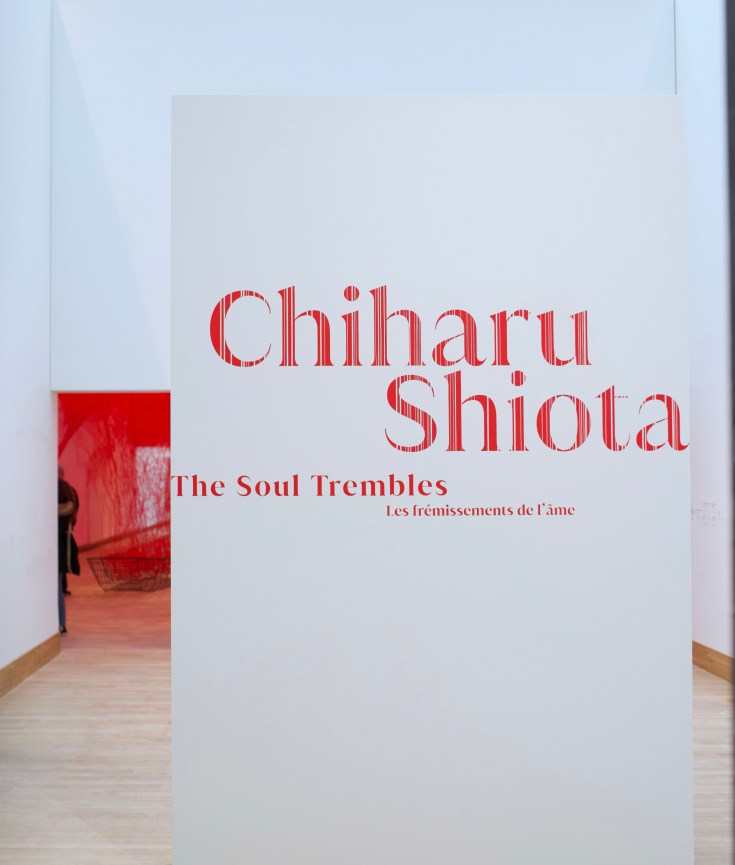

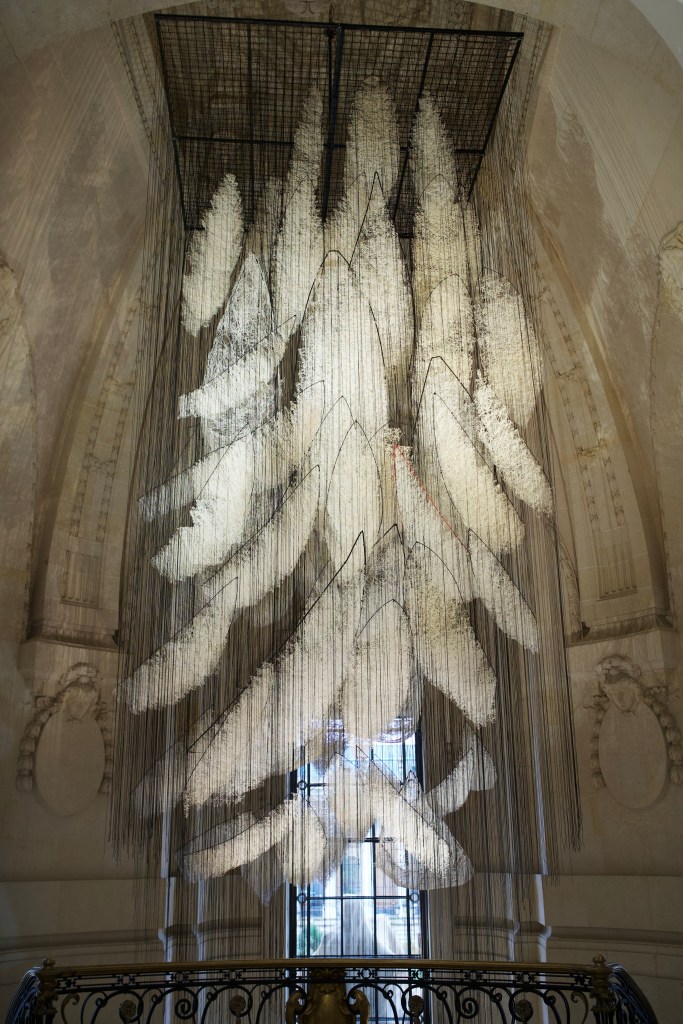
For the first exhibition since its restoration, the Grand Palais in Paris offers to Chiharu Shiota probably her largest exhibition ever organized in Europe, in association with the Mori Art Museum in Tokyo. From 11th December 2024 until 19th March 2025, the show features seven large scale installations and a retrospective of her former works, including staging projects for operas. Renowned for her in situ installations made of interlacing red or black wool yarn (see for instance her exhibition at the Galerie Templon in 2023), the selected works deal with the favorite themes of the Japanese artist, from the questioning about her identity to the relation between life and death.
Art as a sensitive experience
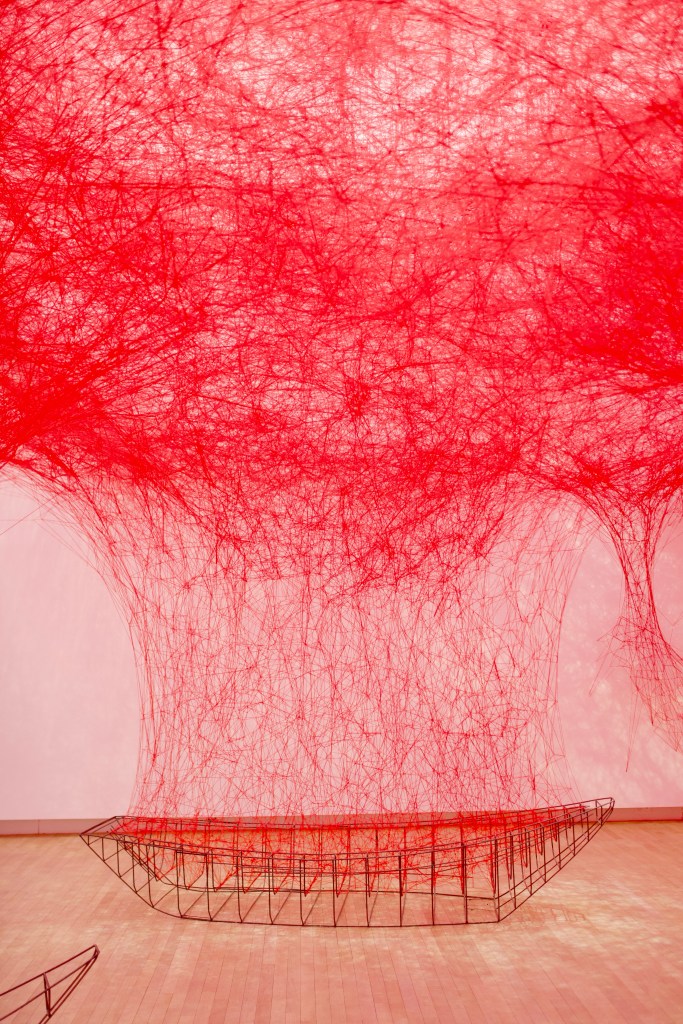
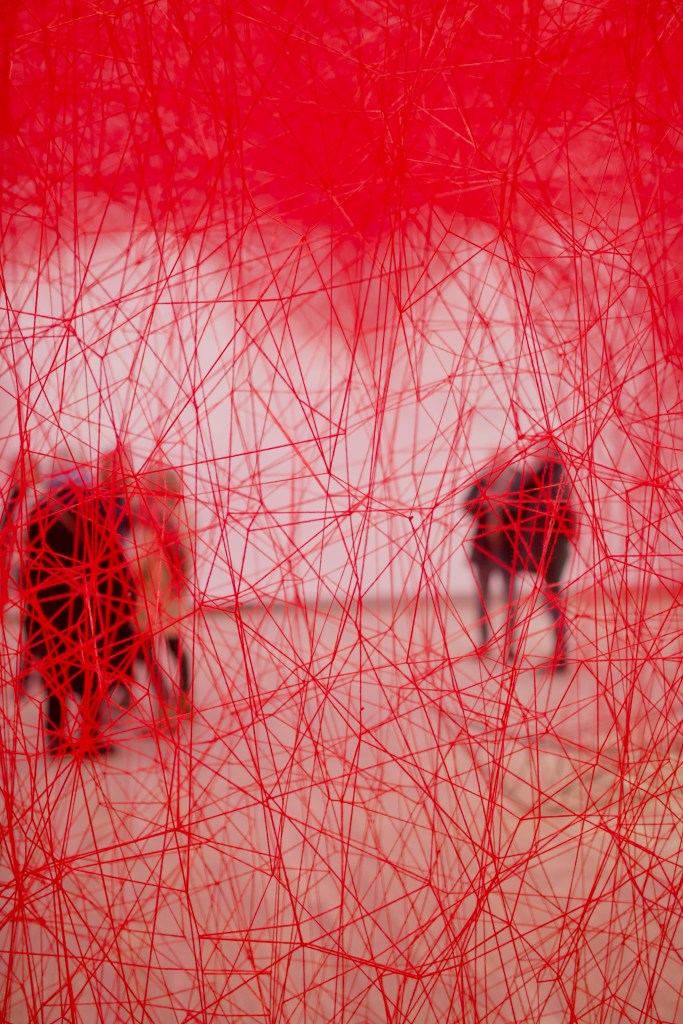
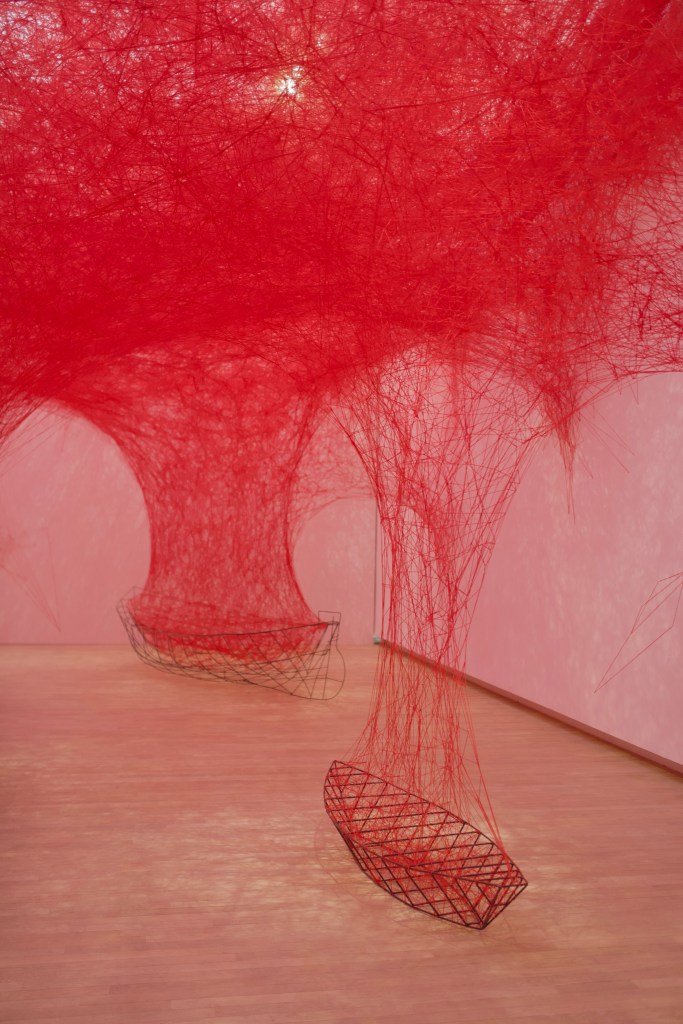
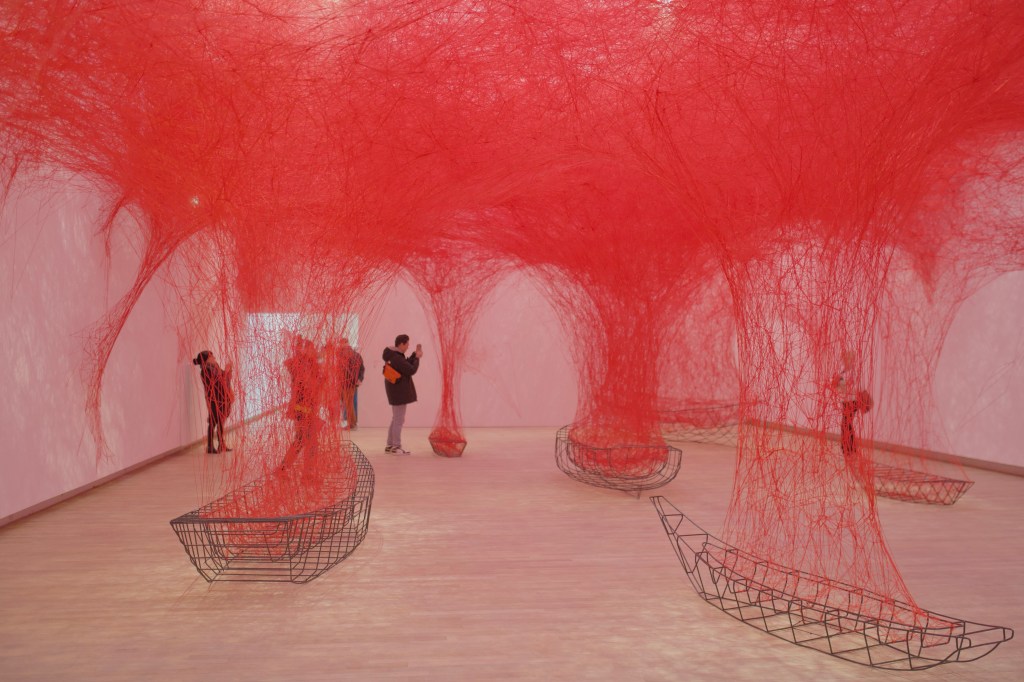
The visit begins with Uncertain Journey (2016-2024), a striking installation composed of several metal frames of small boats from which comes out a complex network of red threads, spreading until the ceiling. Creating an emotion and a link with the visitor is part of Chiharu Shiota’s art : besides the evocation of the travel, one can feel to be part of the work walking in this red muffled ambiance.
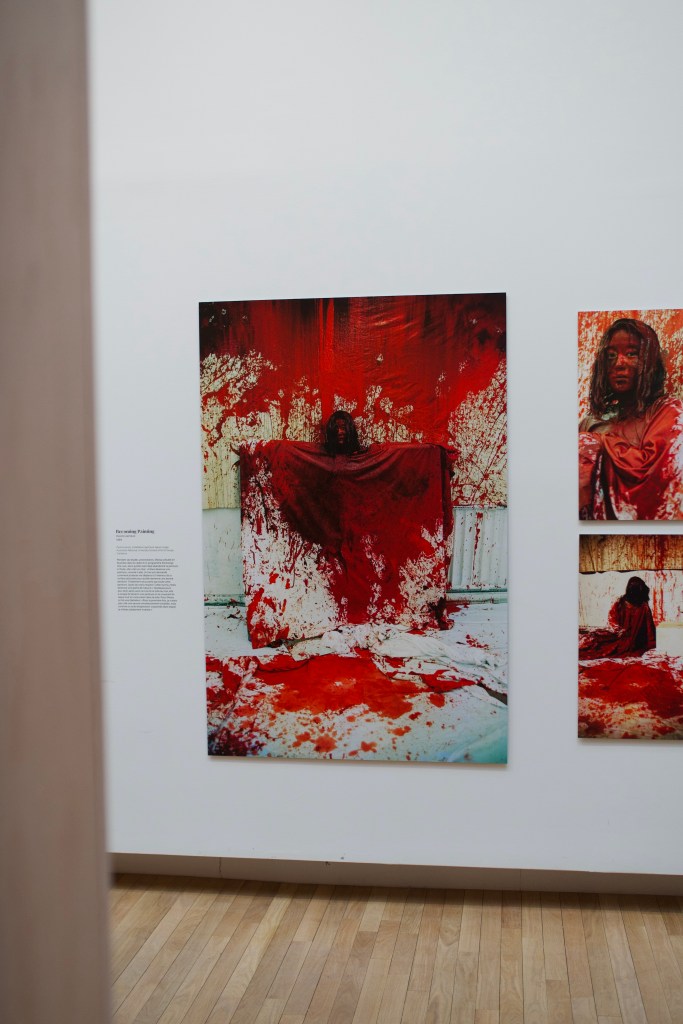
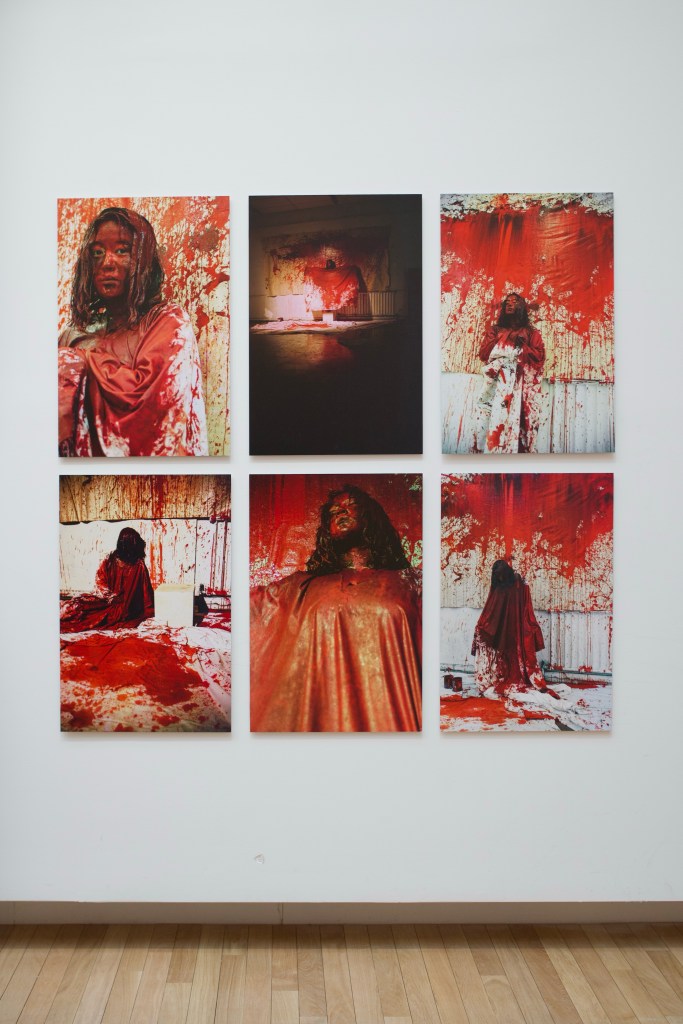
Born in 1972, Chiharu Shiota studied at the Kyoto Seika University from 1992 to 1996. As an exchange student at the Australian National University School of Art in Canberra, she questioned her approach of the painting and realized her first installation, Becoming Painting (1994), covering herself with red enamel paint, which became the starting point of her works to come. “It burned and colored my skin, I had to cut my hair which was red for months; enamel is a very toxic paint. I tried to manifest the dream in the performance. I wanted to be part of an artwork just as I had felt in the dream.” she explained.
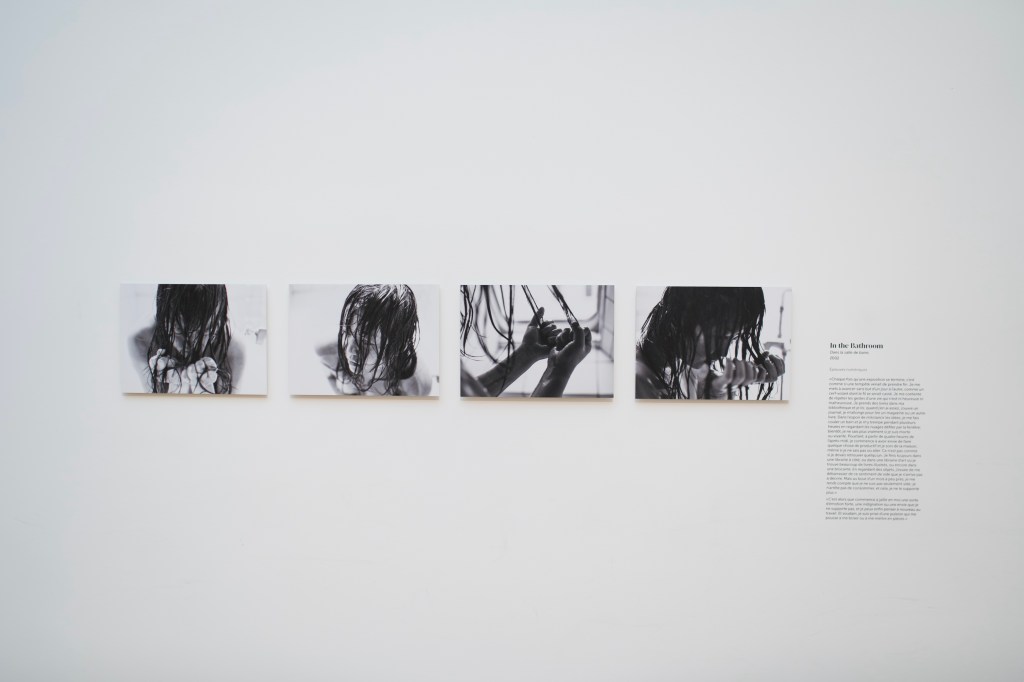
She moved then to Germany to study at the Hochschule für Bildende Künste (Braunschweig) and the Universität der Künste (Berlin) between 1997 and 2003, where she followed the teachings of the renowned artists Rebecca Horn and Marina Abramović. In a workshop proposed by the lattest one, she made a performance (Try and Go Home, 1997) in which she had to climb the sloped wall of a cave, fall down and try again, while thinking of her place in her homeland. She used this experience as a metaphor of her inability to come back home and the doubts around her existence. Some years later, with In the Bathroom (2002), she tried to explain the emptiness that she feels between two exhibitions: “In the hope of clearing my mind, I am having a bath and taking a dip during several hours watching the clouds through the window ; soon, I don’t really know whether I am dead or alive.”
Presence in absence
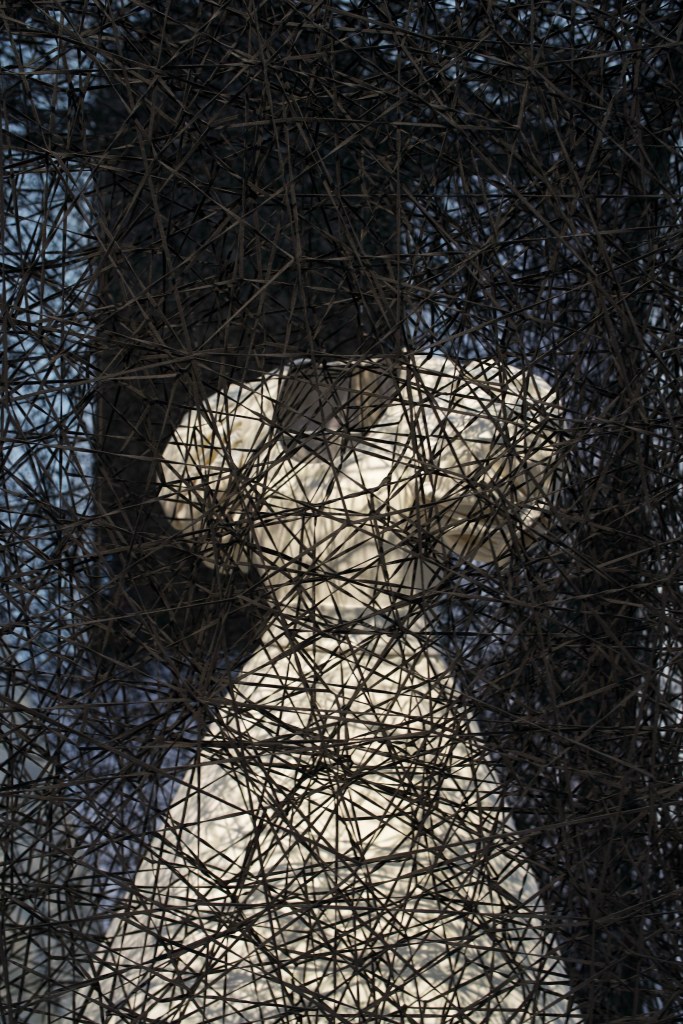
A recurring idea developed by Chiharu Shiota is the presence-absence coexistence in her works. This duality can be found for instance in Reflection of Space and Time (2018) in which two white dresses entwined in black threads stand in a large diamond shape glass box. However, when the visitor approaches, he can see the trick: a mirror has been set up in the diagonal of the glass box and the second dress is actually the reflection of the first one. But if he/she looks behind the mirror, there is indeed another dress in the other half of the glass box, playing with our visual perception (Does the second dress really exist?).

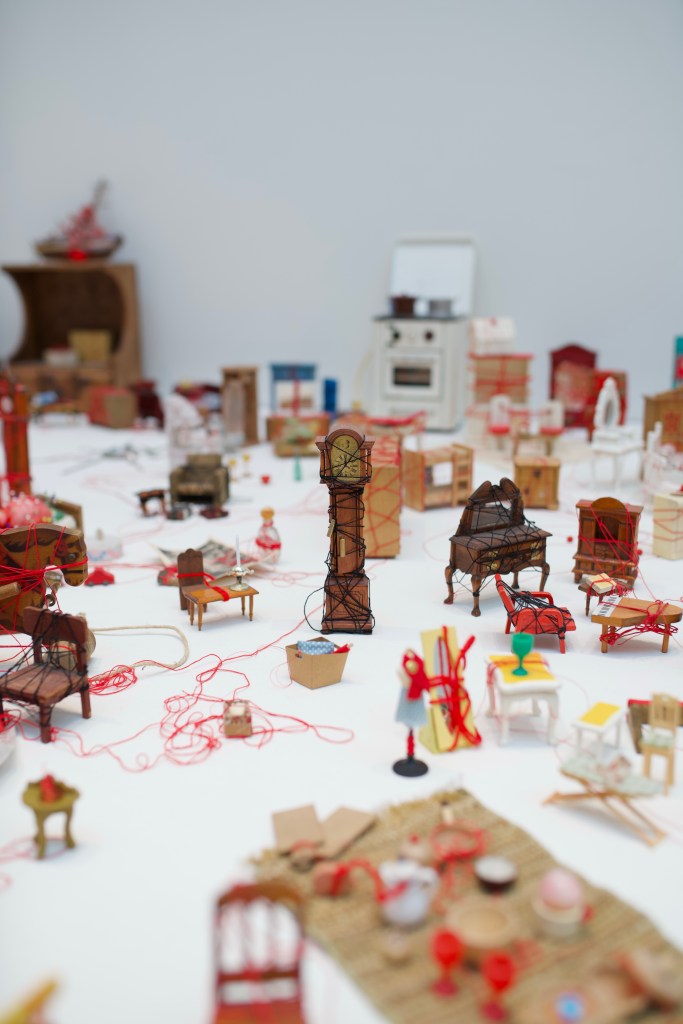
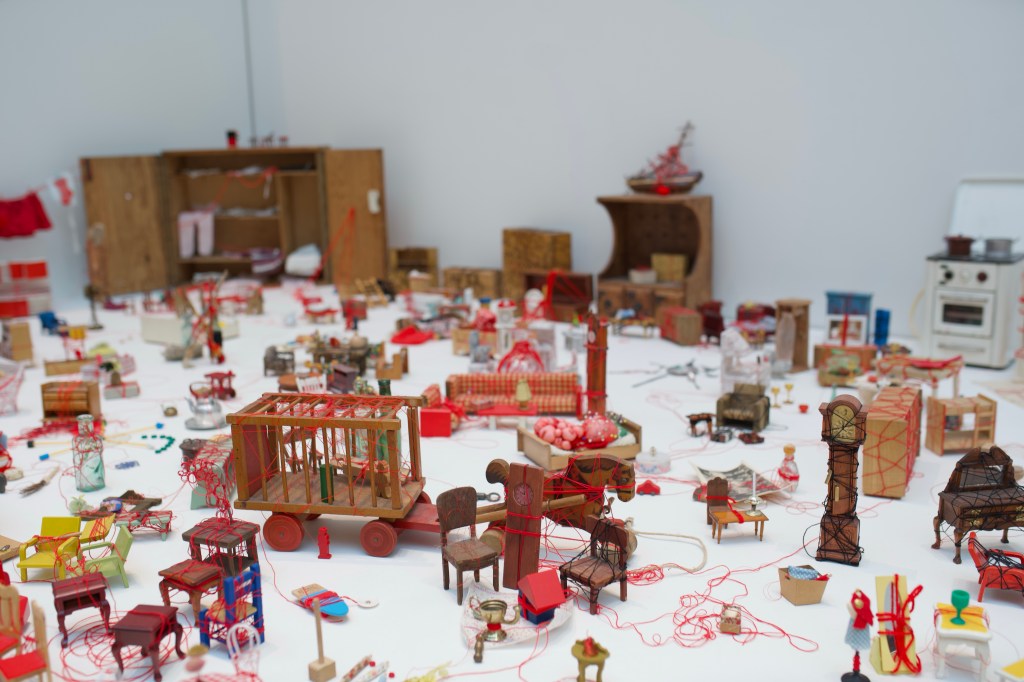
With Connecting Small Memories (2018/2024), which gathers numerous tiny furnitures and household items from dollhouses, linked together with some red and black yarns, she invokes the memories of a forgotten past she shares with the visitor through the threads. This past is not there anymore yet physically present with this collection of small objects.

Origin, alienation and identity
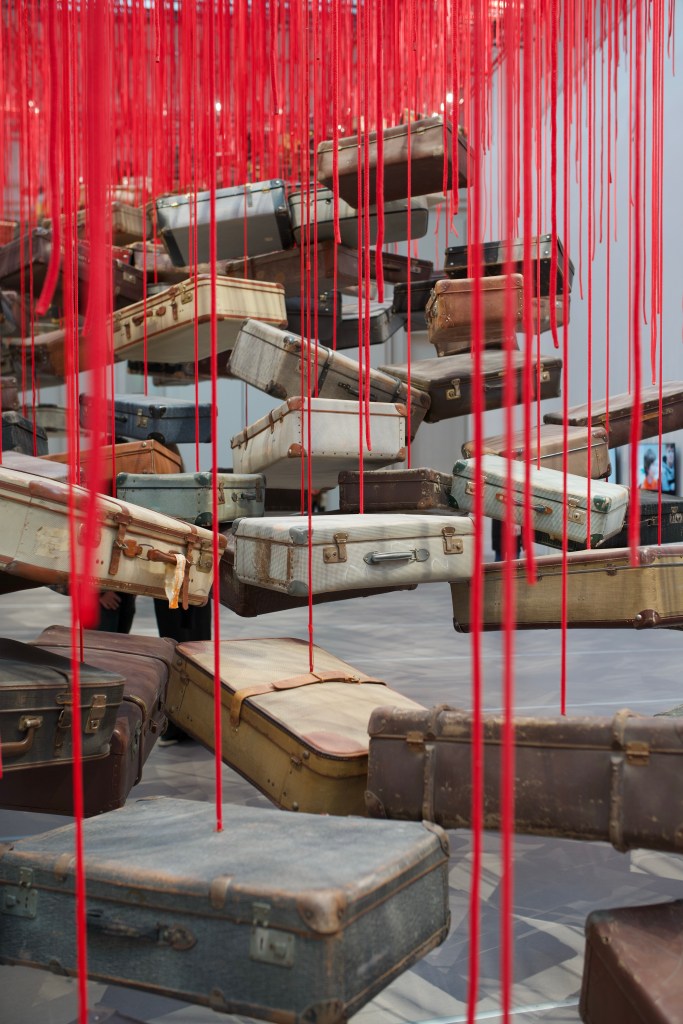
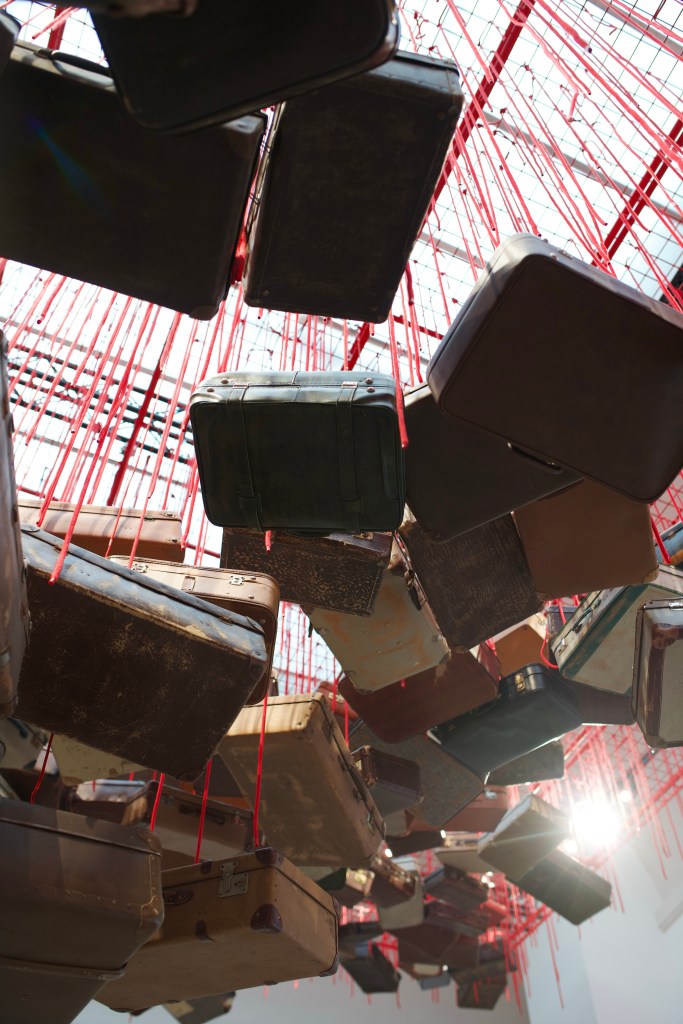
As a Japanese expatriate in Germany, Chiharu Shiota has often questioned her identity, her roots and her expectations. The feeling of distance from her homeland and alienation in a foreign country haunt some of her works. In Accumulation – Searching for Destination (2014-2024), dozens of suitcases are hung from the ceiling with red thin ropes, looking like a staircase going up to the sky. The installation evokes her own feelings and the ones of millions travellers, migrants and moved people all around the world, and raises the both following questions: where are we from? (the accumulation of our lives, materialized by the suitcases) / where are we going? (the destination). This journey is not only physical but also mental, as most people are looking for a goal in their life.

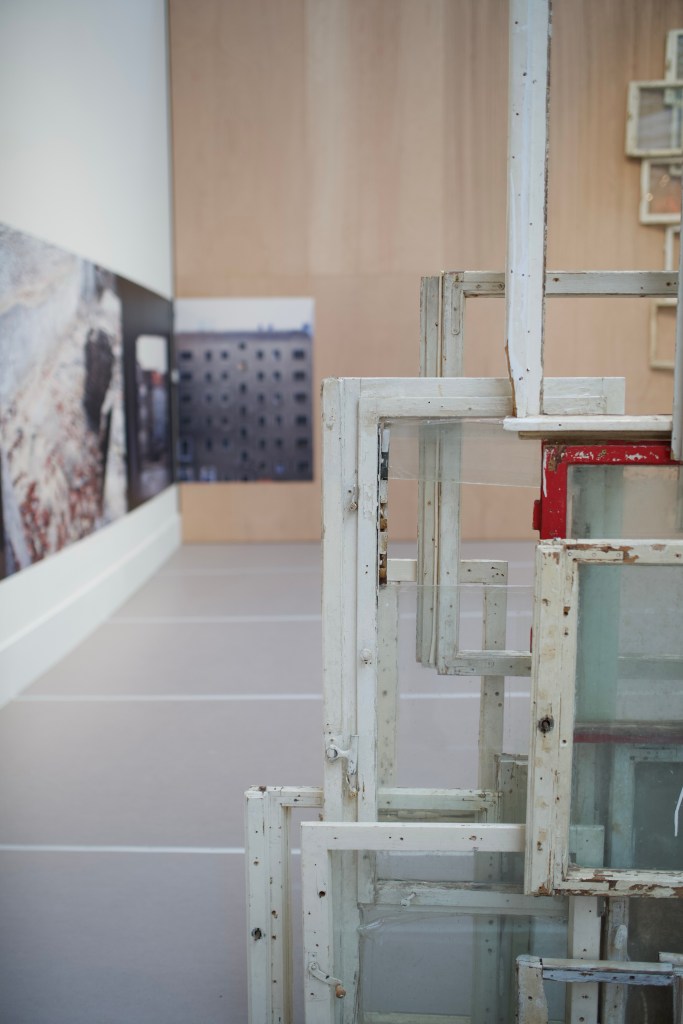
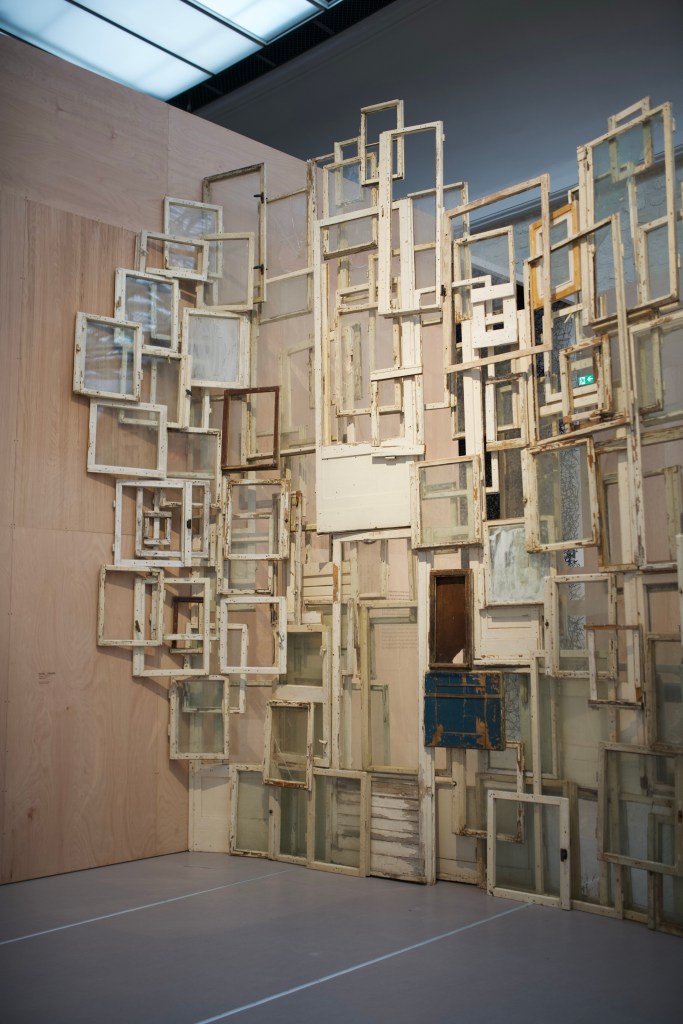
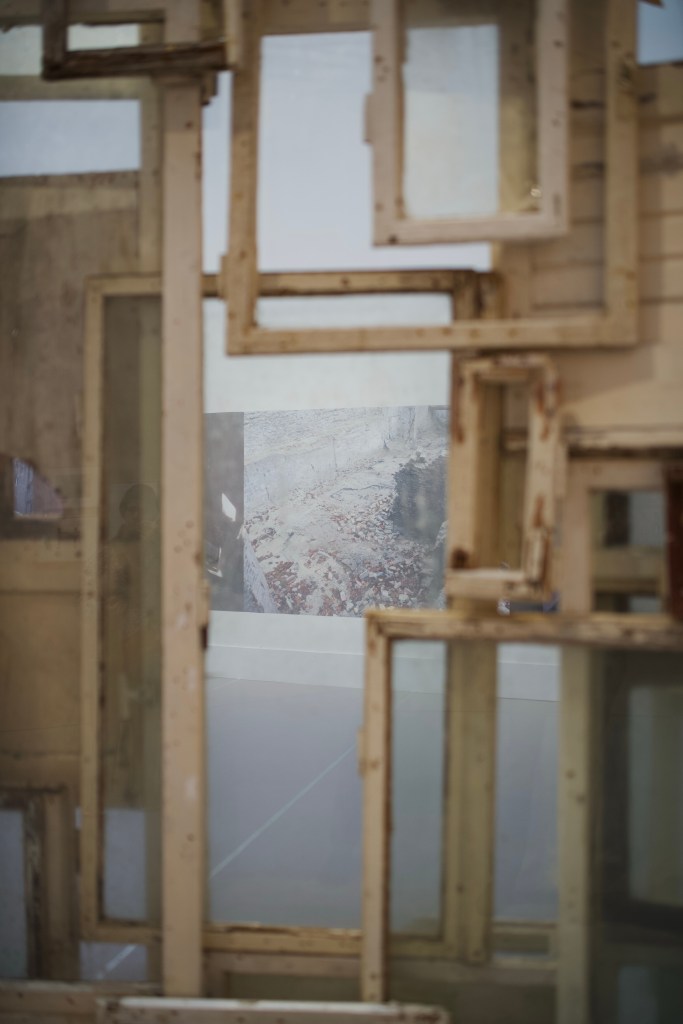
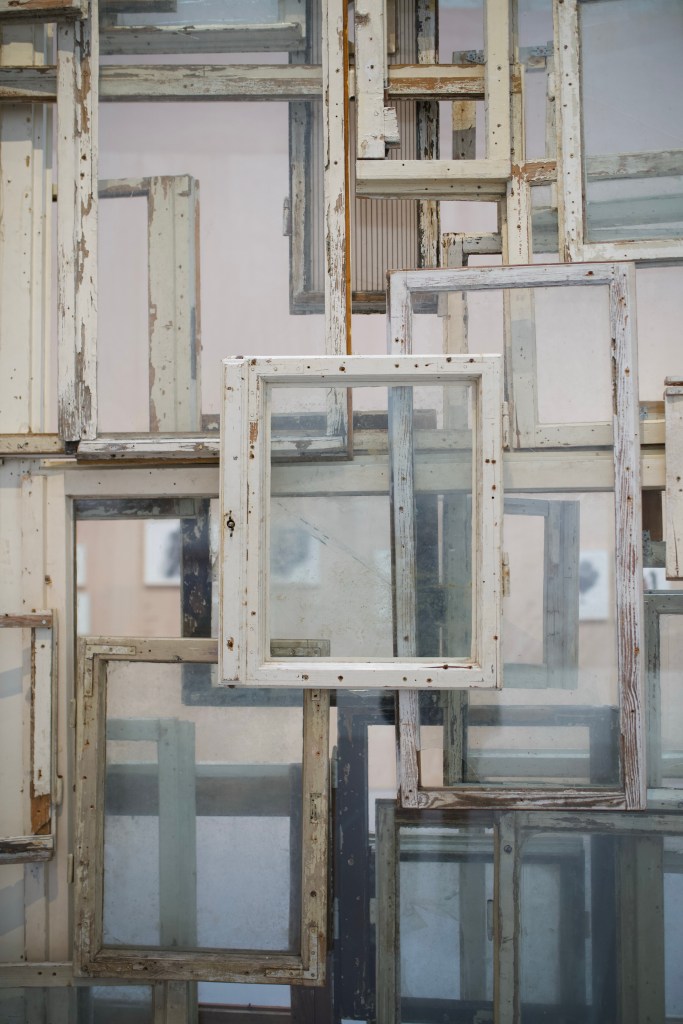
In Berlin, she spent six months to collect used windows, day and night, all over the city. The Inside – Outside (2008-2024) installation presents the result of her hunt, supported by large format photographies of destruction sites and destroyed buildings taken in the German capital. She stated: “When I see the old windows that have been replaced and discarded on the Berlin construction sites, I remember how East and West have been separated during twenty-eight years and I think of the life of these people of the same nationality, speaking the same language, of the way they were seeing their life in Berlin and the thoughts that came to their mind.“
Life and death
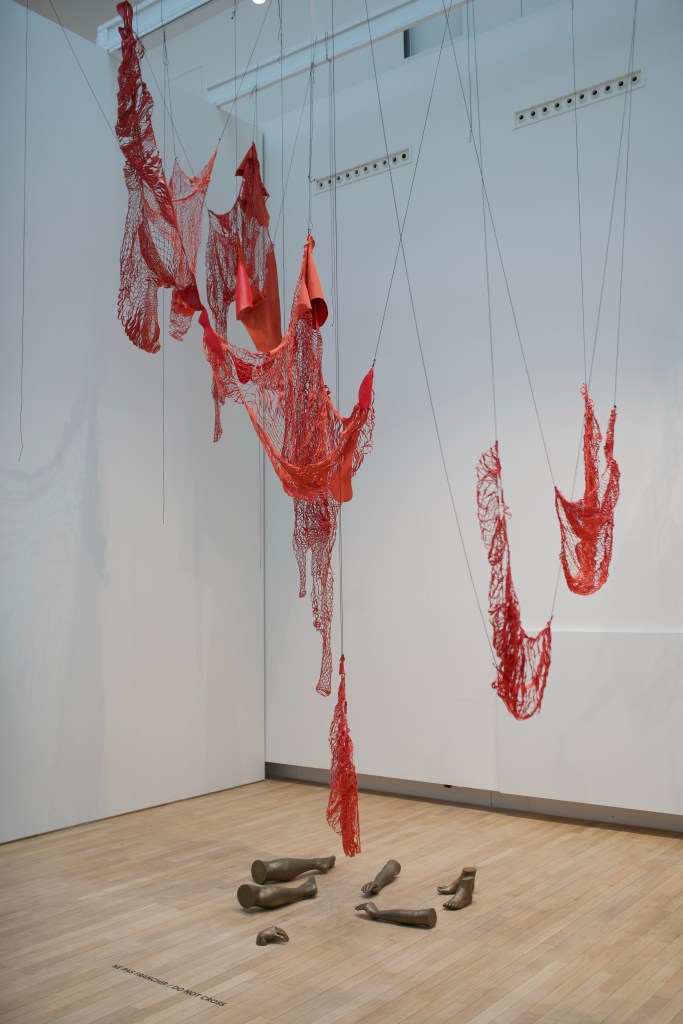
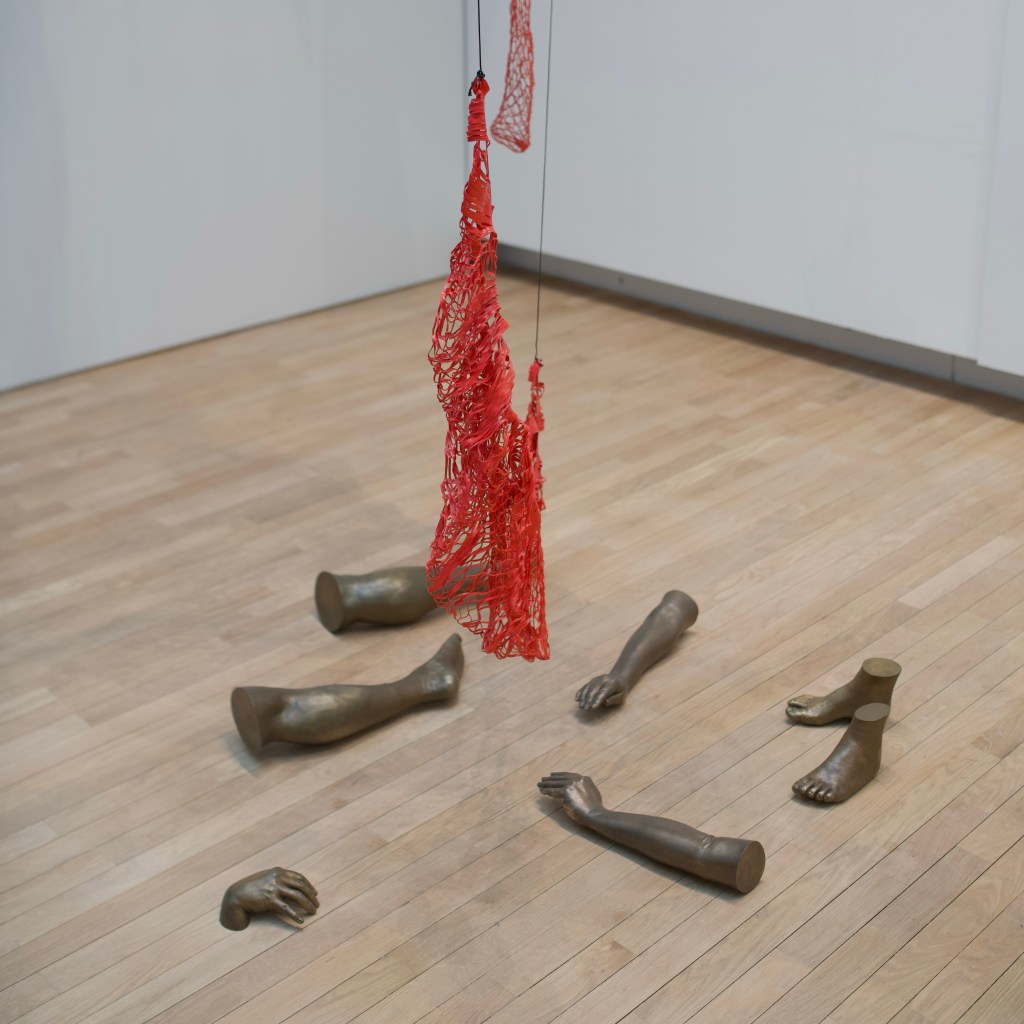
In resonance with the presence in absence feeling she explores, life and death are also present in Shiota’s work. In 2005, she has been operated from an ovarian cancer and suffered a relapse in 2017 she had to treat with chemotherapy. This experience inspired her the installation Out of my Body (2019/2024), in which some red woven leathers are suspended over various body parts mouldings of bronze laid out on the ground. The body may have been ripped and dismembered, but the soul, though not visible, remains present.
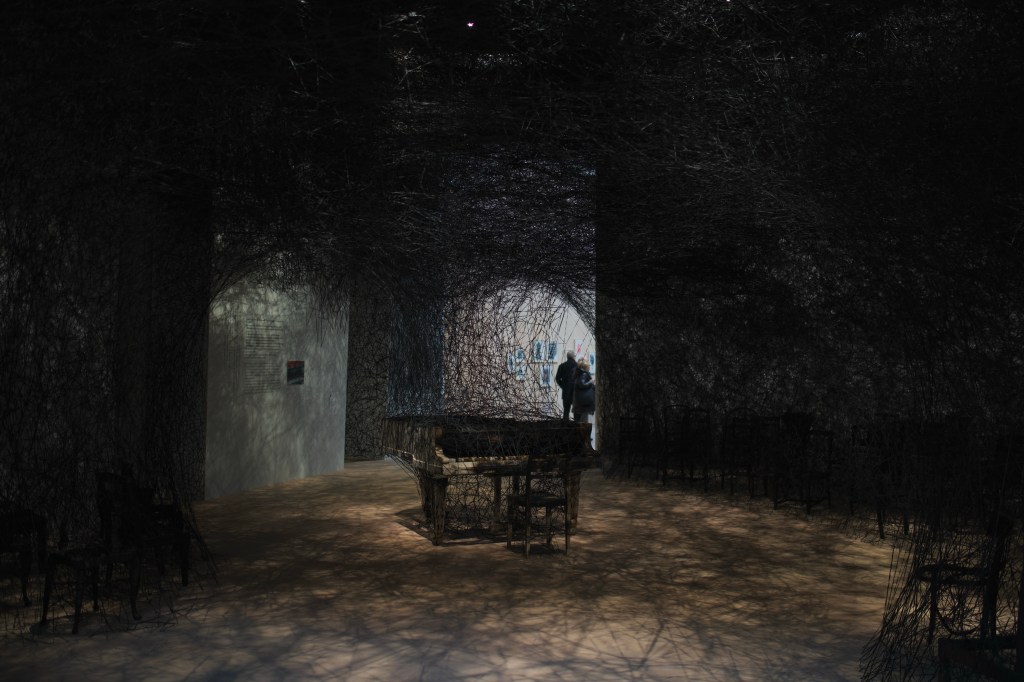
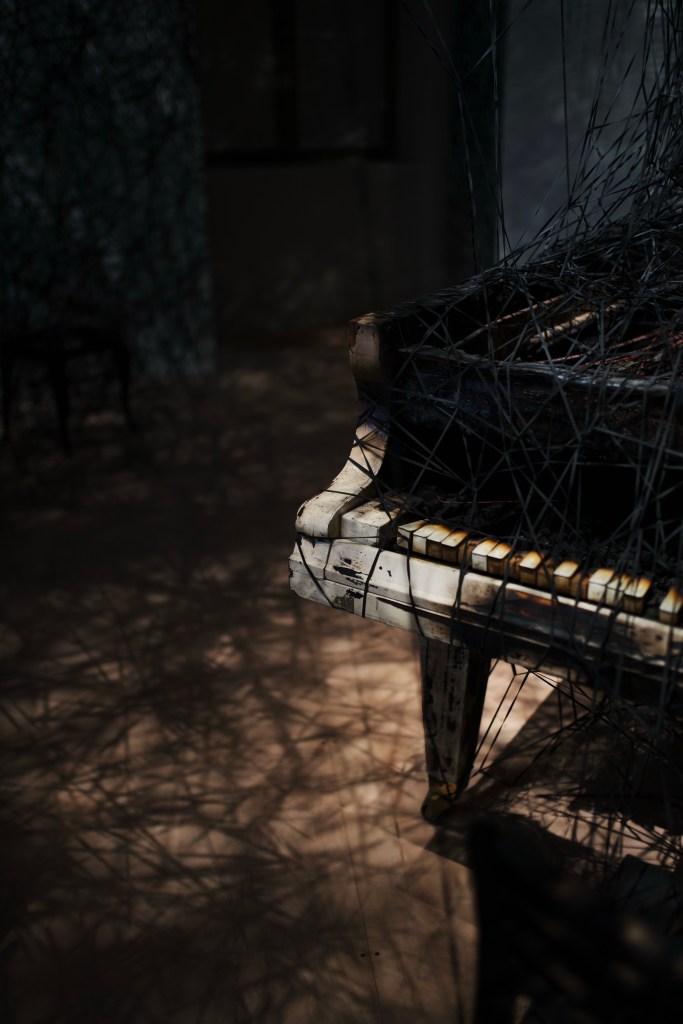
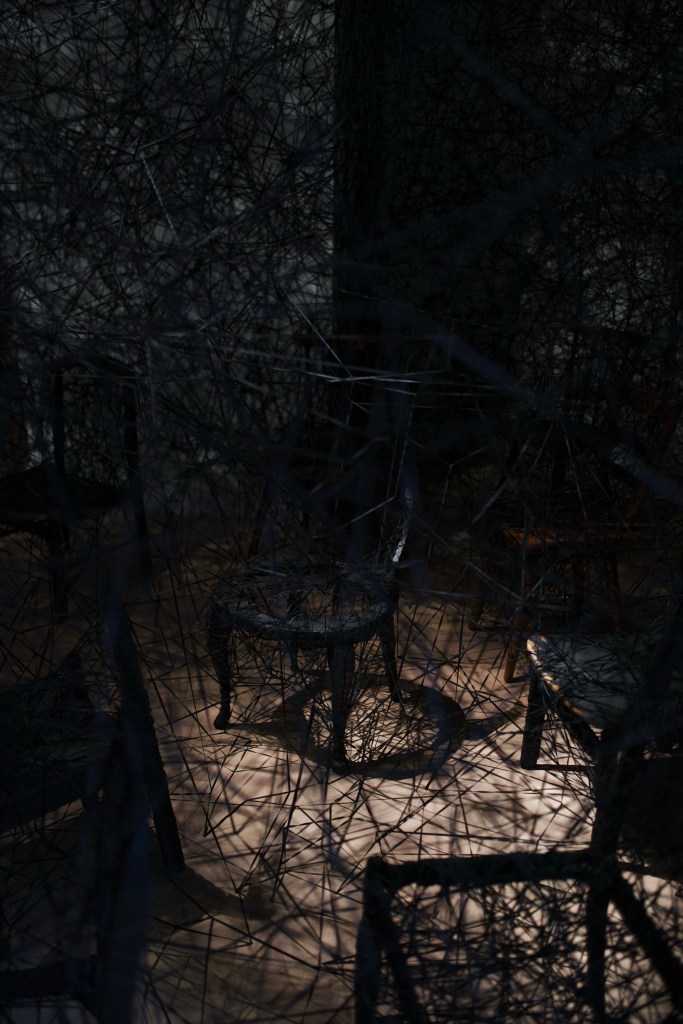
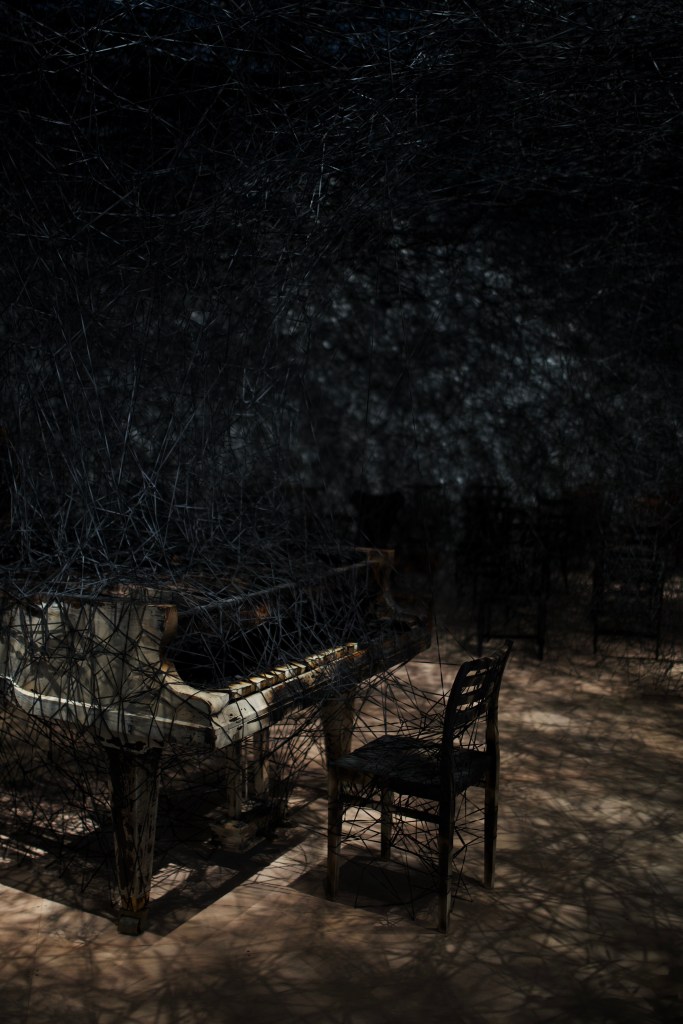
To the Uncertain Journey that opens the exhibition with its red threads that seems to spring out like blood (symbol of life) all over the room, answers the dark and mysterious In Silence (2002-2024) and its black yarns (reminding death) that expand over a burnt piano and several concert room chairs in a theatrical way. The installation refers to the memory of a piano the artist had seen burnt near her house as she was nine and the silence she felt during the following days: the strings have been destroyed and no one can play it again, but beyond the silence, one can still imagine the music once produced by this piano.
Although the installations have already been shown in past exhibitions (but updated for the occasion), in addition to the well documented presentation of her former works, including the stagings she has made for nine operas and plays between 2003 and 2019, the Grand Palais exhibition provides an exciting overview of a career that spans over more than thirty years, to be seen until 19th March 2025.
N.b.: the quotations of the artist in the article, if there is no hyperlink, are excerpts from the exhibition catalog.
Photos credits: @elegantinparis
 Elégances Parisiennes