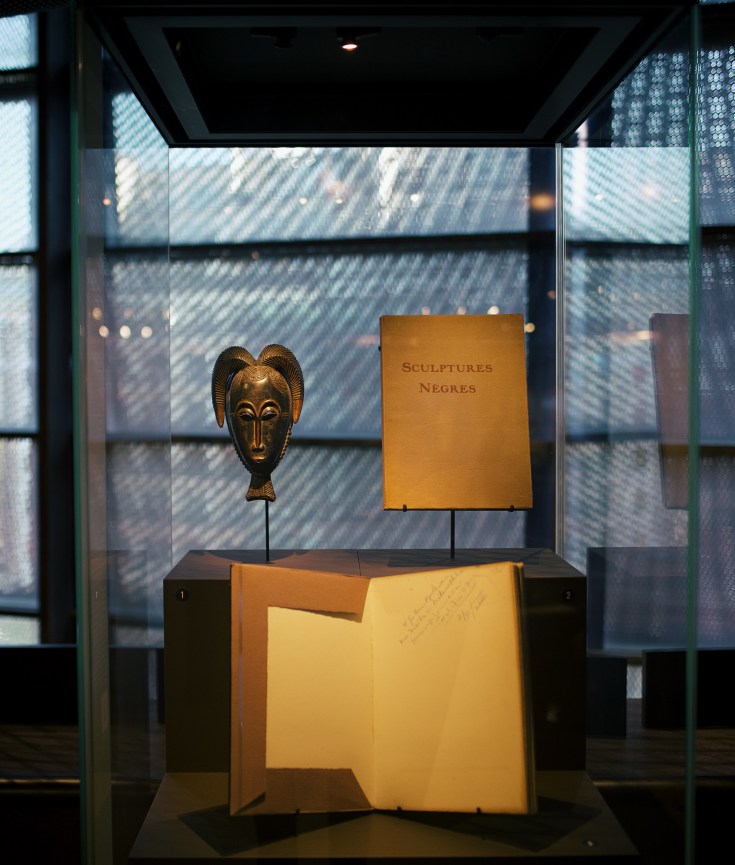

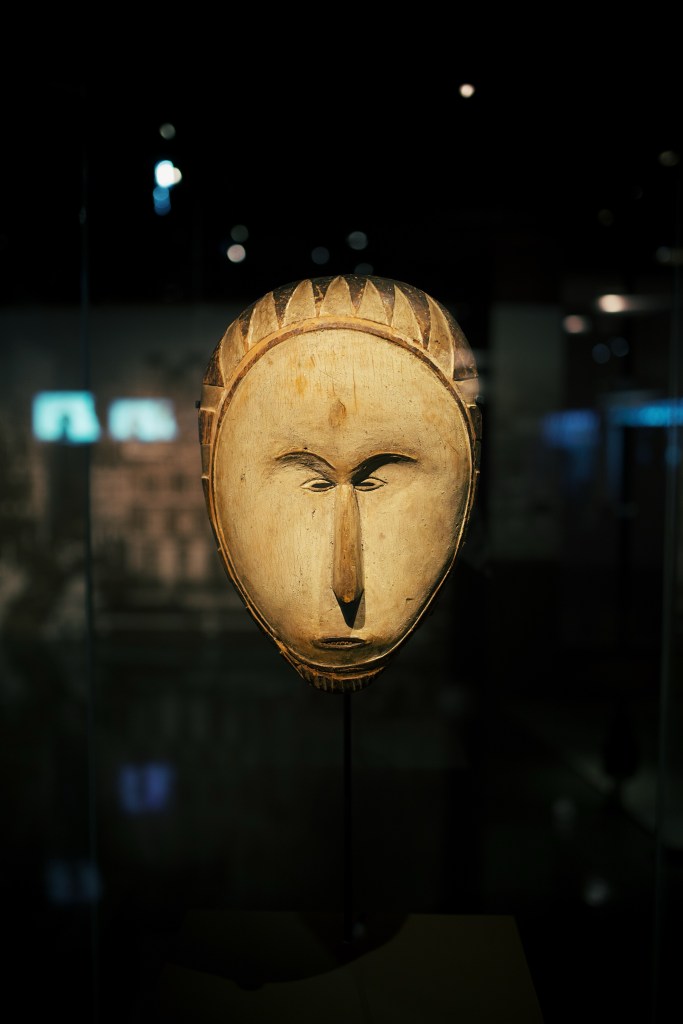
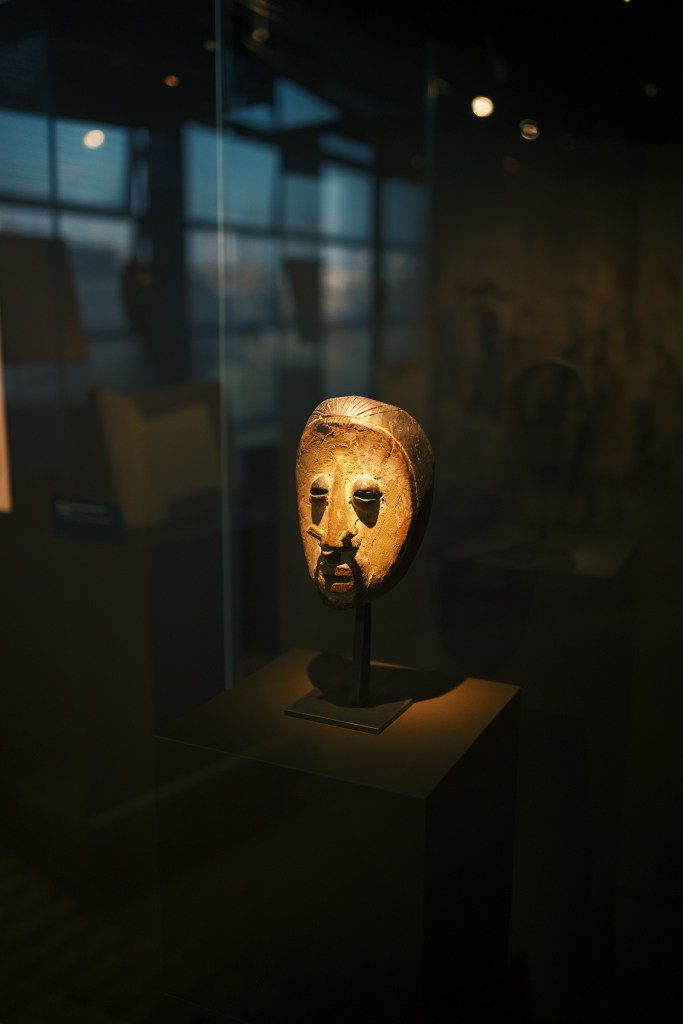
Could this quietly powerful Fang mask from Gabon mark the beginning of Paris’s fascination with the arts of Africa and Oceania? This artwork was first acquired by Maurice de Vlaminck, who sold it to André Derain in 1906, before Henri Matisse and Pablo Picasso came to admire it. This mask, together with a Nkisi Nkondi figure once owned by Guillaume Apollinaire (one of the first artists to take a serious interest in extra-European arts) opens the exhibition 1913–1923: The Spirit of the Times, Paris Celebrates the Arts of Africa and Oceania at the Musée du Quai Branly–Jacques Chirac, until September 20, 2026.
That decade was a key moment in the recognition of the arts of Africa and Oceania, driven by the activity of dealers, collectors, and artists in Paris, and culminating in a landmark exhibition in 1923 at the Pavillon de Marsan of the Louvre. The exhibition looks back at the various figures and the events of the preceding years, accompanied by rare artworks connected to them.
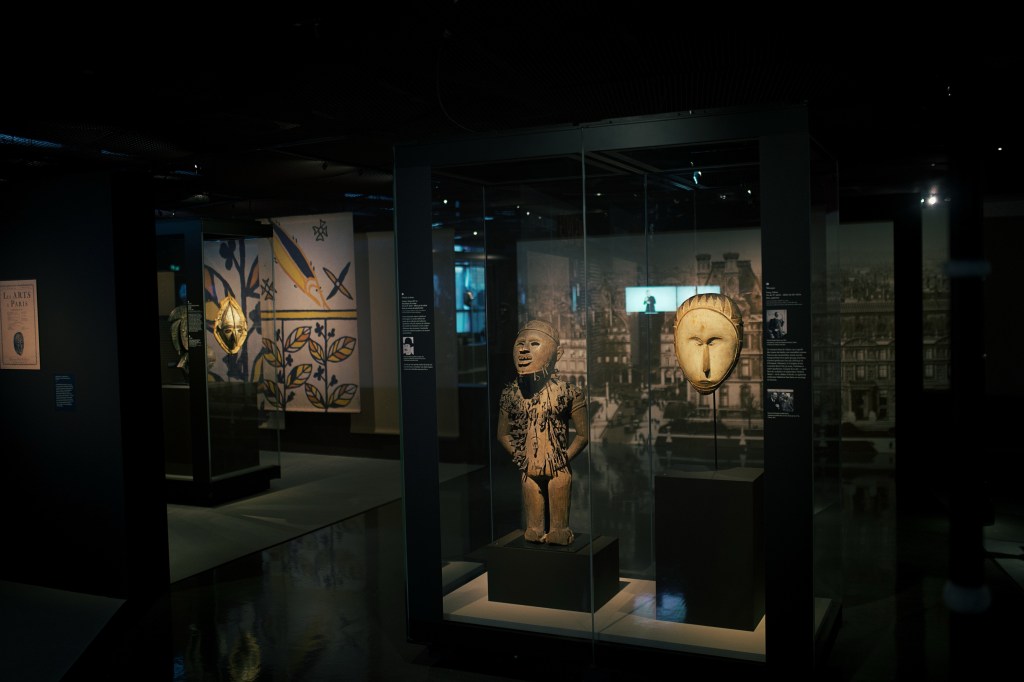
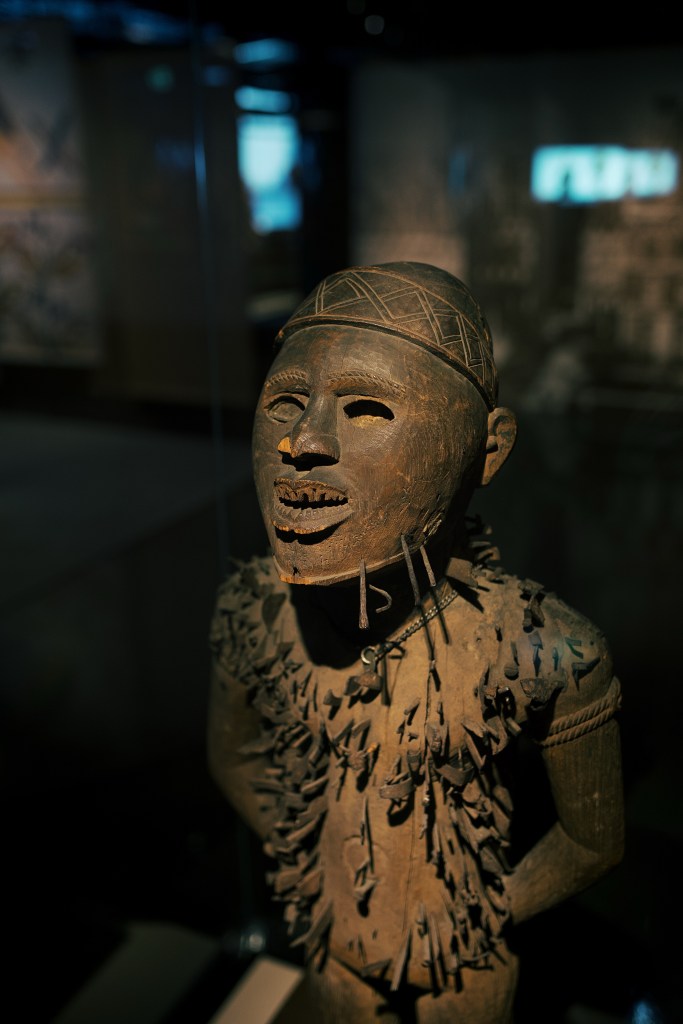
Nkisi Nkondi figure, Democratic Republic of the Congo, ex-Guillaume Apollinaire (bottom)
The Pioneers
The first section of the exhibition focuses on the various actors who helped transform perceptions of arts from Africa and Oceania during these years, and made possible the first exhibitions to include objects from those regions.
Joseph Brummer and Charles Vignier were among them. The former was a Hungarian-born art dealer and collector active in Paris in the 1910s, before moving to the United States during the First World War and becoming one of the first to champion European art in America. Among the objects that passed through his hands was a remarkable Fang-Betsi reliquary head, later named after him, now in the collection of the Fondation Dapper.
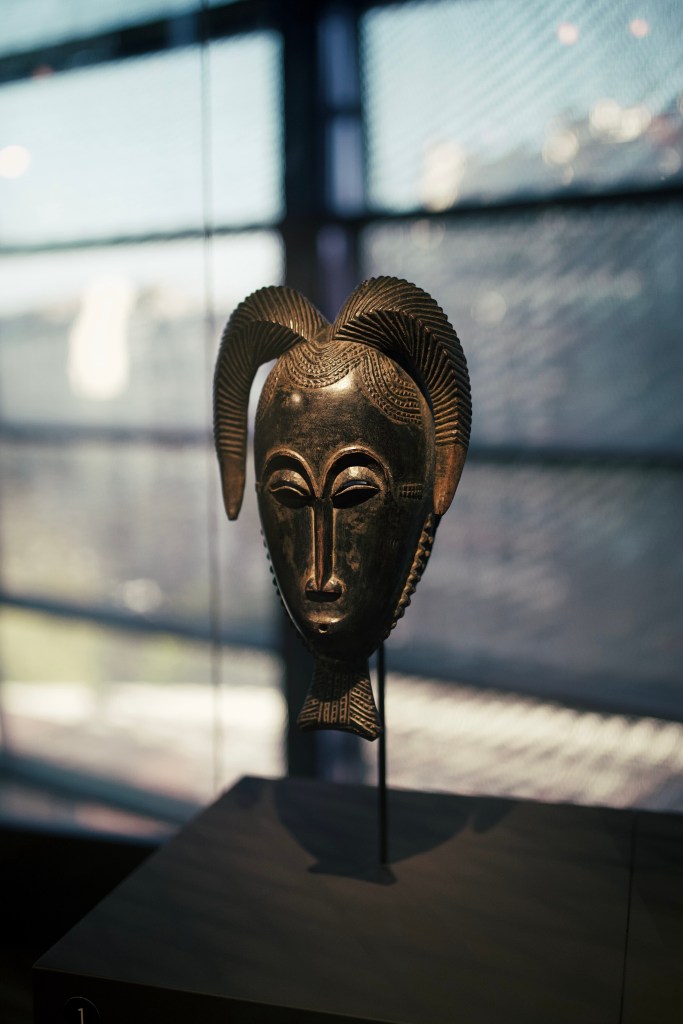
The latter was a Swiss-born poet and writer who later specialized in Asian art. He also developed an interest in arts from Africa and Oceania, purchasing eighteen African works from Brummer and including them (along with four others) in an exhibition devoted to non-European ancient arts that he organized at Galerie Levesque in 1913, in the back courtyard of the mansion once owned by the renowned couturier Paul Poiret. It was perhaps the first event in Paris to feature African works, though the catalogue mentioned only a Baoulé portrait.
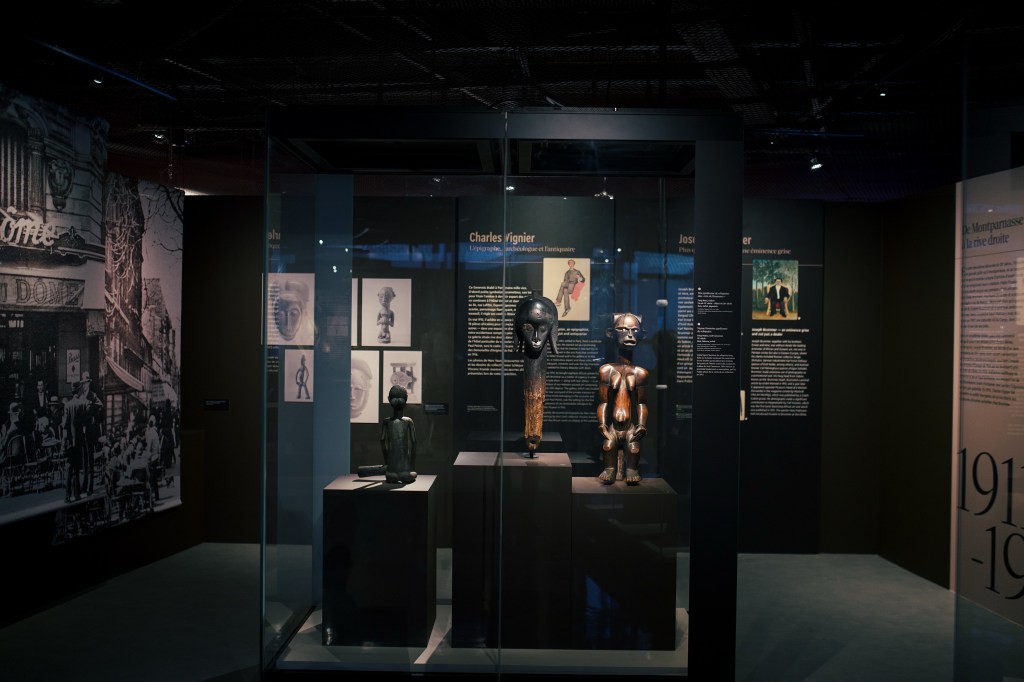
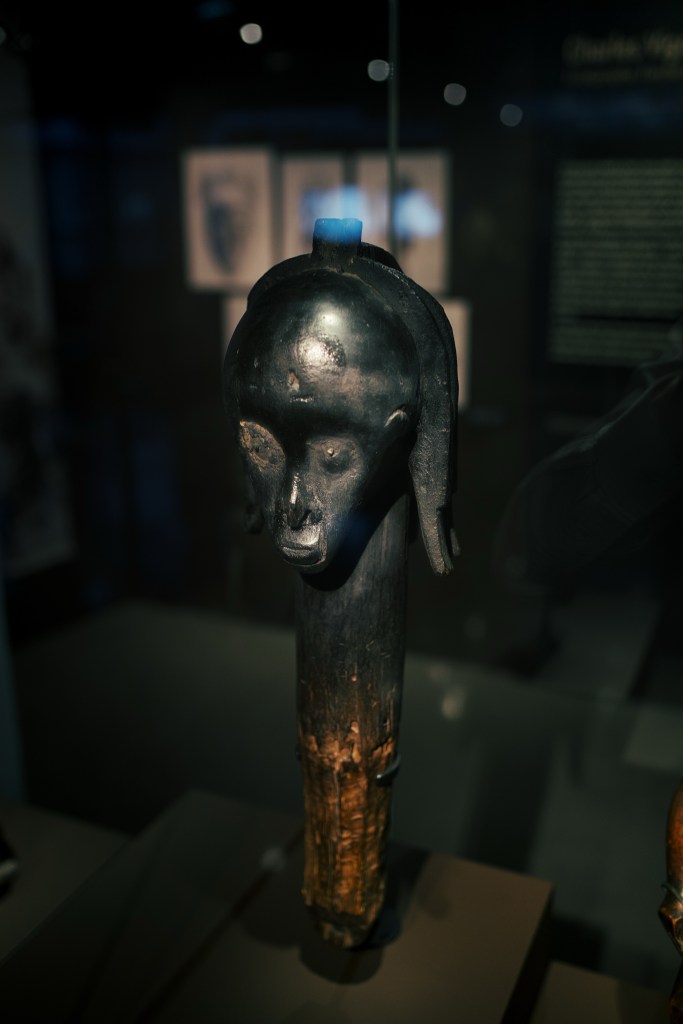
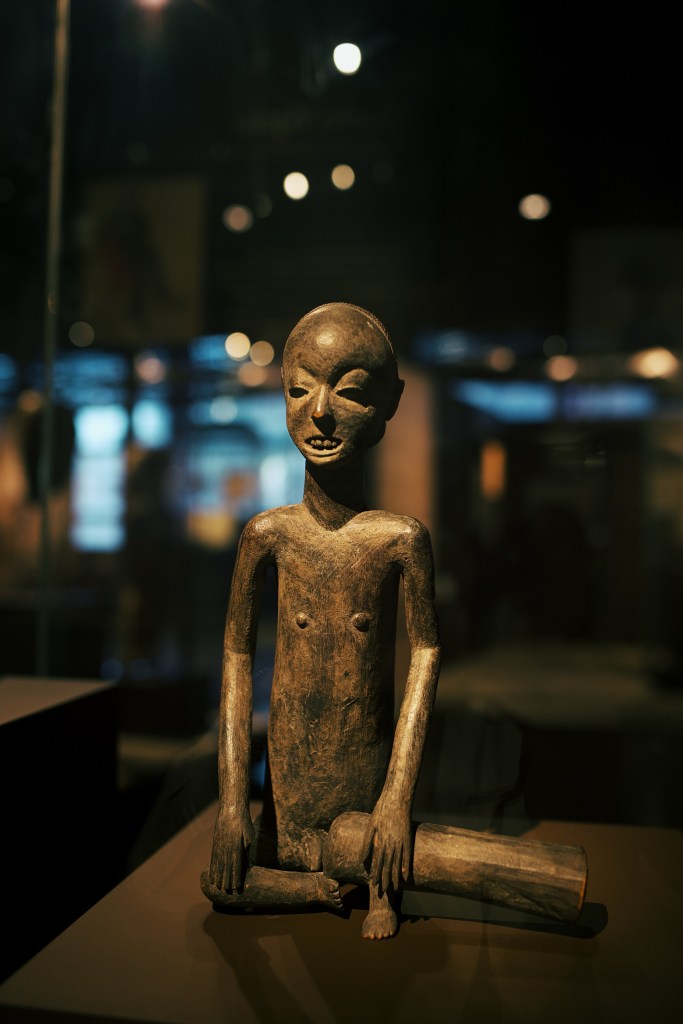
Guardian reliquary head known as the “Brummer Head,” Fang Betsi, Gabon (bottom left) ; Statue of a man with a drum, Kanioka, Democratic Republic of the Congo, ex-Charles Vignier collection (right)
Paul Guillaume was undoubtedly one of the most active figures in this burgeoning field. He began working as a dealer in the early 1910s, acquiring sculptures from military officers and colonial administrators returning from Congo and Côte d’Ivoire. Early on, he met Guillaume Apollinaire and went into business with Joseph Brummer.
While France had entered the war against Germany two years earlier, and Apollinaire had been admitted to the Val-de-Grâce hospital, Paul Guillaume exhibited several sculptures from Africa and Oceania alongside works by some of the most celebrated artists of the day, at a show organized by Lyre et Palette, an association based near the Café du Dôme in Montparnasse. Surrounded by works by Picasso, Modigliani, and Ortiz de Zárate, Guillaume emphasized that it was the first time sculptures from Africa and Oceania had been presented for their aesthetic qualities rather than their ethnic origins.
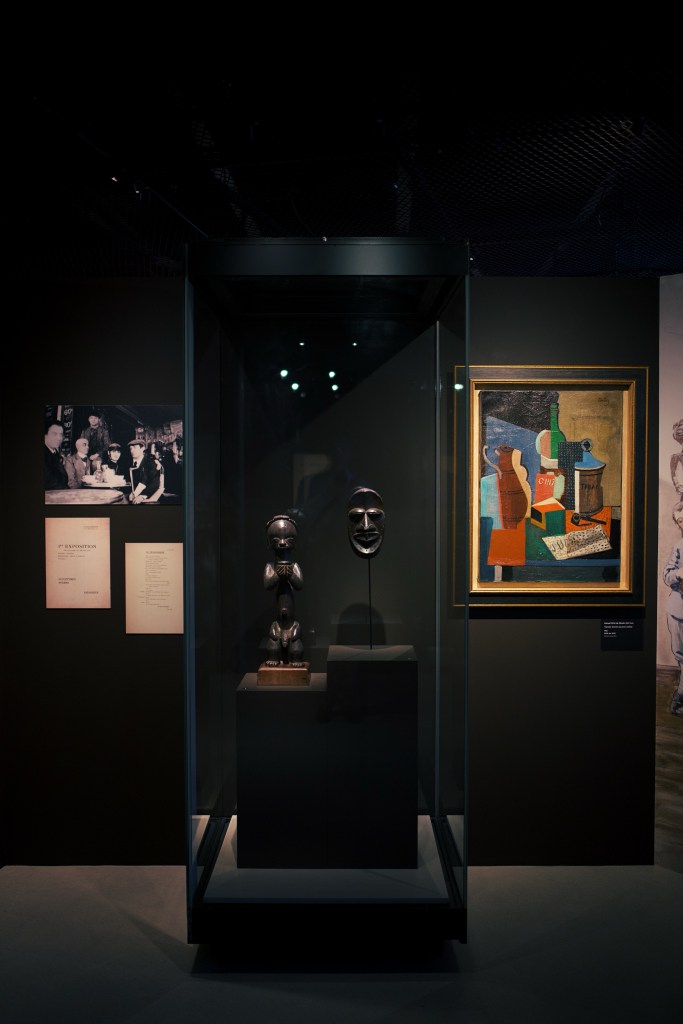
On April 25, 1917, Paul Guillaume published Sculptures nègres, a volume featuring photographs of twenty-four African works, a kind of sales catalogue showcasing selected pieces from his collection. The following year, he launched Les Arts à Paris, a magazine he continued to publish until his death in order to promote his galleries and avant-garde art. African art also featured in the periodical, accompanied by texts by Paul Guillaume and Guillaume Apollinaire.
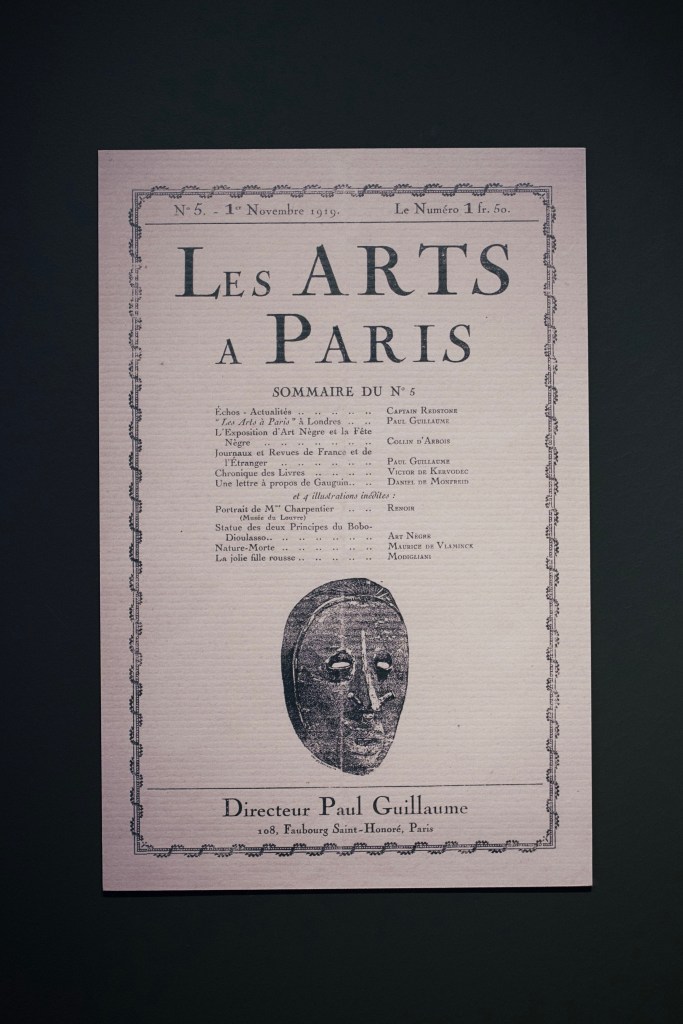
Eventually, he fulfilled a long-standing project, by organizing the first exhibition of African and Oceanic art organized by Mr. Paul Guillaume, at galerie Devambez on boulevard Malhserbes, in May 1919. In addition to Guillaume’s objects, other collectors also lent works, including André Level. A businessman and secretary-general of the Docks de Marseille, Level’s enthusiasm for non-European arts led him to co-author several books with his friend Henri Clouzot, a journalist and art historian.
The Beginnings of Institutional Recognition
If the years 1913–1923 saw the emergence of new mediators (dealers, collectors and avant-garde artists) who reshaped the perception of African and Oceanian arts in Paris, the 1923 exhibition at the Pavillon de Marsan in Louvre, marked a decisive shift.
For the first time, these works entered an institutional space, signaling the beginnings of official recognition within the museum world.
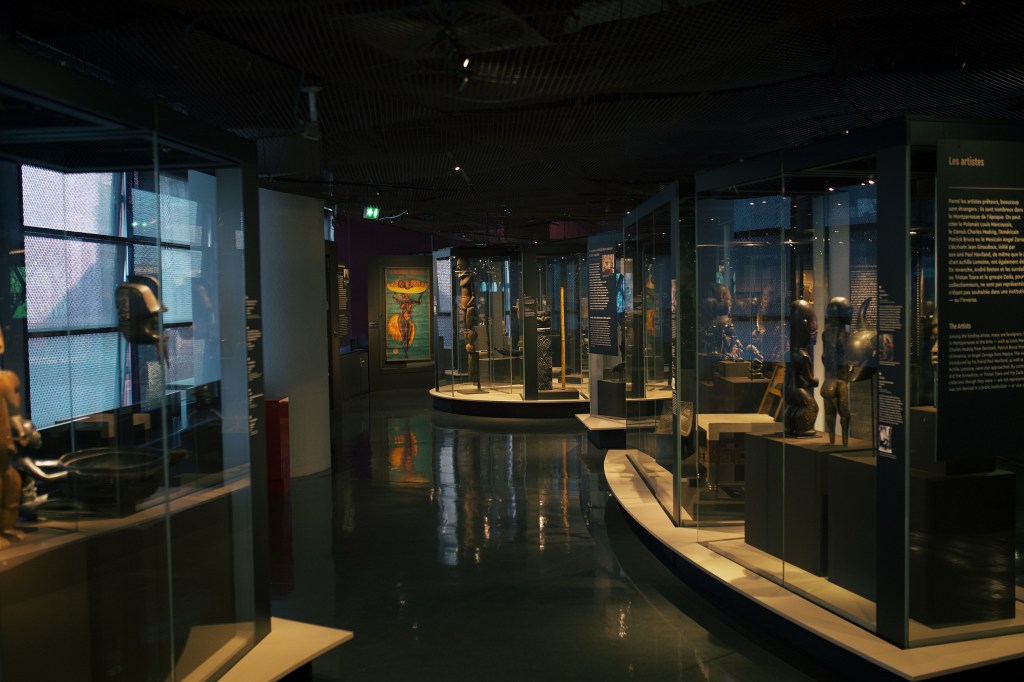
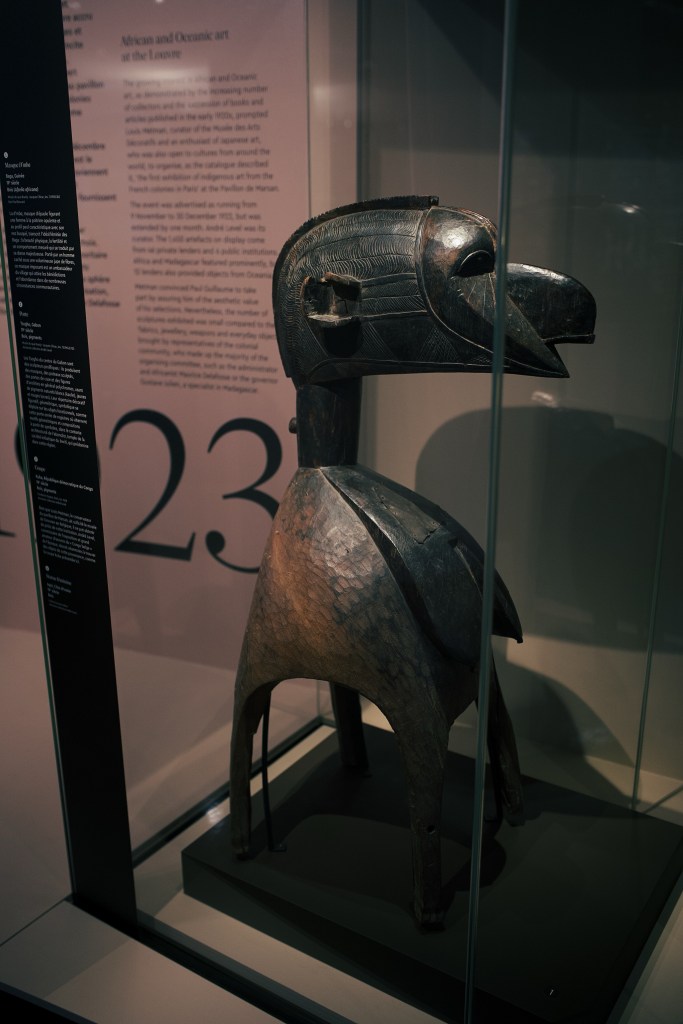
From November to December 1923, the 1,450 works on display met with such success among the public that the exhibition was extended until January 27, 1924. The impressive Nimba shoulder mask, now in the collection of the Musée du Quai Branly–Jacques Chirac, was chosen to feature on the official poster.
The key figures who had actively worked toward the recognition of these arts over the preceding decade were present. André Level and Henri Clouzot were asked by the organizers to validate the selected objects, acting as curators. Among the lenders, we also find Charles Vignier, Ernest Brummer (brother of Joseph Brummer, who had moved to the United States during the First World War), and Paul Guillaume.
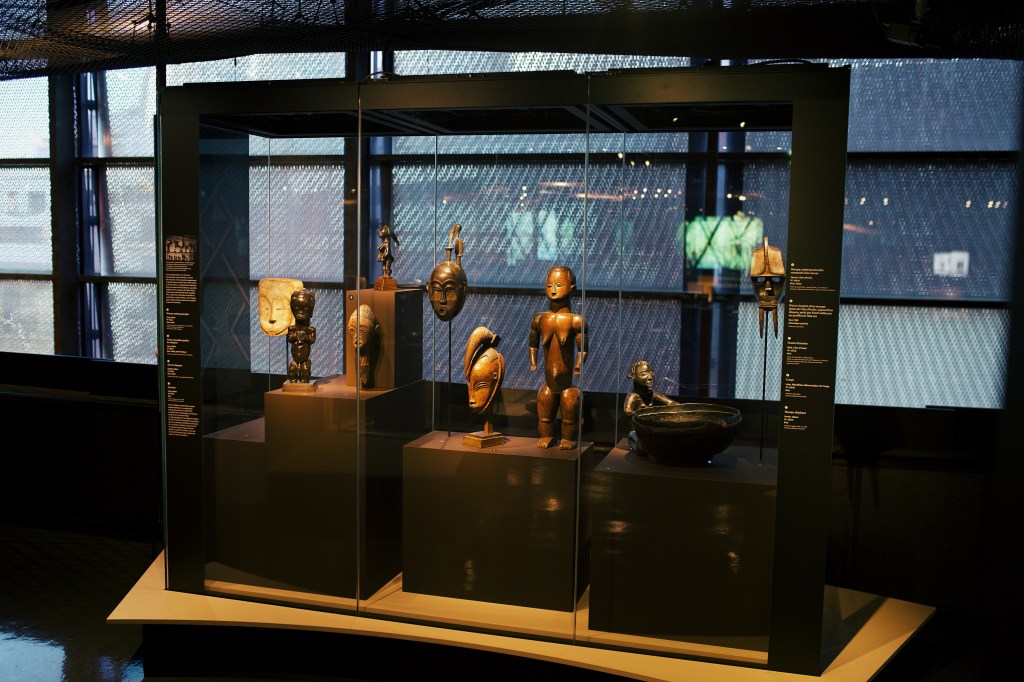
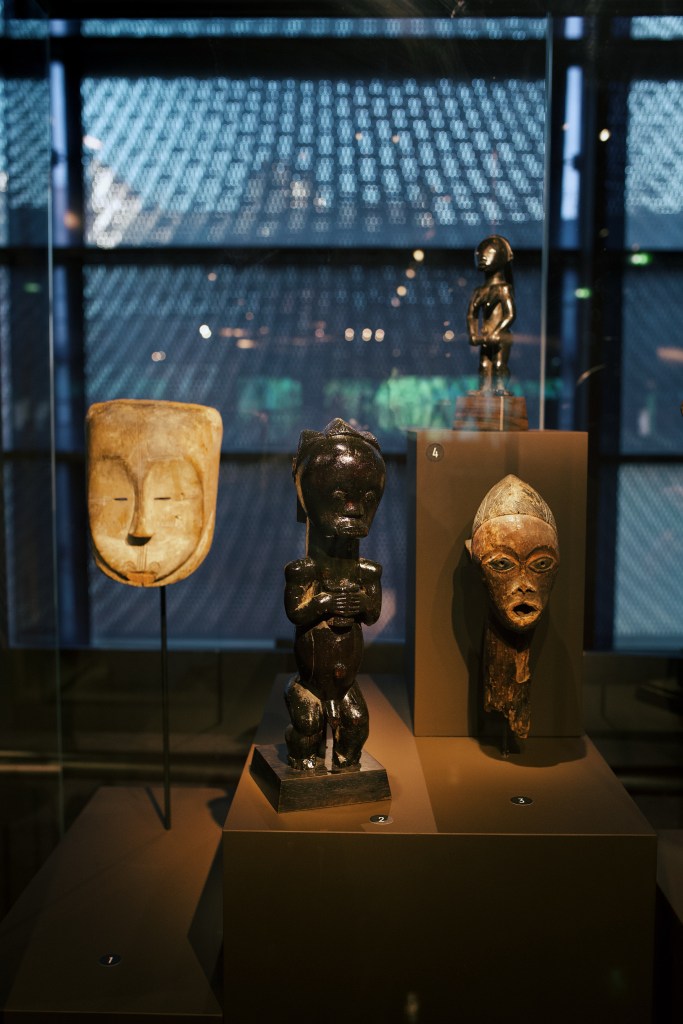
In the Bulletin de la vie artistique of December 1st, 1923, Felix Feneon published a photography titled “Vitrine du Gabon, au pavillon de Marsan”, showing several Fang byeri reliquary, heads and masks. The exhibition at the Musée du Quai Branly partially recreates this display, featuring an enigmatic Fang Betsi male reliquary figure and a serene Fang anthropomorphic mask, both of which once belonged to Paul Guillaume.
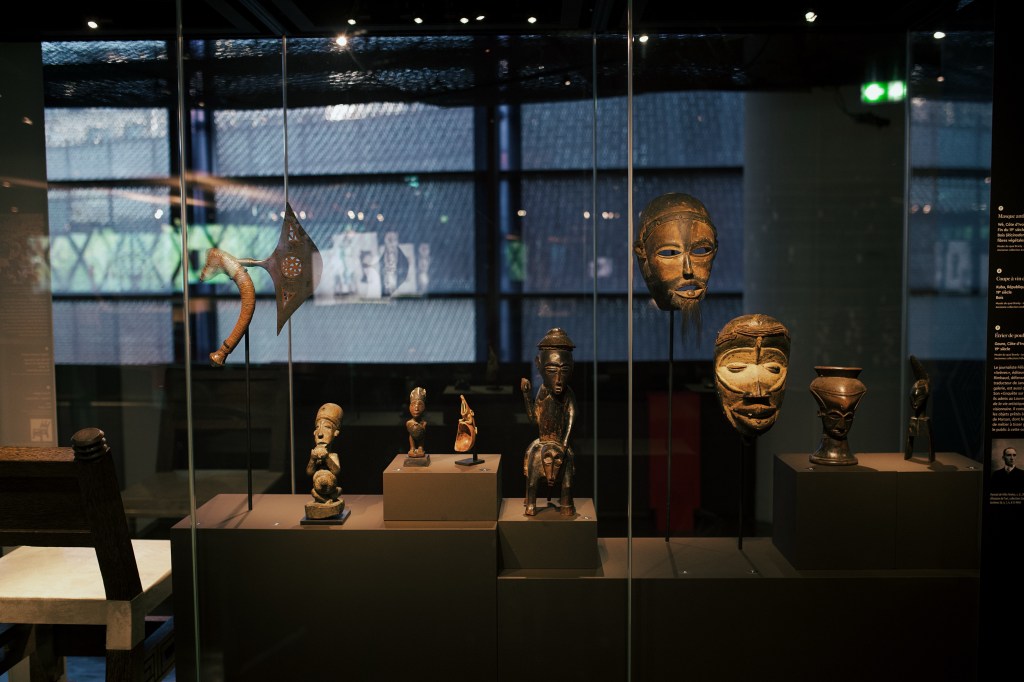
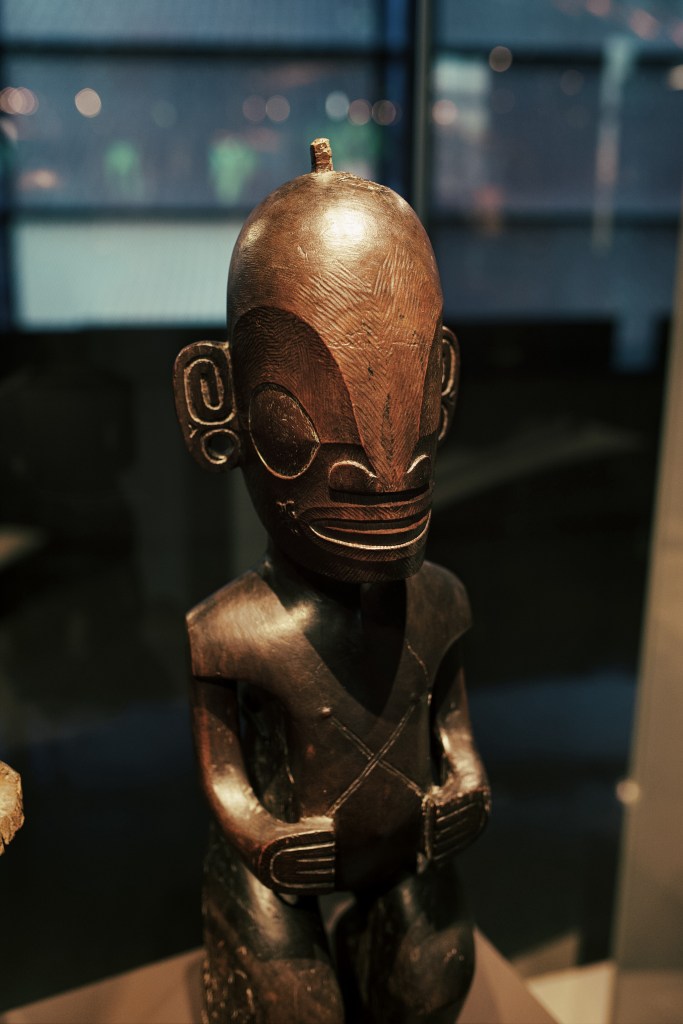
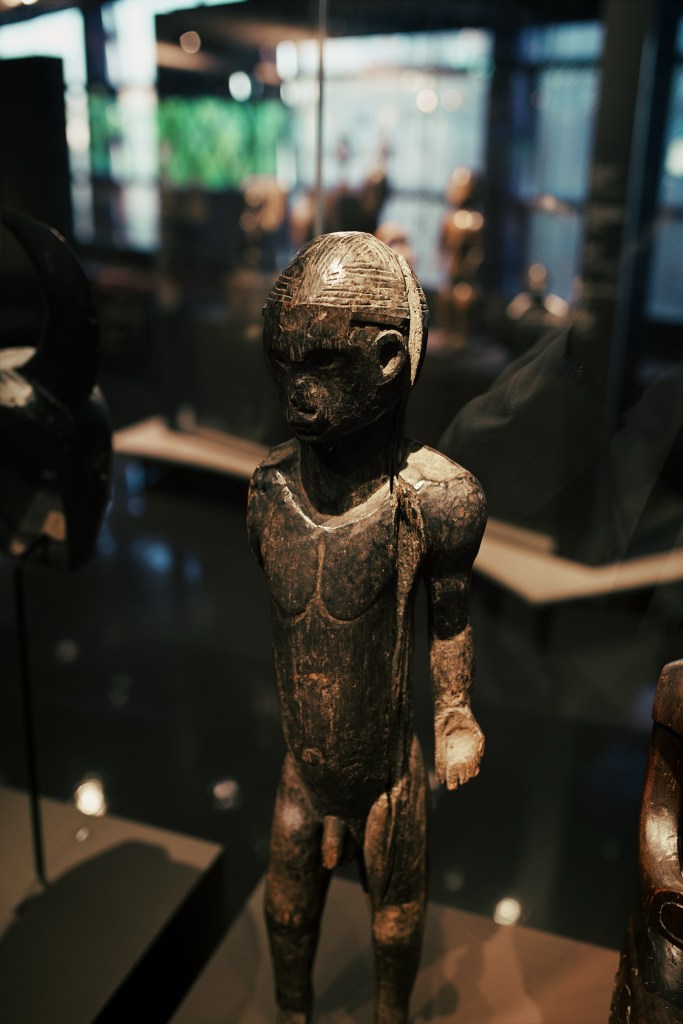
Alongside art dealers, avant-garde artists also contributed to the exhibition at the Pavillon de Marsan. Louis Marcoussis (a friend of Apollinaire and adviser to Helena Rubinstein), André Lhote, and Patrick Henry Bruce were among those who lent works. Although key pioneers in the recognition of African and Oceanic arts (such as Matisse, Vlaminck, or Derain) were absent from the list of contributors, Pablo Picasso took part, lending his cherished tiki figure from the Marquesas Islands.
Among the collectors was Frank Burty Haviland, heir to a Limoges porcelain business. Close to the artists of Montparnasse, he began collecting (and dealing in) objects after an initial purchase from Joseph Brummer, becoming one of the earliest enthusiasts of extra-European art. He lent several works from his collection to the exhibition, including an elegant Tiv statue from Nigeria.
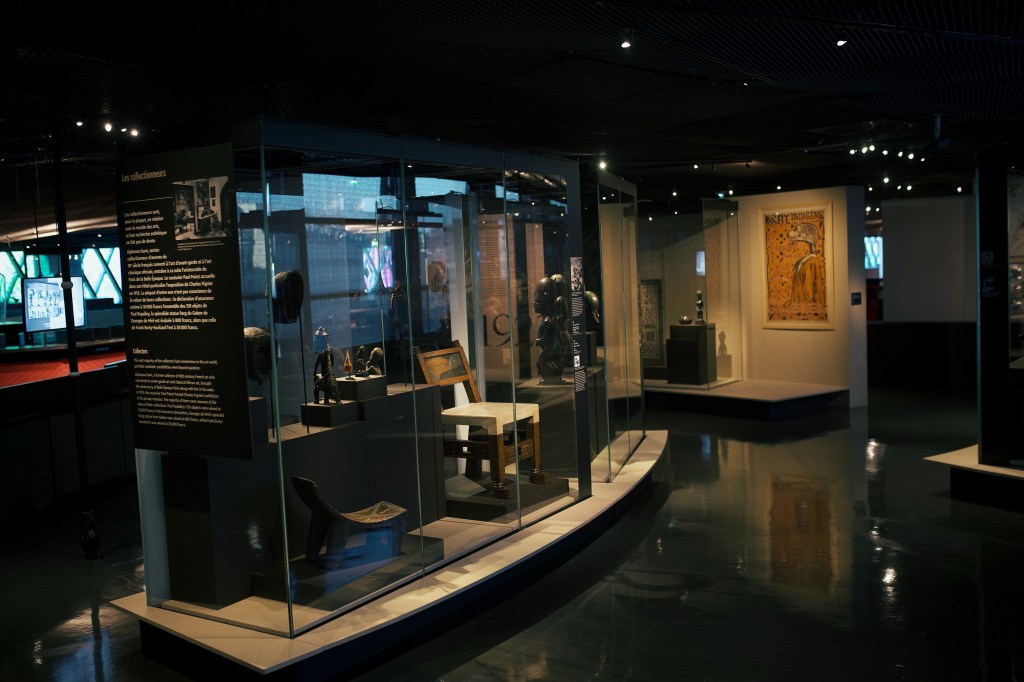
Final thoughts
The first three exhibitions to include African and Oceanian artworks (at galerie Levesque, and at Lyre et Palette for the two earliest ones), organized between 1913 and 1919, were met with little critical response, and the last at galerie Devambez was even greeted with mockery. Yet the sustained efforts of a small circle of dealers, collectors, and enthusiasts gradually laid the groundwork for the 1923 exhibition at the Pavillon de Marsan. There, these objects, long regarded primarily as ethnographic curiosities, began to be considered within an artistic framework.
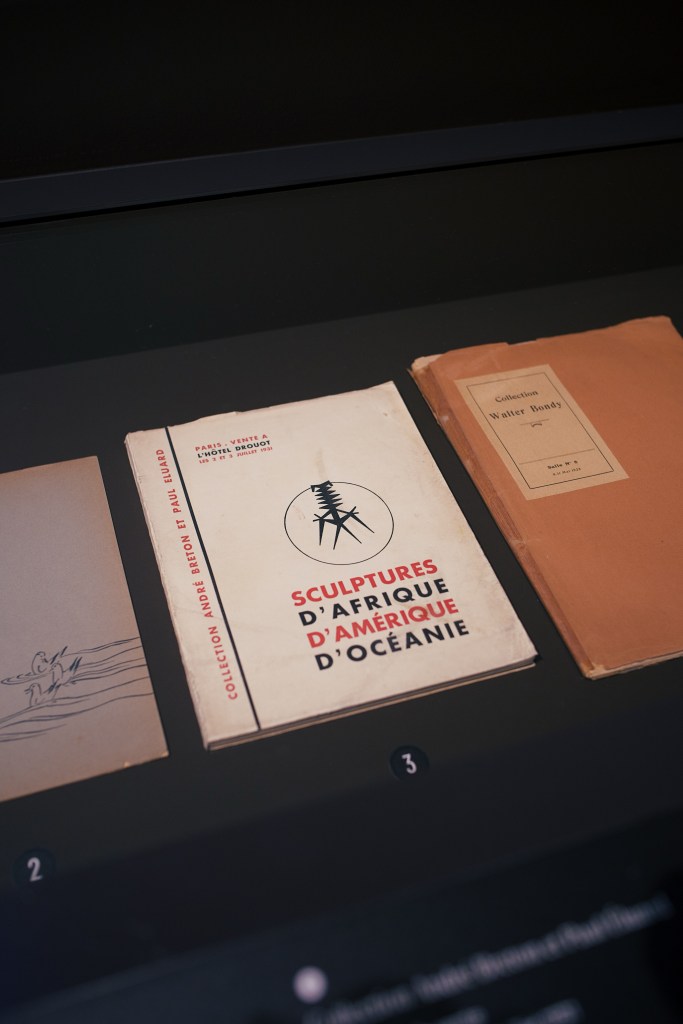
This shift in perception marked a decisive turning point. In the years that followed, a series of auctions further established their status, enabling important works to enter some of the most prestigious private and public collections.
Photos credits: @elegantinparis
 Elégances Parisiennes