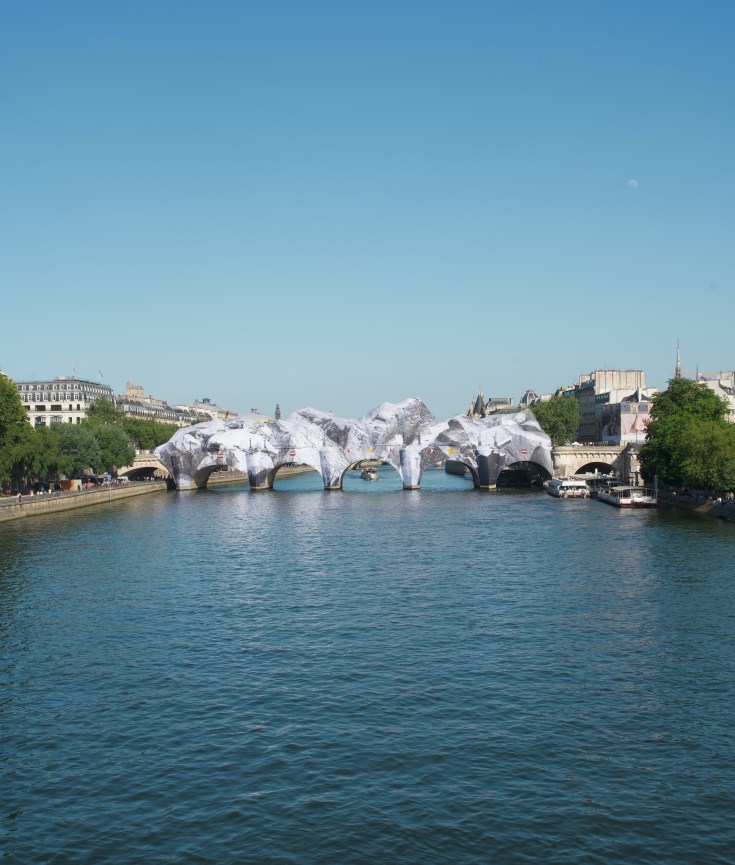

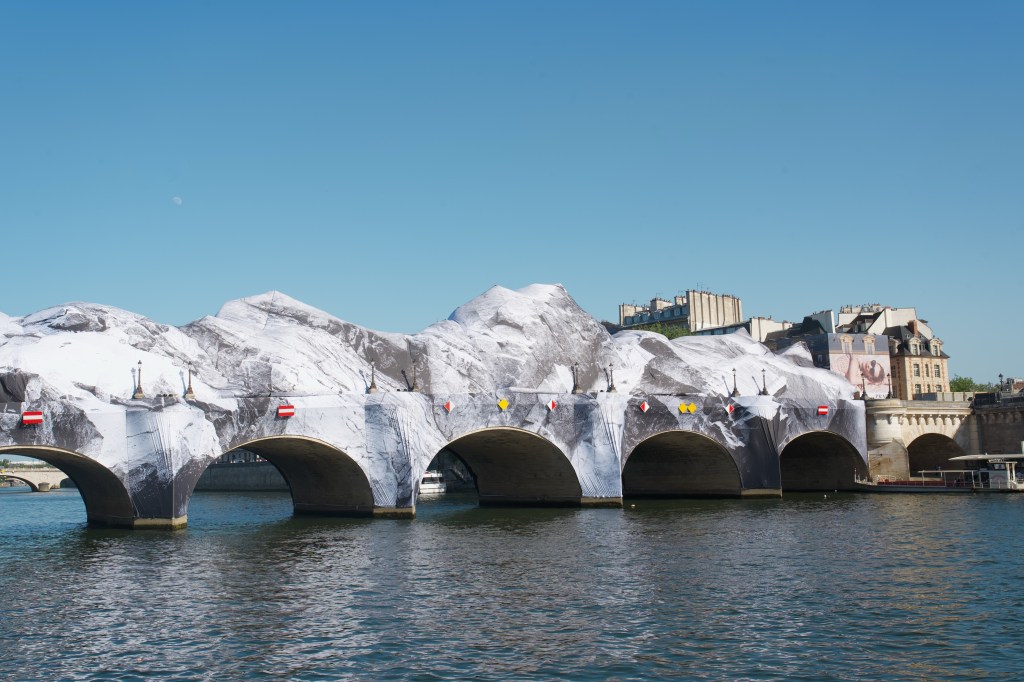
For centuries, the Pont Neuf has occupied a unique place in the Parisian landscape. Despite its name, which means “New Bridge”, it is in fact the oldest bridge in Paris, linking the banks of the Seine since the early 17th century. More than a historic landmark, the Pont Neuf has long served as a stage where the city, its inhabitants, and its artists meet. In June 2026, French artist JR adds a new chapter to this story with La Caverne du Pont-Neuf, a monumental installation that transforms part of the bridge into a spectacular rocky cave.
The project inevitably recalls one of the most famous public artworks ever created in Paris. In 1985, artists Christo and Jeanne-Claude wrapped the entire Pont Neuf in a golden sandstone-colored fabric. For two weeks, the familiar monument appeared both hidden and strangely revealed. By covering the bridge, the artists encouraged visitors to look at it again, noticing details that had become invisible through everyday familiarity. The installation became a landmark moment in the history of public art and remains one of Paris’s most celebrated artistic interventions. In 2021, a year after Christo’s death (Jeanne-Claude had passed away in 2009), the Arc de Triomphe was wrapped as well.
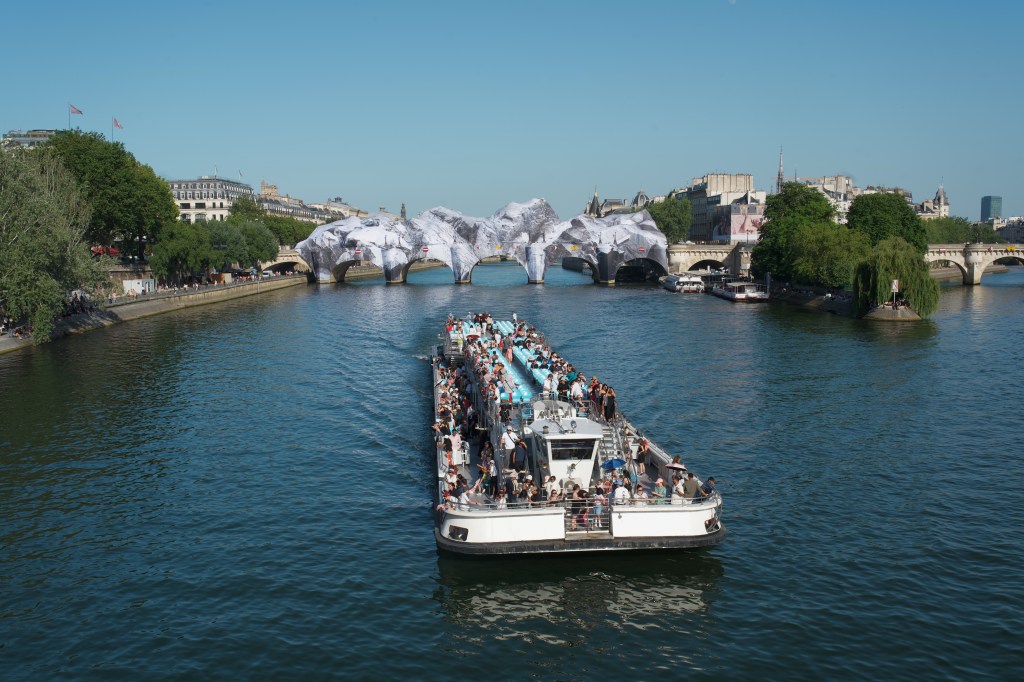
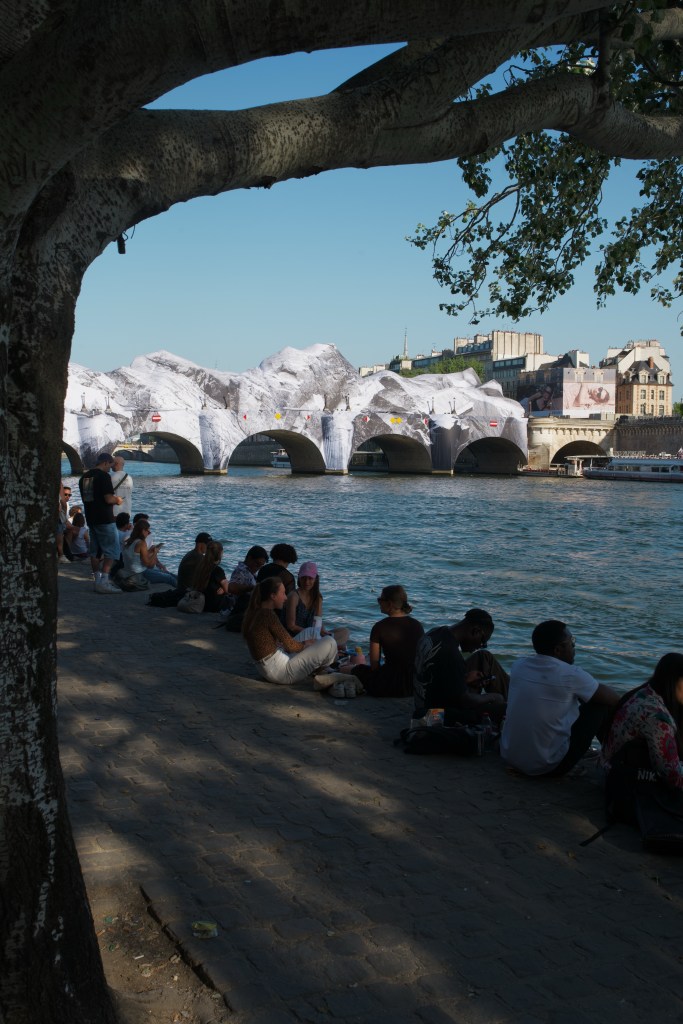
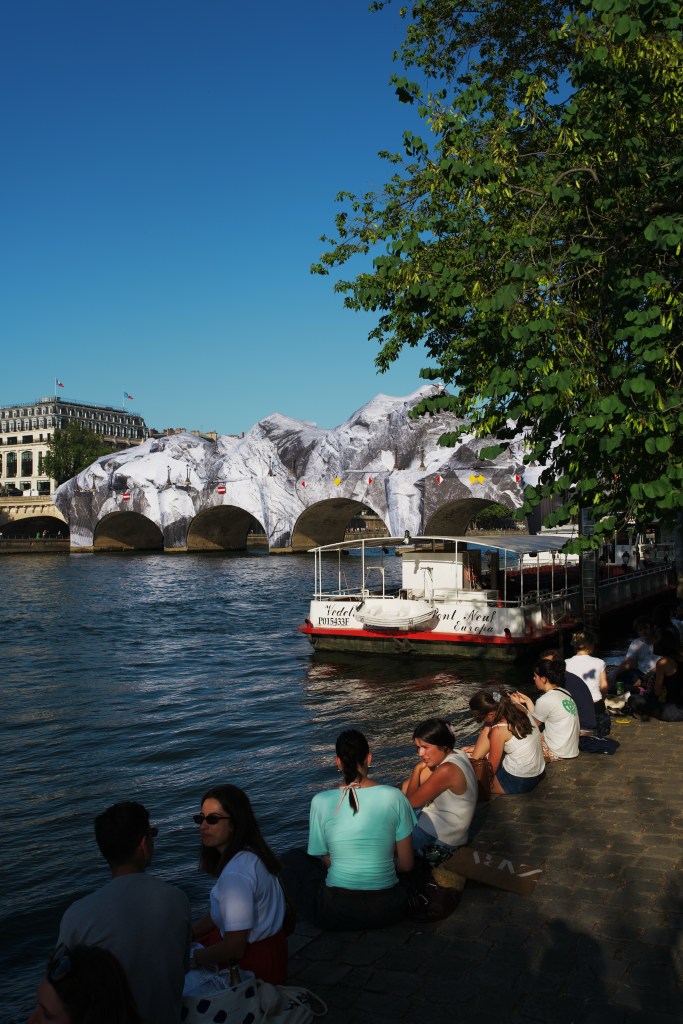
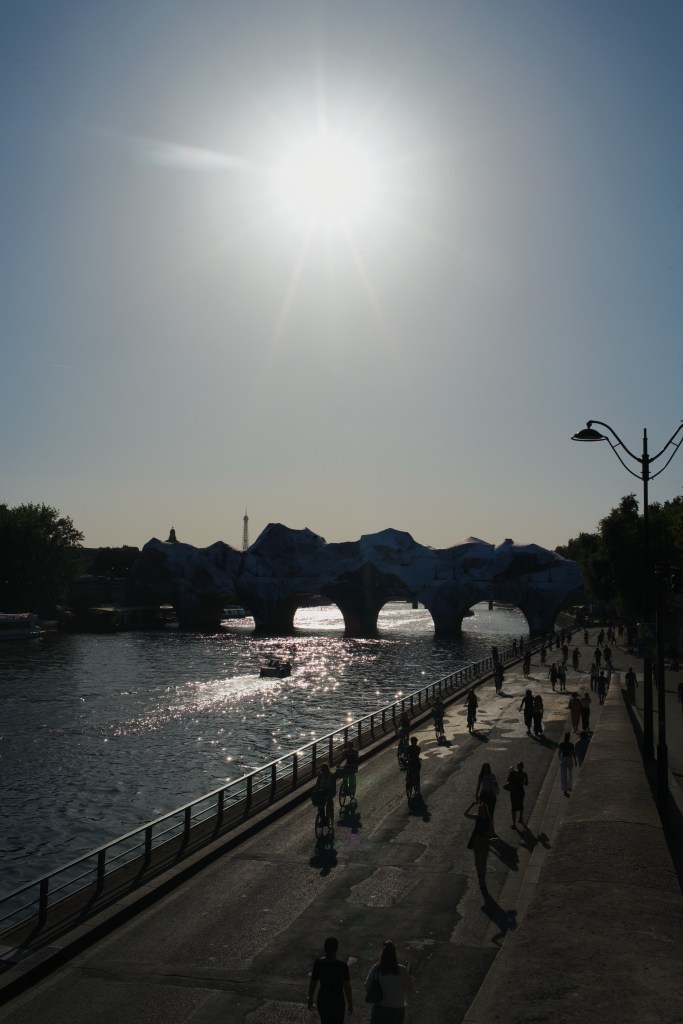
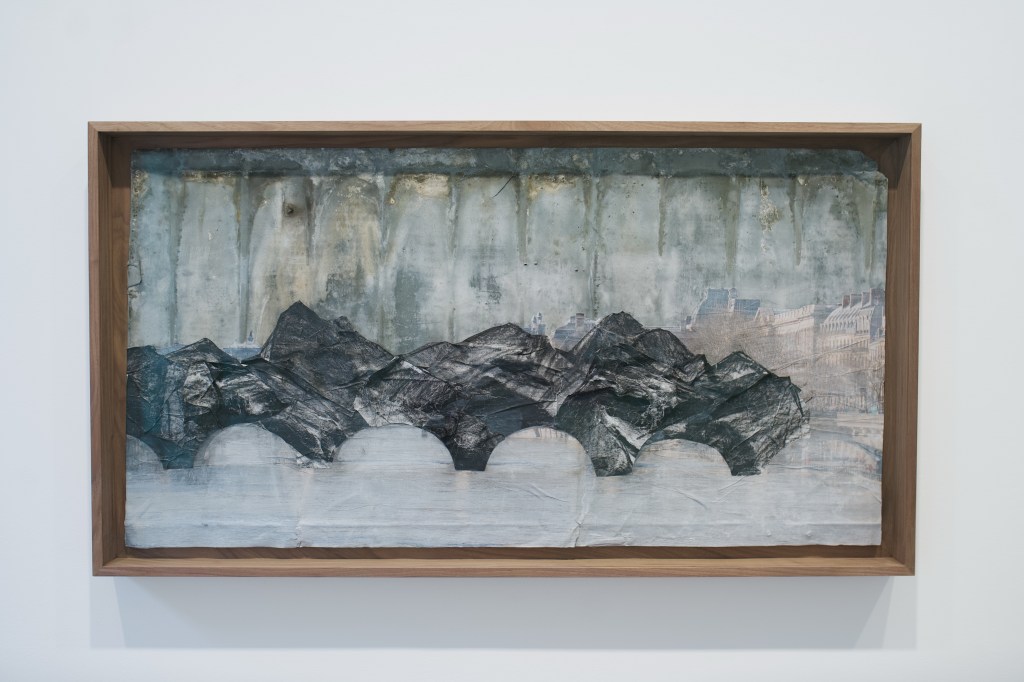
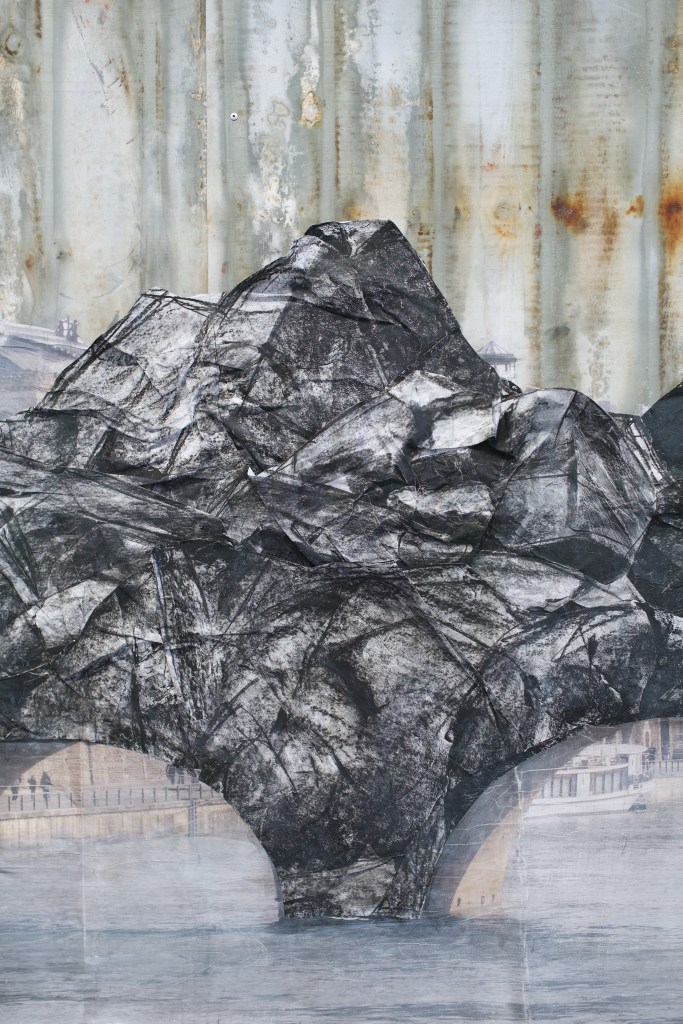
More than forty years later, JR returns to the same location, but with a very different visual language. Rather than wrapping the bridge, he turns it into something entirely unexpected. Using large-scale printed imagery and carefully designed optical effects, La Caverne du Pont-Neuf gives the impression that a giant cave has emerged from the heart of the city. What was once a bridge becomes a geological formation, as if Paris itself had suddenly revealed an ancient landscape hidden beneath its streets.
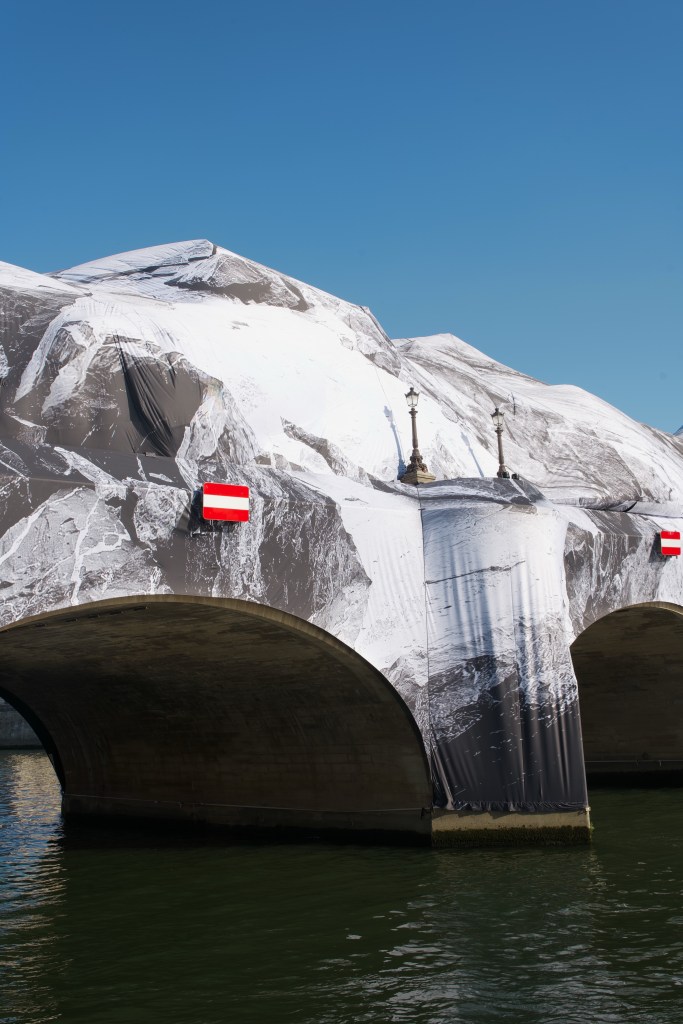
Yet despite their contrasting aesthetics, JR’s work shares an essential quality with that of Christo and Jeanne-Claude: both projects challenge the public’s perception of a familiar monument. Neither artwork alters the bridge permanently. Instead, they temporarily transform the way people experience it. Visitors are invited to pause, look again, and question what they thought they knew about a place they may have crossed countless times.
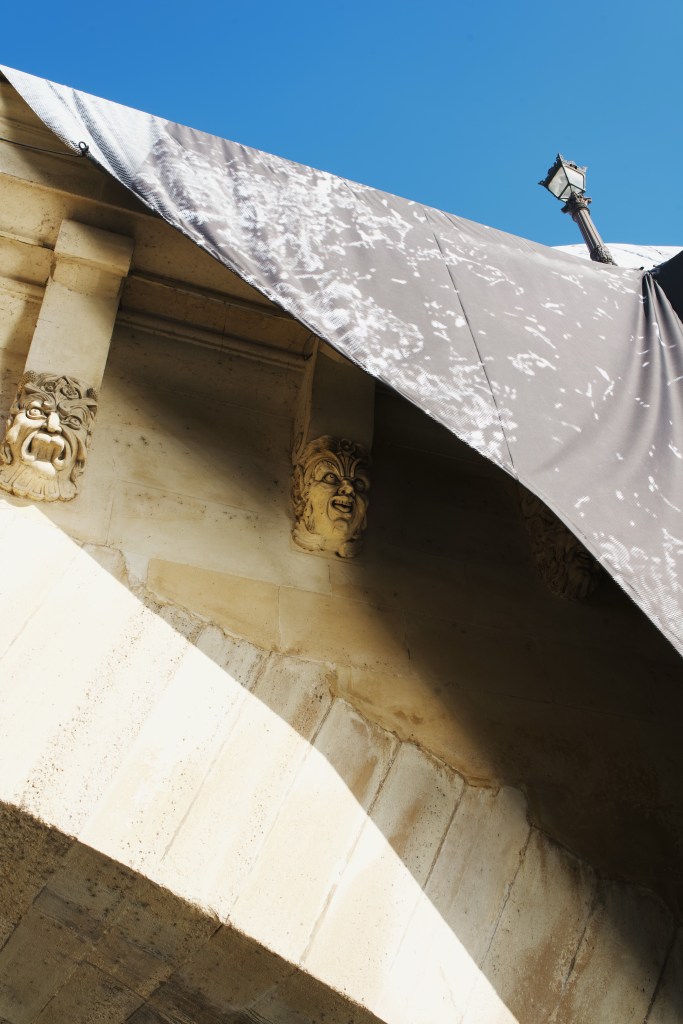
This ability to reinvent the urban environment is one of the defining strengths of public art. Unlike works displayed inside museums, installations such as The Pont Neuf Wrapped or La Caverne du Pont-Neuf encounter people in their daily lives. They interrupt routines, spark conversations, and encourage collective experiences. For a brief moment, the city becomes a place of wonder and imagination.
The Pont Neuf seems particularly suited to this role. Located at the heart of Paris, overlooking the Seine and the Île de la Cité, it occupies both a geographical and symbolic center. It has witnessed centuries of change, from royal processions to modern tourism. By choosing this iconic site, artists engage not only with a physical structure but also with layers of history and memory.
Perhaps this explains why the bridge continues to inspire ambitious artistic projects. Its enduring presence offers a stable foundation upon which temporary visions can be built. Whether wrapped in fabric or transformed into a cave, the Pont Neuf becomes a canvas for creativity, demonstrating how art can reshape our relationship with the places we think we know best.
As visitors and tourists gather beneath JR’s monumental illusion in the beginning of this summer, they are participating in a tradition that extends beyond a single artwork. They are rediscovering the Pont Neuf once again, and proving that even the oldest bridge in Paris can still surprise us.
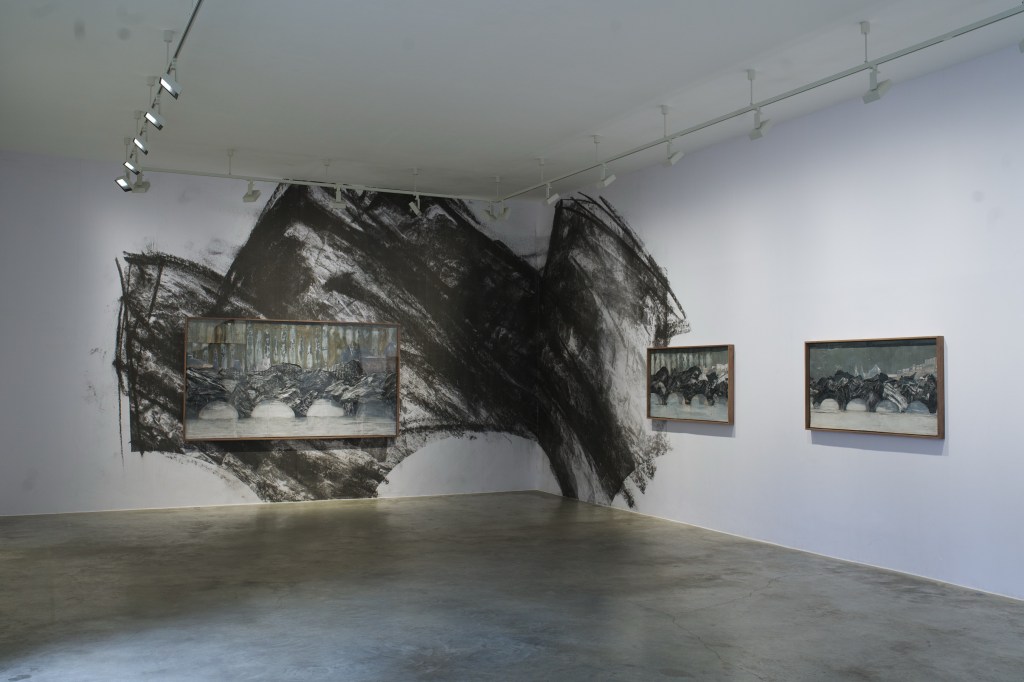
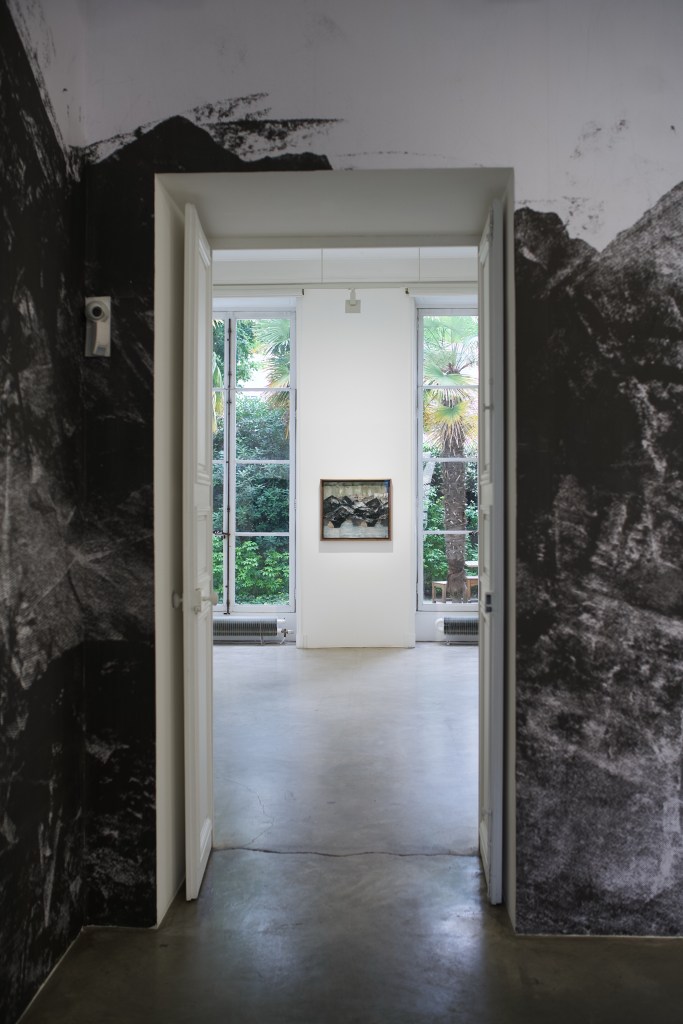
‘Les Esquisses de la Caverne’ at Galerie Perrotin
Presented at Perrotin alongside the installation, Les Esquisses de la Caverne offers a glimpse into JR’s creative process through preparatory collages, photomontages, and studies. The exhibition reveals how his large-scale trompe-l’œil works are conceived, blending photography, drawing, and illusion to transform architectural landmarks into imagined landscapes.
Photos credits: @elegantinparis
 Elégances Parisiennes