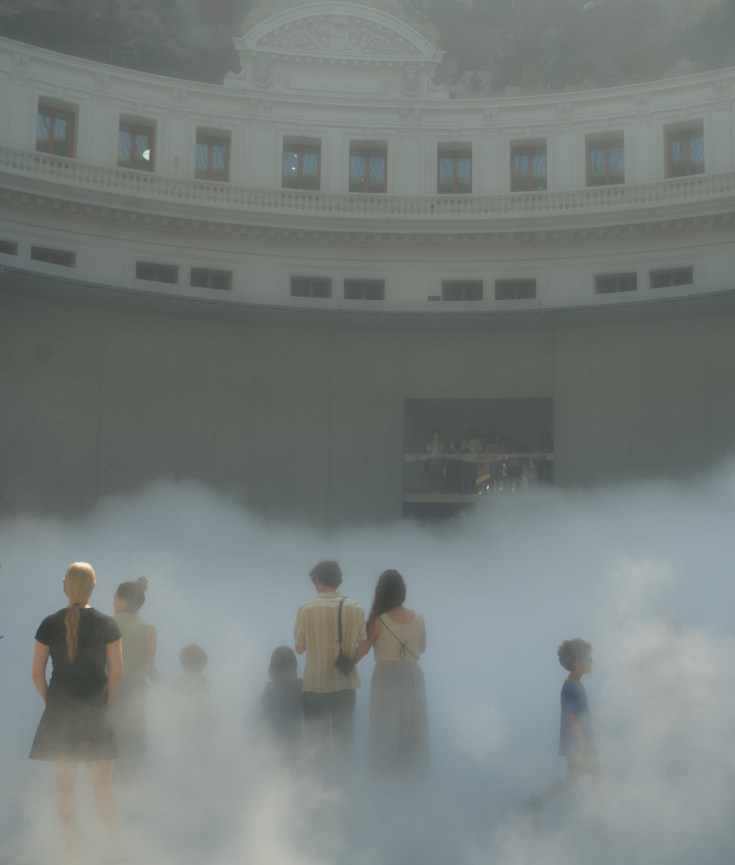

Running until 30 August 2026, Clair-obscur transforms the Bourse de Commerce into a journey through chiaroscuro, the subtle interplay of light and darkness that has fascinated artists for centuries. Bringing together works from the Pinault Collection across different periods and media, the exhibition explores darkness not simply as the absence of light, but as a space of mystery, memory and revelation.
Visitors are first immersed in Fujiko Nakaya’s Fog installation beneath the Rotunda before encountering the quiet, introspective works of Laura Lamiel presented in display cases around the Rotunda. On the ground floor, two monographic galleries are devoted to Sigmar Polke and James Lee Byars, whose radically different artistic languages offer complementary reflections on materiality and the invisible. The journey then continues on the first floor with Victor Man’s enigmatic paintings, before culminating on the second level in four thematic galleries (Germination, Shadows, Fog and Incandescence) where post-war and contemporary works enter into a compelling dialogue around the exhibition’s central theme.
This article is not intended as a comprehensive review of Clair-obscur. Instead, it is a personal selection of four highlights that left a strong impression on me. Together, these works reflect the remarkable breadth of the exhibition and the many ways artists continue to explore the enduring power of chiaroscuro.
Fujiko Nakaya, Fog
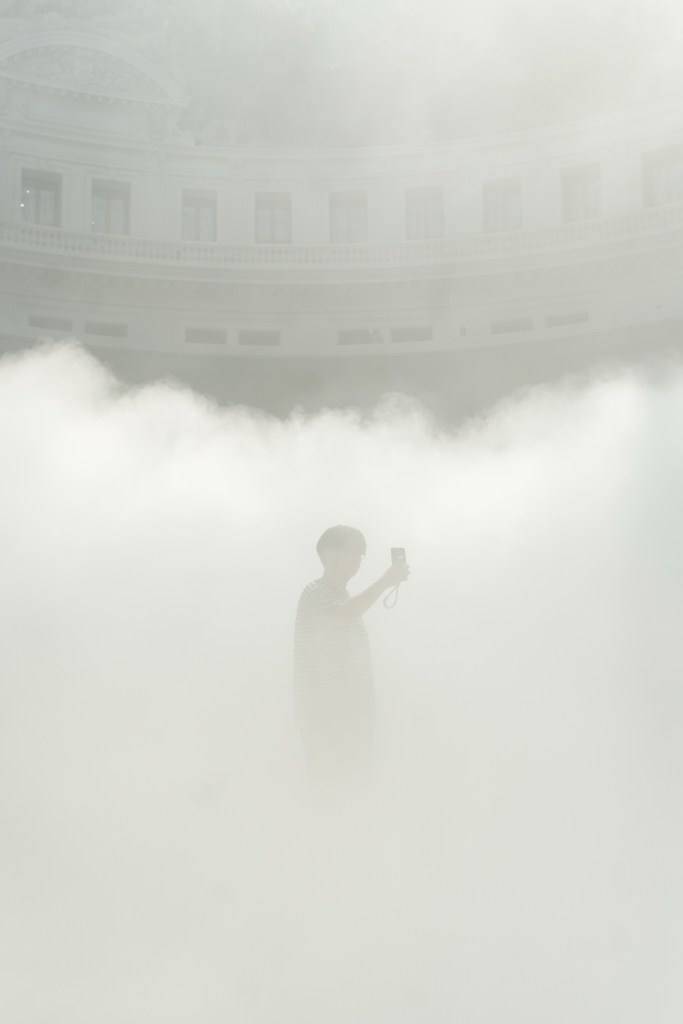
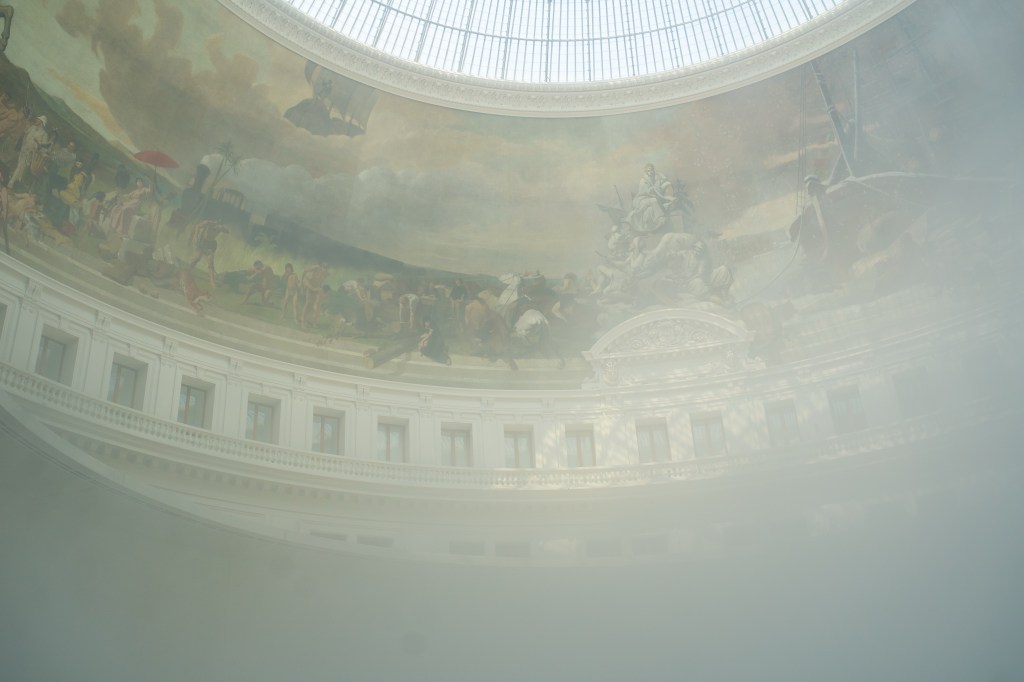
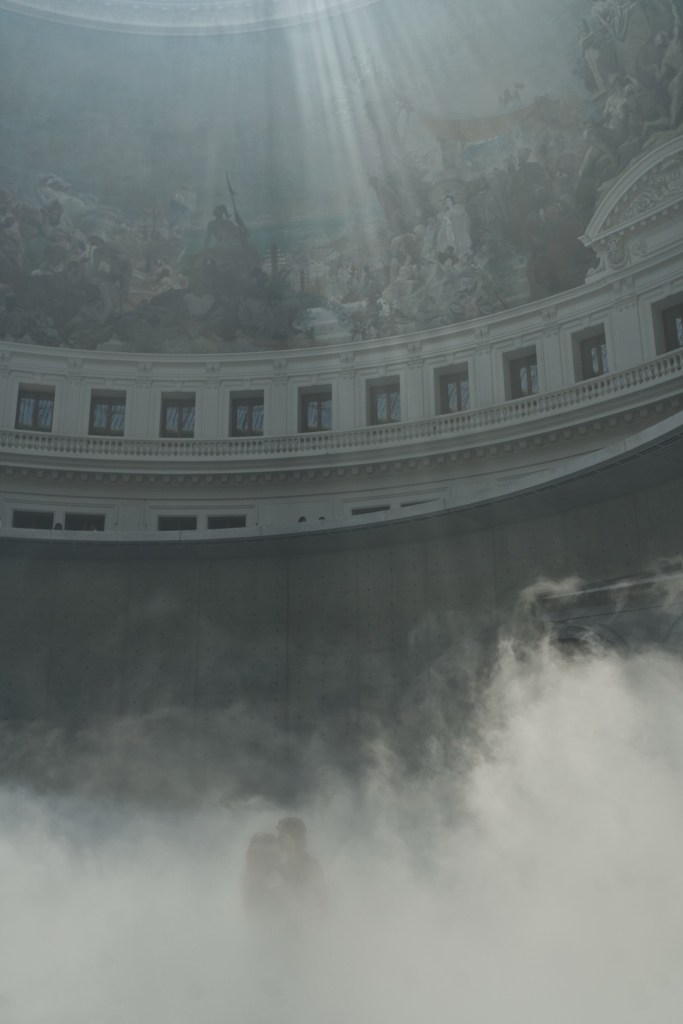
Fujiko Nakaya transforms the Rotunda into one of her iconic fog sculptures, filling the museum’s central space with dense clouds of water vapor. Rather than adding a physical object, the Japanese artist reshapes the architecture itself, temporarily obscuring its familiar lines before revealing them once again. By materialising the void, her ephemeral intervention enters into a quiet dialogue with Tadao Ando’s minimalist renovation of the building. The encounter between the two Japanese artists feels almost natural, as mist softens the architect’s precise geometry and gives new life to the monumental Rotunda.
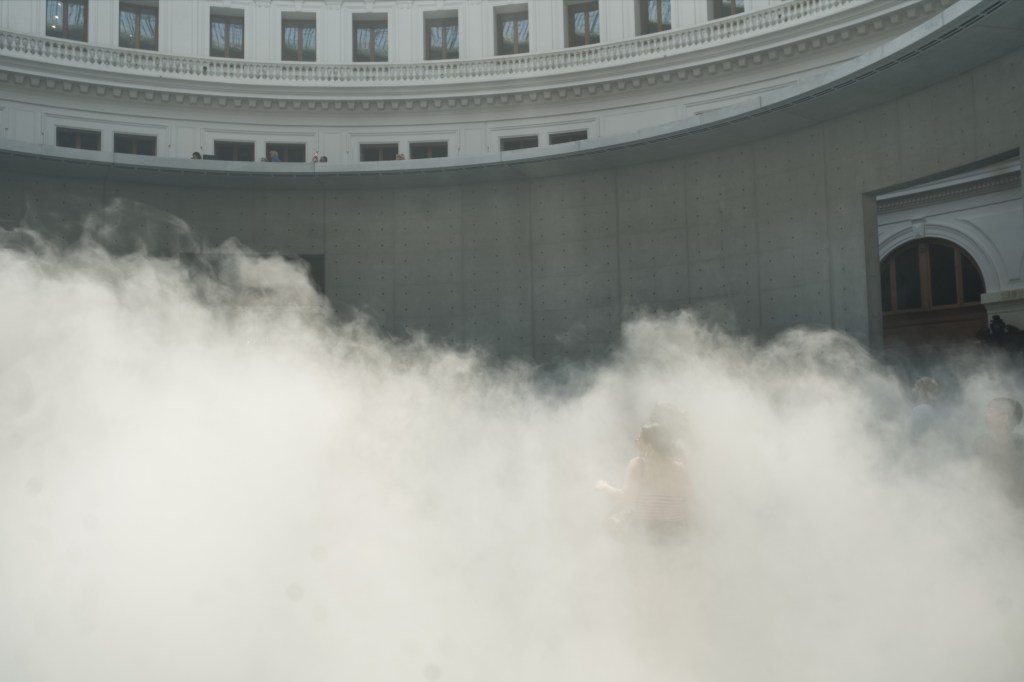
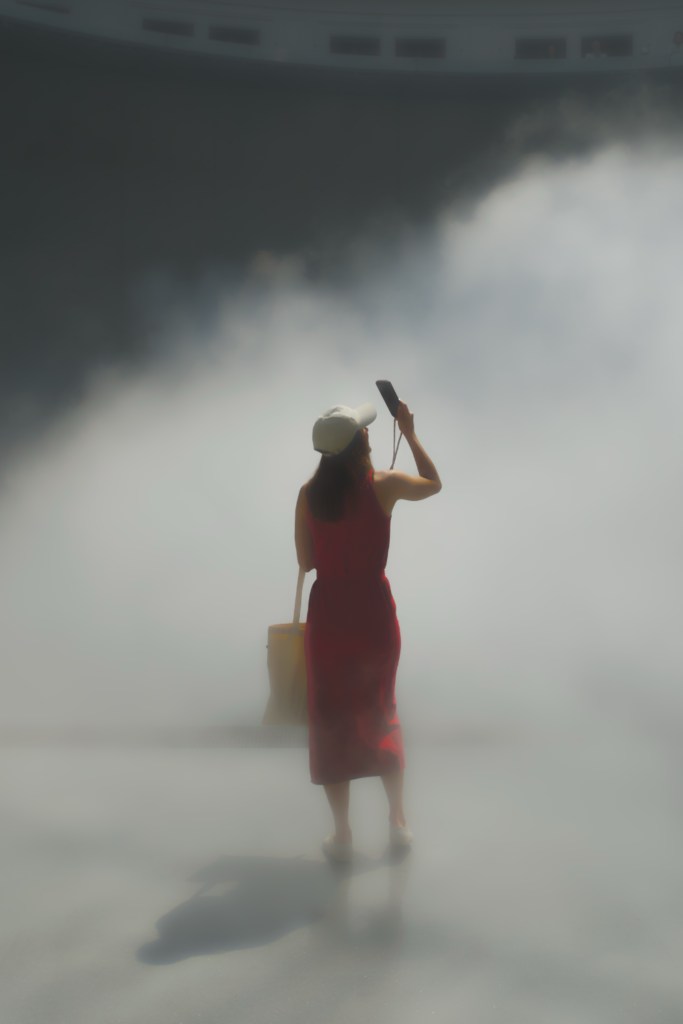
While photographing the installation, I was struck by the way it altered not only the space but also the people within it. Visitors’ silhouettes would dissolve into the mist before gradually reappearing, their outlines softened by the shifting veil of fog. For a few moments, they became part of the artwork itself, contributing to a scene that was never quite the same twice. Simple in its means yet remarkably powerful, Nakaya’s intervention transforms the Rotunda into an ever-changing landscape where perception constantly shifts.
James Lee Byars
After the immersive experience of Fujiko Nakaya’s Fog, the exhibition takes on a quieter, almost ceremonial atmosphere with the works of James Lee Byars. Fascinated by beauty, perfection and transcendence, the American artist developed a visual language of pure forms and symbolic materials, shaped by his years in Japan and his interest in Zen philosophy.
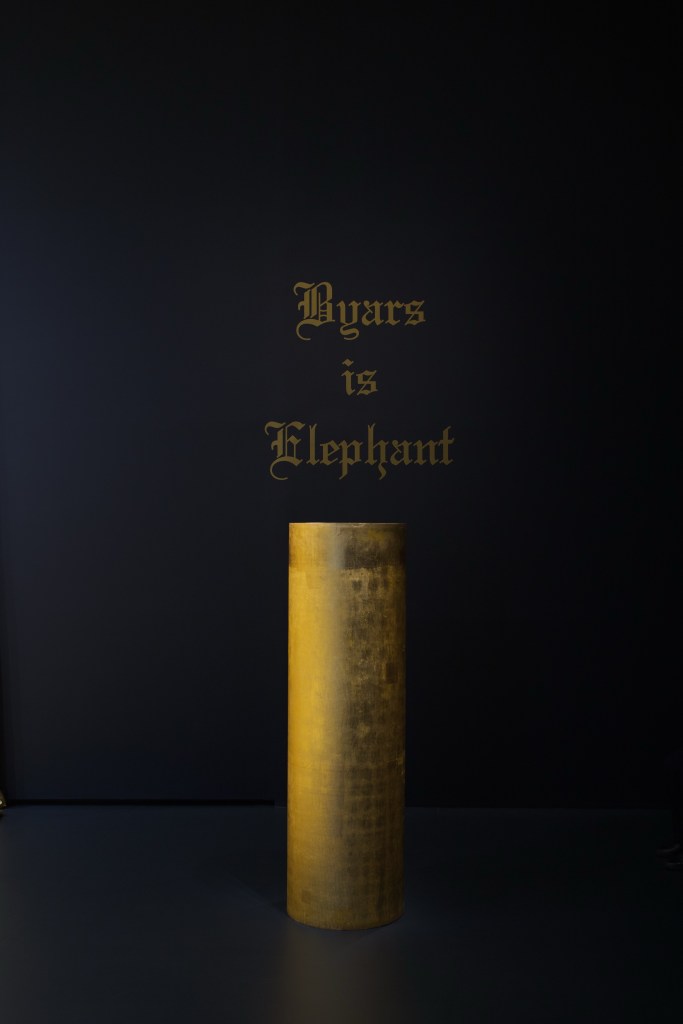
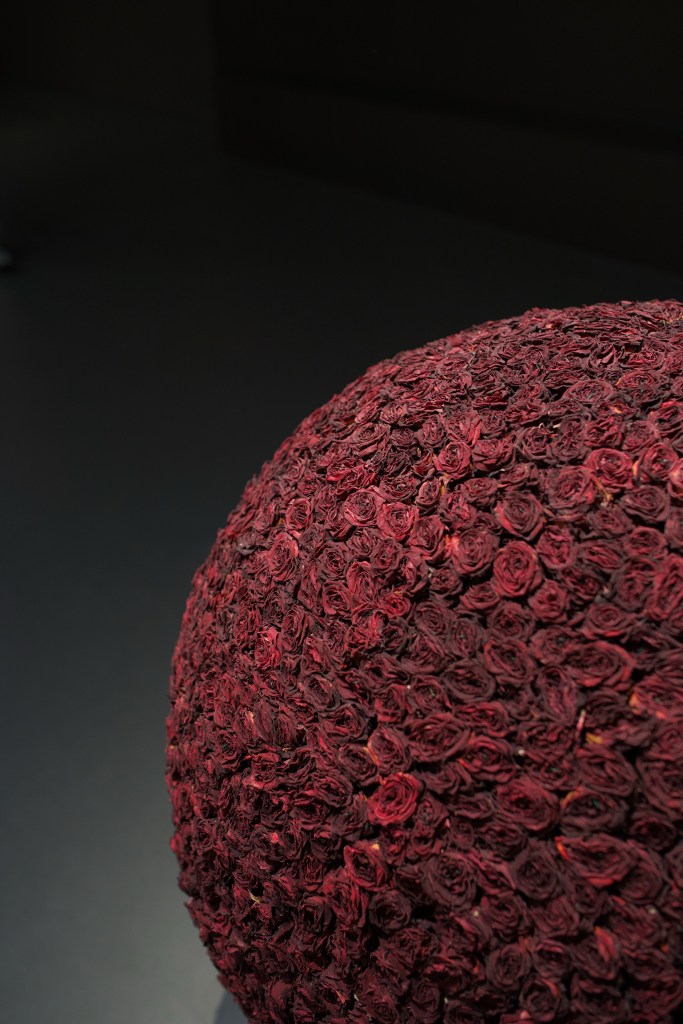
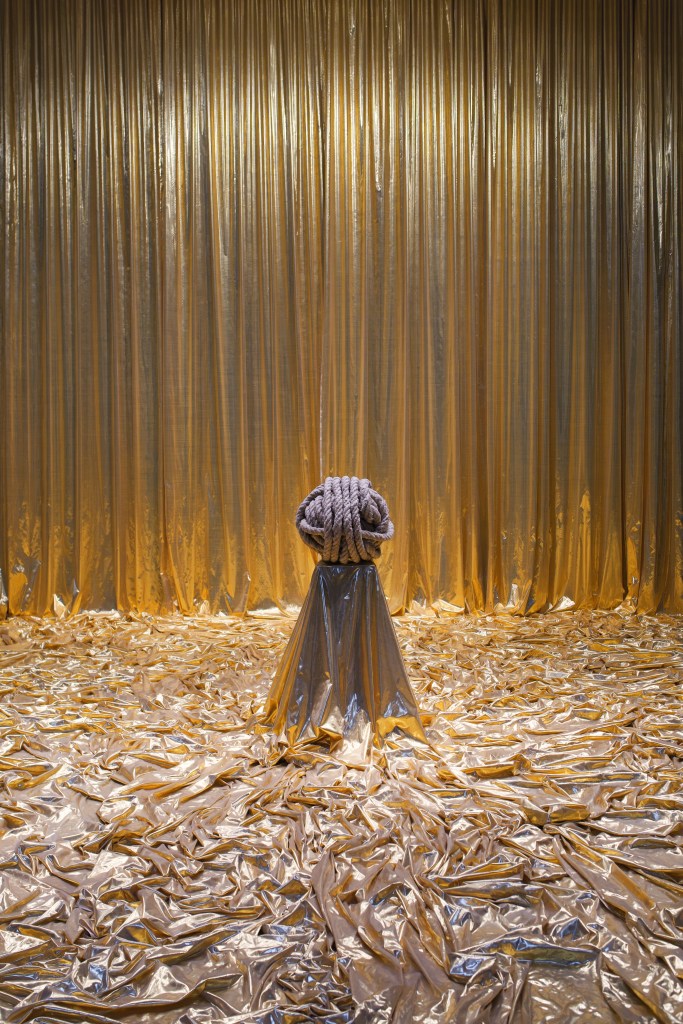
The shimmering Golden Tower (1974) immediately captures the eye. Wrapped in gold, Byars’ signature material, it evokes both ritual and monument, embodying his lifelong fascination with the absolute. Nearby, The Rose Table of Perfect (1989) presents a flawless sphere made of 3,333 red roses that slowly wither throughout the exhibition, turning perfection into a meditation on time and impermanence. Completing the ensemble, Byars is Elephant (1997), created shortly before the artist’s death, combines coarse camel-hair rope with gold fabric, embracing the fragility that makes perfection forever unattainable.
Victor Man
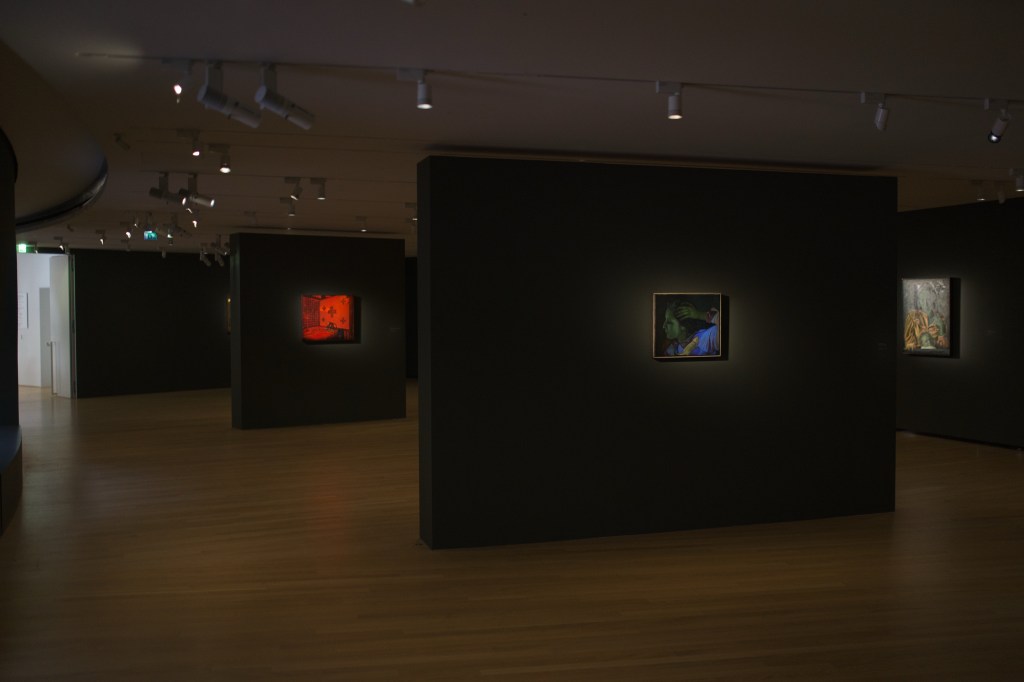
On the first floor, Romanian artist Victor Man offers a strikingly different interpretation of chiaroscuro. His paintings emerge from darkness with remarkable subtlety, their muted palette and delicate brushwork revealing figures only gradually. Rather than using light to illuminate, Man uses it sparingly, allowing ambiguity to become an essential part of the viewing experience.
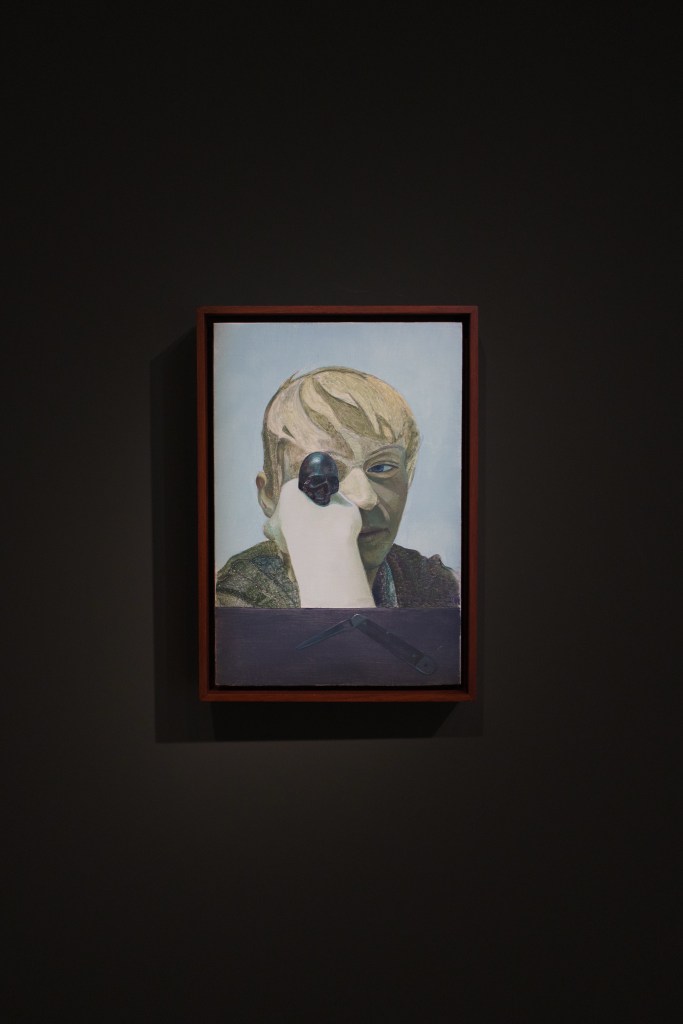
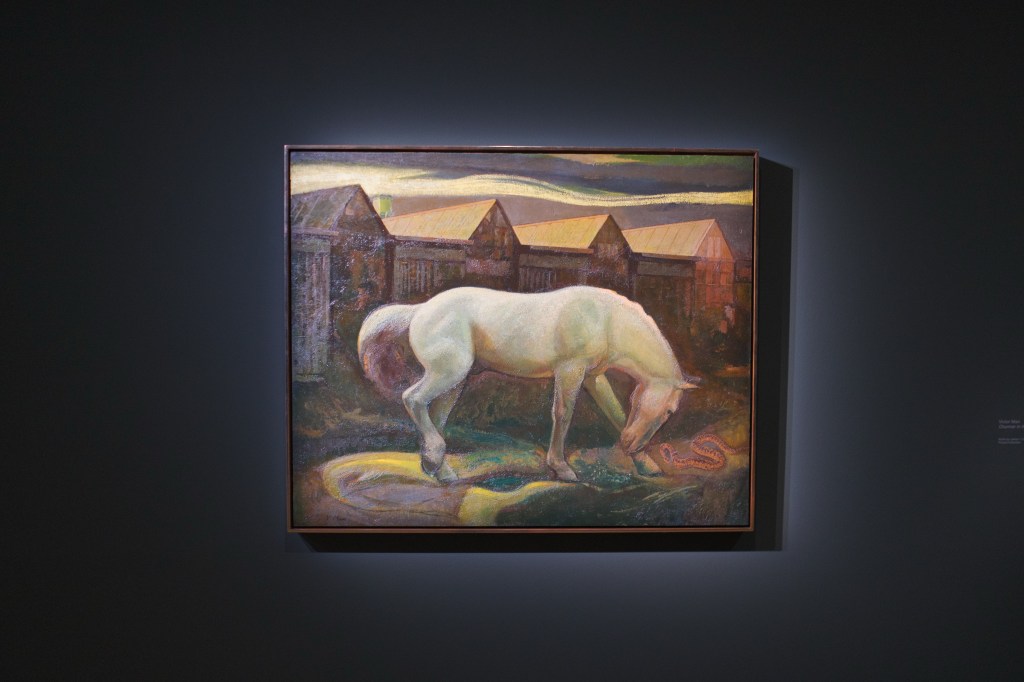
Portraits, enigmatic interiors and symbolic animals populate these intimate compositions, where references to art history, mythology and memory quietly overlap. In Charmer in the Season Mist of Lead, as in the two Untitled (Portrait With Skull) paintings, familiar motifs acquire an unsettling, dreamlike quality. Nearby, Brothel Room with Monkey and Titiriteros suggest narratives that remain deliberately elusive, inviting viewers to linger rather than seek immediate answers.
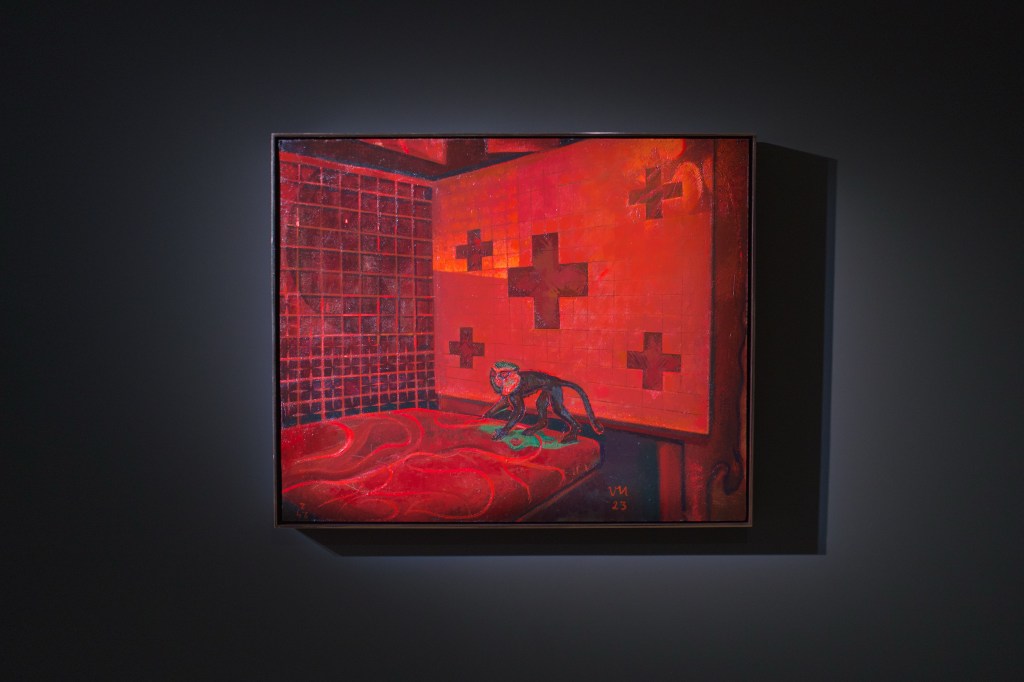
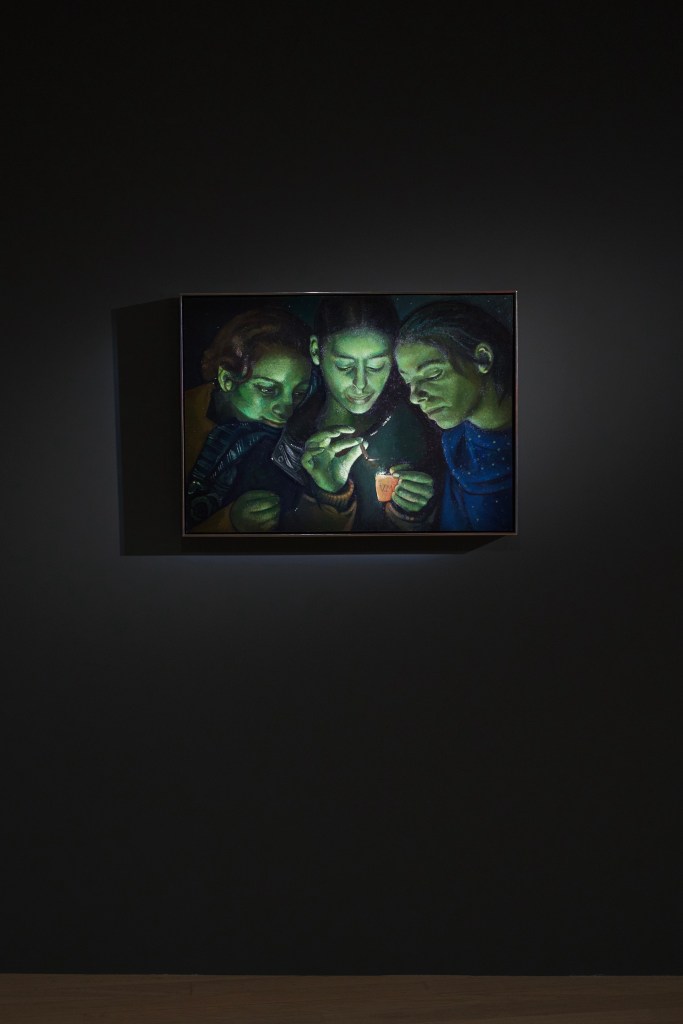
Standing before these paintings requires patience. As the eye adjusts, details slowly surface from the shadows, rewarding careful observation. Victor Man transforms darkness into a space of contemplation, where mystery becomes an essential part of seeing.
Shadows
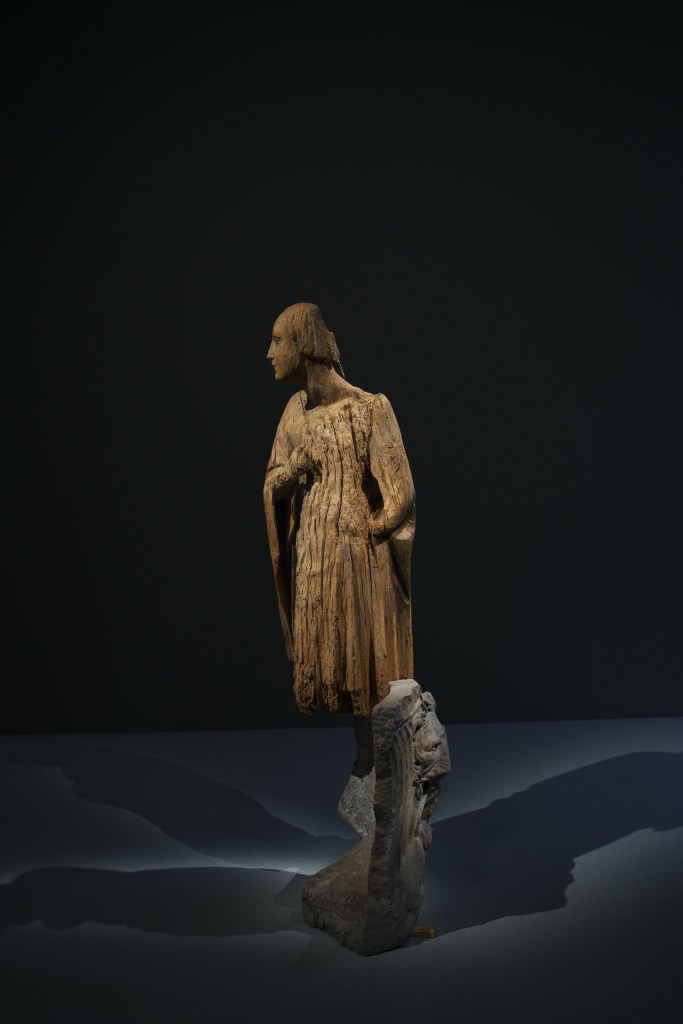
Among all the sections of Clair-obscur, Shadows was my favorite. Bringing together major post-war artists, it explores how darkness became a language through which to express the anxieties and fractures of the twentieth century.
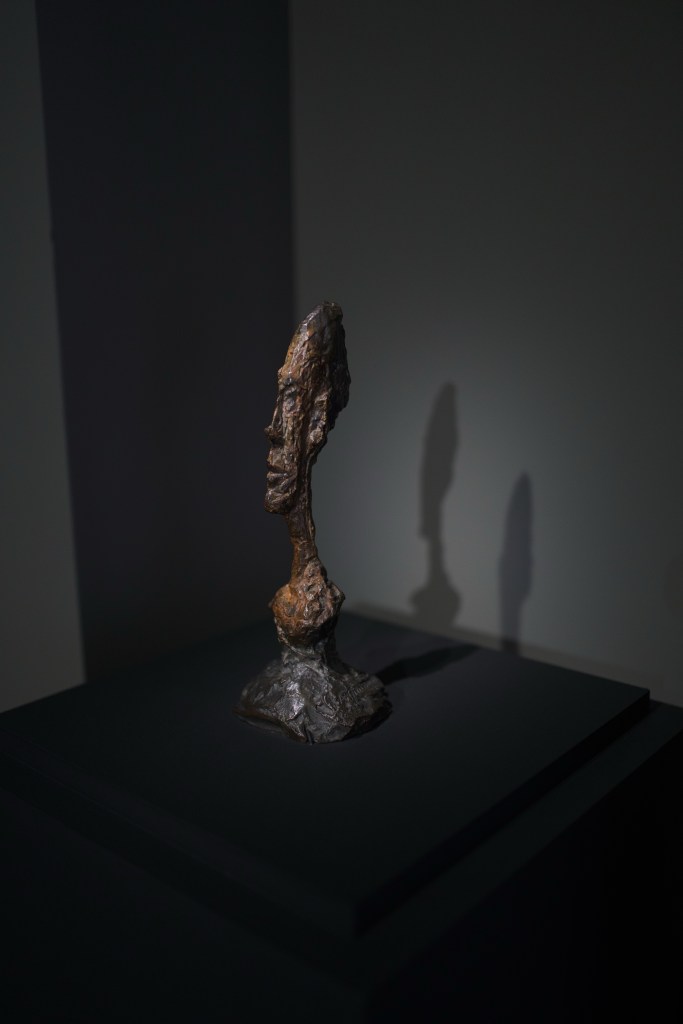
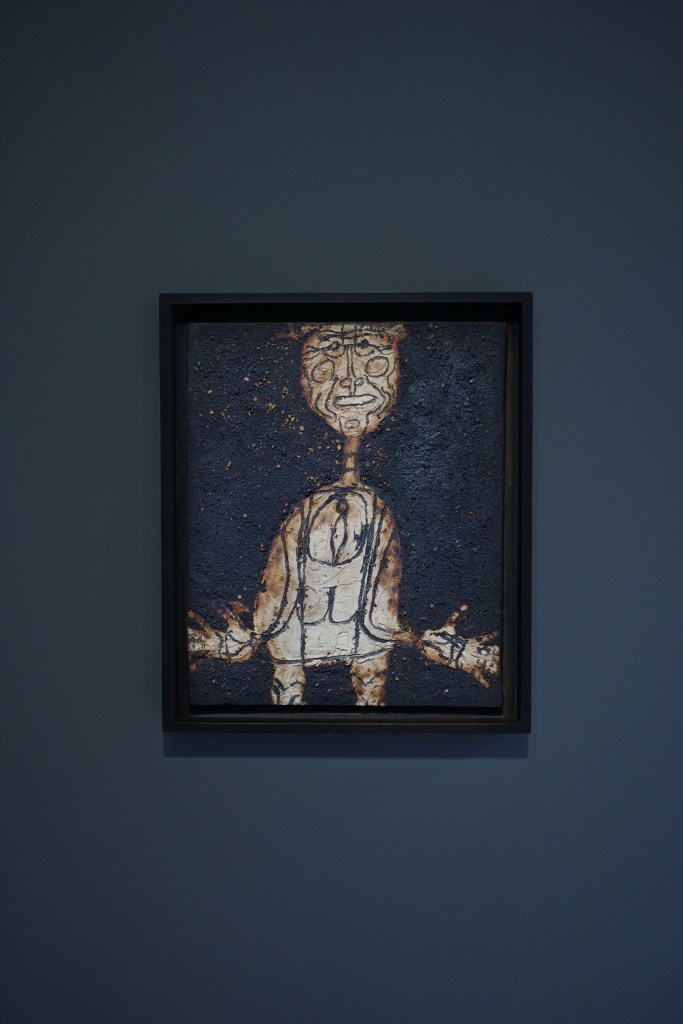
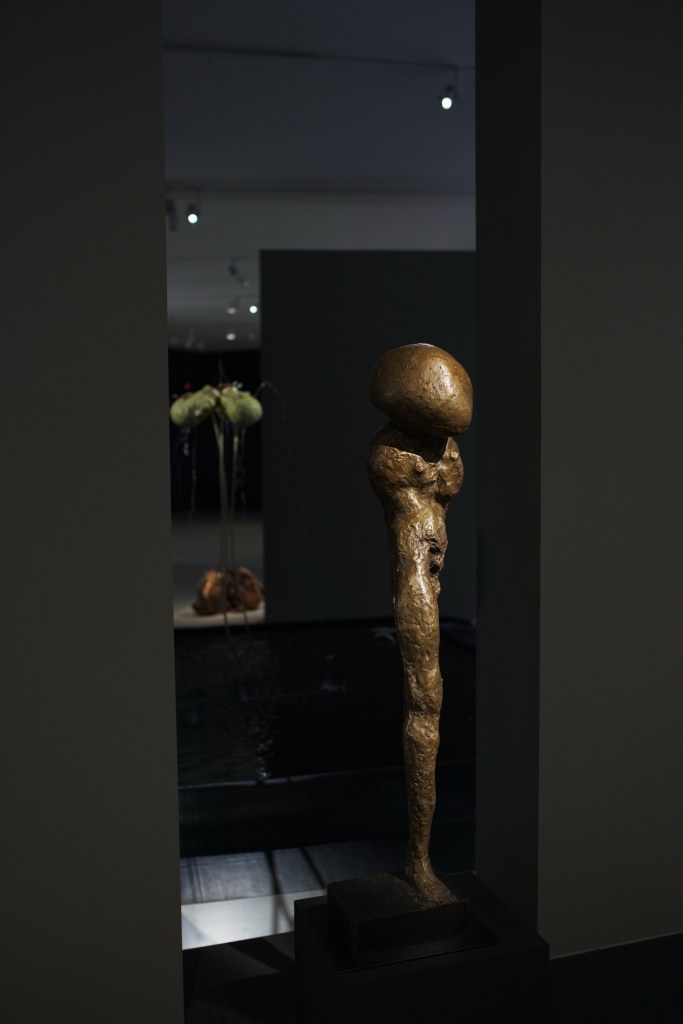
Alberto Giacometti’s Bust of Diego and Germaine Richier’s striking Don Quichotte embody this fragile humanity, their elongated and distorted forms suspended between presence and disappearance. Maria Martins’ Brouillard Noir transforms bronze into an organic, almost unsettling vision, while Jean Dubuffet’s Monsieur Macadam celebrates the raw, imperfect materiality of the everyday.
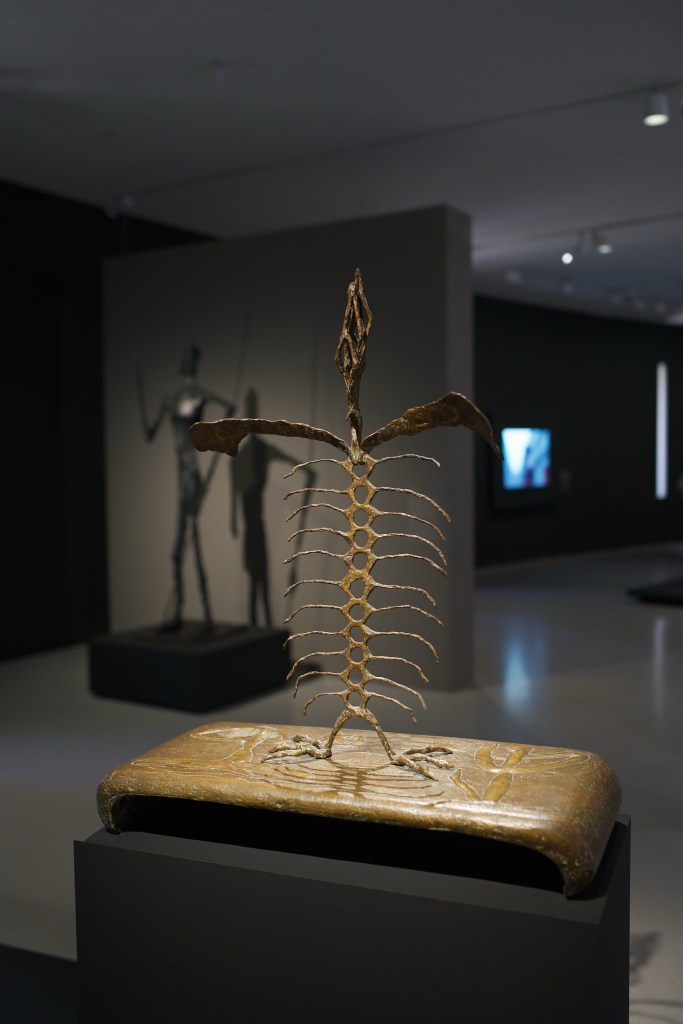
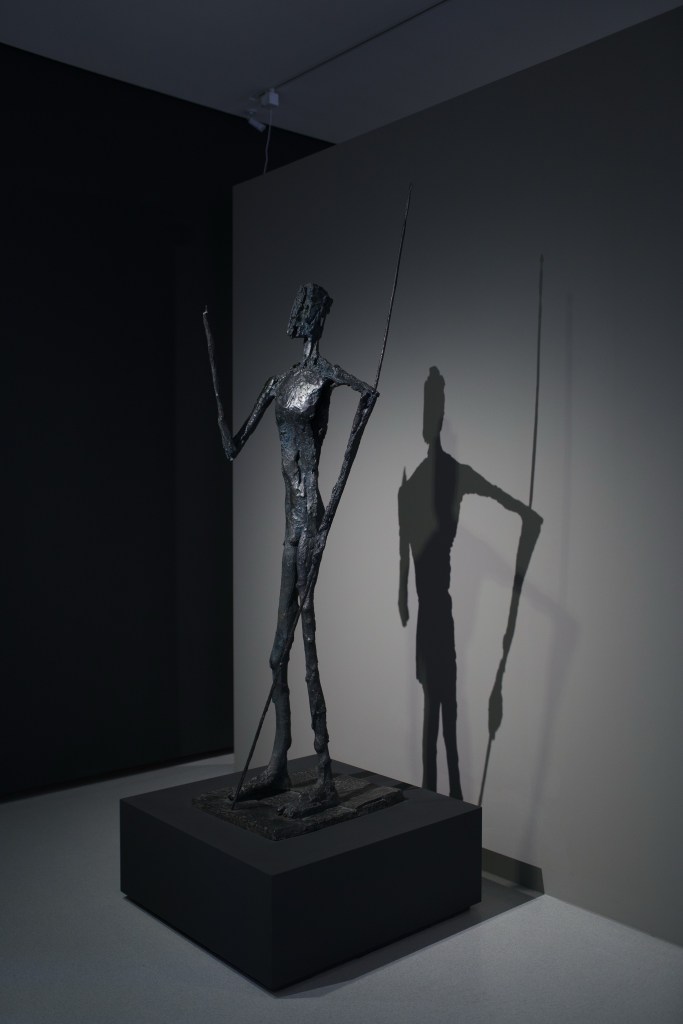
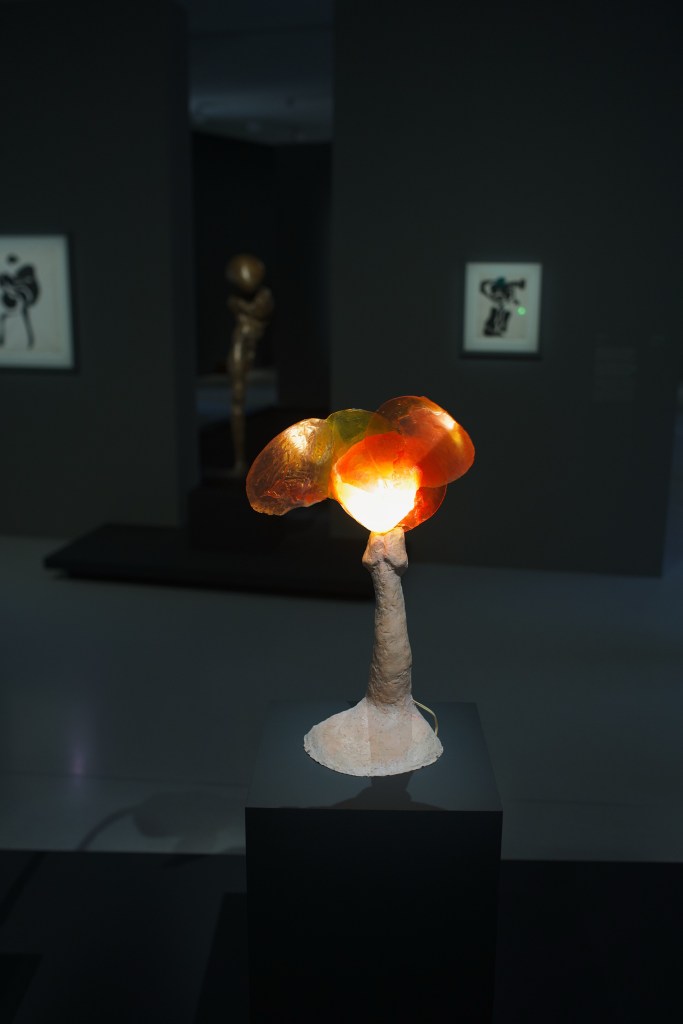
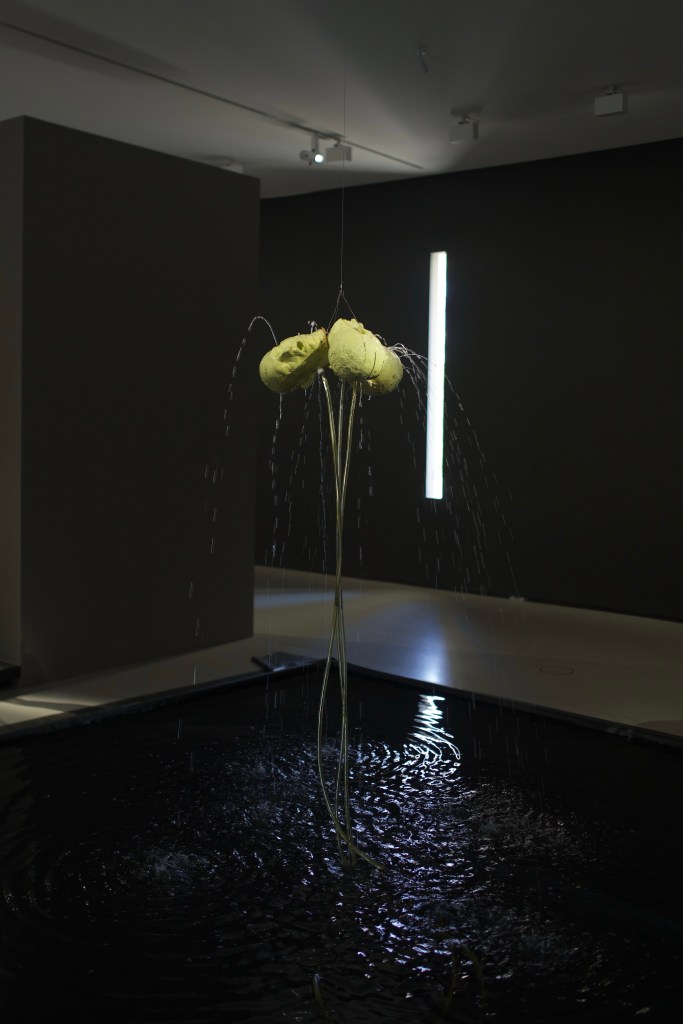
The dialogue extends into more contemporary works, from Alina Szapocznikow’s haunting sculptures to Bruce Nauman’s uncanny 3 Heads Fountain and Danh Vō’s enigmatic installations. Together, they reveal how shadows are not merely the absence of light, but a space where memory, identity and the unconscious continue to take shape.
Final thoughts
These highlights represent only part of the richness of Clair-obscur. The exhibition brings together a wide range of galleries and artists, each offering a distinct perspective on the dialogue between light and shadow.
What makes the exhibition particularly compelling is that Clair-obscur is never treated as a purely visual effect. Instead, it becomes a way of exploring memory, solitude, spirituality and the human condition. In an age saturated with images and constant stimulation, these works invite a slower, more attentive way of looking. Rather than providing immediate answers, they encourage contemplation and leave room for ambiguity. It is an exhibition best experienced without rushing, allowing each encounter to reveal its own meaning.
Photos credits: @elegantinparis
 Elégances Parisiennes